
 Worksheets
Earth Science Unit One Test Review
Total questions: 45
Worksheet time: 1hrs 24mins
Name
Class
Date
1.
The closest point to the Sun in a planet's orbit is called_____.
a)
aphelion
b)
helion
c)
perihelion
d)
solstice
2.
The furthest point to the Sun in a planet's orbit is called_____.
a)
perihelion
b)
aphelion
c)
solstice
d)
helion
3.
Precession is the wobbling of the Earth's axis as it turns in space.
a)
True
b)
False
4.

Which letter on the diagram represents the Earth's position on the autumnal equinox?
a)
A
b)
B
c)
C
d)
D
5.

Which letter on the diagram represents the Earth's position on the summer solstice?
a)
A
b)
B
c)
C
d)
D
6.

Which letter on the diagram represents the Earth's position on the winter solstice?
a)
A
b)
B
c)
C
d)
D
7.
To go around another object
a)
rotation
b)
revolution
8.
To spin on its own axis
a)
rotation
b)
revolution
9.
When less than half of the moon is glowing
a)
New moon
b)
Full moon
c)
Crescent
d)
Gibbous
10.
When more than half of the moon is glowing
a)
Gibbous
b)
Crescent
c)
Quarter
11.

a)
New moon
b)
Full moon
c)
1st Quarter
d)
3rd Quarter
12.

a)
New moon
b)
Full moon
c)
1st Quarter
d)
3rd Quarter
13.

a)
New moon
b)
Full moon
c)
1st Quarter
d)
3rd Quarter
14.

a)
New moon
b)
Full moon
c)
1st Quarter
d)
3rd Quarter
15.

a)
Waxing Crescent
b)
Waning Crescent
c)
Waxing Gibbous
d)
Waning Gibbous
16.

a)
Waxing Crescent
b)
Waning Crescent
c)
Waxing Gibbous
d)
Waning Gibbous
17.
What do we call the small tides that happen when the sun and moon are at right angles to each other?
a)
Neap Tide
b)
Spring Tide
c)
Larger Change
d)
Smaller Change
18.

What type of tides would this arrangement of earth-moon-sun create?
a)
neap tide
b)
spring tide
c)
new moon tide
d)
full moon tide
19.
Tides are caused by ___________
a)
wind
b)
gravitational pull of moon
c)
waves gravitation toward land
d)
rain
20.
Which planets revolution is less than that of the earth's?
a)
Venus
b)
Mars
c)
Neptune
d)
Jupiter
21.
The earth is located between which 2 planets?
a)
Jupiter & Saturn
b)
Mercury & Venus
c)
Venus & Mars
d)
Saturn and Uranus
22.
What is the process that occurs in the core of a star, like the sun, that produces energy?
a)
fission
b)
fusion
c)
decay
d)
convection
23.
In what form does the Sun's energy travel to Earth?
a)
Heat
b)
Electrical energy
c)
Electromagnetic radiation
d)
Mechanical energy
24.
The variable that is being tested or changed
a)
independent variable
b)
dependent variable
c)
control variable
25.
The variable that is being measured
a)
independent variable
b)
dependent variable
c)
control variable
26.
the variable that is kept the same to make sure results are caused by the thing being tested
a)
independent variable
b)
dependent variable
c)
control variable
27.

The sun shines down on this family as the play on the beach.
a)
conduction
b)
convection
c)
radiation
28.

Walking on the warm sand sand with your bare feet.
a)
conduction
b)
convection
c)
radiation
29.

Blow drying your wet hair.
a)
conduction
b)
convection
c)
radiation
30.
What is the ultimate ORIGINAL source of energy for living things
a)
Sugar
b)
Sun
c)
Moon
d)
Carbon Dioxide
31.
What are the products of photosynthesis?
a)
water and carbon dioxide
b)
oxygen and glucose
c)
oxygen and carbon dioxide
d)
oxygen and water
32.
What is photosynthesis?
a)
The process in which humans eat their food
b)
When a photographer takes a photo.
c)
To get your pictures from the photo lab.
d)
The process in which plants make their food.
33.
True or false: as you move along the spectrum, left to right, the wavelengths decrease in size (get smaller)
a)
true
b)
false
34.
A wave with a large wavelength will have a ______ frequency and _____ energy
a)
high, low
b)
high, high
c)
low, high
d)
low, low
35.
Select the correct order of waves on the EMS
a)
Radio, Micro, Infra, Visible, Ultra, X-ray, Gamma
b)
Gamma, X-ray, Ultra, Vis, Infra, Micro, Radio
c)
Vis, Micro, Infra, Ultra, X-ray, Gamma, Radio
d)
Micro, Radio, Vis, Infra, Ultra, X-ray, Gamma
36.
Planets orbit the Sun in a shape called a(n)
a)
circle
b)
ellipse
c)
focus
d)
perihelion
37.
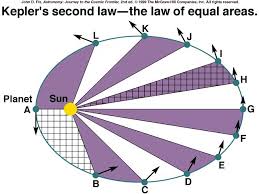
Where is the planet moving faster
a)
Position A to B
b)
Position B to C
c)
Position H to I
d)
Position I to J
38.

Label part 1
a)
#1 Core
b)
#1 Radiation zone
c)
#1 Convection zone
d)
#1 Photosphere
39.

Label Part 2
a)
#2 Core
b)
#2 Radiation zone
c)
#2 Convection zone
d)
#2 Corona
40.

Label Part 3
a)
#3 Chromosphere
b)
#3 Radiation zone
c)
#3 Convection zone
d)
#3 Photosphere
41.

Label part 7
a)
#7 Prominences
b)
#7 Corona
c)
#7 Sunspots
d)
#7 Photosphere
42.
What fuel do stars use?
a)
Oxygen
b)
Hydrogen
c)
Carbon
d)
Iron
43.
In a large mass star, the temperature reaches more than 100 billion degrees. The repulsive forces between the iron nuclei explode the star’s mass into space in a ....
a)
Nebula
b)
Black Hole
c)
Supernova
d)
Neutron star
44.

what stage of the life cycle of a star is this?
a)
Planetary Nebula
b)
Black Hole
c)
Neutron Star
d)
Giant/Supergiant
45.

This is an image of the formation of a star, also known as a ....
a)
Main Sequence
b)
Planetary Nebula
c)
Supernova
d)
Stellar Nebula
100 %

