
 Worksheets
Periodic Table Review
Total questions: 75
Worksheet time: 1hrs 28mins
Name
Class
Date
1.
The atomic number tells us the number of ____________?
a)
Neutrons
b)
Protons
c)
Electrons
2.
Elements in the same family have similar _______________.
a)
Protons
b)
Physical and Chemical Properties
c)
Shape
d)
Size
3.
The atomic mass is the ______________ + ____________ in the atom.
a)
neutrons + electrons
b)
protons + electrons
c)
protons + neutrons
d)
electrons
4.
Metals are ___________.
a)
Good Conductors of heat and electricity
b)
Noble Gasses
c)
Bad Conductors of heat and electricity
d)
sometimes a gas
5.
Metalloids have ___________________
a)
Only properties of a metal
b)
Only properties of a non-metal
c)
Can have properties of both metals and non-metals
6.
Ductile means and material can be drawn into a wire. Which type of element can do this?
a)
Metals
b)
Non-Metals
c)
Metalloids
7.
Brittle means easily broken. Which type of element does this describe?
a)
Metal
b)
Non-metal
c)
Metalloid
8.
Periods are the rows of the periodic table. How many are there?
a)
7
b)
18
c)
12
d)
20
9.
In the modern periodic table elements are arranged by:
a)
atomic mass
b)
atomic number
c)
valence electrons
d)
number of isotopes
10.
Most of the elements to the LEFT of the zig-zag line are:
a)
metals
b)
metalloids
c)
non-metals
d)
noble gases
11.
Lithium (Li) is part of the _ family.
a)
alkali metals
b)
alkaline earth metals
c)
halogens
d)
Noble gases
12.
Chlorine (Cl) is part of the _ family.
a)
alkali metals
b)
alkaline earth metals
c)
halogens
d)
noble gases
13.
Magnesium (Mg) is part of the _ family.
a)
alkali metals
b)
alkaline earth metals
c)
halogens
d)
noble gases
14.
_ are the MOST reactive METALS.
a)
alkali metals
b)
alkaline earth metals
c)
halogens
d)
noble gases
15.
Elements in this family do not react with other elements.
a)
alkali metals
b)
alkaline earth metals
c)
halogens
d)
noble gases
16.
What is an example of a physical change?
a)
cake baking
b)
a nail rusting
c)
eggs rotting
d)
cutting paper
17.
What is an example of a chemical change?
a)
milk souring
b)
ice melting
c)
breaking a bottle
d)
folding paper
18.

The elements along the staircase are called
a)
metals
b)
nonmetals
c)
metalloids
d)
noble gases
19.

The yellow elements are called
a)
metals
b)
nonmetals
c)
metalloids
d)
noble gases
20.

What does the 1.00794 stand for?
a)
Hydrogen
b)
atomic number
c)
atomic mass
d)
atomic explosion
21.

What does the 1 stand for?
a)
Hydrogen
b)
atomic number
c)
atomic mass
d)
atomic explosion
22.

What does the H stand for?
a)
Hydrogen
b)
atomic number
c)
atomic mass
d)
atomic explosion
23.

The atomic number of this pictured element is
a)
28
b)
58.6934
c)
Ni
d)
Nickel
24.
A negatively charged particle that moves around the nucleus is a(n)
a)
proton
b)
neutron
c)
electron
d)
quark
25.
Particles in an atom's nucleus that are neutral and have no charge are
a)
megatrons.
b)
electrons.
c)
neutrons.
d)
protons.
26.
Each column in the periodic table is called a
a)
period
b)
group
c)
cluster
d)
unit
27.
Each row in the periodic table is called a
a)
group
b)
period
c)
cluster
d)
unit
28.
Which of the 4 major groups is the largest?
a)
Metals
b)
Semimetals
c)
Nonmetals
d)
Inert/Noble Gases
29.
Which element is not in Group 1?
a)
Li
b)
H
c)
Fr
d)
Cs
30.

what does the 6 represent?
a)
Atomic mass
b)
atomic number
c)
chemical symbol
d)
element name
31.
What are characteristics of metals?
a)
Shiny, high conductivity, malleable
b)
dull, poor conductor, brittle
c)
semiconductors, solid at room temperature, metallic luster
32.
What is the mass number?
a)
the number of protons
b)
the sum of the number of protons and the number of neutrons in the nucleus of an atom
33.

In what section would Noble Gases be found?
a)
white
b)
yellow
c)
blue
d)
red
34.

What section is the least reactive?
a)
yellow
b)
red
c)
dark blue
d)
orange
35.
What happens to the atomic number of elements as you move left to right, up to down on the Periodic Table?
a)
Increases
b)
Decreases
36.
An element's identity is determined by the number of
a)
electrons.
b)
protons.
c)
neutrons.
d)
valence.
37.
What is the symbol for sodium?
a)
S
b)
So
c)
Sm
d)
Na
38.
What is the symbol for chlorine?
a)
C
b)
Ch
c)
Ce
d)
Cl
39.
What is the symbol for helium?
a)
H
b)
He
c)
Hm
d)
K
40.
What is the symbol for hydrogen?
a)
H
b)
He
c)
Hm
d)
K
41.
Fe is the symbol for
a)
sodium
b)
fosphourus
c)
Iron
d)
Neon
42.
C is the symbol for
a)
carbon
b)
calcium
c)
copper
d)
silver
43.
O is the symbol for
a)
Gold
b)
Silver
c)
Oxygen
d)
Potassium
44.
Au is the symbol for
a)
Anderson university
b)
gold
gold
gold
c)
silver
d)
aluminum
45.
Ag is the chemical symbol for
a)
gold
b)
aluminum
c)
silver
d)
fluorine
46.
Al is the chemical symbol for
a)
aluminum
b)
alumni
c)
argon
d)
tin
47.
How many protons are in an atom with an atomic number of 20, an atomic mass of 45, and a charge of +2?
a)
20
b)
10
c)
2
d)
18
48.
What particle provided the positive charge for an atom?
a)
proton
b)
neutron
c)
electron
d)
nucleus
49.
Which particle does not contribute mass to the atom?
a)
Proton
b)
Neutron
c)
Electron
d)
Nucleus
50.

How many protons are in this element?
a)
79
b)
196
c)
117
d)
Cannot be determined
51.

Atoms have neutrons and ________ in the nucleus.
a)
protons
b)
electrons
c)
shells
d)
ions
52.

A vertical column is called...
a)
group
b)
tower
c)
period
d)
crew
53.
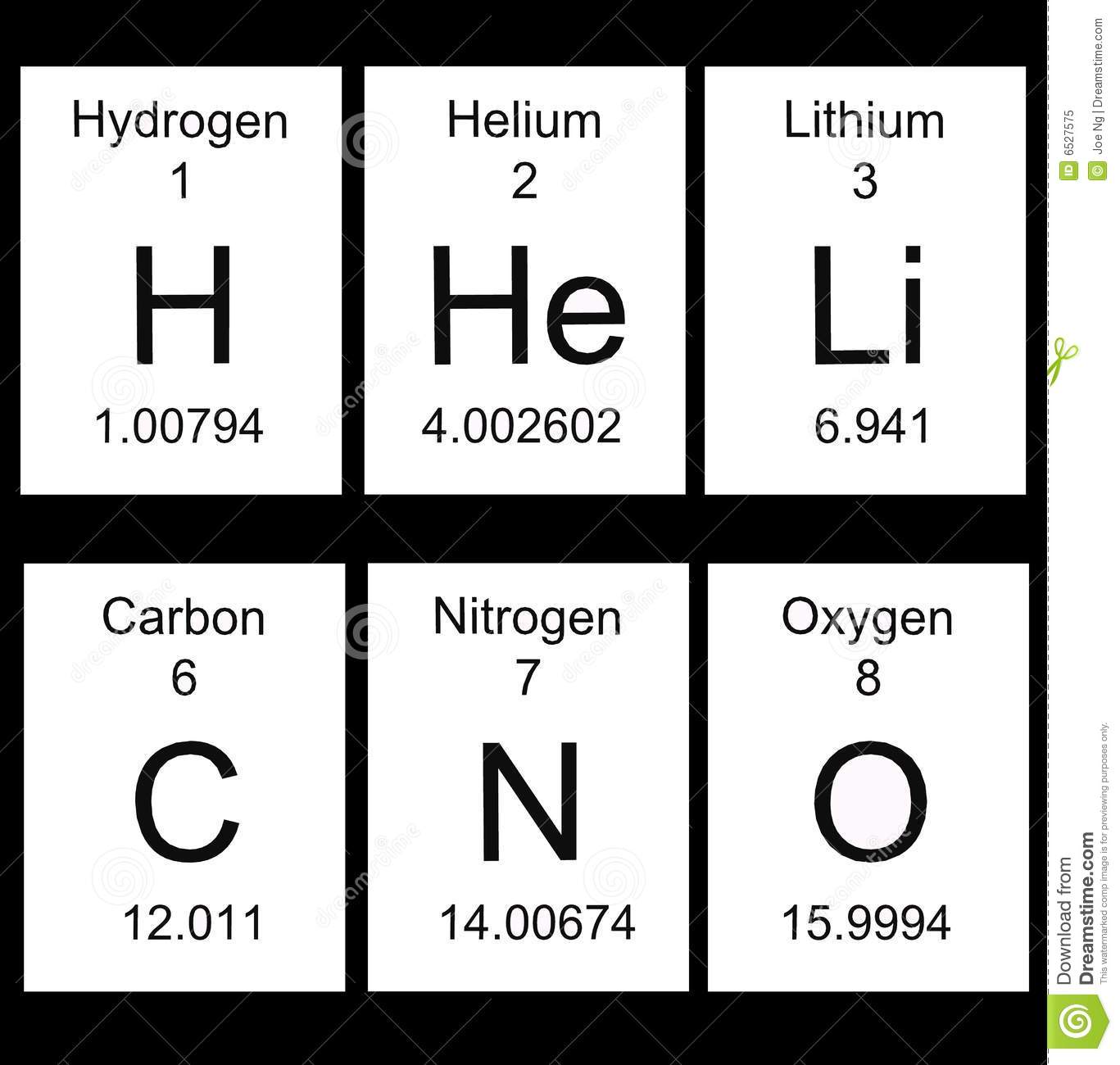
The number at the bottom of each square on the periodic table is the ...
a)
atomic number
b)
atomic mass
c)
chemical symbol
d)
element name
54.
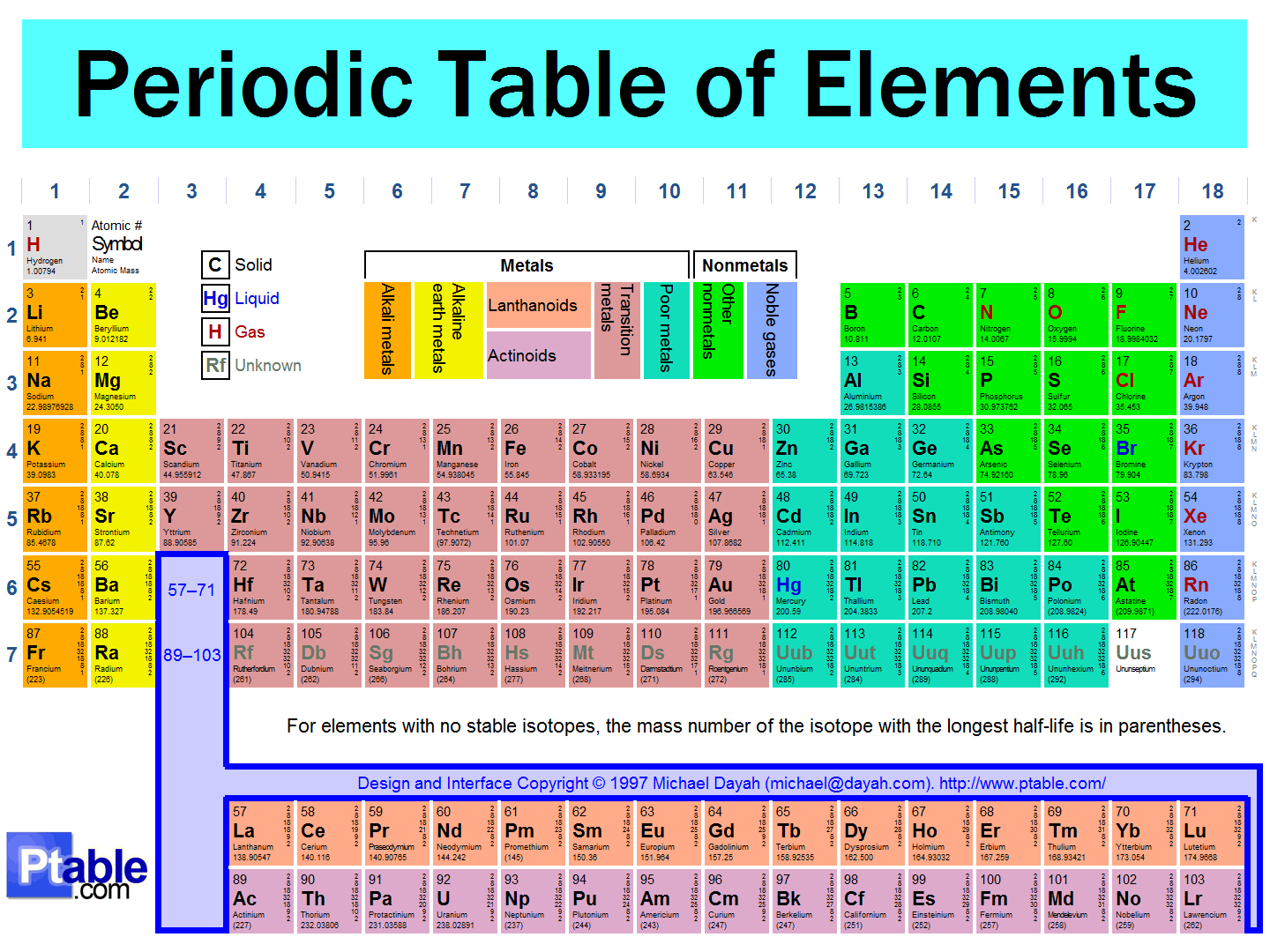
This class of elements are sometimes called "semiconductors."
a)
Metals
b)
Nonmetals
c)
Metalloids
d)
Groups
55.

How did Mendeleev arrange the elements?
a)
alphabetical
b)
density
c)
melting point
d)
atomic mass
56.
Atoms make up
a)
Elements
b)
Molecules
c)
Compounds
d)
Protons Neutrons and Electrons
57.
All ____________ are made up of two or more atoms bonded together.
a)
atoms
b)
molecules
c)
electrons
d)
elements
58.
Molecules are
a)
2 atoms bound together
b)
2 elements bound together
c)
2 or more atoms mixed together
d)
2 or more atoms bound together
59.

The atoms along the staircase are called
a)
metals
b)
nonmetals
c)
metalloids
d)
noble gases
60.
The metals of Group 1 are commonly called the
a)
Transition metals
b)
Alkaline earth metals
c)
Lanthanides
d)
Alkali Metals
61.
One metal that is liquid at room temperature is
a)
Magnesium
b)
Manganese
c)
Mercury
d)
Sodium
62.
Gold, which is in Group 11 on the periodic table, is an example of a(n) ____________
a)
Alkali Metal
b)
Other Metal
c)
Transition Metal
d)
Alkaline Earth Metal
63.
The family in the periodic table that contains the most reactive metals is the_______
a)
Alkaline Earth Metals
b)
Transition Metals
c)
Alkali Metals
d)
Other Metals
64.
Shiny
a)
Metal
b)
Nonmetal
65.
Good conductor of heat
a)
Metal
b)
Nonmetal
66.
H
a)
Metal
b)
Nonmetal
67.
Which particle carries a positive charge?
a)
Protons
b)
electrons
c)
atom
d)
neutrons
68.
Which of the following is NOT a characteristic of most metals?
a)
Brittle
b)
Good conductor
c)
Ductile
d)
Malleable
69.
Brittle
a)
Metal
b)
Nonmetal
70.
______________________ is the ability of an object to carry electric current.
a)
Thermal conductivity
b)
Electrical conductivity
c)
Malleable
d)
Ductile
71.
Where are the non-metallic elements found in the periodic table?
a)
In the middle
b)
In the top rows
c)
On the left-hand side
d)
On the right-hand side
72.
Silicon is a semiconductor and has properties of both metals and nonmetals. What type of element is Silicon?
a)
Metal
b)
Nonmetal
c)
Metalloid
d)
Pretty
73.
Iron is a good conductor, malleable and magnetic. What type of element is Iron?
a)
Metal
b)
Nonmetal
c)
Metalloid
74.
A student is given a sample of an unknown substance. He is asked to determine if it is classified as a metal, a metalloid, or a nonmetal. He discovered that the unknown element conducted some heat and electricity, had a shiny luster, and broke easily. This element is most likely a
a)
metal
b)
nonmetal
c)
metalloid
d)
cannot be determined
75.

How would this element be classified?
a)
Metal
b)
Nonmetal
c)
Metalloid
d)
Metamorphic
100 %

