
 Worksheets
8th Grade - Atoms and the PTable
Total questions: 70
Worksheet time: 35mins
Which elements on the Periodic Table are known to be good conductors of heat energy and electricity?
Metals
Nonmetals
Halogens
Noble Gases
This group of elements rarely reacts with any other elements because of their full valence shell of electrons.
Metals
Nonmetals
Noble Gases
Halogens
Valence electrons are the 'bonding electrons'. How do we predict HOW MANY an atom will have?
Look at the Atomic Number
Equal to the last digit of the element's Group Number
Add the neutrons and protons
Round off the Atomic Mass to the nearest whole number
The group of elements that is the MOST REACTIVE of the nonmetals is _________
Noble Gases
Nonmetals
Halogens
None of these
These elements tend to be poor conductors of heat and electricity.
Metals
Metalloids
Rare Earth Metals
Nonmetals
By finding its place on the Periodic Table, we can often predict an element's _________.
chemical properties
abundance in the Earth's crust
ability to dissolve in water
number of neutrons
The zigzag line of elements are called __________.
Metals
Nonmetals
Noble Gases
Metalloids
Where do electrons live in an atom?
In a cloud surrounding the nucleus
In straight lines around the nucleus
In the nucleus with the protons
In the nucleus with the neutrons
In an atom, the ____________ are negatively charged and the _____________ are positively charged.
neutrons; protons
protons; electrons
protons; neutrons
electrons; protons
Describe a neutron.
positively charged and is the smallest part of the atom
negatively charged and is the smallest part of the atom
has no charge and is a large part of the atomic nucleus
positively charged and is a large part of the atomic nucleus
The Mass Number minus the Atomic Number equals the ___________.
number of protons
number of electrons
number of neutrons
none of these
How are the elements in the Periodic Table arranged?
Atomic Mass
Number of neutrons
Number of electrons
Atomic Number
What does the Atomic Number tell us?
Number of protons
Number of neutrons
Number of electrons
Number of protons + neutrons
We now organize the Periodic Table by Atomic Number (number of protons). How did Mendeleev organize his original table?
Atomic Mass
Atomic Number
Atomic Density
Atomic Weapons
Which one of these is NOT found on our Periodic Table?
Atomic Number
Number of neutrons
Atomic symbol
Element name

If you have an atom of Carbon-13, how many NEUTRONS will it have?
6
5
7
12
How do we find the Mass Number of an element?
Add the protons and neutrons
Add the protons and electrons
Add the electrons and neutrons
Add the protons, neutrons, and electrons
On the Periodic Table, rows are called ________ and columns are called __________.
groups; periods
groups, families
periods; groups
periods; families
Which describes an isotope?
Same number of protons, different number of neutrons
Same number of neutrons, different number of protons
Same number of protons, different number of electrons
Same number of electrons, different number of protons

Group 13 .... How many neutrons?
13
26
27
14

Group 15 ... How many VALENCE (outer shell) electrons?
5
7
14
21

Group 18 ... How many protons?
131
8
18
54

Group 1 ... How many TOTAL electrons?
23
11
13
1

Group 2 ... How many VALENCE (outer shell) electrons?
12
24
2
25

Group 15 ... How many neutrons?
16
15
31
5

Group 1 ... How many protons?
39
19
1
20

Group 15 ... How many neutrons?
83
15
126
5

Group 18 ... How many VALENCE (outer shell) electrons?
8
18
136
222

Group 2 ... How many protons?
226
2
88
22

Group 2 ... How many neutrons?
2
4
9
5

Group 17 ... How many VALENCE (outer shell) electrons?
53
7
127
74
Which particle(s) live in the nucleus?
Protons
Electrons
Electrons and Protons
Protons and Neutrons
What makes metalloids unique (different)?
They have properties of both metals and nonmetals
They are the best conductors of heat and electricity
They never react with other elements
They are the most reactive elements on the Periodic Table
The smallest piece of matter that still has the qualities of that element.
Proton
Neutron
Atom
Electron
What can the Group Number tell us about an element?
How many protons it has
How many neutrons it has
How many valence (outer shell) electrons it has
How many Instagram followers it has

Electrons found in the outer shell are called
Core electrons
Neutral electrons
Inner electrons
Valence electrons

As you move DOWN a group on the periodic table, the atomic radius ___.
Increases
Decreases
Stays the same
The cloud-like space that electrons travel around:
nucleus
shell
neutrons
Oort cloud
The smallest piece of an element:
quark
electron
shell
atom
Classification system for elements is called:
Elements
Periods
The Periodic Table of Elements
Families
The subatomic particles are called:
protons, nucleus and electrons
protons, electrons and neutrons
protons, positives and negatives
cloud, shell and quarks
Substances that have only one kind of atom are called:
elements
nitrogen
electrons
nucleus
Electrons have a _____ charge.
neutral
negative
positive
both positive and negative
The abbreviation for an element:
element name
atomic number
chemical symbol
atomic symbol
The scientist who invented the classification system for the elements:
Dimitri Mendeleev
Niels Bohr
Sir Isaac Newton
Albert Einstein
This "group" of elements has a full valence shell and is essentially chemically non-reactive.
Metals
Non-metals
Transition metals
Noble Gases
Which of these elements has 2 valence electrons?
Sodium (Na)
Calcium (Ca)
Copper (Cu)
Sulfur (S)
Which of these elements has 6 valence electrons?
Sodium (Na)
Calcium (Ca)
Copper (Cu)
Sulfur (S)
Which of the following is a "non-metal?"
Sodium
Magnesium
Titanium
Carbon

Where are the metals on the Periodic Table located?
left of the zig zag
right of the zig zag
on the bottom
on the top
_______have a positive charge
Protons
Electrons
Neutrons
Energy levels

What can the Period Number tell us about an element?
How many protons it has
How many neutrons it has
How many energy shells it has
How many electrons it has

What element is shown in the diagram?
Hydrogen
Lithium
Sodium
Potassium
What is a common characteristic between all elements in group 2?
They are all solids.
They are all gases.
They are all metals.
They all have 1 valence electron.
They are all not reactive.
What is a common characteristic between all elements in group 18?
They are all solids.
They are all gases.
They are all metals.
They all have 1 valence electron.
They are all reactive.
What is a common characteristic between all elements in group 1?
They are all solids.
They are all gases.
They are all nonmetals.
They all have 1 valence electron.
They are all not reactive.
How many valence electrons does Beryllium have?
1
2
4
9
Aluminum-28 has 13 protons.
How many electrons does a neutral atom have?
13
15
27
28
Aluminum-28 has 13 protons.
What is the atomic mass of Aluminum 28?
13
15
27
28
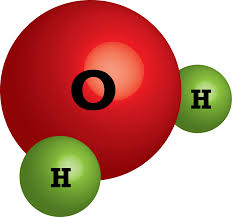
How many atoms are in this molecule?
1
2
3
4


How many neutrons does platinum have?
78
117
195
196

