
 Worksheets
Semester 1 Science Review
Total questions: 103
Worksheet time: 2hrs 44mins
Name
Class
Date
1.
Which layer of Earth is the layer of rock which is solid, putty like, can flow, and the layer that the crust floats on.
a)
Crust
b)
Upper Mantle
c)
Lower Mantle
d)
Outer Core
2.
What is the thin and solid outermost layer of Earth above the mantle.
a)
Crust
b)
Upper Mantle
c)
Lower Mantle
d)
Inner Core
3.
A _______________ is a wave of energy that travels through the Earth and away from an earthquake in all directions
a)
Seismic Wave
b)
Seismic Pulse
c)
Earthquake Wave
d)
Internal Earth Wave
4.
Which part of Earth's core is solid due to extreme pressure?
a)
Inner Core
b)
Outer Core
5.
Which part of Earth's core is liquid due to high temperatures?
a)
Inner Core
b)
Outer Core
6.
Which part of Earth's core is more dense?
a)
Inner Core
b)
Outer Core
7.
Which type of seismic wave can travel through solids, liquids, and gasses?
a)
P Waves
b)
S Waves
8.
Which type of seismic waves can only travel through solids?
a)
P Waves
b)
S Waves
9.
What is it called when when unstable materials break down into stable materials, and large amounts of energy in the form of heat is released?
a)
Radioactive Decay
b)
Radioactive Breakdown
c)
Radioactive Deterioration
d)
Radioactive heat release
10.
In which layer of Earth do convection currents occur?
a)
Crust
b)
Upper Mantle
c)
Lower Mantle
d)
Outer Core
11.
What is the hypothesis made by Alfred Wegener that today's continents were once part of a single landmass?
a)
Continental Drift
b)
Theory of Plate Tectonics
c)
The Theory of Pangaea
d)
Wegener's Hypothesis
12.
What theory states that Earth's surface is made up of giant, moving slabs called tectonic plates?
a)
Theory of Plate Tectonics
b)
Theory of Continental Drift
c)
Theory of Pangaea
d)
Theory of Earth Plates
13.
What is the process by which new sea floor forms?
a)
sea-floor spreading
b)
sea floor creation
c)
magma rising
d)
subduction
14.
What is process by which one tectonic plate is pulled beneath another plate?
a)
sea-floor spreading
b)
subduction
c)
mid ocean ridging
d)
convection
15.
What are underwater mountain belts formed by sea floor spreading?
a)
mid ocean ridges
b)
oceanic mountains
c)
sea floor spreading
d)
ocean mountain ranges
16.
What cause tectonic plate motion by movement that results from differences in the density of magma in the earth's mantle?
a)
Ocean currents
b)
atmospheric currents
c)
convection currents
d)
ridge currents
17.
Which type of Earth's crust is more dense?
a)
Oceanic Crust
b)
Continental Crust
18.
What are large moving pieces of Earth's crust?
a)
Tectonic plates
b)
Continental Plates
c)
Oceanic Plates
d)
Earth's plates
19.
Which type of stress squeezes and shortens materials at convergent plate boundaries?
a)
compression
b)
tension
c)
shear stress
20.
Which type of stress lengthens material or pulls material apart at divergent plate boundaries?
a)
compression
b)
tension
c)
shear stress
21.
Which type of stress causes materials to become twisted or distorted at transform plate boundaries?
a)
compression
b)
tension
c)
shear stress
22.
What type of boundary occurs when two tectonic plates move away from one another, or diverge?
a)
Convergent
b)
Divergent
c)
Transform
23.
What type of boundary occurs when tectonic plates move toward each other and collide?
a)
Convergent
b)
Divergent
c)
Transform
24.
What type of boundary occurs when two tectonic plates move past one another in opposite directions?
a)
Convergent
b)
Divergent
c)
Transform
25.
What are deepest landforms found on the ocean floor that form when one oceanic plate collides with and slides under another plate?
a)
Mid Ocean Ridges
b)
Trenches
c)
Fissures
d)
faults
26.
What is a break in Earth's crust along which blocks of rock move?
a)
fault
b)
fissure
c)
break
d)
ditch
27.
What is the area on Earth's surface directly above the focus?
a)
epicenter
b)
fault
c)
surface focus
d)
earthquake zone
28.
What is a place within Earth along a fault at which the first motion of an earthquake occurs?
a)
fault
b)
focus
c)
epicenter
d)
earthquake
29.
What happens at a plate boundary?
a)
Seafloor spreading takes place at all tectonic plate boundaries.
b)
An oceanic plate becomes a continental plate
c)
Two tectonic plates interact with each other.
d)
Continental plates get smaller as a result of subduction.
30.
What was the cause of this tsunami?
a)
an earthquake beneath the ocean
b)
the impact of a large meteorite in the ocean
c)
a sudden violent windstorm above the ocean water
d)
a typhoon moving from the Indian Ocean toward India
31.
Earth formed in a swirling disk of matter surrounding the sun. As particles in the disk collided and stuck together, they grew larger and some eventually became planets. What force was responsible for the collisions between these particles?
a)
gravity
b)
solar radiation
c)
seismic waves
d)
radioactive decay
32.

Who is the person credited with developing the theory of continental drift?
a)
Harry Hess
b)
Galileo
c)
Alfred Wegener
d)
Newton
33.
What two specific continents fit together most noticeably?
a)
Africa and North America
b)
South America and Europe
c)
South America and Africa
d)
Antartica and Africa
34.
What evidence did Wegener use to help support his Theory of Continental Drift?
a)
the shapes of the continents appeared to fit together like puzzle pieces.
b)
Fossils of plants and animals, along with similar rock types were found on continents that were separated by oceans.
c)
Climatic evidence like coal deposits and glacial striations.
d)
all of the above
35.
Originally the Continental drift theory was not well received by other scientist. Why?
a)
There was a competing theory at the time that was more believable.
b)
There was no data showing the continents ever moved.
c)
The scientists did not know the force responsible for moving the continents.
d)
The scientist presenting the data was unreliable.
36.

Name the boundary
a)
convergent boundary
b)
divergent boundary
c)
transform boundary
d)
sergent boundary
37.

Name the boundary
a)
convergent boundary
b)
divergent boundary
c)
transform boundary
d)
sergent boundary
38.

Name the boundary
a)
convergent boundary
b)
divergent boundary
c)
transform boundary
d)
sergent boundary
39.

As you travel from the inner core to the crust, how would temperature, pressure and density of the material change?
a)
The would all increase
b)
The would all decrease.
c)
They would stay the same.
d)
Temperature would decrease, but pressure and density would increase.
40.
Plate movement is caused by ______________.
a)
the rotation of the Earth
b)
ocean tides
c)
convection currents in the mantle
d)
the moon's gravity
41.
During sea floor spreading, molten material rises up from the mantle...
a)
along the continents
b)
at the mid ocean ridges
c)
deep ocean trenches
d)
at north and south poles
42.
Which of the following is where one plate slides under another plate?
a)
submarine zone
b)
divergence zone
c)
subduction zone
d)
lower zone
43.
The area around the pacific plate where most of the Earth's earthquakes and volcanoes occur is called
a)
death ring
b)
fire zone
c)
ring of fire
d)
zone of fire
44.
This land formation occurs at a divergent continental/ continental boundary.
a)
mid ocean ridge
b)
deep ocean trench
c)
pacific hot spot
d)
rift valley
45.
What would you be most likely to find at a transform boundary?
a)
Earthquakes
b)
Volcanoes
c)
Mountains
d)
Rift
46.
What would you be most likely to find at a convergent boundary between a continental and oceanic plate?
a)
Mountains
b)
Volcanoes
c)
Mid-Ocean Ridge
d)
Rift
47.
What would you be most likely to find at a divergent boundary between two pieces of oceanic crust?
a)
Rift
b)
Mid-Ocean Ridge
c)
Island Arc
d)
Flat land
48.
What would you be most likely to find at a divergent boundary between two pieces of continental crust?
a)
Mid-Ocean Ridge
b)
Mountain
c)
Rift
d)
Island Arc
49.
What would you be most likely to find at a convergent boundary between two pieces of continental crust?
a)
Volcano
b)
Mountain
c)
Rift
d)
Island Arc
50.

This famous transform fault is located in the western United States creates significant earthquake activity for California
a)
Sierra Nevada Seismic Zone
b)
Denali Fault
c)
San Fransisco
d)
San Andreas
51.

How does freezing water cause the weathering of rocks? The freezing water—
a)
keeps the rocks in place.
b)
makes the rocks last longer.
c)
expands cracks and breaks rocks.
d)
causes rocks to fall in landslides.
52.

Over long periods of time, deposition may change the Earth’s surface by _____.
a)
forming new land features.
b)
breaking down large rocks into smaller ones.
c)
washing away beaches.
d)
moving topsoil.
53.

A cliff formed near the ocean. Which statement best describes how this cliff formed?
a)
Warm air melted the rock.
b)
Sun rays evaporated the rock.
c)
Ocean waves washed away rock.
d)
Plant roots pushed away the rock.
54.

What is the process that picks up and moves weathered rocks?
a)
Deposition
b)
Landslide
c)
Weathering
d)
Erosion
55.
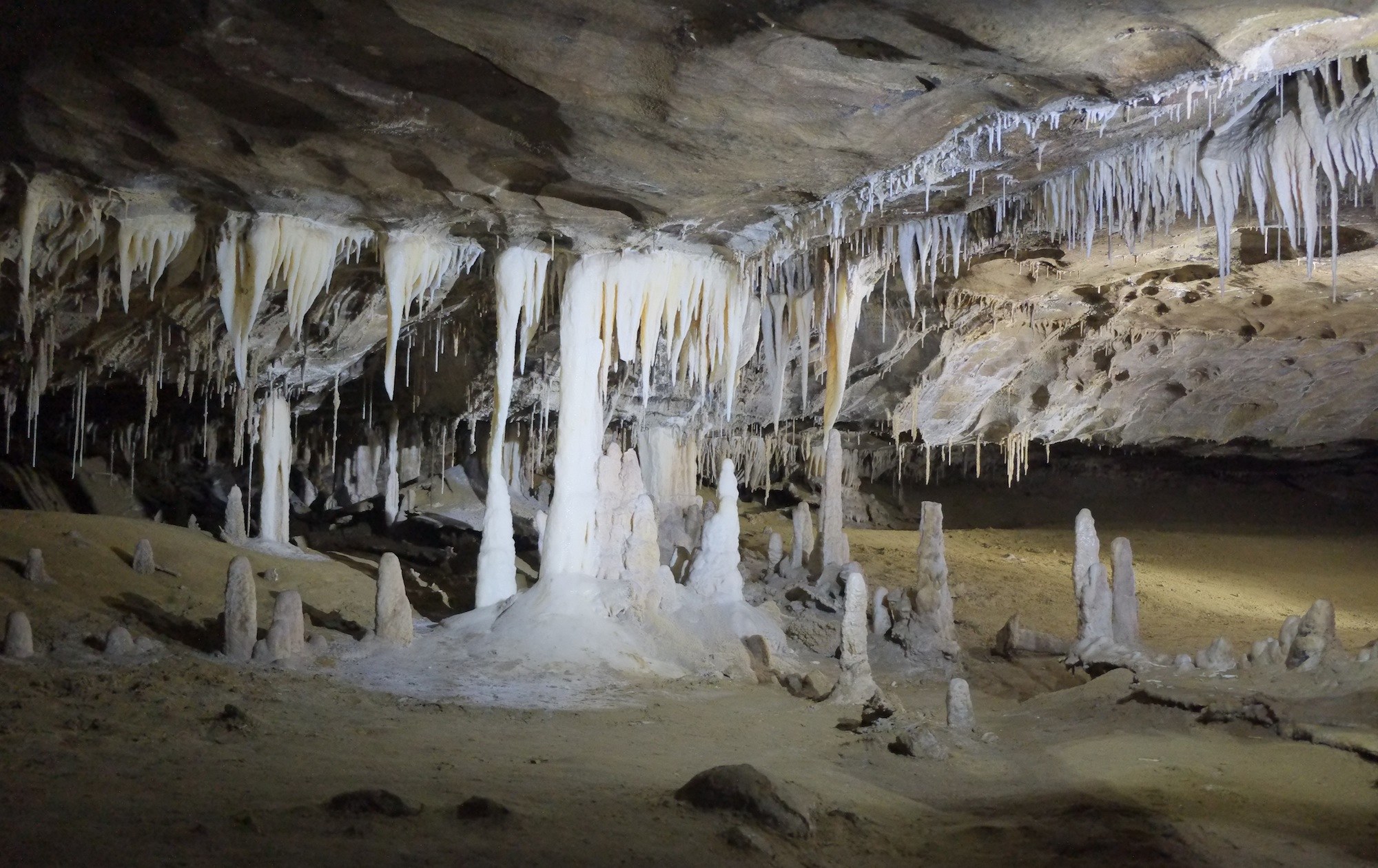
Deposition changes the Earth’s surface because bits of broken rock and soil _____.
a)
stop rivers from flowing.
b)
make rich farmlands.
c)
are dropped in new places.
d)
move very slowly.
56.

What causes the greatest erosion effect on our beaches?
a)
Waves
b)
Gravity
c)
Glaciers
d)
Wind
57.

The process by which water, ice, wind, or gravity moves weathered rock and soil from one place to another.
a)
Weathering
b)
Erosion
c)
Deposition
d)
Crop Rotation
58.

Which of these is an example of erosion?
a)
Light shining onto a mountain.
b)
Rain breaking down rocks on a mountain into smaller pieces.
c)
Wind blowing away sediment to a new place on the mountain.
d)
All of the above.
59.

Layers of sediment forming at the bottom of the ocean floor is an example of
a)
Weathering
b)
Erosion
c)
Deposition
d)
Awesome Science
60.

Muddy water being carried away by a fast-moving river is an example of
a)
Weathering
b)
Erosion
c)
Deposition
d)
A nice place to swim
61.

What is an enormous mass of ice moving over land, causing weathering of rock and soil?
a)
A glacier
b)
An iceberg
c)
An ice wedge
d)
A sand dune
62.

How do plants weather rocks?
a)
During photosynthesis
b)
When roots grow into cracks of rocks and expand the rock breaks.
c)
When the plant moves water from the roots to the leaves, the rock breaks.
d)
Plants don't weather rocks.
63.

What is the wearing away or breaking down of rocks called?
a)
Deposition
b)
Erosion
c)
Glaciers
d)
Weathering
64.

Flood water pounding against a canyon wall and wearing it down is an example of
a)
Weathering
b)
Erosion
c)
Deposition
d)
An avalanche
65.

Which of the following is NOT a slow change to Earth's surface?
a)
Weathering
b)
Erosion
c)
Deposition
d)
Landslides
66.

Which of the following is NOT a fast change in Earth's surface?
a)
Landslides
b)
Erosion
c)
Volcanoes Erupting
d)
Earthquakes
67.
Some EROSION agents are...
a)
wind
b)
water
c)
ice and gravity
d)
ALL
68.
A delta is formed by the action of -
a)
weathering
b)
erosion
c)
deposition
d)
condensation
69.
How might a weathered mountain appear different than an unweathered mountain?
a)
Weathered mountain would be taller.
b)
Weathered mountain would be rounder and less jagged.
c)
Weathered mountain would be more jagged and less rounded.
d)
Weathered mountain would have no trees.
70.
When a large amount of dirt and rock move downhill, this is known as a
a)
mudflow
b)
landslide
c)
creep
d)
lahar
71.
How are sinkholes formed?
a)
earthquakes
b)
groundwater
c)
volcanoes
d)
waterfalls
72.

Based on the map below, which location has a greater elevation, A or B?
a)
Location A is higher.
b)
Location B is higher.
c)
Locations A and B are at the same elevation.
d)
It is impossible to determine which location is higher.
73.

A mountaineer is planning an expedition. He wants to follow the easiest possible path, which means he needs to find the most gentle slope up the mountain. Which route should the mountaineer choose?
a)
Route A
b)
Route B
c)
Route C
d)
Route D
74.

What is the contour interval of the topographic map below?
a)
400 m
b)
200 m
c)
100 m
d)
80 m
75.

What is the most likely elevation of the mountain below?
a)
774 meters
b)
871 meters
c)
922 meters
d)
985 meters
76.
Fossils are important to the theory of evolution because
a)
A.They provide evidence for organisms changing over time
b)
A.They are old and can be dated to millions of years ago
c)
A.There are many different kinds of fossils to study
d)
A.None of these
77.
The Law of Superposition helps scientists to determine what?
a)
The absolute age of rock layers
b)
The age of fossils
c)
The relative age of rock layers
d)
the super powers of rocks
78.
Relative dating of rock layers tells us that the deeper we dig, _______.
a)
the younger the rocks get
b)
the smellier the rocks get
c)
the harder the rocks get
d)
the older the rocks get
79.
The Geologic Time Scale is a record of what?
a)
old geologists
b)
sweet geology music
c)
the known history of rocks and fossils
d)
a list of every living thing ever
80.
How old do Paleontologists believe the Earth is?
a)
2015 years old
b)
3.6 billion years old
c)
4.6 billion years old
d)
4.6 million years old
81.

According to the law of superposition, the oldest fossils are found
a)
At the top of the rock layers
b)
Near the bottom of the rock layers
c)
In the middle of the rock layers
d)
Somewhat near the surface
82.
How do scientists figure out the relative age of rocks/fossils?
a)
Use the Law of Superposition
b)
Use the Law of Uniformitarianism
c)
Use Catastrophism
d)
Use Original Horizontality
83.

Which rock layer in the diagram seems to be the oldest?
a)
F
b)
E
c)
B
d)
A
84.

According to the law of superposition, which layer is the youngest?
a)
A
b)
B
c)
C
85.
gaps in rock layers caused by erosion are called
a)
law of superposition
b)
unconformities
c)
uniformitarianism
d)
relative dating
86.
states that the geologic feature which cuts another is the younger of the two features
a)
law of horizontality
b)
cross cutting relationships
c)
law of superposition
d)
uniformitarianism
87.

Which of the following is the oldest?
a)
Layer L
b)
Intrusion D
c)
Intrusion H
d)
Layer E
88.

Letter "F" is a....
a)
inclusion
b)
intrusion
c)
fault
d)
unconformity
89.

The rock formation labeled "P" is a(n)...
a)
fault
b)
intrusion
c)
inclusion
d)
unconformity
90.

The statement "Layer B is younger than layer E" can be determined by using which principle?
a)
Principle of Horizontality
b)
Principle of Cross-Cutting Relationships
c)
Principle of Inclusions
d)
Principle of Superposition
91.

What is the youngest layer in the outcrop?
a)
A
b)
B
c)
C
d)
D
92.

What is the oldest layer in the outcrop?
a)
B
b)
C
c)
D
d)
E
93.
Which of the following is not a trace fossil?
a)
Bone
b)
Wormhole
c)
footprint
d)
Burrow
94.
Which statement is true about fossil formation?
a)
Slow burial, better fossilization
b)
Most fossils are land animals
c)
there are no plant fossils
d)
Fast burial, better fossilization
95.

4. What is the name of this kind of fossil?
a)
Amber Fossil
b)
Exoskeleton fossil
c)
Trace Fossil
d)
Petrification Fossil
96.

5. What kind of fossil is this?
a)
Amber Fossil
b)
Frozen Fossil
c)
Exo Fossil
d)
Petrification Fossil
97.
8. Which type of rock from the choices below would most likely contain a fossil?
a)
Igneous
b)
Sedimenteary
c)
Metamorphic
98.
9. Complete fossils of an animal or plant are very common.
a)
True
b)
False
99.
A coprolite is waste from an organim long ago. This type of fossil would be considered...
a)
Not a fossil
b)
Body fossil
c)
Trace fossil
100.
A trace, print or the remains of a plant or animal of a past age preserved in rock is...
a)
fossil
b)
cast
c)
mold
d)
organism
101.

This amber fossil is formed by...
a)
organisms trapped in wax
b)
organisms trapped in clay
c)
organisms trapped in glue
d)
organisms trapped in sap
102.
What is the first step of forming a fossil?
a)
minerals seep in bones
b)
bones are buried
c)
hardens into rock
d)
an animal dies
103.
What can"t fossils tell us?
a)
size
b)
color
c)
what it ate
d)
how habitat changed
100 %

