
 Worksheets
Benchmark Review
Total questions: 85
Worksheet time: 2hrs 20mins
Name
Class
Date
1.
What is a PUSH or PULL of an object?
a)
Motion
b)
Force
c)
Friction
d)
Gravity
2.
What is MOVEMENT?
a)
Inertia
b)
Force
c)
Work
d)
Motion
3.
What happens when one force PULLS an object toward another?
a)
Friction
b)
Motion
c)
Gravity
d)
Magnetism
4.
What is a force that works AGAINST MOTION?
a)
Force
b)
Motion
c)
Gravity
d)
Friction
5.
Which force produces a change in motion?
a)
unbalanced force
b)
balanced force
c)
gravitational force
d)
frictional force
6.
What is force?
a)
A force is a push or a pull upon an object resulting from the object's interaction with another object.
b)
something used in Star Wars
c)
It is the amount of space between two points.
d)
It is Superman's power
7.
Why does a rolling ball stop?
a)
Gravity
b)
Friction
c)
Waterfalls
d)
Sand
8.
A push or pull that causes a change in motion
a)
Friction
b)
Gravity
c)
Force
d)
Mass
9.
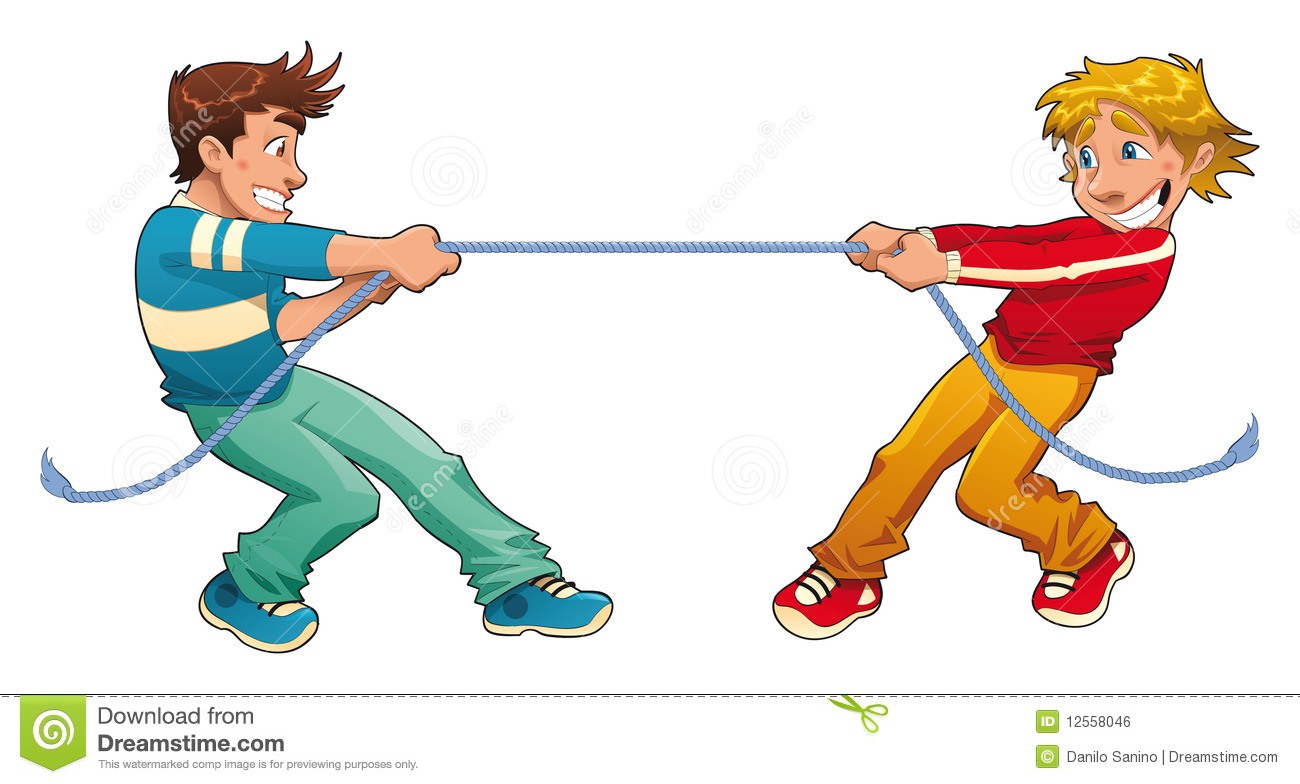
If these boys are pulling with the same amount of force. What will happen?
a)
The boy in blue will win.
b)
They will not move at all.
c)
The boy in red will win.
d)
Both will fall down.
10.
What pulls a ball back to earth?
a)
Gas
b)
Gravity
c)
Friction
d)
Molecules
11.
What is the standard unit force is measured in?
a)
Newtons
b)
pounds
c)
grams
d)
meters
12.
What is the standard unit force is measured in?
a)
Newtons
b)
pounds
c)
grams
d)
meters
13.
What happens when one object moves an object over a distance?
a)
Inertia
b)
Work
c)
Displacement
d)
Magnetism
14.
What is the formula for Work?
W= Fxd
W= Fxd
a)
Work = friction x distance
b)
Work = Force x distance
c)
Work = forumla x diameter
15.
What kind of properties can only be observed when a substance changes into a different substance?
a)
physical properties
b)
chemical properties
c)
liquid properties
d)
real properties
16.
Which of the following is a sign that a chemical reaction has occurred?
a)
change in shape
b)
melting
c)
formation of a gas
d)
dissolving
17.
Is melting butter for popcorn a chemical or physical change?
a)
chemical
b)
physical
18.
Is bleaching your hair a physical or chemical change?
a)
physical
b)
chemical
19.

Is burning wood a chemical or physical change?
a)
chemical
b)
physical
20.
Is hammering wood together to build a house a chemical or physical change?
a)
chemical
b)
physical
21.
A change in the size, shape, or state of matter.
a)
chemical change
b)
physical change
c)
chemical reaction
d)
electron change
22.
Which of the following is NOT an example of a physical change?
a)
crumpled paper
b)
pencil sharpening
c)
shrunken clothing
d)
sour milk
23.
Kim puts an ice cube in a beaker and it melts. This is a good example of:
a)
a physical change.
b)
a chemical change.
c)
an experiment.
d)
an analysis.
24.

Photosynthesis is an example of a
a)
physical change
b)
chemical change
25.
Salt dissolves in water
a)
physical Change
b)
chemical change
26.
hydrochloric acid reacts with magnesium to produce hydrogen gass
a)
physical change
b)
chemical change
27.
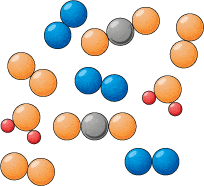
These are found on the Periodic Table.
a)
elements
b)
mixtures
c)
compounds
28.
Which of the following is not a compound?
a)
HCl
b)
Cl
c)
NaCl
d)
CO2
29.
How many elements are represented in the compound?
Na2CO3
Na2CO3
a)
1
b)
2
c)
3
d)
4
30.
How many total elements are in the compound C2H12O3?
a)
3
b)
17
c)
12
d)
2
31.
The P in SHNOP is the symbol for:
a)
Potassium
b)
Positive
c)
Phosphorous
d)
Plebium
32.

Which of the following elements is required in an organic compound?
a)
nitrogen
b)
oxygen
c)
carbon
d)
sodium
33.
The compound PO4 is...
a)
inorganic
b)
organic
34.
The compound CHO is...
a)
inorganic
b)
organic
35.
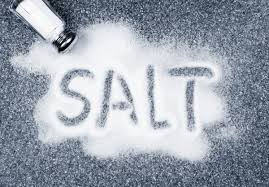
Is NaCl (table salt) a Organic or Inorganic Compound?
a)
Inorganic
b)
Organic
36.
Which compound is inorganic?
a)
Glucose (C₆H₁₂O₆)
b)
Ethane (C₂H₆)
c)
Carbon Dioxide (CO₂)
d)
Stearic Acid (C₁₈H₃₆O₂)
37.
The compound Fe2O is...
a)
inorganic
b)
organic
38.
What kind of offspring does Asexual Reproduction make?
a)
uniform offspring
b)
diverse offspring
c)
both
d)
niether
39.
What reproduction makes uniform offspring?
a)
sexual
b)
vegetative
c)
asexual
d)
none of the above
40.
Examples of asexual reproduction?
a)
budding
b)
fission
c)
vegetative
d)
all of the above
41.
Advantages of Asexual Reproduction?
a)
creates large population
b)
get bad characteristics
c)
dies easily
d)
can't adapt quickly
42.
Disadvantages of Asexual Reproduction?
a)
can get good characteristics
b)
limited ability to adapt to changing environment
c)
parent stays in one place
d)
reproduces quickly
43.
Is it true that asexual reproduction make uniform offspring?
a)
true
b)
false
44.
Is it true that sexual reproduction makes uniform offspring?
a)
false
b)
true
45.
Is it true that sexual reproduction make diverse offspring?
a)
false
b)
true
46.
Is it true that fission,budding,fragmentation,and parthenogenesis are all types of asexual reproduction?
a)
Yes
b)
No
47.
Is it true that conjugation and syngamy are types of sexual reproduction?
a)
No
b)
Yes
48.

Which of the following scientists contributed to the cell theory?
a)
Rudolf Virchow, Robert Hooke, Anton van Leuwenhoek
b)
Matthais Schleiden, Theodor Schwann, Rudolf Virchow
c)
Robert Hooke, Theodor Schwann, Anton von Leuwenhoek
d)
Theodor Schwann, Matthais Schleiden, Robert HookeOption 4 (optional)
49.

Which of the following scientists concluded that all animals are made of cells?
a)
Rudolf Virchow
b)
Matthais Schleiden
c)
Robert Hooke
d)
Theodor Schwann
50.

Which of the following scientists was the first to observe bacteria?
a)
Anton van Leuwenhoek
b)
Matthais Schleiden
c)
Robert Hooke
d)
Theodor Schwann
51.

Which of the following statements is not part of the cell theory?
a)
Cells are the basic unit of structure and function in all living things.
b)
All cells are produced from other cells.
c)
Only animal cells are composed of cells.
d)
All living things are composed of cells.
52.

The invention of the microscope made it possible for people to discover and learn about
a)
Plants
b)
Skin
c)
Animals
d)
Cells
53.
What structures distinguish a plant cell from an animal cell?
a)
Plant cells have cell walls and ribosomes.
b)
Plant cells have cell walls and chloroplasts.
c)
Plant cells have chloroplasts and ribosomes.
d)
Plant cells have chloroplasts and mitochondria.
54.

Which organism is made up of cells that have both a cell membrane and a cell wall?
a)
desert mouse
b)
human
c)
maple tree
d)
zebra
55.
The basic unit of life is called a (n)
a)
atom
b)
compound
c)
cell
d)
energy
56.
The first part of the Cell Theory states: "What happens in Cell Theory, stay in Cell Theory."
a)
True
b)
False
57.
When observing cells, which of the following optical tools is most appropriate?
a)
Hand lens
b)
Telescope
c)
Petri dish
d)
Microscope
58.
The third part of cell theory states: "All cells come from prehistoric cells."
a)
False
b)
True
c)
Yep
d)
Not even close
59.
Which system is the heart in?
a)
Circulatory
b)
Digestive
c)
Cardiovascular
60.
Which system are the lungs in?
a)
respiratory
b)
digestive
c)
excretory
61.
Which system is the stomach in?
a)
respiratory
b)
digestive
c)
nervous
62.
Which system is the esophagus in?
a)
digestive
b)
urinary
c)
integumentary
63.
What blood vessels take blood away from the heart after oxygen is addels
a)
veins
b)
arteries
c)
capillaries
64.
which organ is not part of the respiratory system?
a)
nose
b)
pancreas
c)
trachea
65.
What is the main function of the respiratory system?
a)
take in oxygen and exhale waste like carbon dioxide
b)
move nutrients throughout the body
c)
take in carbon dioxide and exhale oxygen
66.
Where does digestion start?
a)
stomach
b)
mouth
c)
esophagus
67.
What is the main job of the digestive system?
a)
break down foods into nutrients that can be used by the body
b)
take in oxygen and exhale waste like caron dioxide
c)
pump blood throughout the body
68.
What is the largest organ?
a)
Heart
b)
Lungs
c)
Skin
69.
One of the main fuctions of the nervous system is to receive stimuli from inside and outside the body
a)
True
b)
False
70.
Which muscles are attached to bones and provide assistance for movement?
a)
skeletal
b)
smooth
c)
cardiac
71.
Smooth and Cardiac muscles are both
a)
voluntary
b)
involuntary
72.
Which systems main function is to allow movement of the body?
a)
muscular
b)
digestive
c)
skeletal
73.
Where do two or more bones meet?
a)
tendons
b)
ligaments
c)
joints
74.
Which of the following is a type of a joint?
a)
ball and socket
b)
hinge
c)
gliding
d)
all of the above
75.
What component of the skin gives you yourr skin color?
a)
melanin
b)
lymph
c)
blood vessels
76.
Which of the following is NOT part of the Central Nervous System?
a)
Brain
b)
Spinal Cord
c)
Eyeballs
77.
What is NOT a component of blood?
a)
platelets
b)
bone marrow
c)
plasma
78.
What is the longest bone in your body?
a)
radius
b)
phalange
c)
femur
79.
When you get a sunburn, you are burning which layer of your skin?
a)
dermis
b)
epidermis
c)
subcutaneous layer
80.
What makes the endoplasmic reticulum rough?
a)
Vessicles
b)
Vacuoles
c)
Ribosomes
d)
Chromosomes
81.
Cells come together to form
a)
tissue
b)
organs
c)
body systems
d)
osmosis
82.
Organs come together to form
a)
cells
b)
tissue
c)
organs
d)
organ systems
83.
The flap that closes over the windpipe to keep you from choking is called the
a)
esophagus
b)
endocytosis
c)
exocytosis
d)
epiglottis
84.
In which eukaryotic organelles does photosynthesis occur?
a)
mitochondria
b)
stomata
c)
xylem
d)
chloroplast
85.
What are the products of photosynthesis?
a)
Carbon dioxide and water
b)
Carbon dioxide and oxygen
c)
Glucose and oxygen
d)
Glucose and water
100 %

