
 Worksheets
Chemistry Year 8
Total questions: 80
Worksheet time: 57mins
protons
negative charge, nucleus
positive charge, shells
positive charge , nucleus
neutral charge, nucleus
what is an atom
smallest part of the universe
smallest part of a substance
smallest part of anything
smallest part of water
neutrons
no charge, shells
positive charge, nucleus
no charge, nucleus
negative charge, shells
electrons
no charge, nucleus
positive charge, nucleus
negative charge, shells
negative charge, nucleus
same number of protons, different number of neutrons
atomic number
mass number
isotope
ion
a charged atom
neutral
isotope
ion
nucleus
An electron is smaller than an atom.
True
False
Whic
An atom's atomic number will tell you how many protons and electrons it has.
True
False
Evidence of a chemical change includes:
Color changes
Temperature changes
Small explosions
All of the above


a. A mixture is made up of different substances that are chemically joined together.
b. You cannot change the amounts of substances in a mixture.
c. A pure substance has no other substance mixed with it.
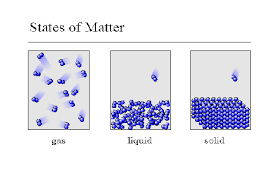
Which of the following is a correct description for solids?
closely arranged and in fixed positions
closely arranged and vibrate in fixed positions
closely arranged and can move around
Particles are always moving.
True
False
What is MATTER?
Anything that has MASS
Anything that takes up SPACE
Anything that has MASS and takes up SPACE
Anything that DOES NOT have mass or take up space
All matter is made up of tiny _______________
energy
particles (atoms and molecules)
bits
antimatter

Particles always ________________ each other, this gets stronger as the particles get ___________________.
attract, farther apart
attract, closer together
repel, farther apart
repel, closer together

Diagram 7 shows a graph of the volume of gas produced against time for the reaction between zinc granules and hydrochloric acid.
The gradient of the graph decreases with time because
catalyst is not used
volume of mixture decreases
temperature of reaction decreases
concentration of hydrochloric acid decreases
Increase in temperature causes the particles to
slow down
move faster
stay apart from each other
move in the correct order
Why does a higher concentration increase the rate of reaction?
it increases the amount of reactants
it lowers the activation energy
it increases the energy of reactant particles
it increases the frequency of collision
Why does a higher temperature increase the rate of a reaction?
It increases both the frequency collision and energy of reactant particles
It only increases the frequency of collision
It only increases the energy of reactant particles
It reduces the activation energy of the reaction
Grinding an effervescent tablet into powder increases the rate of reaction due to increase of
concentration
total surface area
temperature
size

Which factors increase the rate of a reaction?
increasing temperature
increasing concentration
increasing total surface area
All of these
Increasing the temperature gives particles more __________.
time
energy
space
frequency
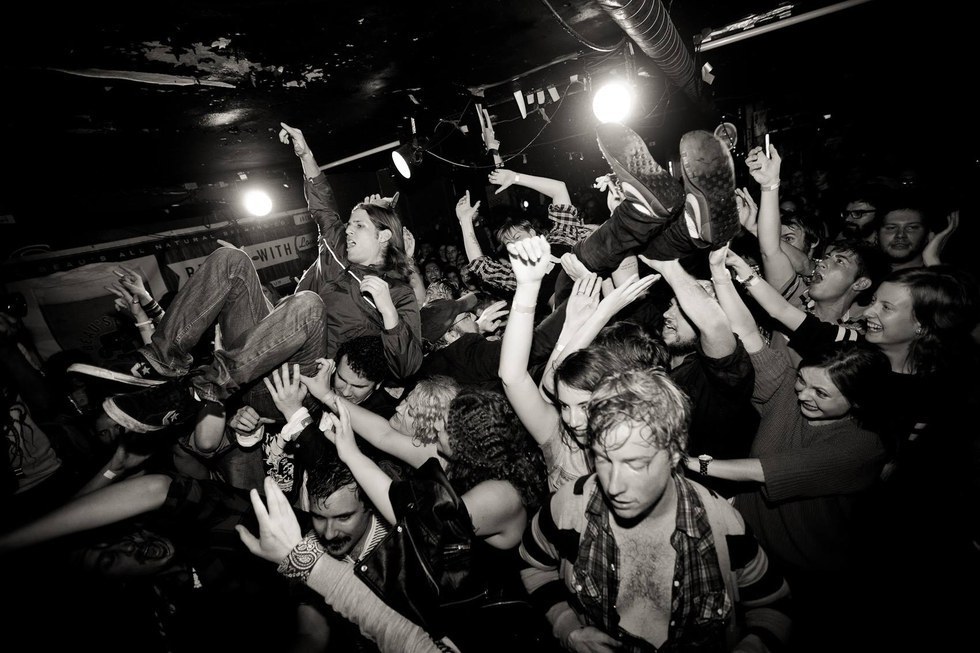
You add more bodies into a "mosh pit" to hope for more collisions. You have increased
temperature
concentration
pressure
catalyst
Why does breaking up a solid reactant increase the rate of reaction?
it creates more solid
it creates more energy
it increases the total surface area
it increases the concentration
List three factors that affect the rate of a reaction
temperature
concentration
surface area
volume
The atomic # tells us the # of ____________________ in an atom.
protons
electrons
neutrons
Cassietrons
The mass # tells us the mass of the atom. Which two subatomic particles make up the mass of the atom?
protons and electrons
neutrons and electrons
Kyrontrons and Kytrons
protons and neutrons
What can you do to find the number of neutrons in an atom?
It's the same as the atomic #.
Ask Sierra!
Subtract the atomic # (protons) from the mass # (protons and neutrons)
Multiply the mass # (protons and neutrons) and the atomic # (protons)
The number of electrons is usually the same as the number of protons.
True
False
Only Abraham knows...
What do we call protons, electrons, and neutrons as a group?
Billy Bob Emilys
subatomic particles
Spiral-shaped yeast buns
periodic table of the elements

Carbon has how many protons?
12
6
7
4

Bromine has how many Neutrons?
35
80
45
8

Oxygen has a mass of...
8
16
15
6

Arsenic has a mass of _______
33
79
75
47

How many protons are in Gold
79
197
118
276

How many neutrons are in Tungsten
110
74
183
258

If Hydrogen has an atomic number of 1 and a mass unit of 1 How many protons does it have?
1
2
3
4

If Helium has an atomic number of 2 and an atomic mass of 4. How many protons does it have?
1
2
3
4

The element Beryllium has an atomic number of 4 and an atomic mass of 9. How many Protons?
1
2
3
4

The lithium element has an atomic number of 3 and an atomic mass of 7. How many protons does it have?
1
2
3
4
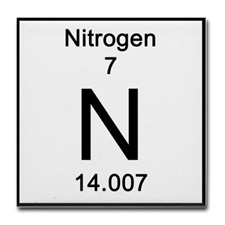
How many protons does the element in this image contain?
14
7
15
18

