
 Worksheets
Properties of Matter Test Review (Honors Science)
Total questions: 85
Worksheet time: 1hrs 5mins




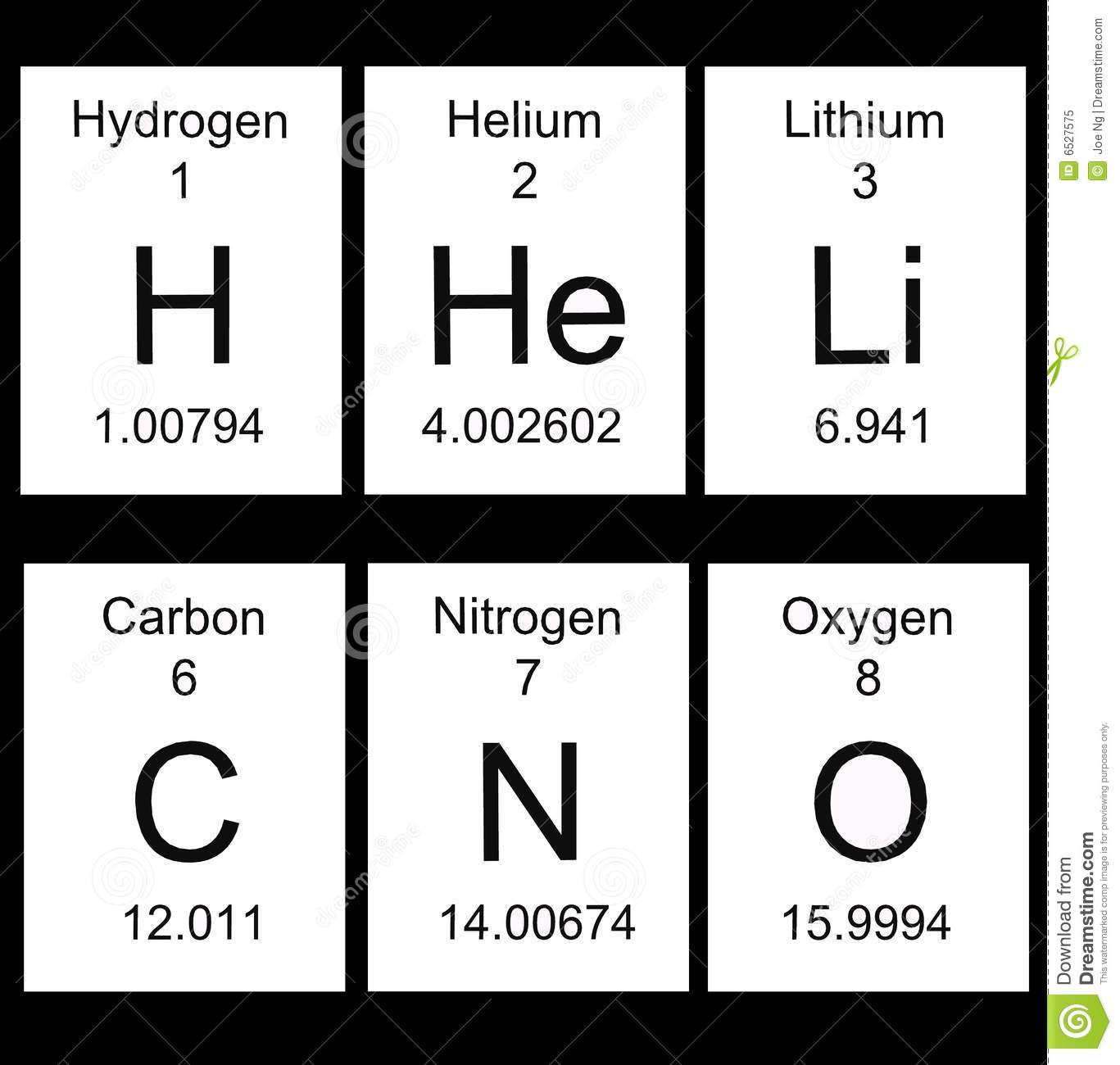

Which of the following represents an element?
H2O
H
NaCl
CaCO3
An atom is made up of...
Protons
Neutrons
Electrons
Electricity
Which of these elements is part of the non-metal Halogen family?
Iron
Gold
Chlorine
Aluminum
How many protons are in the element Nitrogen?
7
14.01
21.01
Nitrogen doesn't have protons
Alkali Metals are...
very reactive with water
in group 1 on the periodic table
not on the periodic table
NOT reactive
What did the waiter say when oxygen, hydrogen, sulfur, sodium, and phosphorus came in and sat down?
OH SNaP (choose this one)
Again Mrs. Schlutz????
Carbon cannot be broken down into anything simpler by chemical means, so carbon must be...
a compound
DNA
a molecule
an element

Which of the elements are from the same family?
O, Ne
Li, K
He, Fr
Co, Be
Ag (silver) is metal which means...
It will react violently with Oxygen
It is a good conductor of heat & electricity
It is a poor conductor of heat and electricity
It will not melt in water
Which is a true statement about Oxygen?
The atomic number is 16
The chemical symbol is O
The atomic mass is 12.01
It is in group 16

Which element is is period 1, group 1?
Hydrogen
Helium
Magnesium
Nickel
How many protons are in Sodium (Na)?
22.99
19
11
3
What particles make up an atom?
proton
neutron
electron
DNA
What is the atomic mass of Ni (Nickle)?
28
14.01
59
88

What is the name of the element in period 3, group 13?
Aluminum
Al
13
Gallium
What is the smallest form of matter?
protons
compounds
atom
DNA
What is the atomic number of an element with three protons in its nucleus?
2
6
3
1

What is this an example of?
compound because it is made up of 3 different elements bonded together
a molecule because it is the same element bonded together
compound because it is made up of 2 different elements bonded together
an element because it is the simplest form of matter

What are the name(s) of the element(s) in the compound below?
Hydrogen
Helium
Oxygen
Carbon
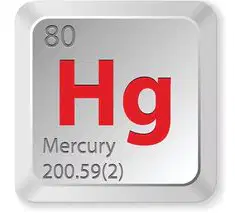
What is this an example of?
molecule
element
compound
electron
Which subatomic particle has a positive charge?
proton
cation
neutron
electron
Which two subatomic particles are located in the nucleus of an atom?
protons & neutrons
cation & neutrons
neutron & electron
electrons only
In an atom, where are the electrons located?
in shells outside of the nucleus
Inside the nucleus
Electrons are not part of atoms
next to protons in the nucleus
an atom with atomic number 6 would have how many protons?
What is the atomic number for an element with 3 protons?
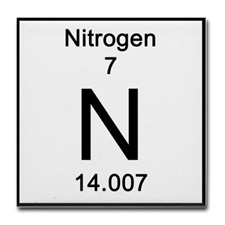
What is the atomic number of this element?
What is the chemical symbol for the element Silver (atomic # = 47)

What is the chemical symbol for Zinc?
Zn
zn
ZN
Zinc
What is the name of the element with the chemical symbol Pu?
Plutonium
Phosphorous
Lead
Cobalt
How many protons are in Iodine?
53
127
88
118
What information does the atomic mass tell us?
It doesn't tell us anything useful
How many electrons there are in an element's atom
How many protons there are in the element's atom
How many protons and neutrons are in the element
What information does the atomic number tell us?
It doesn't tell us anything useful
How many electrons there are in an element's atom
How many protons there are in the element's atom
How many protons and neutrons are in the element

What is displayed in the picture?
Atom
Mixture
Molecule
Compound

Which is a neutron
Which is a proton?
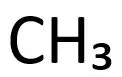
What are the name(s) of the element(s) in the compound above?
Carbon, Hydrogen
Calcium, Helium
Oxygen, Hydrogen
Bromine, Tin
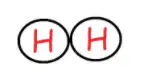
Why is this an example of a molecule?
It is different elements bonded together
It is the same element bonded together
It is not an example of a molecule
It has only 2 protons in the nucleus
Which order matches the three substances: Nitrogen (N), Zinc (Zn), Oxygen (O)?
compound, element, element
element, molecule, compound
element, element, element
molecule, compound, compound
Which of the following is NOT a compound?
HCo
NaCl
CaCo
Br
Which is NOT an element?
Hydrogen (H)
Lithium (Li)
Water (H2O)
Nitrogen (N)

What is the compound that this image shows?
CH4
H2O2
C2H4
CO2
Identify the name of the element(s) in this compound:
SnBrCl3
Tin, Bromine, Chlorine
Sodium, Boron
Bromine, Oxygen, Carbon
Chlorine, Oxygen
What is the term for combining 2 or more of the SAME atoms together?
elements
molecules
compounds
Which of the following lists ONLY elements?
H2O, OH, MgCl2
H2O, KF, Ne
KCl, AgMg, Au
K, Hg, N

What is CO2 and example of?
element
molecule
compound
molecule
2 or more different elements that are bonded together is called...
Element
Compound
Molecule
Which Russian chemist arranged the first periodic table?
Mosely
Einstein
Mendeleev
Bohr
Moseley organized the periodic table by ____________
atomic mass
mass number
number of electrons
atomic number
Which of the following elements is a METAL?
Na
Ne
As
Kr
Which element is a NON-METAL?
Po
Na
Rn
Pb
Which element is a METALLOID?
K
Sn
Sb
Mo
Which element is a good conductor of electricity?
Au
O
He
Og
How many naturally occurring elements are there?
100
118
94
2
What statement is true about ALL of the elements in Group 18?
They ALL are radioactive
They ALL are gases
They ALL react easily with other elements.
They ALL disappear within 5 minutes
Halogens are...
non-metals
metals
"salt-formers"
reactive with Alkali Metals
Noble Gases are...
Non-metals
metals
colorless
odorless
the most reactive group
Which family does Zn belong to?
Transition Metals
Alkali Metals
Halogens
Noble Gases
Which element is part of the transition metals?
Fe
Pt
Au
Ag
Which element(s) are radioactive?
Ac
Cu
U
Pu

The elements that make up the "staircase"/green on this table are called...
metals
nonmetals
metalloids
noble gases
Elements in the same ________ behave similarly chemically.
group/family
period
club
table
The period for Bromine (Br) is ___________.
3
2
4
6
Beryllium (Be) is in group number______.
Group 2
Group 3
Group 4
Group 7

