
 Worksheets
Environmental Science Final Exam Review
Total questions: 67
Worksheet time: 1hrs 13mins
Name
Class
Date
1.

What is the carrying capacity of the following graph?
a)
1000
b)
8000
c)
800
d)
600
2.
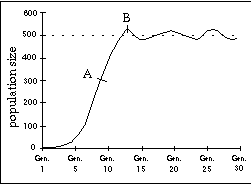
What is the carrying capacity of the graph?
a)
around 500
b)
more than 500
c)
less than 500
d)
around 600
3.

When a population grows past the ecosystem's carrying capacity, what happens to the population?
a)
Continues to grow
b)
The population starts to die off to return to carrying capcity
c)
The population will go extinct due to lack of resources
d)
The population grows then finds a new carrying capacity
4.

If the carrying capacity of a predator decreases, what will happen to the carrying capacity of the prey?
a)
Will Increase
b)
Will Decrease
c)
Will stay the same
d)
Will fluctuate
5.

The largest number of individuals in a species that an environment can support long term
a)
carrying capacity
b)
emigration
c)
immigration
d)
population density
6.
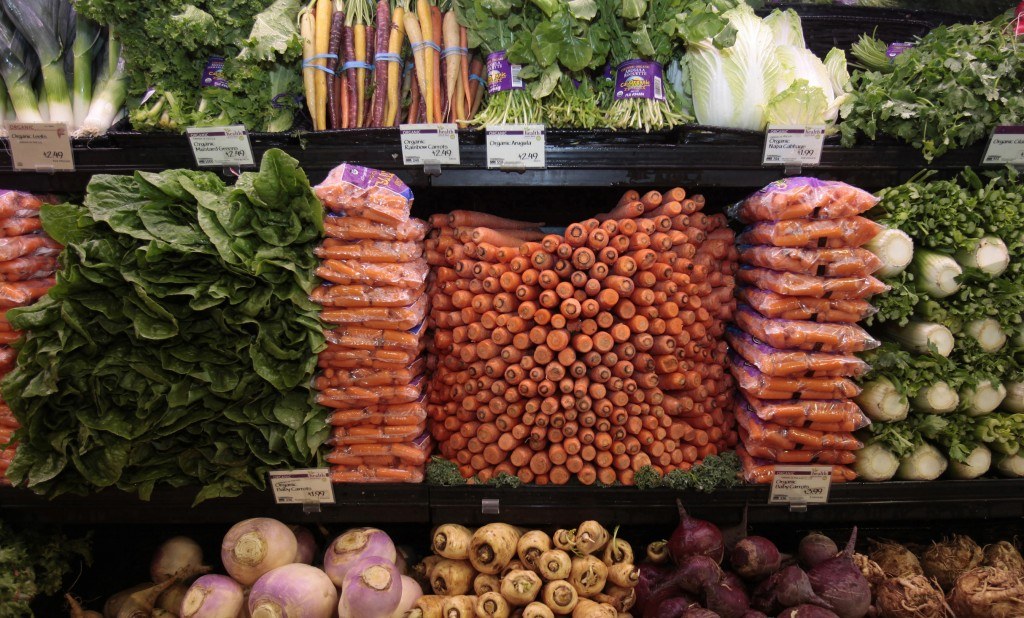
Which of the following would INCREASE the carrying capacity of an ecosystem?
a)
increase in predators
b)
disease
c)
increase in available food
d)
drought
7.
Which symbols best describe mutualism?
a)
+,+
b)
+,-
c)
+,0
d)
-,0
8.
Which symbols best describe parasitism?
a)
+,+
b)
+,-
c)
+,0
d)
-,0
9.
Which symbols best describe commensalism?
a)
+,+
b)
+,-
c)
+,0
d)
0,0
10.
If the population of a certain predator increases, there is often _______ its prey
a)
a decrease the population of
b)
an increase of the population of
c)
great news for its prey of
d)
no impact found on
11.

Biotic or abiotic things that control the size of a population
a)
Limiting factor
b)
density- dependent factor
c)
density- independent factot
d)
tolerance
12.

Which definition best matches the term population?
a)
A measurement of people for a specific area.
b)
All the inhabitants of a particular area.
c)
Human beings in general.
d)
The increase in the number of people in a particular area.
13.

Which definition best matches the term population density?
a)
Human beings in general.
b)
Number of people in a particular area.
c)
A measurement of people for a specific area.
d)
All the inhabitants of a particular area.
14.

The number of deaths compared to the total number of people in a population is a:
a)
death rate
b)
doubling time
c)
population decline
d)
birth rate
15.

The number of births compared to the total number of people in a population is:
a)
death rate
b)
birth rate
c)
baby boom
d)
doubling time
16.

Which is NOT a reason for the decreasing death rate?
a)
Better health care
b)
Greater food supply
c)
Cleaner water
d)
More pollution
17.

Which of the following is NOT a challenge to a growing population?
a)
Overcrowding
b)
Housing shortages
c)
Overuse of resources
d)
Increased food supplies
18.

The average number of people per square mile is:
a)
population distribution
b)
population density
c)
urbanization
d)
population rate
19.

The movement of people from place to place is:
a)
Migration
b)
Urbanization
c)
Modernization
d)
Industrialization
20.

Leaving one's home to live in a new place is:
a)
Emigration
b)
Immigration
c)
Urbanization
d)
Ruralization
21.

If a country has a death rate of 30 and a birth rate of 45 the natural rate of increase would show the population is:
a)
Increasing
b)
Decreasing
c)
Staying the same
d)
Fluctuating too much
22.

If a pyramid graph is wider at the base, the population is decreasing. True or false?
a)
True
b)
False
23.

If a pyramid graph is wider at the top, the population is decreasing. True or false?
a)
True
b)
False
24.
Which is not a density dependent factor?
a)
Competition
b)
Predation
c)
Volcanic Eruption
d)
Disease
25.
Which is not a density independent factor?
a)
Climate change
b)
Hurricanes
c)
Clear cutting forests
d)
Parasitism
26.

The graph on the right best represents which country?
a)
USA
b)
Mexico
c)
Nigeria
d)
India
27.
An individual living thing is a/an __________.
a)
habitat
b)
ecosystem
c)
organism
d)
population
28.
All of the living and nonliving things in an area that interact with each other are called a/an ______.
a)
community
b)
habitat
c)
population
d)
ecosystem
29.

What kind of factor: disease?
a)
density-independent
b)
density-dependent
30.
Succession that occurs in an area with NO SOIL
a)
ecological succession
b)
primary succession
c)
secondary succession
d)
pioneer speciles
31.
The process of change in the living parts of the ecosystem
a)
ecological succession
b)
primary succession
c)
climax community
d)
pioneer species
32.

The picture shows what type of succession?
a)
primary
b)
secondary
c)
tertiary
d)
quadanary
33.
The first organisms that appear in an ecological community
a)
ecological succession
b)
primary succession
c)
secondary succession
d)
pioneer speciles
34.
Natural disasters such as flooding and tornadoes are linked to ________________.
a)
primary
b)
secondary
c)
old field
d)
ecosystem
35.
The final stable community of plants and animals is called:
a)
pioneer community
b)
farmland
c)
climax community
d)
old field
36.
What is the purpose of a dichotomous key?
a)
to find a common ancestor
b)
to show the evolution of organisms
c)
to see what organisms eat
d)
to identify organisms
37.

Take your time and read carefully! Timer is 3 minutes!
---------
An illustration and a dichotomous key are given. What is the correct classification for this organism?
---------
An illustration and a dichotomous key are given. What is the correct classification for this organism?
a)
Class Insecta
b)
Order Amblygygi
c)
Order Araneae
d)
Order Scorpiones
38.
The place in which an organism lives
a)
habitat
b)
population
c)
ecosystem
d)
niche
39.

What term identifies the role an animal fills including how it lives, what abiotic factors it needs, how it reproduces, what it eats, and how it obtains food in an ecosystem?
a)
territory
b)
niche
c)
habitat
d)
species
40.
Starfish are probably the most important predator in the shallow ecosystem because they eat basically anything that they can come across. Their feeding activities control the whole ecosystem. This is an example of the starfish ___.
a)
habitat
b)
biotic factors
c)
tolerance level
d)
niche
41.
An organism that uses an outside source of energy like the sun to create energy-rich food molecules.
a)
Consumer
b)
Producer
c)
Decomposer
d)
Parasite
42.
An organism that obtains energy by eating other organisms.
a)
Consumer
b)
Producer
c)
Decomposer
d)
Detriov
43.
Organisms that break down dead or decaying organisms.
a)
Decomposers
b)
Producers
c)
Consumers
d)
Detrivores
44.
The efficiency of energy transfer from a lower trophic level to the next highest level is roughly
a)
1%
b)
10%
c)
100%
d)
1000%
45.
Trophic levels are represented by
a)
squares
b)
circles
c)
pyramids
d)
lines
46.

The average number of births women bear in the lifetime is:
a)
crude birth rate.
b)
crude death rate.
c)
total fertility rate.
d)
natural increase rate.
47.

Why do women in more developed countries (MDCs) have lower rates of fertility?
a)
they are engaged in business and political activities
b)
they have access to medical care and birth control
c)
they pursue education opportunities, thus delaying child birth
d)
all of the above
48.
Which of the following is NOT an example of a biome?
a)
Desert
b)
Marine
c)
Freshwater
d)
Waterpark
49.
One characteristic feature of the tundra is that only the surface thaws in the summer and refreezes in the winter, leaving a permanently frozen subsoil. This characteristic is known as
a)
Hoarfrost
b)
Glaciation
c)
Permafrost
d)
Crystallization
50.
The kangaroo rat is able to get all of the water it needs through it's food and therefore, never needs to drink liquid. This animal has adapted to survive in which biome?
a)
Forest
b)
Tundra
c)
Desert
d)
Grassland
51.
Which characteristics are common in the taiga biome?
a)
Spruces. elk, snowshoe hares, sever winters
b)
Lichens, reindeer, and permafrost
c)
Grasses, bison, prairie dogs
52.
Which of the following in an ecosystem is ABIOTIC?
a)
Sunlight
b)
Frog
c)
Scorpion
d)
Snake
53.
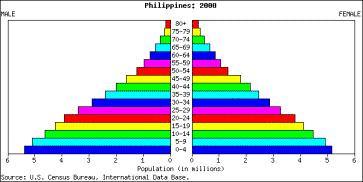
According to the population pyramid of this country, its population is most likely...
a)
growing slowly.
b)
growing rapidly.
c)
decreasing.
d)
not changing.
54.

Which has NOT been a major cause of the population explosion?
a)
modern preventive medicine
b)
increase in life expectancy
c)
improved sanitation
d)
increase in birth rates
55.

All of the following are demographic figures used in determining the total population of a country EXCEPT...
a)
immigration.
b)
birth rate.
c)
death rate.
d)
marriage rate.
56.

The average number of people living in a square kilometer is called...
a)
urbanization.
b)
internal migration.
c)
population density.
d)
pull factors.
57.
What is a population pyramid?
a)
A type of graph showing the number of males and females in different age groups.
b)
A type of graph showing the number of males in different age groups.
c)
A type of graph showing the number of females in different age groups.
d)
A type of graph showing the number of males and females in only one age group.
58.
This is what me measure as the outcome of the experiment. We get data and results from this.
a)
Independent Variable
b)
Dependent Variable
c)
Control
d)
Constant
59.
What are the two main factors that determine the climate of an area?
a)
precipitation and humidity
b)
temperature and air pressure
c)
wind conditions and humidity
d)
temperature and precipitation
60.
A 'J' shaped graph is said to show ....
a)
exponential growth
b)
rapid decline
c)
carrying capacity
d)
boom and bust
61.
An 'r' selected species ....
a)
produces small litters
b)
invests heavily in rearing a single offspring for a long time
c)
produces many offspring and invests little into their care
d)
reproduces asexually
62.
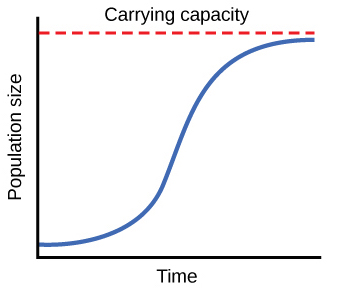
__________ growth shows growth of a population under environmental constraints (carrying capacity-K) that sets a maximum population size
a)
logistic
b)
exponential
c)
niche
d)
uniform
63.
________ grow slowly over time, cares for its young over a long period of time and is usually near the carrying capacity of its ecosystem.
a)
K-strategists
b)
R-strategists
c)
Uniform strategists
d)
environmentalists
64.

Coal is a __________ energy resource.
a)
Renewable
b)
Nonrenewable
65.

Solar Power is a __________ energy resource.
a)
Renewable
b)
Nonrenewable
66.

Oil is a __________ energy resource.
a)
Renewable
b)
Nonrenewable
67.

Wind is a __________ energy resource.
a)
Renewable
b)
Nonrenewable
100 %

