
 Worksheets
Module 6: Arthropoda
Total questions: 45
Worksheet time: 29mins
Name
Class
Date
1.
What type of environments do arthropods live?
a)
Marine
b)
Freshwater
c)
Land
d)
All of the above
2.
Spiders, ticks, scorpions all belong to...
a)
Crustacean
b)
Arachanids
c)
Chilopoda
d)
Insecta
3.
Which group of Arthropods have two pairs of legs per body segment?
a)
Chilopoda (centipedes)
b)
Diplopoda (millipedes)
c)
Insecta
d)
Crustacea
4.
Beetles, grasshoppers and moths are all examples of...
a)
Arachnids
b)
Crustaceans
c)
Insecta
d)
Diplopoda
5.
What two characteristics do all Arthropods have?
a)
two legs per body segment
b)
jointed legs and a cephalothorax
c)
three body segments and metamorphosis
d)
jointed legs and segmented bodies
6.
What type of circulatory system do Arthropods have?
a)
closed
b)
open
7.
Centipedes are an example of what group of Arthropods?
a)
Chilopoda
b)
Mammalia
c)
Arachnida
d)
Birds
8.
Lobster, shrimp, and crabs are examples of what group of Arthropods?
a)
Chilopoda
b)
Diplopoda
c)
Crustaceans
d)
Arachnida
9.
All arthropods have segmented bodies, jointed appendages, and ________________.
a)
tails
b)
lungs
c)
wings
d)
an exoskelton
10.

?
a)
Crustacea
b)
Arachnida
c)
Insecta
d)
Myriapoda
11.

?
a)
Arachnida
b)
Insecta
c)
Crustacea
d)
Myriapoda
12.

?
a)
Myriapoda
b)
Insecta
c)
Arachnida
d)
Crustacea
13.
The removing and replacing of old exoskeleton is called
a)
metamorphosis
b)
replacement
c)
molting
d)
exoing
14.
Arachnids are the largest class in the animal kingdom.
a)
true
b)
false
15.
What type of skeleton do Arthropods have?
a)
Endoskeleton made of chitin
b)
Hydrostatic skeleton
c)
Exoskeleton made of calcium carbonate
d)
Exoskeleton made of chitin
16.
What type of symmetry do Arthropods have?
a)
Radial
b)
Bilateral
c)
Asymmetrical
17.
Appendages on crayfish that create water currents and function in reproduction
a)
swimmerets
b)
chelipeds
c)
antennae
d)
maxillae
18.
How do crayfish breath?
a)
gills
b)
lungs
c)
through their skin
19.
What does the term arthropod mean?
a)
soft
b)
little rings
c)
jointed foot
d)
cephalization
20.
The tough layer on the outside of arthropod's bodies that provide protection and support
a)
nauplius
b)
exoskeleton
c)
skeleton
d)
shell
21.
Why do arthropods have to shed their exoskeletons?
a)
it wears out
b)
they don't shed
c)
it limits the size they can grow
d)
to go from water to land environments
22.
Arthropods demonstrate a large degree of cephalization
a)
true
b)
false
23.
Appendages on crayfish that serve as feelers sensitive to touch, taste and balance
a)
chelipeds
b)
mandibles
c)
antennae
d)
swimmerets
24.
Most anterior legs on crayfish that have pincers for capturing food and defense
a)
chelipeds
b)
swimmerets
c)
mandibles
d)
maxillae
25.
The organ in crayfish used to remove waste and excess water
a)
green gland
b)
gills
c)
esophagus
d)
malphigian tubule
26.
Appendages on crayfish used to manipulate food
a)
chelipeds
b)
maxillae
c)
mandible
d)
antennae
27.
Organs on spiders that are modified as fangs and used to inject venom into prey
a)
chelicera
b)
antennae
c)
spinnerets
d)
chelipeds
28.
Respiratory organ in spiders that is modified for life on land
a)
gills
b)
book lungs
c)
lungs
d)
pharynx
29.
The specialized body regions of an arthropod are called
a)
Chelicerae
b)
Segments
c)
Tagmata
d)
Annuli
30.
The three body parts of many adult arthropods, such as insects, are the
a)
head, cephalothorax, abdomen
b)
head, segments, pygidium
c)
head, foot, visceral mass
d)
head, thorax, abdomen
31.
What are the phases of incomplete metamorphosis?
a)
egg, larva, pupa, adult
b)
egg, nymph, adult
c)
egg, larva, adult
d)
egg, pupa, nymph, adult
32.
The two appendages on the front of a spider's head used for sensory, catch prey, & reproduction
a)
Fangs
b)
Pedipalps
c)
Chelicerae
d)
Spinnerets
33.
These insects often communicate by dancing:
a)
Ants
b)
Bees
c)
Spiders
d)
Termites
34.
Insects are in what subphylum?
a)
Chelicerata
b)
Crustacea
c)
Hexapoda
d)
Myriapoda
35.
Spiders, ticks, scorpions all belong to...
a)
Crustacean
b)
Arachanids
c)
Chilopoda
d)
Insecta
36.
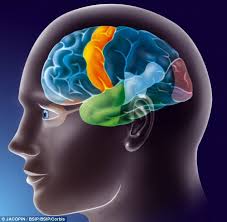
Towards the Front.
[The eyes are _______ to the brain].
[The eyes are _______ to the brain].
a)
Inferior
b)
Deep
c)
Lateral
d)
Anterior
37.
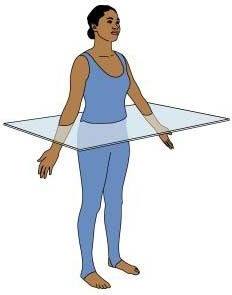
Divides body into top and bottom portions (superior-head; inferior-feat)
a)
Medial Plane
b)
Sagittal
c)
Proximal
d)
Transverse Plane
38.
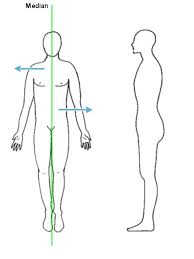
Away from midline
a)
Lateral
b)
Distal
c)
Superior
d)
Transverse
39.

Closer to midline in relation to another part
a)
Deep
b)
Distal
c)
Medial
d)
Proximal
40.

The head is ______ to the chest.
a)
superior
b)
dorsal
c)
inferior
d)
ventral
41.
Found in the between layers and gives rise to the supportive, contractile and blood cells.
a)
mesoderm
b)
endoderm
c)
ectoderm
42.
An invertebrate that has an external skeleton, a segmented body, and jointed appendages.
a)
echinoderm
b)
cnidarian
c)
arthropod
d)
segmented worm
43.
Which is not an example of arthropods?
a)
crab
b)
grasshopper
c)
starfish
d)
spider
44.

Spiders, millipedes, and centipedes are all ________.
a)
annelids
b)
arthropods
c)
porifera
d)
echinoderms
45.

Crabs, lobsters, and shrimp are all __________.
a)
crustaceans
b)
gastropods
c)
echinoderms
d)
cnidaria
100 %

