
Font size
S
M
L
XL
 Worksheets
3rd 9 weeks Review Game
Total questions: 102
Worksheet time: 1hrs 27mins
Name
Class
Date
1.

When a heavy football player and a light one run into each other, who exerts more force?
a)
The heavy one
b)
The light one
c)
They are equal
d)
there is no such thing as force
2.
What is Newton's First Law
a)
F=ma
b)
Every action has an equal and opposite reaction
c)
An object at rest stays at rest, an object in motion stays in motion.
d)
Friction
3.
What is Newton's First Law
a)
F=ma
b)
Every action has an equal and opposite reaction
c)
An object at rest stays at rest, an object in motion stays in motion.
d)
Friction
4.
If a ball of cheese is fired into frictionless space, the amount of force needed to keep it going equals
a)
twice the force with which it was fired
b)
the same amount of force with which it was fired
c)
1/2 the force with which it was fired
d)
zero, since no force is requires to keep it moving.
5.
Which one needs a greater net force to move, a kilogram of feathers or a kilogram of iron?
a)
feathers
b)
iron
c)
same
d)
depends on their friction
6.
One object has twice as much mass as another object. The first object also has also twice as much...
a)
velocity
b)
gravitational acceleration
c)
inertia
d)
all of these
7.
What pulls a ball back to earth?
a)
Gas
b)
Gravity
c)
Friction
d)
Molecules
8.
What is the speed of an object that travels 20 meters in 4 seconds?
a)
80 m/s
b)
0.2 m/s
c)
5 m/s
d)
24 m/s
9.
If a 10 kilogram object accelerates suddenly at 15 m/s2, how much force was applied to the object?
a)
150 Newtons
b)
15 Newtons
c)
150 kilograms
d)
100 kilograms
10.
A(n) __________ is a push or pull.
a)
newton
b)
acceleration
c)
force
d)
momentum
11.

If you are an astronaut slowly drifting away from the space station, you might be able to drift back to the station by throwing a 555-kg tool rapidly in the direction that you are traveling (away from the station).Please choose from one of the following options.
a)
True
b)
False
12.

Which best explains why we are able to accelerate forward when starting to run?
a)
As one leg moves backward, it provides an equal and opposite force for the other foot to move forward.
b)
No acceleration takes place. Runners are always at a fixed velocity.
c)
The striking foot pushes backward against the ground. The friction with the ground provides an equal and opposite force forward.
d)
The runner's upper body quickly leans forward, causing the entire body to begin accelerating forward
13.

When a large truck pushes a small car with a given force, the small car is applying an equal and opposite force on the truck.
a)
True
b)
False
14.
What is the unit to MEASURE force?
a)
Kilogram
b)
Meter
c)
Pascal
d)
Newton
15.

What is the net force?
a)
10 N
b)
0 N
c)
25 N
d)
1 N
16.

Balanced or Unbalanced?
a)
Balanced
b)
Unbalanced
17.
Acceleration is caused by a force acting on a mass.
a)
Newton’s first law of motion
b)
Newton’s second law of motion
c)
Newton’s third law of motion
18.
Unit of mass
a)
m/s 2
b)
m/s
c)
newtons
d)
kg
19.
Newton's third law states that any action will have a(n) _______ and ______ reaction
a)
Equal and similar
b)
Equal and opposite
c)
Equal and different
d)
Greater and opposite
20.
Football A has a greater mass than football B. Which football will have greater acceleration when both are thrown with the same force in the same direction?
a)
Football A
b)
Football B
c)
They will have the same acceleration
d)
Mass has no effect on acceleration
21.
You hit a wall with a stick. The equal but opposite reaction is _____
a)
the wall pushes against you
b)
the stick pushes against you
c)
you push against the stick
d)
the wall pushes against the stick
22.

A soccer ball accelerates more than a bowling ball when thrown with the same force.
a)
1st Law
b)
2nd Law
c)
3rd Law
23.
A ball thrown at the ground bounces back up.
a)
Law of Inertia (1st Law)
b)
Law of Mass and Acceleration (2nd law)
c)
Law of Action Reaction (3rd Law)
24.
According to Newton's First Law, an object's velocity will not change unless _____ acts upon it.
a)
a balanced force
b)
an unbalanced force
c)
zero force
25.

If an object is stationary (not moving) the forces acting upon it are _____________
a)
unbalanced
b)
weak
c)
balanced
d)
Hulk Smash!
26.
What is Newton's First Law
a)
F=ma
b)
Every action has an equal and opposite reaction
c)
An object at rest stays at rest, an object in motion stays in motion.
d)
Friction
27.
What is Newton’s Third Law of Motion?
a)
Objects at rest remain at rest and objects in motion remain in motion in a straight line unless acted upon by an unbalanced force.
b)
Force equals mass times acceleration (or f = ma).
c)
For every action there is an equal and opposite reaction.
28.
What is Newton’s Second Law of Motion?
a)
Objects at rest remain at rest and objects in motion remain in motion in a straight line unless acted upon by an unbalanced force.
b)
Force equals mass times acceleration (or f = ma).
c)
For every action there is an equal and opposite reaction.
29.
Energy can be classified into two main categories, kinetic energy and potential energy. Kinetic energy is when an object is:
a)
standing still
b)
actively doing something
c)
changing states of matter
d)
objects do not have kinetic energy
30.
When a hot object touches a cooler object, heat energy is transferred from the warmer object to the cooler object through:
a)
radiation
b)
electrical energy
c)
conduction
d)
solar heating
31.
You and your family are sitting around a campfire. You can feel the heat on your face, even when you back your seat away from the fire. The heat energy from the fire warms your face through:
a)
light energy from the fire
b)
conduction
c)
chemical reactions in the fire
d)
radiation
32.
Which is an example of potential energy?
a)
a roller coaster speeding down a hill
b)
the pulled back string on an archers's bow
c)
releasing the strings on a guitar
d)
an electric current lighting a light bulb
33.
Choose the BEST answer that is an example of an energy transformation from potential energy to kinetic energy.
a)
a ball rolling down a ramp
b)
a picture hanging on the wall
c)
a swing swaying back and forth
d)
a coat hanging on a hook
34.
Heat energy transfer is:
a)
the transfer of heat from one object to another.
b)
the radiation of heat from an object.
c)
an increase in heat energy.
d)
a loss of heat energy.
35.
Choose the BEST example of convection:
a)
Heat leaves a coffee cup as the currents of steam and air rise.
b)
Heat leaves the hot soup and heats the spoon.
c)
Heat from a liquid melts an ice cube.
d)
Water droplets form on the outside of a glass of water.
36.
Which of the following is an example of potential energy?
a)
a ball rolling down a ramp
b)
a stretched rubber band
c)
a baseball flying into the outfield
d)
a snail moving across a rock
37.
Gasoline that powers a car is an example of...
a)
Nuclear energy
b)
Chemical energy
c)
Sound energy
d)
Light energy
38.
Sound energy is a type of...
a)
kinetic energy
b)
potential energy
39.
Stored mechanical energy is a type of...
a)
kinetic energy
b)
potential energy
40.
Electrical energy (electricity) is a type of...
a)
kinetic energy
b)
potential energy
41.
Heat (thermal) energy is an example of...
a)
kinetic energy
b)
potential energy
42.
The light from the sun gets to the Earth through...
a)
Radiation
b)
Convection
c)
Conduction
43.
Warm air rises and cool air sinks due to...
a)
Radiation
b)
Convection
c)
Conduction
44.
When your feet touch the hot pavement, heat is transferred to your feet through...
a)
Radiation
b)
Convection
c)
Conduction
45.
Energy of motion is which type of energy?
a)
Potential
b)
Kinetic
c)
Sound
d)
Gravitational
46.
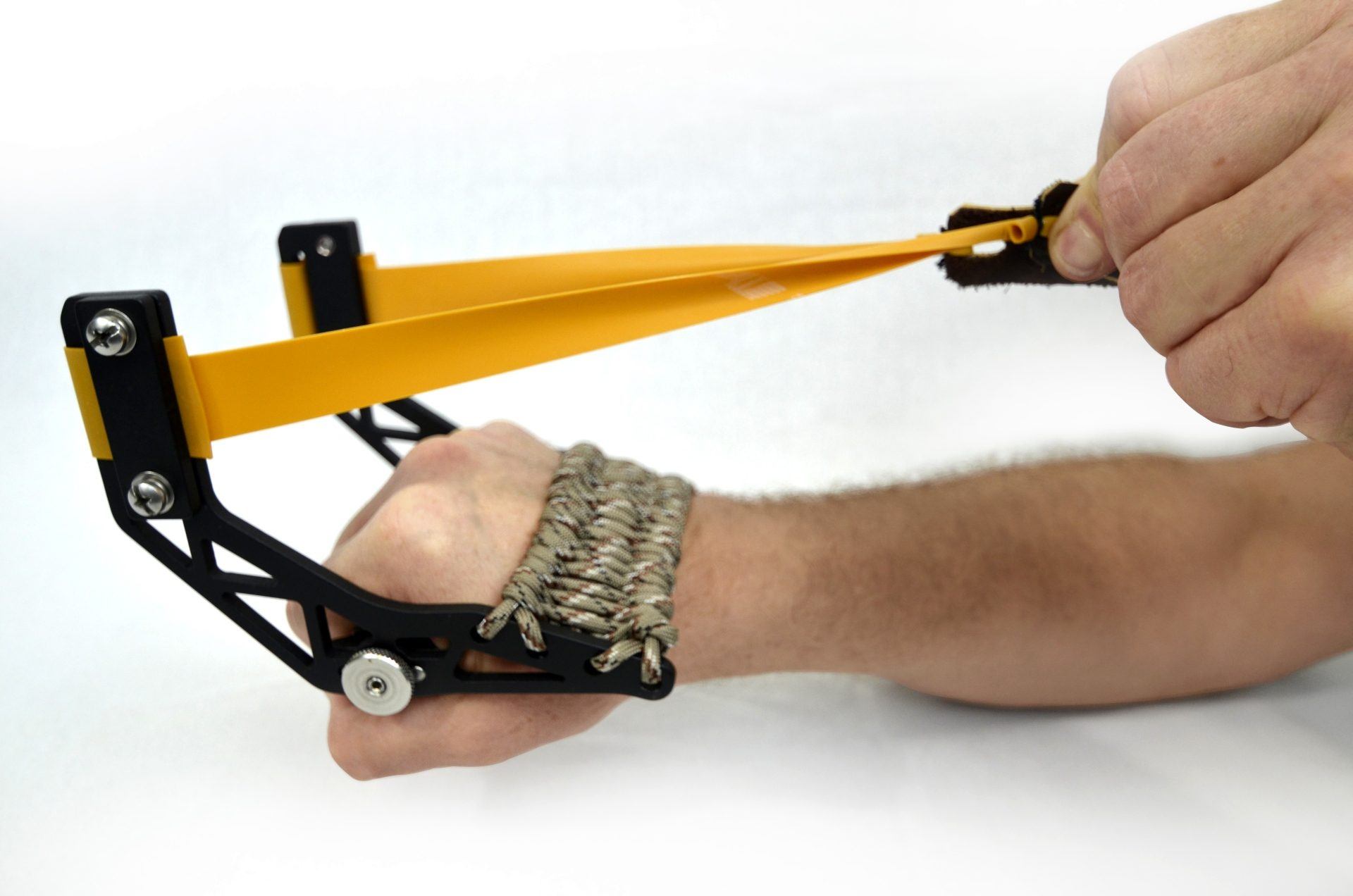
What type of energy is in this picture?
a)
Kinetic
b)
Potential
c)
Chemical
d)
Sound
47.
When plants convert the sun's energy into food, which type of energy is it?
a)
kinetic
b)
chemical
c)
thermal
d)
radiant
48.

What kind of energy is represented in this picture?
a)
Thermal
b)
Potential
c)
Nuclear
d)
Mechanical
49.

What kind of energy does this device use?
a)
Chemical
b)
Electrical
c)
Thermal
d)
Chemical
50.
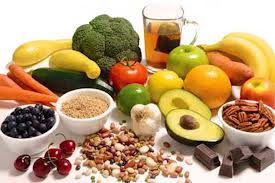
What kind of energy is represented in the picture?
a)
Thermal
b)
Chemical
c)
Sound
d)
Nuclear
51.

A battery converts what type of energy to another?
a)
sound to kinetic
b)
light to heat
c)
mechanical to electrical
d)
chemical to electrical
52.
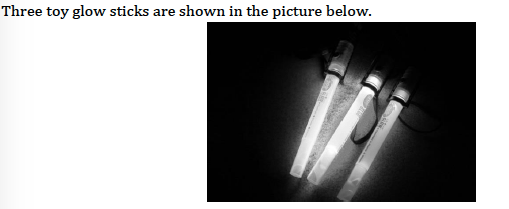
The glow sticks produce light for a short amount of time. The light from the glow stick is a conversion from what to what?
a)
thermal to light
b)
gravitational to potential
c)
radiant to electrical
d)
chemical to light
53.
Work is:
a)
A transfer of energy by a force to move and object
b)
Something you get paid for
c)
Something you take home
d)
Makes you sweat
54.
What machine changes electrical energy into light and sound energy?
a)
battery
b)
lightbulb
c)
alarm clock
d)
apple
55.
On a roller coaster, where is maximum kinetic energy?
a)
At the bottom of a big hill
b)
When going around a corner
c)
When going upside down
d)
At the top of a big hill
56.
Energy that is stored in bonds between atoms is:
a)
Mechanical energy
b)
Chemical energy
c)
Kinetic energy
d)
Nuclear energy
57.
Energy caused by the movement in the particles of matter. It is a form of kinetic energy.
a)
Nuclear energy
b)
Sound energy
c)
Light energy
d)
Thermal energy
58.
Energy that comes from the nucleus of an atom. A form of potential energy.
a)
chemical energy
b)
Nuclear energy
c)
Sound energy
d)
Electrical energy
59.
According to which law of energy, energy can't be created or destroyed?
a)
First law of motion
b)
The law of tacos
c)
Laws of Energy
d)
law of conservation of energy
60.

The purpose of the panels is to change solar energy into ____________.
a)
light energy
b)
electrical energy
c)
chemical energy
d)
mechanical energy
61.
What machine changes chemical energy into heat, light and sound energy
a)
blender
b)
firecracker
c)
lightbulb
d)
apple
62.
Conduction is heat transfer by -
a)
Touch
b)
Circles
c)
Waves
63.
What type of heat transfer takes place in solids?
a)
Conduction
b)
Convection
c)
Radiation
64.
Which example below is an example of conduction?
a)
Boiling macaroni
b)
The attic is warmer than the basement
c)
The Sun heating the Earth
d)
Touching hot sand with your feet
65.
Which example below is an example of convection?
a)
Standing on a hot metal bridge
b)
The attic is warmer than the basement
c)
The Sun heating the Earth
d)
Touching hot sand with your feet
66.
Which example below is an example of radiation?
a)
Standing on a hot metal bridge
b)
The attic is warmer than the basement
c)
The Sun heating the Earth
d)
Touching hot sand with your feet
67.
As you touch a hot stove the heat transfers -
a)
from your hand to the stove
b)
from the stove to your hand
c)
It doesn't transfer
68.
Convection could occur in which of the materials below?
a)
A block of wood
b)
The ocean
c)
A bowl of ice cream
d)
In space
69.

Darth Vader is using a light saber. The light saber transfers heat through-
a)
Conduction
b)
Convection
c)
Radiation
70.

This is an example of-
a)
Conduction
b)
Convection
c)
Radiation
71.

This is an example of-
a)
Conduction
b)
Convection
c)
Radiation
72.

This is an example of-
a)
Conduction
b)
Convection
c)
Radiation
73.
What happens to particles as they heat up?
a)
They slow down
b)
Nothing
c)
They don't move
d)
They speed up
74.
What happens to particles as they cool down?
a)
They slow down
b)
Nothing
c)
They don't move
d)
They speed up
75.

You drop a 5 kg ball from a height of 2 m. Just before it reaches the ground, what type of energy does it have?
a)
Potential Energy
b)
Kinetic Energy
c)
Nuclear Energy
d)
Chemical Energy
76.

You drop a 5 kg ball from a height of 2 m. Just before it reaches the ground, how much kinetic energy does it have?
a)
10 J
b)
100 J
c)
7 J
d)
20 J
77.

When a pendulum swings, at which point is potential energy at its greatest?
a)
2
b)
3
c)
4
d)
5
78.
How do you find mechanical energy?
a)
weight x hieght
b)
potential + kinetic
c)
energy + weight
d)
none of these
79.
Gravitational potential energy depends on the ________ and ________ of the object.
a)
Height and mass
b)
Friction and movement
c)
Mass and Movement
d)
Height and Friction
80.

What kind of energy is in a rock at the edge of a cliff?
a)
Potential
b)
Kinetic
81.

which point has the most potential energy
a)
G
b)
f
c)
b
d)
a
82.

Which 2 letters have the most kinetic energy
a)
W & Y
b)
X & Z
83.

At which point is potential energy greatest?
a)
W
b)
X
c)
Y
d)
Z
84.

When a pendulum swings, at which point is kinetic energy highest?
a)
1
b)
2
c)
3
d)
4
85.

When a pendulum swings, at which point is potential energy at its greatest?
a)
1
b)
2
c)
3
d)
4
86.

A ball is projected into the air. Where is potential energy the greatest?
a)
A
b)
B
c)
C
d)
A and C
87.

Which graph BEST shows the relationship of kinetic energy to potential energy as a book sits on the edge of a desk?
a)
A
b)
B
c)
C
d)
D
88.

Which graph BEST shows the relationship of kinetic energy to potential energy as you lift a box on a shelf.
a)
A
b)
B
c)
C
d)
D
89.

Which graph BEST shows the relationship of kinetic energy to potential energy as roll down a roller coaster
a)
A
b)
B
c)
C
d)
D
90.

Can your displacement ever be greater than your distance?
a)
Yes
b)
No
91.

Describe the motion of the graph.
a)
the slope is zero
b)
the speed is zero
c)
the velocity is zero
d)
all the above
92.

Can average speed ever be greater than instantaneous speed?
a)
Yes
b)
No
93.

What information does the slope of a line tell you?
a)
distance
b)
displacement
c)
speed
d)
velocity
94.

Why don't the runners in the 400m dash start at the same line?
a)
so their distance is the same
b)
so their displacement is the same
c)
so their speed is the same
d)
so their velocity is the same
95.

Are these lines of graphed speeds instantaneous or average speeds?
a)
average
b)
instantaneous
96.

Which turtle won the race?
a)
Bill
b)
Myrtle
c)
Zed
97.

Acceleration is the rate of change of
a)
position
b)
time
c)
speed
d)
velocity
98.

The equation used to find acceleration is A=
a)
vi-vf/t
b)
v/t
c)
vf-vi/t
d)
vf+vi/t
99.

Which describes how velocity changes over time?
a)
acceleration
b)
average speed
c)
velocity
d)
instantaneous speed
100.

Which is an example of a car NOT accelerating?
a)
moving at 80km/h on a flat, straight highway
b)
slowing down to round a corner
c)
speeding up to win the race
d)
crossing the finish line and pulling into the pit
101.

If you want to calculate the acceleration, you ________ the change in speed by the time
a)
add
b)
subtract
c)
divide
d)
multiply
102.

How could a jogger accelerate?
a)
run uphill then downhill
b)
run 10 miles N then run 10 miles back
c)
jog, stop, rest, start again
d)
speed up, slow down, turn corners
Reset

