wayground logo

Free Printable Worksheets

Font size

S
M
L
XL
Worksheets

Physical Science Physics Semester Review

Total questions: 99

Worksheet time: 1hrs 2mins

Name
Class
Date
1.
A distance vs. time graph shows an object's
a)
frame of reference
b)
speed
c)
acceleration
d)
favorite food
2.
Speed =
a)
distance / time
b)
time / distance
c)
distance * time
3.
You walk 10 meters to math class in 20 seconds. Your average speed is
a)
2 m/s
b)
0.5 m/s
c)
200 m/s
d)
5 m/s
4.

On a distance-versus-time graph, a horizontal line ALWAYS indicates that an object’s speed is _____.

a)

constant

b)

zero

c)

increasing

d)

decreasing

5.
Change in speed over a given period of time is
a)
velocity
b)
motion
c)
speed
d)
acceleration
6.
On a distance vs. time graph, the steeper the slope _____
a)
the slower the speed
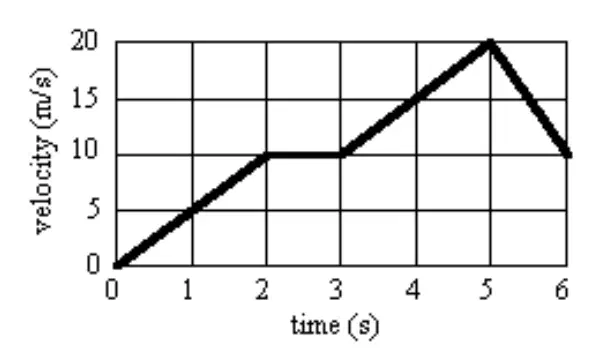
b)
the faster the speed
c)
less acceleration
d)
greater acceleration
7.
What is the SI unit for acceleration?
a)
m/s
b)
m
c)
m/s2
d)
s
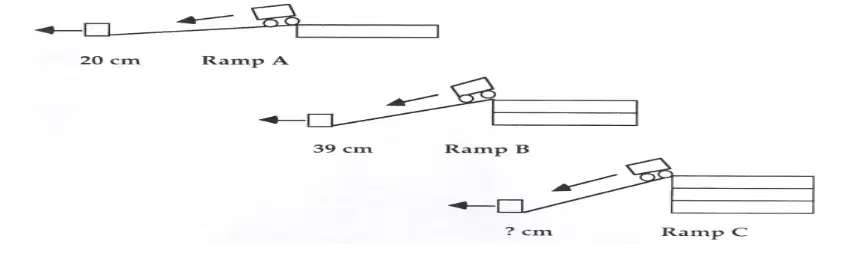
8.
What is the SI unit for speed
a)
Km
b)
s
c)
m/s
d)
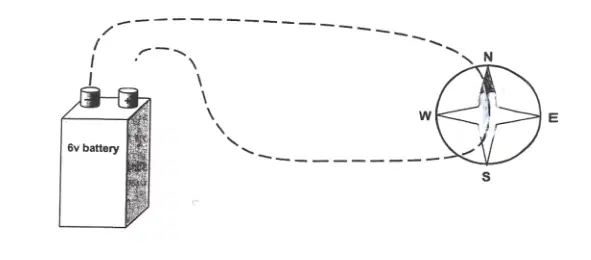
m/s2
9.
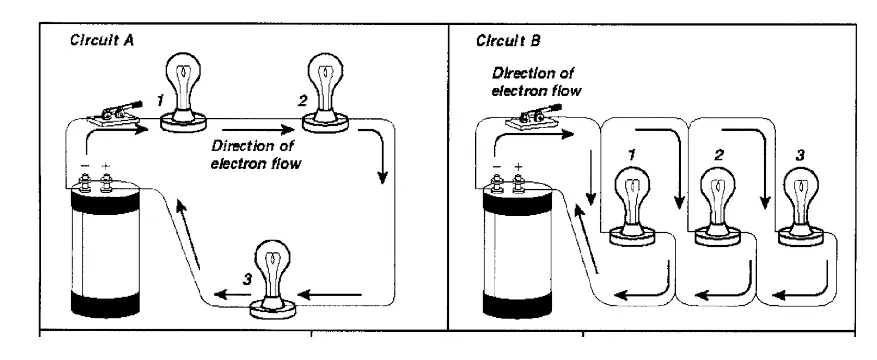
When something has speed in a certain direction it is called ___________.
a)
motion
b)
position
c)
velocity
d)
speed
10.
Acceleration of an object happens when things ________
a)
slow down
b)
go faster
c)
change direction (turn)
d)
All of the above
11.
The formula:
 ? = D/T with direction 
is used to find
a)
Velocity
b)
Speed
c)
Force 
d)
Acceleration
12.
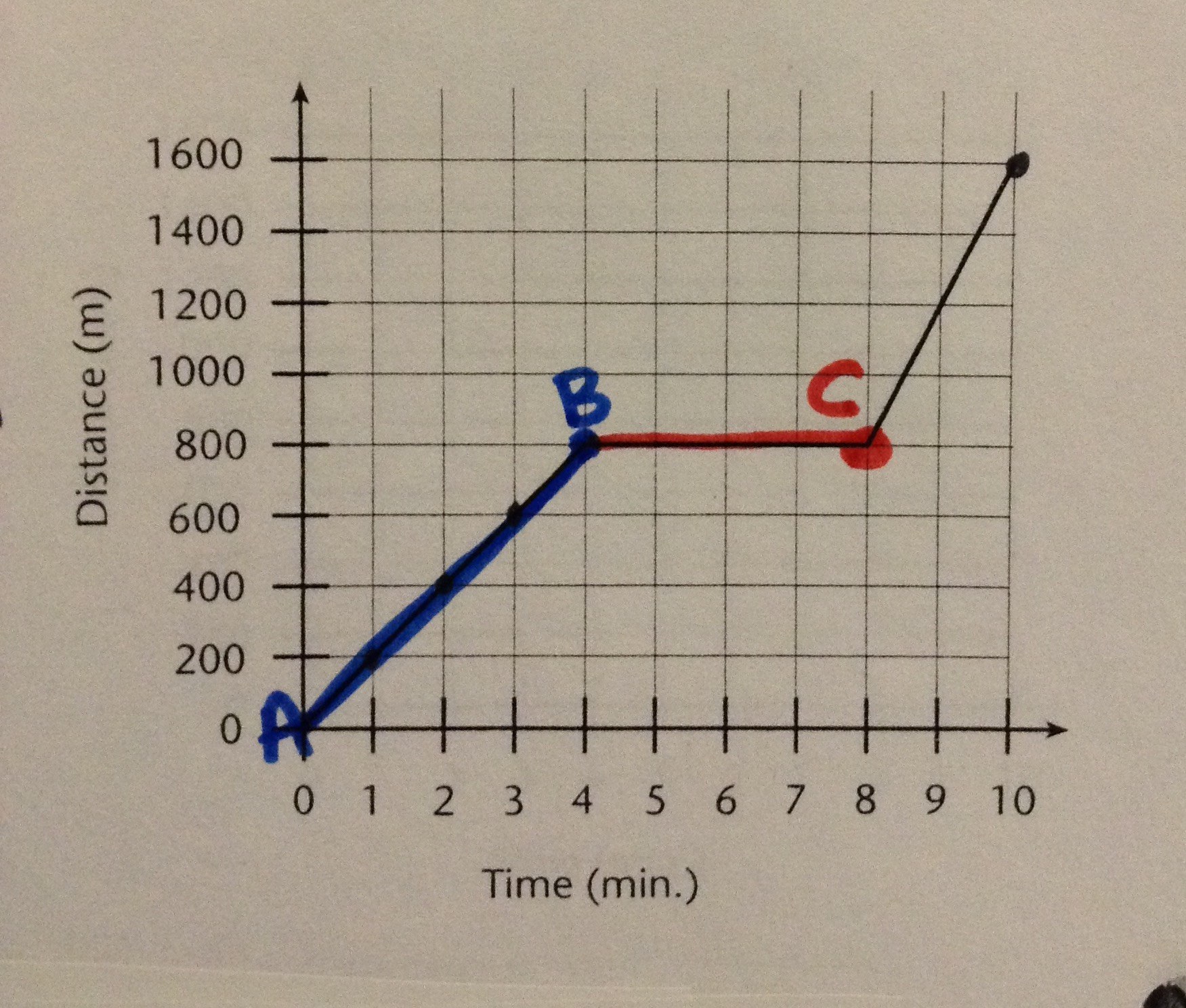
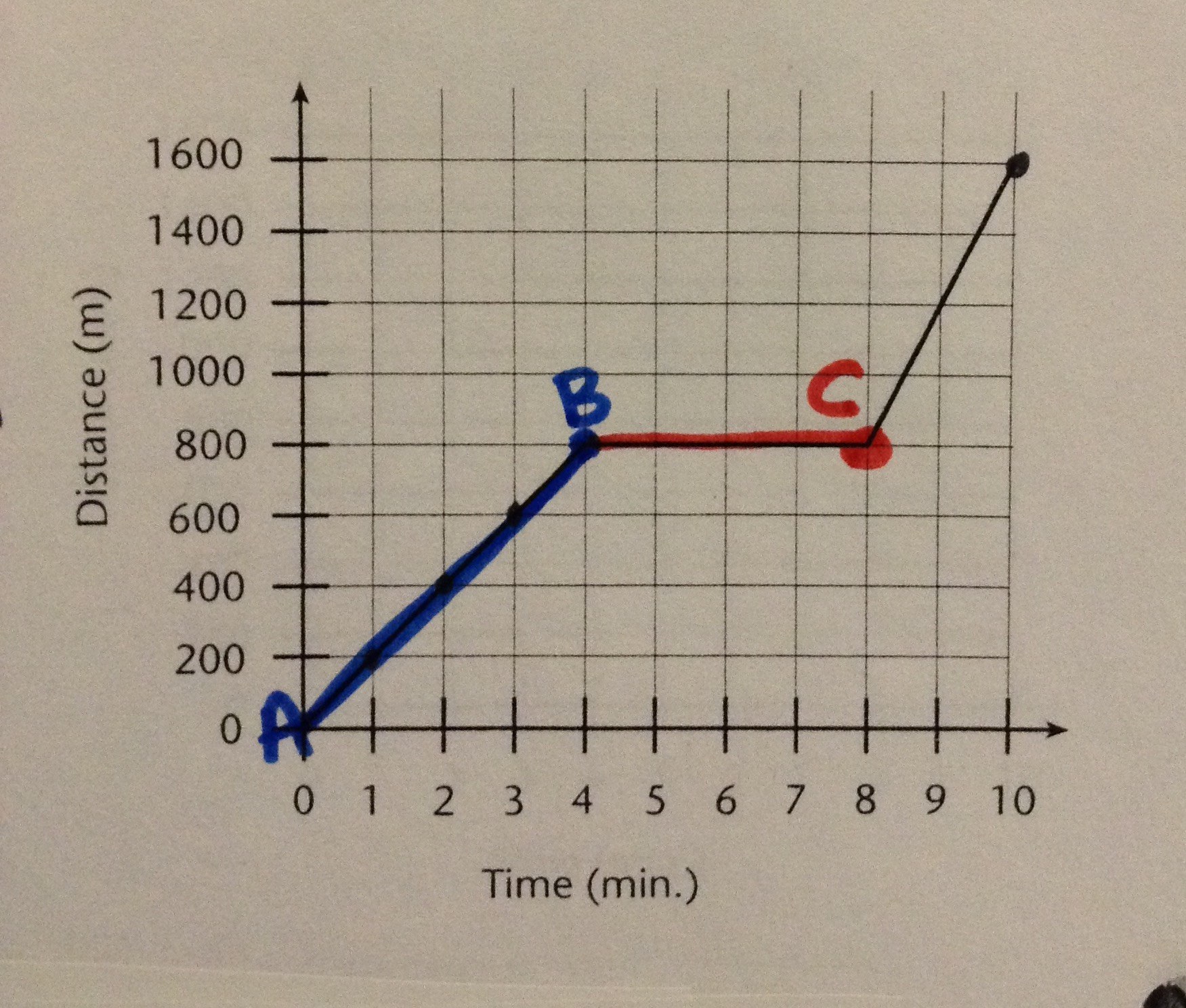
LT4: The graph shows Ashley riding her bike to Maria's house. 
What is occurring from point A to point B?
a)
they are traveling at a constant speed
b)
they are decreasing in speed
c)
they stopped to take a break
13.
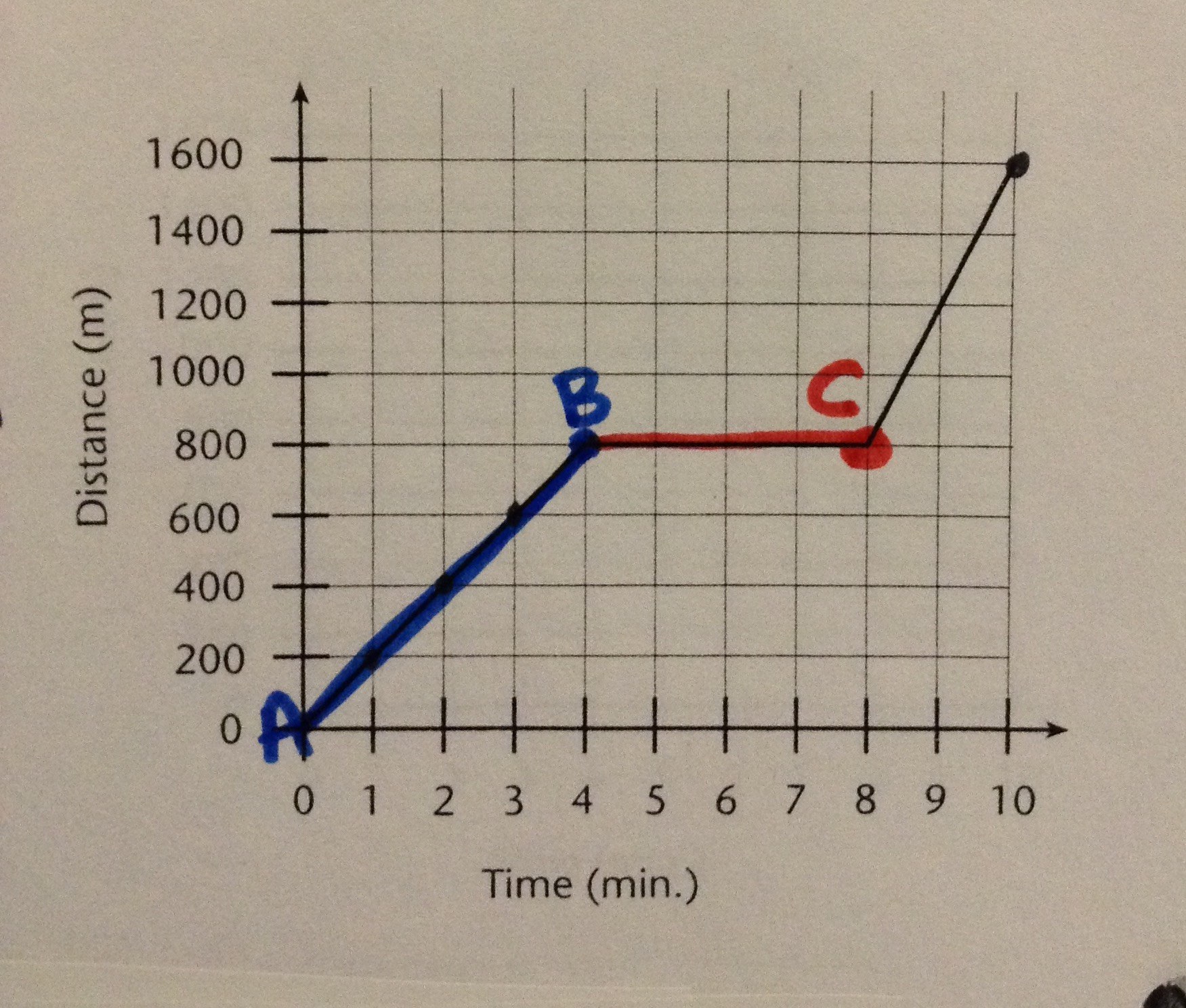
LT4: The graph shows Ashley riding her bike to Maria's house. 
What was occurring from point B to point C?
a)
She was increasing her speed.
b)
She stopped for 4 minutes
c)
She was decreasing in speed
14.
LT4: The graph shows Ashley riding her bike to Maria's house. 
What was her average speed for the ENTIRE trip?
a)
1600 m/min
b)
200 m/min
c)
160 m/min
15.
What is the net force?
a)
20 N 
b)
0 N 
c)
400 N 
d)
40 N 
16.
What is the unit to MEASURE force?
a)
Kilogram
b)
Meter
c)
Pascal
d)
Newton
17.
A ____________ is a push or a pull on an object.
a)
friction
b)
force
c)
magnet
d)
gravity
18.
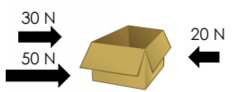
What is the net force?
a)
30 N 
b)
25 N 
c)
5 N 
d)
55 N 
19.
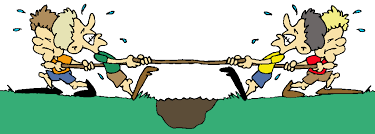
If these teams are pulling with the same amount of force what will happen?
a)
The boy in blue will win.
b)
They will not move at all.
c)
The boy in red will win.
d)
Both will fall down.
20.
Balanced or unbalanced?
a)
balanced
b)
unbalanced
21.
Forces that have a net force of zero 
a)
Balanced force
b)
Unbalanced force
22.
The sum of all forces acting on an object.
a)
Contact Force
b)
Balanced Force
c)
Unbalanced Force
d)
Net Force
23.
What will cause an object to move?
a)
Applied forces
b)
Balanced forces
c)
Unbalanced forces
24.
Calculate the Net Force. 
a)
60N, Left 
b)
40N, Right 
c)
0N
d)
60N, Right
25.
Which force produces a change in motion?
a)
unbalanced force
b)
balanced force
c)
gravitational force
d)
frictional force
26.
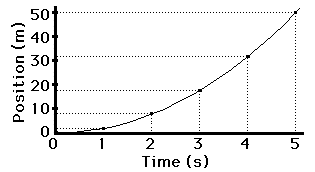
The picture of the position vs. time graph shows an object that is...
a)
accelerating/speeding up
b)
moving at a constant speed 
c)
not moving 
d)
accelerating/slowing down. 
27.
What is Newton's First Law known as? The Law of
a)
Friction
b)
Mass
c)
Inertia
d)
Gravity
28.
What is the formula for force?
a)
F=M/A
b)
F=MA
c)
F=AX
d)
what is force?
29.
What is Newton's Third Law?
a)
Object in motion stays in motion and an object at rest stays at rest unless acted on by a outside force
b)
Force = mass x acceleration
c)
For every action there is an equal and opposite reaction
30.
According to Newton's second law, if you increase the force applied to an object :
a)
it accelerates more
b)
it doesn't move
c)
you get more inertia
d)
it decelerates
31.
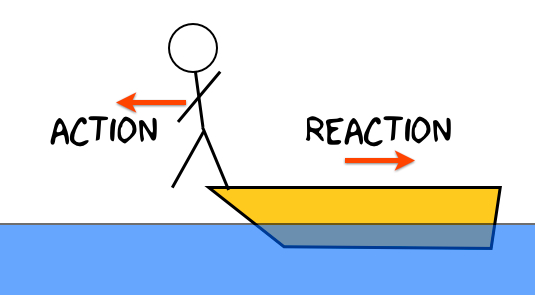
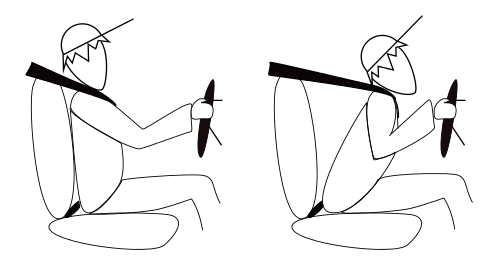
What law of motion does this picture represent?
a)
Newtons 1st law
b)
Newtons 4th law 
c)
Newtons 3rd law 
d)
Newtons 2nd law
32.
What Newtons law does this picture represent
a)
Newtons 2nd law 
b)
Law of gravity 
c)
Newtons 1st law
d)
Newtons 5th law
33.
The graph represents
a)
no motion
b)
Constant velocity
c)
Acceleration
d)
negative acceleration
34.
The graph represents
a)
no motion
b)
constant velocity
c)
acceleration
d)
negative acceleration
35.
The graph respresents
a)
No motion
b)
Constant Velocity
c)
Acceleration
d)
Deceleration
36.
Density is...
a)
the amount of mass in an object
b)
the amount of space an object takes up
c)
the amount of mass in a given space
d)
the weight of an object
37.
What is the formula for density?
a)
density = mass x volume
b)
density = mass / volume
c)
density = mass + volume
d)
density = mass - volume
38.
What units can be used to express density?
a)
g/mL
b)
grams
c)
millimeters
d)
milliliters
39.
If the density of a bar of gold is 19.3 g/cm3and you cut it into 4 pieces,  what is the density of each piece of gold?  
a)
4.825 g/cm3
b)
9.65 g/cm3
c)
19.3 g/cm3
d)
38.6 g/cm3
40.
A force exerted over a distance to move an object is ______________________.
a)
power
b)
work
c)
momentum
d)
Watt
41.

Which of the following is the best example of work being done.

a)

doing homework

b)

lifting a box

c)

pushing a stationary box

d)

holding a box

42.
What is the unit for mass?
a)
Kilogram (Kg)
b)
Newton (N)
c)
Joule (J)
d)
Watt (W)
43.
How far does a car that weighs 5,000 N go if 18,000 J of work is done on it?
a)
3.8 m
b)
3.7 m
c)
3.2 m
d)
3.6 m
44.
What is the potential energy done in lifting a 50kg barbell 5.8m above the floor?
a)
50J
b)
9.81J
c)
2845J
d)
58J
45.
The tendency of an object to resist changes in its motion is...
a)
inertia
b)
force
c)
acceleration
d)
velocity
46.

What is the gravitational force?

a)

6 N downward

b)

3 N to the left

c)

20 N to the right

d)

6 N upward

47.

What is the net force acting on the object

a)

20 N to the right

b)

3 N to the left

c)

17 N to the right

48.
When one object pushes on another obect, the second object
a)
pushes back on the first object with an equal force in the opposite direction.
b)
pulls on the first object with a little less force, due to friction.
c)
pushes back on the first object with more force in the opposite direction.
d)
pulls on the first object with an equal force in the same direction.
49.

The ____ of an object is the magnitude of the force of gravity on the object.

a)

mass

b)

weight

c)

volume

d)

density

50.
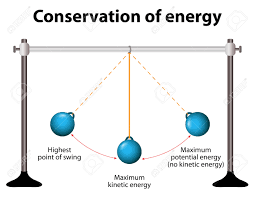
At which point is potential energy greatest
a)
W
b)
X
c)
Y
d)
Z
51.
Movers slide a box down the ramp of a truck.
What helps slow the box as it slides to the bottom of the ramp?
a)
friction
b)
gravity
c)
inertia
d)
magnetism
52.

When you rub your hands together on a cold day, you are using friction to convert...

a)

nuclear energy into mechanical energy

b)

mechanical energy into thermal energy

c)

electrical energy into nuclear energy

d)

nuclear energy into thermal energy
53.

Convert 400 feet to meters.

a)

133.33 m

b)

121.95 m

c)

125.62 m

d)

130.18 m

54.
One end of the rope is vibrated to produce a wave with a wavelength of .25 m.  The Frequency of the wave is 3.0 Hz.  What is the speed of the wave?
a)
3.00 m/s
b)
2.50 m/s
c)
.75 m/s
d)
1.25 m/s
55.

What is a series circuit?

a)

A circuit in which the components are connected in a single path, so the same current flows through all the components.

b)

A circuit in which the components are not connected to each other, allowing the current to flow in any direction.

c)

A circuit in which the components are connected in a loop, causing the current to split and flow through different paths.

d)

A circuit in which the components are connected in multiple paths, so the current can flow through different components at different rates.

56.

What is inertia?

a)

The resistance of any physical object to any change in its state of motion

b)

The amount of mass an object has

c)

A reaction in an object

d)

No one knows

57.

When you rub your hands together on a cold day, you are using friction to convert...

a)

nuclear energy into mechanical energy

b)

mechanical energy into thermal energy

c)

electrical energy into nuclear energy

d)

nuclear energy into thermal energy

58.
What is the formula for density?
a)
density = mass x volume
b)
density = mass / volume
c)
density = mass + volume
d)
density = mass - volume
59.
Density is...
a)
the amount of mass in an object
b)
the amount of space an object takes up
c)
the amount of mass in a given space
d)
the weight of an object
60.
Conservation of energy states that energy cannot be ________ or ________, but can be altered from one form to another.
a)
created, destroyed
b)
gravity, force
c)
heat, created
61.
Kilogram is the SI unit of measure for
a)
weight
b)
density
c)
mass
d)
temperature
62.
The measuring device most likely used to measure the volume of a liquid precisely is
a)
a balance
b)
set of tongs
c)
meter stick
d)
graduated cylinder
e)
beaker
63.
Speed equals distance divided by
a)
time
b)
velocity
c)
size
d)
motion
64.
A ball is thrown upwards and is caught when it comes back down. Neglecting air resistance, the speed of the ball when it is caught is
a)
more than the speed it had when thrown upwards.
b)
the same as the speed it had when thrown upwards.
c)
less than the speed it had when thrown upwards.
d)
none of the above.
65.
A ball is thrown upwards and is caught when it comes back down. Neglecting air resistance, the speed of the ball when it is caught is
a)
more than the speed it had when thrown upwards.
b)
the same as the speed it had when thrown upwards.
c)
less than the speed it had when thrown upwards.
d)
none of the above.
66.
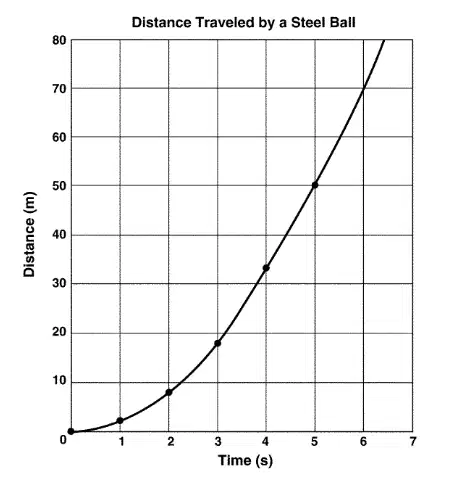
After 5(s) how far has the object traveled?
a)
9m
b)
31m
c)
50m
d)
80m
67.
The velocity of the object is best described as
a)
constant
b)
decreasing
c)
increasing
d)
zero
68.
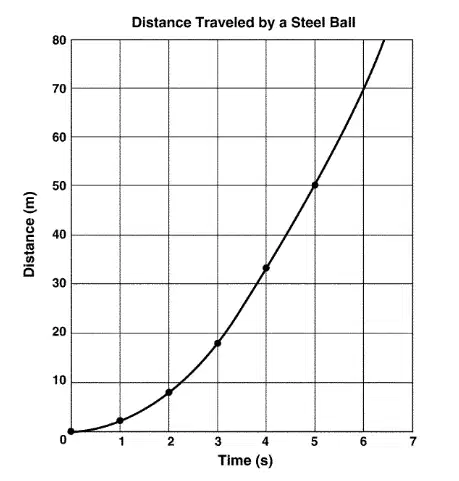
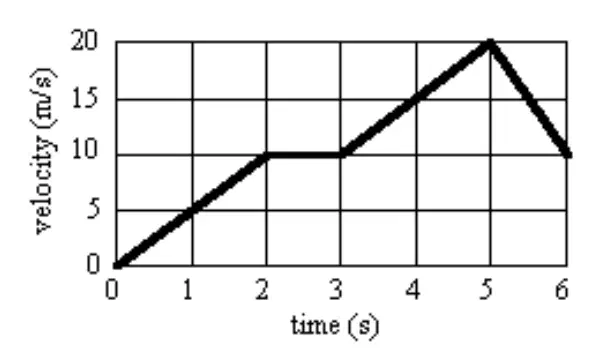
What is the acceleration of the ball between 0 and 2 seconds?
a)
0 m/s/s
b)
5 m/s/s
c)
10 m/s/s
d)
20 m/s/s
69.
What is the acceleration of the ball between 2 and 3 seconds?
a)
0 m/s/s
b)
5 m/s/s
c)
10 m/s/s
d)
20 m/s/s
70.
Which of the following best illustrates balanced forces?
a)
a rock falling toward the ground
b)
a stretched rubber band being held between two hands 2
c)
a person lifting a heavy box off the ground
d)
a crash between a large truck and a small car
71.
The tendency of an object to resist a change in its motion is called
a)
momentum.
b)
force.
c)
pressure.
d)
inertia.
72.
A heavy object and a light object are dropped at the same time from rest. Ignoring air resistance, the heavier object reaches the ground ______.
a)
sooner than the lighter object.
b)
at the same time as the lighter object.
c)
later than the lighter object.
d)
instead of the lighter object.
73.
Air resistance is a type of
a)
motion.
b)
acceleration.
c)
velocity.
d)
friction.
74.
A box is being pulled across the floor. The box has a mass of 10.0 kg and is being pulled with a force of 10.0N. What is the box’s acceleration?
a)
10.0 m/s/s
b)
100.0 m/s/s
c)
0 m/s/s
d)
1.0 m/s/s
75.
The SI unit of force is the
a)
Kilometer.
b)
Kilogram.
c)
Joule
d)
Newton
76.
What happens when two forces act in the same direction?
a)
they cancel each other out.
b)
the stronger one overcomes the other.
c)
they add together.
d)
their sum divided by two is the total force.
77.
The force of gravity on a person or object at the surface of a planet is known as
a)
mass.
b)
inertia.
c)
air resistance.
d)
weight.
78.
What term describes an object that is in free fall and no longer accelerating?
a)
terminal velocity.
b)
momentum.
c)
inertia.
d)
rolling friction.
79.
Whether an object is moving or if it is at rest, it still has
a)
inertia.
b)
velocity.
c)
motion.
d)
acceleration.
80.
The velocity of an object is not just its speed because
a)
velocity also tells acceleration.
b)
speed is always an average.
c)
velocity also tells direction.
d)
speed is only useful for fast-moving objects.
81.
Which of the following is an example of Newton’s Third Law of Motion (action-reaction)?
a)
Two children are pulling on a toy with equal force, and the toy goes nowhere.
b)
Increasing force will increase acceleration.
c)
A rock is dropped down a mine shaft.
d)
A wagon accelerates as it travels down a road.
82.
As shown in the diagram below, when the car reached the bottom of the ramp it hit the block and made the block move. Using Ramp A, the block moved 20 centimeters, and using Ramp B, it moved 39 centimeters. How far do you predict the block will move using Ramp C?
a)
24 centimeters
b)
35 centimeters
c)
56 centimeters
d)
8 centimeters
83.
In the above diagram, which ramp will require the least amount of force to push the cart back up the ramp?
a)
Ramp A
b)
Ramp B
c)
Ramp C
d)
The same force is required for all three ramps.
84.
The Law of Conservation of Energy states that when one form of energy is converted into another
a)
energy is destroyed in the process.
b)
no energy is destroyed in the process.
c)
energy is created in the process.
d)
some energy cannot be accounted for.
85.
You push a wall with a force of 100 N. The wall does not move. How much work did you do on the wall?
a)
100 joules of work.
b)
50 joules of work.
c)
No work, because the wall pushed back with 50 N of force.
d)
No work, because the wall did not move.
86.
Which is an example of kinetic energy?
a)
Gasoline in a car.
b)
A rock at the top of a hill.
c)
A baseball bat held in the ready position.
d)
A softball soaring over someone’s head.
87.
When you rub your hands together on a cold day, you are using friction to convert
a)
electrical energy into nuclear energy.
b)
mechanical energy into thermal energy.
c)
thermal energy into electromagnetic.
d)
nuclear energy into mechanical energy.
88.
Which of these is an example of work being done on an object?
a)
Holding a heavy piece of wood at a construction site.
b)
Trying to push a car that doesn’t move out of deep snow.
c)
Pushing a child on a swing.
d)
Holding a door on a windy day, so it doesn’t blow open.
89.
A coil of wire rotating within a magnetic field will
a)
cause the magnet to become non-magnetic.
b)
create an electrical current.
c)
create a stronger magnetic field.
d)
cause the magnet to become stronger.
90.
Electromagnetic waves vary in
a)
the speed they travel in a vacuum.
b)
wavelength and frequency.
c)
the way they reflect.
d)
the orientation of their electric and magnetic fields.
91.
In the drawing below, the dashed line represents an insulated wire that is passing over a compass. The wire is in direct contact with the glass cover of the compass. When both ends of the wire are connected to the battery terminals, the compass needle will no longer point north. This is because:
a)
the earth’s magnetic field changes when electric charges move through the wire.n 1
b)
moving electrical charges produce heat.
c)
moving electrical charges produce magnetic forces.
d)
the wire is naturally magnetic.
92.
Magnetic poles that are alike will
a)
attract each other.
b)
do not react to each other.
c)
always point toward the north.
d)
repel each other.
93.
What will happen to the circuits if bulb 1 is removed?
a)
In both circuits, bulbs 2 & 3 will go out.
b)
In both circuits, bulbs 2 & 3 will remain lit.
c)
In circuit A, bulbs 2 & 3 will remain lit, while in circuit B, bulbs 2 & 3 will go out.
d)
In circuit A, bulbs 2 & 3 will go out while in circuit B, bulbs 2 & 3 will remain lit.
94.
Sound waves
a)
require a medium through which to travel.
b)
are unrelated to vibrations.
c)
are not mechanical waves.
d)
can travel in a vacuum.
95.
Light waves
a)
require a medium through which to travel.
b)
can travel through the Earth’s mantle.
c)
are caused by a vibrating object.
d)
are electromagnetic waves.
96.
What is transferred by electromagnetic waves?
a)
sound
b)
electricity
c)
energy
d)
resonance
97.
An object is dropped from a ledge of the grand canyon 1829 meters above the ground. If the object did not experience any type of friction, how long will it take to hit the ground?
a)
11.24 seconds
b)
19.32 seconds
c)
37.88 seconds
d)
45.01 seconds
98.
An object is dropped from a ledge of the grand canyon 1829 meters above the ground. If the object did not experience any type of friction, what is the final velocity of the object in meters per second ?
a)
189.34 m/s
b)
100.78 m/s
c)
137.88 m/s
d)
204.17 m/s
99.
If an object is sitting on a ledge takes 4.32 seconds to hit the ground, what height in feet did it fall from?
a)
98 feet
b)
300 feet
c)
250 feet
d)
145 feet