
NEW
Font size
S
M
L
XL
 Worksheets
Weather
Total questions: 51
Worksheet time: 2hrs 42mins
Name
Class
Date
1.

This severe weather involves lightning, rain, and possibly hail
a)
thunderstorm
b)
tornado
c)
blizzard
d)
none of the above
2.

The boundary between two air masses is known as:
a)
front
b)
storm
c)
climate
d)
flood
3.
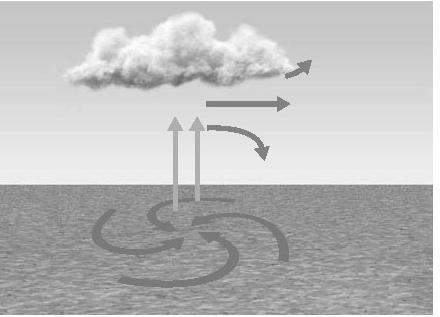
Which type of pressure system is pictured?
a)
high
b)
low
c)
medium
d)
extra large
4.

What type of weather would you expect with the pressure system pictured?
a)
clear
b)
cloudy
c)
cold
d)
medium
5.
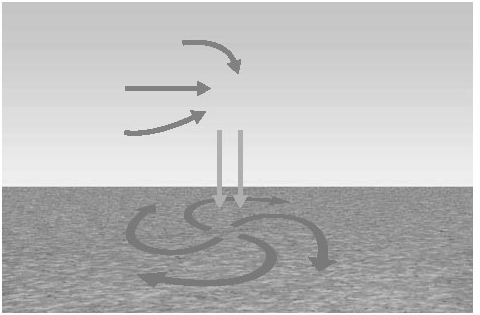
Which type of pressure system is pictured?
a)
high
b)
low
c)
medium
d)
small
6.

What type of weather would you expect from the pressure system pictured?
a)
clear
b)
cloudy
c)
hot
d)
stormy
7.

Cold air traveling south from Canada is:
a)
continental tropical
b)
continental polar
c)
maritime tropical
d)
maritime polar
8.

Warm air moving upwards from the Gulf of Mexico is:
a)
continental tropical
b)
continental polar
c)
maritime tropical
d)
maritime polar
9.

What type of front can bring strong storms
a)
cold
b)
warm
c)
stationary
d)
occluded
10.

What type of front results in the same weather for several days
a)
warm
b)
cold
c)
stationary
d)
occluded
11.

Which weather tool measures wind speed
a)
thermometer
b)
barometer
c)
anemometer
d)
psychrometer
12.

Which weather tool measures the amount of kinetic energy in molecules?
a)
thermometer
b)
barometer
c)
psychrometer
d)
anememeter
13.

Which weather tool measures air pressure?
a)
thermometer
b)
barometer
c)
anemometer
d)
psychrometer
14.

Where the warm and cold air meet and stall, clouds and fog form, and it may rain or snow. It could bring many days of clouds and precipitation.
a)
Warm Front
b)
Cold Front
c)
Occluded Front
d)
Stationary Front
15.

This is the symbol for a...
a)
Cold Front
b)
Warm Front
c)
Stationary Front
d)
Occluded Front
16.

This is the symbol for a...
a)
Occluded Front
b)
Stationary Front
c)
Warm Front
d)
Cold Front
17.

This is the symbol for a...
a)
Stationary Front
b)
Occluded Front
c)
Cold Front
d)
Warm Front
18.

Identify the type of front that is shown in the image.
a)
Occluded Front
b)
Cold Front
c)
Stationary Front
d)
Warm Front
19.

Identify the type of front that is shown in the image.
a)
Occluded Front
b)
Cold Front
c)
Stationary Front
d)
Warm Front
20.

Which type of front is located at the leading edge of a temperature drop off. It brings heavy thunderstorms, rain, and hail. Cool, fair weather is likely to follow.
a)
Warm Front
b)
Cold Front
c)
Occluded Front
d)
Stationary Front
21.

Which front is located at the leading edge of a warm air mass. It brings gentle rain or light snow, followed by warmer, milder weather.
a)
Warm Front
b)
Cold Front
c)
Occluded Front
d)
Stationary Front
22.

Which number illustrates Condensation?
a)
1
b)
2
c)
3
d)
4
23.

The boundary between two air masses is known as:
a)
front
b)
storm
c)
climate
d)
flood
24.

Mark looks at the clouds in the sky and decides that he does not need to take his umbrella with him today. Which clouds did Mark most likely see in the sky?
a)
cirrus
b)
nimbostratus
c)
cumulonimbus
25.

Which type of cloud is most often observed during a thunderstorm?
a)
cirrus
b)
stratus
c)
cumulus
d)
cumulonimbus
26.

Warm air __________.
a)
Rises
b)
Sinks
c)
Hovers
27.

What does this symbol on a weather map indicate?
a)
High pressure system
b)
Low pressure system
c)
Cold front
d)
Warm front
28.

Rain, snow, sleet, and hail are all forms of _____.
a)
precipitation
b)
condensation
c)
evaporation
d)
climate
29.

The amount of water vapor present in the air is called ________________.
a)
weather
b)
humidity
c)
air mass
d)
oxygen
30.

When a warm air mass gently slides on top of a cold air mass, and you have drizzly rain and then warmer weather, what type of front is it?
a)
warm front
b)
cold front
c)
occluded front
d)
stationary front
31.

What part of the illustration shows Evaporation?
a)
1
b)
2
c)
3
d)
4
32.

A huge body of air that has similar temperature and humidity at any given height is called a(n) __________________________.
a)
front
b)
jet stream
c)
air mass
d)
cyclone
33.

In the winter, Continental polar air masses bring what type of air to North America?
a)
dry and warm
b)
humid and cold
c)
dry and cold
d)
humid and warm
34.

What are the daily conditions of temperature, humidity and precipitation?
a)
weather
b)
climate
35.

How does freezing rain form
a)
by hail turning to ice
b)
when the temperature is warm
c)
when the temperature is cold and it rains
d)
when ice falls from the sky
36.

What type of cloud is this?
a)
cirrus
b)
cumulus
c)
stratus
d)
fog
37.

What type of cloud is shown?
a)
cumulus
b)
cirrus
c)
stratus
d)
nimbostratus
38.

__________ a two-thermometer instrument slung around a rod or pole that is also referred to as a wet/dry bulb used to measure relative humidity.
a)
thermometer
b)
barometer
c)
sling psychrometer
d)
anemometer
39.

In what direction do winds always blow?
a)
From areas of high pressure to areas of low pressure
b)
From areas of low pressure to areas of high pressure
c)
Clockwise
d)
Counterclockwise
40.

The picture represents a land breeze
a)
True
b)
False
c)
Not enough information
d)
Maybe
41.

A cold front moving into an area can bring this type of weather...
a)
Warmer Temperatures, Clear Skies
b)
Colder Temperatures, Clear Skies
c)
Warmer Temperatures, Clouds
d)
Colder Temperatures, Clouds, and Precipitation
42.

This diagram shows how a certain type of precipitation is formed. Water drops are caught in up-drafts and down-drafts, over and over, before they fall to Earth as
a)
dew
b)
hail
c)
rain
d)
snow
43.

What type of precipitation forms when raindrops fall through cold layer of air and freeze before they hit the ground?
a)
Sleet
b)
Snow
c)
Rain
d)
Hail
44.

What kind of precipitation is it when raindrops fall as liquid water but freeze when they touch a cold surface?
a)
freezing rain
b)
snow
c)
hail
d)
sleet
45.

What causes wind to blow?
a)
Differences in longitude
b)
Shock waves from clouds
c)
Differences in air temperature and pressure
d)
The rotation of the earth
46.

How do we name air masses?
a)
Temperature and air pressure
b)
Air pressure and altitude
c)
Humidity and temperature
d)
Humidity and air pressure
47.

How do we characterise an air mass that forms over land?
a)
Dry
b)
Wet
c)
Cold
d)
Warm
48.

How do we characterize an air mass that forms over the ocean?
a)
Dry
b)
Wet
c)
Cold
d)
Warm
49.

Hurricanes gather ______________ and ______________ through contact with warm ocean waters.
a)
sand, dust
b)
fish, plants
c)
heat, Sun
d)
heat, energy
50.

Why don't hurricanes form in polar regions?
a)
the water is not warm enough
b)
the water is not cold enough
c)
there is no water
d)
icebergs stop the hurricanes
51.

What is usually the most damaging part of a hurricane?
a)
Eye
b)
Lightning
c)
Storm surge
d)
Hail
Reset

