
 Worksheets
Unit 5 Pretest - Sustainability
Total questions: 100
Worksheet time: 5hrs 30mins
Name
Class
Date
1.
What is a natural resource?
a)
a. A man-made resource made from something in the environment
b)
b. A component of the natural world
c)
c. Something that is NOT natural to the environment
d)
both a. and c.
2.
What do we use natural resources for?
a)
To generate electricity
b)
As food or 'fuel' for our bodies
c)
To build houses or buildings
d)
All of the answers
3.
What is a renewable resource?
a)
a. A resource that exists in a finite amount
b)
b. A resource that can regenerate or be replenished by natural cycles
c)
c. A resource that cannot be regenerated or replenished
d)
Both b and c
4.
Which of the following is a renewable resource?
a)
Fossil Fuels
b)
Water
c)
Metals
d)
Minerals
5.
What will happen if a nonrenewable resource is used up faster than it can be replenished or regenerated?
a)
The resource will become abundant
b)
The resource will be replenished
c)
The resource will be replenished
d)
The resource will become scarce
6.
How are natural resources distributed on Earth?
a)
All
of Earth’s natural resources are found north of the equator
b)
Earth’s
natural resources are concentrated along the equator
c)
Earth’s natural resources are evenly distributed
across the planet
d)
Earth’s natural
resources are unevenly distributed across the planet
7.
Metals and minerals are most often found:
a)
in the ocean
b)
near tectonic plate boundaries
c)
to be located
d)
in regions where temperature is relatively mild
8.
The argument that the availability of fresh water has an influence on human population would be supported by which of the following observations?
a)
Human beings, like all living things, are made mostly of water.
b)
Most of the fresh water on the planet is stored in glaciers.
c)
The earth experiences periodic fluctuations in the rate of precipitation.
d)
In land locked countries, the largest cities are often found near rivers.
9.
The natural resources in a country often determine:
a)
the economics of the country
b)
the wealth of a country
c)
the quality of life of people who live in the country
d)
all three
10.
18. Which of the following best explains why access to fossil fuels has been important to the development of human society for the past several decades?
a)
Fossil fuels take millions of years to form.
b)
Fossil fuels are formed from organic material.
c)
Fossil fuels are not evenly distributed.
d)
Fossil fuels can be used as a source of energy.
11.
Freshwater is scarce in some regions because...
a)
They use a lot of desalination
b)
They are far from bodies of salt water
c)
They are far from bodies of fresh water
d)
They have an abundance of fossil fuels
12.
Crude oil is also called what?
a)
biomass
b)
fossils
c)
coal
d)
petroleum
13.
Soil is important because it provides minerals & nutrients, offers ___ for animals, and is important to plants for ______ storage.
a)
medicine; water storage
b)
a habitat; pollen
c)
a habitat; water storage
d)
medicine; pollen
14.
The sun produces energy using _____.
a)
fission
b)
fusion
c)
biomass
d)
geothermal
15.

Trees, crops, garbage, & landfill gas are all examples of
a)
Energy
b)
Biomass
c)
Heat
d)
Nuclear waste
16.

Natural Gas is a __________ energy resource.
a)
Renewable
b)
Nonrenewable
17.

Human activities affect the supply and quality of resources including . . .
a)
land
b)
air
c)
water
d)
all of these
18.

What is an example of a renewable resource?
a)
hydroelectric
b)
oil
c)
coal
d)
fossil fuel
19.
How could you conserve a renewable resource?
a)
Drive electric cars so you won't use gasoline.
b)
Melt aluminum cans to make new ones.
c)
Make diamonds in a lab instead of mining them.
d)
Cut down fewer trees by recycling paper.
20.
Energy generated by the movement of air.
a)
fossil fuel
b)
wind
c)
biofuel
d)
hydroelectric
21.
Takes millions of years to form.
a)
hydroelectric
b)
renewable
c)
solar
d)
fossil fuels
22.
A resource that can be easily replaced.
a)
renewable
b)
alternative
c)
nonrenewable
23.
The ability to maintain something at a certain rate or level is called
a)
biodiversity
b)
conservation
c)
sustainability
d)
recreation
24.
Plants, water, solar energy are all examples of what kind of resources?
a)
renewable
b)
soil and land
c)
nonrenewable
d)
biosphere
25.
The loss of soil
a)
niche
b)
erosion
c)
depletion
d)
conservation
26.
All of the living things in an ecosystem
a)
abiotic factors
b)
natural resources
c)
community
d)
biotic factors
27.
Resources that can be replaced or restored
a)
non renewable
b)
natural resources
c)
renewable
d)
biotic factors
28.
All non-living things in an ecosystem
a)
niche
b)
community
c)
abiotic factors
d)
biotic factors
29.
Conservation is..
a)
preserving the natural environment
b)
protecting the natural environment
c)
preserving and protecting the natural environment
d)
loving the natural environment
30.
What is the process used in nuclear reactors today to generate energy called?
a)
Nuclear Fusion
b)
Nuclear Fission
c)
Nuclear Generation
d)
Nuclear Chemical Synthesis
31.
Wind energy is caused by the uneven ___ of the atmosphere by the sun.
a)
Heating
b)
Cooling
c)
Distribution
d)
Gravity
32.
How does biomass reduce our carbon footprint by producing less CO2 than fossil fuels?
a)
Plants absorb the same amount of CO2 that is released when it is burned.
b)
Plants remove CO2 from the atmosphere and put it permanently into the ground.
c)
Biomass filters CO2 to make it more environmentally stable.
d)
Biomass doesn't release any CO2 when burned.
33.
What is tidal energy?
a)
When water from dams passes through, the turbines spin, generating electricity
b)
Environmental energy produced by currents
c)
Energy obtained from changing sea levels
d)
A byproduct of doing laundry with Tide detergent
34.
Which of the following sources of energy will run out first?
a)
Solar
b)
Nuclear
c)
Biomass
d)
Fossil Fuels
35.
Which energy source has the least negative environmental impact?
a)
Biomass
b)
Nuclear
c)
Natural Gas
d)
Solar
36.
A disadvantage of solar panels is that:
a)
They do not use an abundant energy source
b)
They are expensive
c)
They have little availability
d)
They have few advantages
37.
Solar energy does what to create energy?
a)
turbines inside of the panels create power
b)
carbon dioxide is absorbed from the air
c)
photons generate a flow of electricity
d)
renewable energy from living things is transferred to the panels
38.
Biomass is inefficient compared to energy production of fossil fuels:
a)
True
b)
False
39.
What type of energy production contributes to the disposal of toxic radioactive waste materials?
a)
Nuclear
b)
Solar
c)
Biomass
d)
Hydroelectric
40.
The most abundant fossil fuel is
a)
Coal
b)
Oil
c)
Natural Gas
d)
Petroleum
41.
Which is NOT an advantage of hydroelectric plants?
a)
it is affordable
b)
constant water availability
c)
energy produced is reliable
d)
we are able to store energy for later use generating electricity
42.
Fossil fuels are derived from which of the following sources?
a)
Organic matter trapped in sedimentary rock
b)
Non organic matter trapped in metamorphic rock
c)
Organic matter trapped in igneous rock
d)
Organic matter on the crust’s surface
43.
Nuclear Energy requires wind or solar to produce electricity.
a)
False
b)
True
44.
One of coal's negative effects is:
a)
Acid rain
b)
It’s expensive
c)
Not available
d)
Radioactivity
45.
One disadvantage of nuclear energy is:
a)
requires wind in order to maintain clean enough facilities to manage the reaction
b)
The waste is hazardous and can affect the
environment for thousands of years
environment for thousands of years
c)
Can't be produced in violent weather
d)
it has a high cost of fuel, but it is renewable
46.
Splitting a uranium atom is called -
a)
fission
b)
fusion
47.

What is climate change?
a)
Don't know
b)
Change in global climate, such as an increase in the global temperature and major variations in precipitation patterns.
c)
The earth has become sick.
d)
A change in the earth's climate due to human causes.
48.
What is the primary source used to determine the amount of carbon dioxide in the atmosphere years ago?
a)
ocean data
b)
ice core samples
c)
trees
d)
large lakes
49.
What is causing climate change
a)
wind
b)
the sun
c)
green house gasses
d)
water
50.
Which of the following is part of a positive feedback mechanism associated with global climate change?
a)
Increased gas mileage in cars
b)
Increased cloudiness caused by more moisture in the atmosphere
c)
Melting of Arctic sea ice
d)
Increased acidity of seawater
51.
What is THE most major cause of extinction today?
a)
habitat destruction by humans
b)
poaching
c)
disease
d)
hunting
52.
When trash is burned in an incinerator, it is completely destroyed and no waste is still present.
a)
True
b)
False
53.
Material that is synthetic or not able to be broken down is called _______________.
a)
biodegradable
b)
trash
c)
non-degradable
d)
hazardous waste
54.
Which method of waste disposal is most effective at reducing the volume of solid waste?
a)
burying
b)
burning
c)
recycling
55.
Rainwater falling on a dump dissolves chemicals from the wastes, forming a liquid called _________________ that could pollute rivers, streams, and groundwater.
a)
liquid waste
b)
trash effluent
c)
leachate
d)
runoff
56.
Hazardous materials are discarded liquids and solids that are _______________.
a)
fatal to humans or laboratory animals in low doses
b)
toxic, carcinogenic, mutagenic, or teratogenic
c)
explosive
d)
any of these qualities
57.

A series of activities where discard materials are collected, sorted, processed, converted into raw materials, and used used to make new products
a)
Recycling
b)
Landfill
c)
Pollution
d)
Combustion
58.

A large area of land or an excavated site that receives waste
a)
Garbage
b)
Landfill
c)
Pollution
d)
Solid Waste
59.

The clearing and removal of trees from a forested area.
a)
Ignitability
b)
Solid Waste
c)
Garbage
d)
Deforestation
60.

The contamination of soil,water, or the atmosphere
a)
Pullotion
b)
Ignitability
c)
Landfill
d)
Deforestation
61.

Trash is
a)
something that comes from the kitchen and bathroom.
b)
everything except what comes from the kitchen and the bathroom.
c)
only what comes from the kitchen
d)
only what comes from the bathroom
62.

Garbage is
a)
something that comes from the kitchen and bathroom.
b)
everything except what comes from the kitchen and the bathroom.
c)
only what comes from the kitchen
d)
only what comes from the bathroom
63.

Food, air, water, and shelter are considered:
a)
'wants'
b)
'needs'
64.
Hurricanes form over
a)
land
b)
water
c)
water and land
d)
dry water
65.
Tornadoes have wind speeds up to...
a)
100 mph
b)
200 mph
c)
300 mph
d)
400 mph
66.
Wildfires spread in areas that are...
a)
wet
b)
dry
c)
cold
d)
Snowy
67.
What causes a tsunami?
a)
Earthquake on land
b)
Hurricanes
c)
High winds
d)
Earthquake on the sea floor
68.
Earthquakes take place where...
a)
water meets land
b)
middle schoolers dance
c)
tectonic plates meet.
d)
theres a lot of snow.
69.
Earthquakes are measured with a ...
a)
Richter Scale
b)
Seismic Scale
c)
Here Comes the Big One Scale
d)
Oh Golly Miss Molly Scale
70.
This is found on the surface in the center of an earthquake.
a)
Fault
b)
Epicenter
c)
Focus
d)
Seismic waves
71.
This is located below the surface of the earth where an earthquake originated.
a)
Fault
b)
Seismic wave
c)
Focus
d)
Epicenter
72.
Which of the following is true about BOTH tropical cyclones and tornadoes?
a)
Once they run out of moisture, they disappear
b)
They both have a calm center known as an eye
c)
Their circular winds are caused by warm air rising and cool air sinking
d)
They use the same measurement scale
73.
Floods happen when_________
a)
too much snow and winds are present
b)
too much rain in a short period of time
c)
too much rain in mountains
d)
too much rain inside a cave
74.

Which natural disaster is a mass of snow, ice, and rocks falling rapidly down a mountainside?
a)
Volcano Eruption
b)
Sinkhole
c)
Avalanche
d)
Flooding
75.

Which natural disaster is a depression or hole in the ground caused by some form of collapse of the surface layer?
a)
Sinkhole
b)
Drought
c)
Hurricane
d)
Thunderstorm
76.

Which natural disaster is the sliding down of a mass of earth or rock from a mountain or cliff?
a)
Landslide
b)
Tsunami
c)
Thunderstorm
d)
Tornado
77.
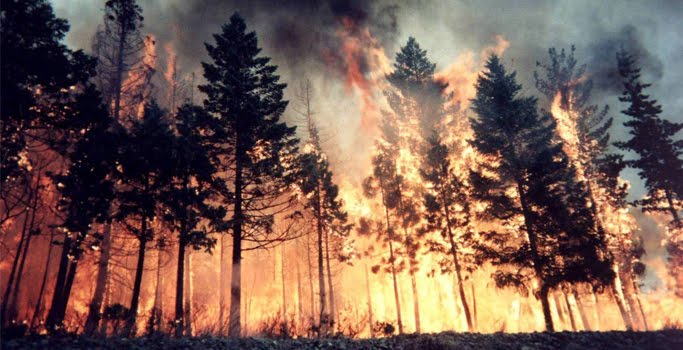
Which natural disaster is a prolonged period of abnormally low rainfall; a shortage of water resulting from this?
a)
Flood
b)
Blizzards
c)
Drought
d)
Hurricane
78.
Over the past 200 years, the level of carbon dioxide in the atmosphere has
a)
decreased slightly
b)
increased until recently, and then decreased
c)
increased steadily
d)
stayed about the same
79.
This prevents damaging ultraviolet radiation from the sun from reaching the earth.
a)
Stratosphere
b)
Hemisphere
c)
Ozone Layer
d)
Ionosphere
80.

What is climate change?
a)
Don't know
b)
Change in global climate, such as an increase in the global temperature and major variations in precipitation patterns.
c)
The earth has become sick.
d)
A change in the earth's climate due to human causes.
81.
What is the difference between climate and weather?
a)
Climate averages the weather conditions in a specific place over a long period of time, while weather describes the state of the atmosphere at a specific moment in time.
b)
Weather averages the weather conditions in a specific place over a long period of time, while Climate describes the state of the atmosphere at a specific moment in time.
c)
Climate describes the weather conditions at night, while weather describes the conditions during the daytime.
d)
There is not a difference between climate and weather.
82.
What is a consequence that increasing human population could have on the Earth's climate?
a)
decreasing global temperatures due to decreased fossil fuel use
b)
increased global temperatures due to increased use of fossil fuels
c)
a decreased heat island effect, due to less people living and working in urban areas
d)
all of these
83.

The greenhouse effect is beneficial as it helps to sustain life on earth by naturally trapping heat in the atmosphere.
a)
False
b)
True
84.
Which of the following natural events would be most likely to contribute to the cooling of Earth's atmosphere?
a)
Earthquake
b)
Hurricane
c)
Volcanism
d)
Monsoon
85.

From 1880 to 2010, the temperature of the globe mostly
a)
stays the same
b)
increases
c)
decreases
d)
none of the above
86.
What is one example of something that can be done about climate change on an individual scale?
a)
Make a cup of tea
b)
Using less items that run on fossil fuels
c)
Showering five times a day
d)
Eating McDonalds for dinner each day of the week
87.
Which of the following have been linked to climate change?
a)
droughts
b)
flooding
c)
melting of polar ice caps
d)
all of the above
88.
Scientists observe the thickness of a tree's _________ to learn about past climate conditions.
a)
rings
b)
branches
c)
roots
d)
bark
89.

Plastic, paper, glass, and metal can all be recycled.
a)
True
b)
False
90.
Sustainability
a)
Taking only what you need to survive
b)
Providing for future generations
c)
Conserving common resources
d)
All of these
91.
Point Source Pollution
a)
Exact source of pollution unknown
b)
Acid Rain
c)
Petroleum, oil, natural gas
d)
Exact source of pollution known
92.
Conservation
a)
Planting foreign vegetation
b)
Preservation of wildlife
c)
Removing natural ecosystems
d)
Building sidewalks and city parks
93.
What is: potential energy
a)
Renewable Resource
b)
Roller coaster energy at the top of a hill
c)
A useful energy source
d)
the Law of Conservation of Energy
94.
Alternative Energy Sources
a)
Using scrubbers when burning coal to reduce toxic emissions
b)
Reusing rain water (grey water) to water plants
c)
Recycling paper
d)
Replace or supplement traditional fossil-fuel sources
95.
Kinetic energy
a)
energy that is stored
b)
energy that is magnetic
c)
energy that is building
d)
energy that is moving
96.
Nonpoint Source Pollution
a)
Battery acid
b)
Exact origin of pollution unknown
c)
Farming run-off
d)
Exact origin of pollution known
97.
What are the agents of soil erosion?
a)
Water
b)
Wind
c)
Gravity
d)
All of these
98.
Any material that can release energy in a chemical change is called,
a)
Energy
b)
Fossil fuel
c)
Fuel
d)
Deforestation
99.
Soil degradation refers to
a)
Physical loss of soil
AND
The decrease in its quality and productivity.
AND
The decrease in its quality and productivity.
b)
The decrease in the quality and productivity of soil
AND
The physical increase of soil
AND
The physical increase of soil
c)
The loss of vegetation and biomass deemed necessary for life to grow in the ground
100.
climate change can be linked to soil erosion by
a)
melting of the soil from increased temperatures
b)
decreases in the amount of solar radiation which is needed for photosynthesis
c)
increased frequency of earthquakes which disrupts soil
d)
increased wind erosion, drought and flooding
100 %

