
 Worksheets
WHII SOL Practice
Total questions: 132
Worksheet time: 2hrs 35mins
Name
Class
Date
1.
Muslims must pray toward this city 5 times a day.
a)
Medina
b)
Mecca
c)
Jerusalem
d)
Dubai
2.
Judaisms holy book (scripture)
a)
Bible
b)
Qur'an
c)
Torah
d)
Gospels
3.
One's actions have an unavoidable effect on the next life.
a)
Dharma
b)
Karma
c)
Tao
d)
Noble Truth
4.
Who is the messiah, according to Christians?
a)
Moses
b)
Muhammad
c)
Jesus
d)
Abraham
5.
Who do Jews, Christians, and Muslims trace their roots back to?
a)
Abraham
b)
Muhammad
c)
Moses
d)
Constantine
6.
How many pillars of Islam are there?
a)
4
b)
5
c)
6
d)
7
7.
Where did the Renaissance begin?
a)
Italy
b)
France
c)
England
d)
Germany
8.
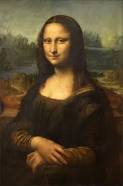
Who painted the Mona Lisa?
a)
Michelangelo
b)
Boticceli
c)
Leonardo da Vinci
d)
Donatello
9.
What was the Renaissance a "rebirth" of?
a)
Religion
b)
Classical culture
c)
Life (after the black death)
d)
Middle Ages
10.
Advantages of Johannes Gutenberg's printing press include all of the following EXCEPT:
a)
Cheaper book prices
b)
Increase in education/literacy
c)
Increase in church power
d)
Rapid spread of ideas
11.
Which of the following occurred as a result of Martin Luther's stand against indulgences? .
a)
Germany rejected Lutheranism and remained Roman Catholic.
b)
Martin Luther became the POPE
c)
Henry VIII started a new religion in England called Anabaptism.
d)
The Protestant Reformation began.
12.
In 1517 the Reformation began in Wittenberg Germany. It led to the founding of Christian churches that did not accept the pope's authority. The person credited with beginning the Reformation is
a)
Queen Elizabeth I
b)
Michelangelo
c)
Martin Luther
d)
King Henry VIII
13.
This reformer translated the Bible into the common language of English.
a)
Huss
b)
Wycliffe
c)
Luther
d)
Calvin
14.
This reformer continued the teachings of Wycliffe. He was condemned to death at the Council of Constance.
a)
John Calvin
b)
Martin Luther
c)
John Huss
d)
Martin Luther King Jr.
15.
The Peace of Augsburg
a)
ended the Reformation
b)
ended the Crusades
c)
It was a peace agreement between Martin Luther and the Catholic Church that gave Lutherans the right to the sacraments
d)
allowed each prince the right to choose whether his territory would be Lutheran or Roman Catholic
16.
A church court used during the Reformation to convict and punish Heretics or those that opposed the churches teachings.
a)
St. Bartholomew Diet
b)
Inquisition
c)
Augsburg Confession
d)
Council of Trent
17.
Huguenots
a)
Followers of Wycliffe
b)
French Catholics
c)
Followers of Luther
d)
First to land on Mars
18.
Predestination, The Institute of the Christian Religion, Systematic Theology
a)
William the Silent
b)
Martin Luther
c)
John Knox
d)
John Calvin
19.
a ship invented by the Portuguese that made it possible to travel long distances
a)
schooner
b)
caravel
c)
lateen
d)
astrolab
20.
Spanish conquerors of the Americas
a)
conquistadors
b)
Aztecs
c)
Incas
d)
encomienda
21.
seventeenth-century economic theory that held that the prosperity of a nation depended on a large supply of gold and silver
a)
encomienda
b)
mercantilism
c)
mita
d)
Columbian Exchange
22.
forced labor system used by the Spanish in colonial Latin America
a)
ecomienda
b)
peninsulares
c)
indentured servitude
d)
mita
23.
exchange of plants, animals, and people between Europe, Asia, and the Americas
a)
Middle Passage
b)
Northwest Passage
c)
Columbian Exchange
d)
Magellan Exchange
24.
Why did the Catholic Church have so much influence in Latin America?
a)
The Catholic Church gave Native Americans food and clothing
b)
Spanish and Portuguese rulers wanted Native Americans to become Catholic
c)
The missions were well organized and profitable
d)
Native Americans became docile members of the Spanish and Portuguese empires
25.
What was the pattern of trade that connected Europe, Africa, and the American continents called?
a)
Golden Age
b)
triangular trade
c)
slave trade
d)
Middle Passage
26.
Who was the first person to circumnavigate the globe?
a)
Christopher Columbus
b)
Amerigo Vespucci
c)
Francisco Pizarro
d)
Ferdinand Magellan
27.
Who conquered the Aztec empire?
a)
Ferdinand Magellan
b)
Francisco Pizarro
c)
Hernan Cortes
d)
Hernan de Soto
28.
Nicolaus Copernicus was the first person to challenge the church and develop the idea that the universe is ______________
a)
Earth centered
b)
Mars centered
c)
Sun centered
d)
beautiful
29.
Who built the telescope?
a)
Hunter Marrone
#Harambe
#Harambe
b)
Sir Iassac Newton
c)
Copernicus
d)
Galileo Galilei
30.
Sir Isaac Newton is known for developing the idea of ______________.
a)
Mashed potatoes and gravy
b)
Gravity
c)
Sun-centered univer
d)
Passion
31.
One similarity in the Scientific Revolution and the Enlightenment is that both ...
a)
a. had the support of the Roman Catholic Church
b)
b. placed great value on traditional beliefs
c)
c. emphasized the value of human reasoning
d)
d. contributed to the end of feudalism
32.
What did Kepler add to Copernicus’ heliocentric theory?
a)
That Jupiter had four moons
b)
The Flux Capacitor equation
c)
That the sun was the biggest star
d)
That the planets move in eliptical (oval shaped) orbits around the sun
33.
John Locke argued that the purpose of the govenment is to
a)
protect a monarch's divine right
b)
suppress a discontent among citizens
c)
protect a citizen's natural rights
d)
persecute the proletariat
34.
The Declaration of Independence represents Enlightenment ideals because it
a)
states that all titles of nobility should be abolished
b)
protects the rights of the accused and prohibited cruel punishment
c)
sets up a system of checks and balances for the US government
d)
says that people have rights to life, liberty, and the pursuit of happiness
35.
American's used _________________'s idea of separation of powers to write the US Constitution.
a)
A. Montesquieu
b)
B. Hobbes
c)
C. Rousseau
d)
D. Voltaire
36.
An agreement between people and the government to give up some rights for safety and protection
a)
Philosophers
b)
Democracy
c)
Social Contract
d)
Divine Right of Kings
37.
Hobbes believed all humans were inherently
a)
selfish and evil
b)
intelligent and reasonable
c)
ambitious and motivated
d)
poor and irrational
38.
Who ascended to the throne during the Glorious Revolution?
a)
James II
b)
William I and Mary II
c)
Charles II
d)
Oliver Cromwell
39.
Match the author to the correct work:
a)
Beccaria, Faust
b)
Hume, Leviathan
c)
Hobbes, Common Sense
d)
Locke, Second Treatise on Government
40.
Adam Smiths pivotal work is titled:
a)
Common Sense
b)
Social Contract
c)
Tableau Economique
d)
Wealth of Nations
41.
Which of the following best relates to Voltaire?
a)
Right to bear arms
b)
Due process
c)
Freedom of speech
d)
Seperation of powers
42.
This is a ruler with complete authority over the government and lives of the people.
a)
Supreme Monarch
b)
Absolute Monarch
c)
Monarch
d)
Queen
43.
What was it called when European monarchs justified their rule through the authority of God?
a)
Social Contract
b)
Indulgences
c)
Divine Right
d)
Tyranny
44.
Louis XIV built this palace as a symbol of France's wealth and power.
a)
Taj Mahal
b)
Buckingham Palace
c)
Versailles
d)
Huguennots
45.
Most of the people of France belonged to the
a)
1st Estate
b)
2nd Estate
c)
3rd Estate
d)
4th Estate
46.

What do these pie charts reveal about the causes of the French Revolution?
a)
all the estates were taxed equally
b)
the upper classes paid the most taxes
c)
the poorest classes paid all the taxes
d)
the third estate was the wealthiest
47.
Which best describes the Congress of Vienna?
a)
One of three social classes in France before the French Revolution.
b)
Village in Belgium near which the Duke of Wellington led British and Prussian forces to final victory over Napoleon.
c)
A wave of senseless panic that spread through the French countryside after the storming of the Bastille in 1789.
d)
A series of meetings in 1814-15, during which European leaders sought to establish long-lasting peace and security after the defeat of Napoleon.
48.
One way in which Toussaint L'Ouverture, Simón Bolívar, and José de San Martín are similar is that they all were
a)
industrial labor reformers
b)
democratically elected leaders
c)
leaders of independence movements
d)
supporters of mercantile policies
49.

Based on a comparison of these maps of South America, which conclusion is accurate?
a)
Between 1790 and 1828, South American political boundaries remained unchanged except for Brazil.
b)
Spain continued to gain South American colonies in the 19th century.
c)
All of South America was independent by 1828.
d)
Many regions of South America gained their independence between 1790 and 1828.
50.

Which individual is most closely associated with the changes indicated on these maps?
a)
Pancho Villa
b)
Porfirio Diaz
c)
Simón Bolívar
d)
Emiliano Zapata
51.
The Iron Chancellor: Unites Germany: Realpolitick
a)
Cavour
b)
Wilhelm I
c)
Bismarck
d)
Garibaldi
52.
The Brains of Italian Unification: unites Italy under the kingdom of Piedmont-Sardinia
a)
Cavour
b)
Manzinni
c)
Garibaldi
d)
Bismarck
53.
The Muscle of Italian Unification: Kicks the Spanish out of Southern Italy
a)
Garibaldi
b)
Cavour
c)
Manzinni
d)
Bismarck
54.
Why did the Industrial Revolution begin in England?
a)
famine in Europe
b)
floods in Asia
c)
war in Europe
d)
natural resources
55.
James Watt is credited with the following:
a)
invention of the cotton gin
b)
urbanization
c)
improvements on the computer
d)
improvements on the steam engine
56.

Why did people move to cities during the Industrial Revolution?
a)
People were looking for work in factories.
b)
People were looking for farms.
c)
People wanted to buy a house.
d)
People wanted to sell their crops.
57.
An early production method was called cottage industry because workers _________.
a)
built cottages
b)
worked in their homes
c)
lived in factories
d)
made cottage cheese
58.
The Bessemer Process was a more efficient way to make this product, plus it made it stronger.
a)
steel
b)
automobiles
c)
gasoline
d)
cloth
59.
Which statement is true?
a)
Children were not allowed to work in the mines during the Industrial Revolution
b)
Work conditions were closely regulated
c)
There were no labor laws that prevented children from working
d)
Children were allowed to work but they were treated fairly.
60.

Who invented cotton gin and interchangeable parts?
a)
John Deere
b)
Eli Whitney
c)
Samuel Slater
d)
Elias Howe
61.
In the late 1800's, which reason led the United States togive greater attention to the world beyond its borders?
a)
fear of revolution in Latin America
b)
fear of Russian expansion in Alaska
c)
interest in finding places to settle surplus population
d)
interest in obtaining markets for surplus goods
62.
A region where an imperial power possesses trading rights but doesn't rule
a)
Colony
b)
Protectorate
c)
Sphere of Influence
d)
Partition
63.
Which of the following was a factor that motivated imperialism?
a)
Closer political ties
b)
Closing of China to trade
c)
Support of world peace
d)
Acquiring new markets and materials
64.
Indian soldiers in service of British were called
a)
Boers
b)
Sepoys
c)
Viceroys
d)
Boxers
65.
Anti-imperialism revolt in China
a)
Self-Strengthening Movement
b)
Boxer Rebellion
c)
Taiping Rebellion
d)
Sepoy Rebellion
66.
The Armenian Genocide occurred under what government?
a)
British
b)
French
c)
Ottoman
d)
Chinese
67.
The Suez Canal connected
a)
Malay and Indochinese Penninsulas
b)
Nile River and Persian Gulf
c)
Pacific and Atlantic
d)
Red Sea and Mediterranean Sea
68.
Social Darwinism was used as proof of:
a)
Superiority of Europe
b)
Evolution of animals
c)
Importance of region
d)
Need for learning about cultures
69.

In what way did alliances cause WWI?
a)
Countries that had alliances were more likely to provoke wars
b)
Countries who were under threat were more likely to leave alliances
c)
Small, regional disputes became magnified when allies were caled upon to assist
d)
Small, regional disputes were quickly settled through negotiations with allies
70.

In what way did Nationalism cause World War I?
a)
Small countries wanted to become a part of something bigger, so tried to become part of bigger nations
b)
Large countries wanted to share their culture with smaller ones, leading to invasions
c)
Countries wanted to be seen as strong and independent, so refused to work with other nations
d)
Countries wanted to be seen as powerful, so tried to diminate others, and resist being dominated themselves.
71.

What is the best description of how Nationalism and Militarism connected together before WWI?
a)
Nations need a bigger military to make the people proud.
b)
Militaries grow larger in nations that have less pride in their nations.
c)
Nations that grow and expand build larger militaries to defend themselves.
d)
Nations that have large militaries need large empires to supply them with food & troops.
72.

Which of the following was NOT one of the central powers in WWI?
a)
France
b)
Germany
c)
Austria-Hungary
d)
The Ottoman Empire
73.

What was the inspiration for naming the Central Powers?
a)
They were all countries in central Europe
b)
They were all countries with a strong central government
c)
Their actions were central to the outbreak of war
d)
They were central to allied victory
74.

Propaganda posters such as this were meant to promote a sense of ___________ among citizens during World War I.
a)
unity and duty
b)
fear and avoidance
c)
neutrality and conscience
d)
patriotism and love
75.

Most of the fighting in World War I took place in
a)
the ocean.
b)
the trenches.
c)
no man's land.
d)
the home front.
76.

What do tanks, x-ray machines, gas masks, and aerial combat have in common?
a)
They were all invented before World War I
b)
They were all invented after World War I
c)
They were all used in World War I
d)
They have nothing in common.
77.

Why did President Wilson want to create a League of Nations after The Great War?
a)
He wanted a peaceful way fto settle disputes between nations
b)
He wanted to support nations ability to determine their fates for themselves
c)
Both are reasons
d)
Neither are reasons
78.

Which nation was blamed for World War I in the Treaty of Versailles?
a)
Germany
b)
Austria Hungary
c)
Serbia
d)
The Balkans
79.

Which of the following countries was broken apart due to World War I?
a)
Germany
b)
Austria-Hungary
c)
Serbia
d)
None of these were broken apart
80.

What was the impact of World War I on the economy of Germany?
a)
It devastated it, because of the War Guilt Clause and massive debt
b)
It helped it, by creating an open economy for Industrialization
c)
It helped it, as Germany was required to rapidly reindustrialize to pay it debts
d)
It hurt it briefly, but they soon recovered under the Weimar republic
81.

Who was assassinated which led to the outbreak of WWI?
a)
Wilhelm II
b)
Franz Ferdinand
c)
Nicolas II
d)
George V
82.
Imperialism caused
a)
increased efforts to solve problems between countries
b)
decreased competition between countries
c)
increased competition between countries
d)
decreased tension between countries
83.
The acronym that helps you to remember the causes of World War I is
a)
ALIVE
b)
POTUS
c)
BANANAS
d)
MAIN
84.
The 2 sides that emerged in WWI were called the:
a)
Axis and Allies
b)
Allies and Central Powers
c)
Reds and Whites
d)
East and West
85.
The assassination that triggered WWI occurred in what city?
a)
Vienna, Austria
b)
Sarajevo, Bosnia
c)
Moscow, Russia
d)
Belgrade, Serbia
86.
The original theorist of Communism. He believed that the workers of the world would unite, seize the means of production, share the profits, create a classless society, and have no need for government.
a)
Proletariat
b)
Totalitarian
c)
Atheist
d)
Karl Marx
87.
Led the Bolsheviks in the 1917 Russian Revolution. Became the first leader of the Soviet Union, tried to implement Marx ideas to create a communist society in Russia.
a)
Lenin
b)
Bolshevik
c)
Czar
d)
Bloody Sunday
88.
Supporters of Lenin, who overtook the provisional government and established Russia as “communist.”
a)
Lenin
b)
Bolshevik
c)
Czar
d)
Bloody Sunday
89.
This was when thousands of unhappy marchers gathered infront of the Czar’s palace, they were fired on, hundreds were killed, the Revolution of 1905 ignited after this event.
a)
Lenin
b)
Bolshevik
c)
Czar
d)
Bloody Sunday
90.
Massive world conflict, Russia had to make their own separate peace treaty because they were losing and experiencing their own Revolution.
a)
Collective Farms
b)
Gulag
c)
Duma
d)
World War One
91.
What do Stalin, Hitler, and Mussolini have in common about their rule?
a)
They all created representative democracy
b)
Limited free speech and basic liberties
c)
Encouraged political parties
d)
Wanted 3 branches of government
92.
Which of these is a system in which a dictatorial government controls most aspects of public and private life, and has deep feelings of racism?
a)
Nazism
b)
Militarism
c)
Fascism
d)
Totalitarianism
93.
Why would totalitarian governments emerge in Germany, Italy, and Spain in the 1920's and 1930's?
a)
Monarchy was a popular choice among the people
b)
Social and economic problems following WWI
c)
Rise of communism in the North
d)
Failure of the UN to maintain peace in Europe
94.
The United States entered WWII because-
a)
Germany wanted to declare war on the U.S.
b)
Southeast Asia fell to Japan
c)
Japanese attacks on Pearl Harbor
d)
None of these
95.
What was Japan's motive for Imperialism in the early 20th century?
a)
They lacked natural resources
b)
To end unfair treaties
c)
To spread religious beliefs
d)
To spread communism
96.
Which event ended war in the Pacific?
a)
D-Day landing in Normandy
b)
Capture of Okinawa
c)
The Battle of Midway
d)
The use of the atomic bomb on Hiroshima and Nagasaki
97.
What is the name of the policy that satisfied reasonable demands of dissatisfied powers for the sake of peace.
a)
Appeasement
b)
Sanctions
c)
Partisan
d)
Concessions
98.
Hitler's plan for the permanent eliminations of the Jews and other undesirables
a)
Auschwitz
b)
Final Solution
c)
Operation Overlord
d)
The Manhattan Project
99.
What occurred on D-Day?
a)
Allies invaded Italy
b)
Allies invaded Germany
c)
Allies invaded France
d)
Allies bombed Japan
100.
What prompted Great Britain and France to declare war on Germany?
a)
Soviet invasion of Poland
b)
German invasion of Poland
c)
German invasion of Czechoslovakia
d)
German invasion of Austria
101.
What event caused the Soviet Union to become allied with the United States and Great Britain?
a)
Hitler's violation of the German-Soviet Non-Aggression Pact
b)
Stalin's defeat at the Battle of Stalingrad
c)
Franklin Roosevelt's plan to invade France on D-Day
d)
Winston Churchill's vow to gain victory in the Battle of the Bulge
102.
Which of these is an accurate description of blitzkrieg?
a)
Sudden violent attacks by air and land
b)
Overthrow of totalitarian government
c)
Negotiations between countries at the end of war
d)
Defensive line of trenches used to protect countries
103.
Ceased power following the death of communist leader Vladimir Lenin
a)
Joseph Stalin
b)
Adolf Hitler
c)
A. Hideki Tojo
d)
A. Benito Mussolini
104.
Utilized fascism after rising to power in Italy.
a)
Joseph Stalin
b)
Adolf Hitler
c)
Hideki Tojo
d)
Benito Mussolini
105.
General & Prime Minister of Japan
a)
Joseph Stalin
b)
Adolf Hitler
c)
Hideki Tojo
d)
Benito Mussolini
106.
Who promised to restore Germany to its former power?
a)
Joseph Stalin
b)
Benito Mussolini
c)
Adolf Hitler
d)
Napoleon Bonaparte
107.

What was the name of Mussolini's political party that controlled Italy through WWII?
a)
Soviet
b)
NAZI
c)
Fascist
d)
Republican
108.

Why type of battle was the Battle of Britain, and who won?
a)
Sea Battle; Great Britain
b)
Hand to hand combat; Germany
c)
Air Battle; Luftwaffe
d)
Air Battle; RAF
109.

What two cities in Japan were atomic bombs dropped on to end WWII?
a)
Hiroshima, Tokyo
b)
Tokyo, Nagasaki
c)
Hiroshima, Nagasaki
d)
Tokyo, Beijing
110.
What were the two ethnic groups fighting in Rwanda?
a)
Hutu and Tutsi
b)
Dinka and Nuer
c)
Hutu and Nuer
d)
Tutsi and Dinka
111.
What were the name of the trials held to try those accused of participating in the German holocaust?
a)
Dresden
b)
Nuremberg
c)
Berlin
d)
Dachau
112.
What was the name of the conference where European countries decided how to split up Africa?
a)
Wansee Conference
b)
Berlin Conference
c)
Dachau Conference
d)
Auschwitz Conference
113.

What two nations were in competition with each other during the Cold War?
a)
Spain and Portugal
b)
England and France
c)
Germany and Italy
d)
United States and Soviet Union
114.

What was the term 'iron curtain' used to describe the division of?
a)
North and South Vietnam
b)
East and West Asia
c)
North and South Korea
d)
East and West Europr
115.

President Truman adopted a new foreign policy during the Cold War know as the Truman Doctrine. What was the main goal of the Truman Doctrine?
a)
To expand trade with Europe
b)
To limit the build up of nuclear weapons
c)
To stop the spread of communism
d)
to send financial aid to Europe
116.

The United States got involved in conflicts like Korea and Vietnam because they were afraid of the domino theory. What is the domino theory?
a)
If one country fell to democracy, others would follow
b)
If one country fell to communism, others would follow
117.

Why was the United States involved in the Berlin Airlift?
a)
to airlift food to the people of West Berlin
b)
to bomb East Berlin
c)
to demolish the Berlin Wall
d)
to transport people out of East Berlin
118.

Where was Korea divided?
a)
18 parallel
b)
34 parallel
c)
38 parallel
d)
15 parallel
119.
Why did the Soviet Union build the Berlin Wall?
a)
They built it to keep Soviet people from going to Western Europe.
b)
They built it to try to keep East Germans from going to West Germany.
c)
The Soviet Union and the United States divided Berlin in two parts after the war.
d)
The Soviet Union was trying to put people back to work by building the Berlin Wall.
120.

What was the mutual defense alliance of non communist nations?
a)
NATO
b)
Warsaw Pact
c)
Truman Doctrine
d)
Open Skies
121.
What was the name for the 1955 alliance of Soviet-dominated countries of Eastern Europe that were the counterpart to the western alliance?
a)
NATO
b)
Warsaw Pact
c)
European Alliance
d)
Iron Curtain
122.
Leader of communism in China
a)
Mao Zedong
b)
Hirohito Showa
c)
Xi Jinping
d)
Pu Yi
123.
What war ended in a stalemate?
a)
Vietnam War
b)
Korean War
c)
Civil War
d)
World War II
124.
What was the Iron Curtain?
a)
the boundary between Western Europe and communist Eastern Europe
b)
the boundary between the United States and Mexico
c)
the boundary between the United States and Mexico
d)
the wall dividing East and West Berlin
125.
When did many African groups begin to challenge European colonial rule?
a)
Before WWI
b)
Just after WWI
c)
Just before WWII
d)
After WWII
126.
What was apartheid?
a)
segregation of races in Kenya
b)
integrated democracy in Kenya
c)
segregation of races in South Africa
d)
integrated democracy in South Africa
127.
Who was the first democratically elected president of South Africa?
a)
Jawaharlal Nehru
b)
Nelson Mandela
c)
Mohammad Jinnah
d)
Jomo Kenyatta
128.
Algeria went to war with the nation that colonized it. This nation was
a)
France
b)
Britain
c)
India
d)
United States
129.
How are Kenyatta and Ghandi similar?
a)
used violence
b)
wanted independence from Great Britain
c)
boycotted British goods
d)
supported colonial practices
130.
Chinese Communist Party leader after 1976; introduced the 4 modernizations
a)
Sun Yat-sen
b)
Mao Zedong
c)
Chiang Kai-shek
d)
Deng Xiaoping
131.
Kenyan writer and leader
a)
Chinua Achebe
b)
Jomo Kenyatta
c)
Desmond Tutu
d)
Nelson Mandela
132.
Gandhi encouraged his followers to protest British laws by all of the following means EXCEPT
a)
withholding of taxes
b)
boycotting British goods
c)
using homemade salt
d)
blowing up British railroad tracks
100 %

