
 Worksheets
Review
Total questions: 91
Worksheet time: 1hrs 20mins
Name
Class
Date
1.

A cannonball with a mass of 0.5 kg is flying at an acceleration of 10 m/sec/sec. What is it's force?
a)
50 Newtons
b)
5 Newtons
c)
20 Newtons
d)
9.5 Newtons
2.
Which law explains why when you put a book on a table the table pushes on the book
a)
3rd law
b)
4th law
c)
1st law
d)
2nd law
3.
What is Newton's First Law
a)
F=ma
b)
Every action has an equal and opposite reaction
c)
An object at rest stays at rest, an object in motion stays in motion.
d)
Friction
4.

Four bike riders were involved in a study of how quickly they could accelerate from a stop. The mass and acceleration of each rider are given in the table below.
Which rider applied the least amount of force to accelerate her bike?
Which rider applied the least amount of force to accelerate her bike?
a)
Rider 1
b)
Rider 2
c)
Rider 3
d)
Rider 4
5.

What is the net force?
a)
40 N left
b)
0 N Balalnced
c)
400 N right
d)
40 N right
6.
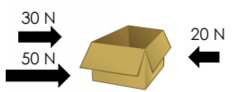
Calculate the Net Force.
a)
60N, Left
b)
40N, Right
c)
0N
d)
60N, Right
7.

Cancer can be treated with_______________waves.
a)
Penicillin
b)
Radio
c)
Infrared
d)
Gamma
8.

_____________________light is the only type of EM wave detected by the human eye.
a)
Red
b)
Gamma
c)
Microwave
d)
Visible
9.

The acronym (letters) used to remember visible light is____________
a)
KTPERRY
b)
ROYGBIV
c)
DOGPOUND
d)
ROMERO
10.

_____ have the longest wavelengths and lowest frequencies of all electromagnetic waves.
a)
microwaves
b)
radio waves
c)
gamma rays
d)
ultraviolet
11.
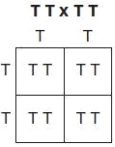
What ratio of the offspring from the cross shown will be homozygous recessive for the trait of tallness?
a)
0 in 4
b)
1 in 4
c)
2 in 4
d)
4 in 4
12.
In a flowering plant species, red flower color (R) is dominant over white flower color (r). What is the genotype of any red-flowering plant resulting from this species?
a)
rr
b)
R
c)
RR
d)
RR or Rr
13.
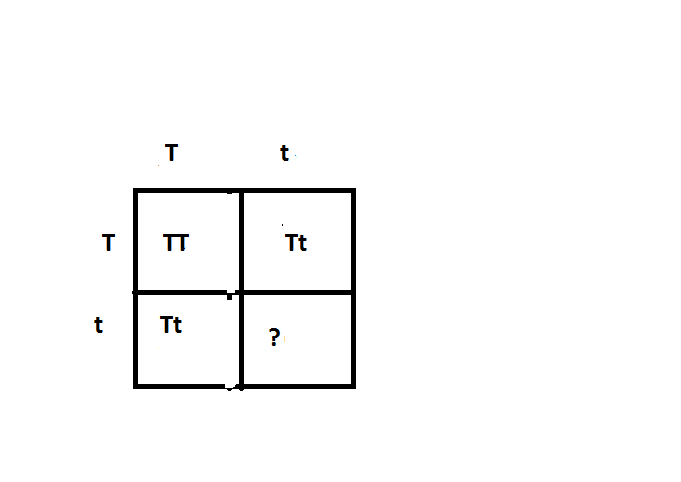
T - tall and t = short
In the punnett square below, what belongs in the missing square
In the punnett square below, what belongs in the missing square
a)
tt
b)
Tt
c)
Bb
d)
TT
14.
Aa is
a)
homozygous
b)
heterozygous
15.
Which of the following is homozygous dominant?
a)
Yy
b)
Y
c)
yy
d)
YY
16.
What gender has an X and a Y chromosome?
a)
male
b)
female
c)
transgender
d)
all of the above
17.
How many alleles (letters) do each person carry for a trait?
a)
1
b)
2
c)
3
d)
4
18.
How many alleles (letters) does a child get from each parent for each trait?
a)
1
b)
2
c)
3
d)
4
19.
When the Northern Hemisphere is pointing towards the sun, what season is the Southern Hemisphere?
a)
Winter
b)
Spring
c)
Fall
d)
Summer
20.
What are the reasons for the seasons?
a)
Earth's tilt and rotation.
b)
Earth's rotation and revolution.
c)
Earth's tilt and revolution.
d)
Earth's tilt and resolution
21.
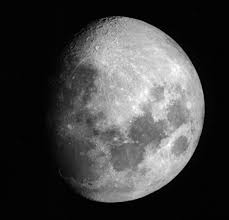
Name the moon phase
a)
waning crescent
b)
waxing crescent
c)
waning gibbous
d)
waxing gibbous
22.
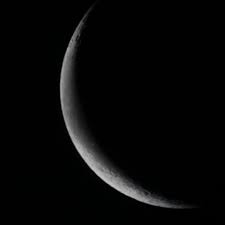
Name the moon phase
a)
waning crescent
b)
waxing crescent
c)
waning gibbous
d)
waxing gibbous
23.
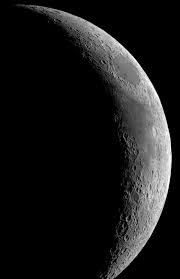
Name the moon phase
a)
waning crescent
b)
waxing crescent
c)
waning gibbous
d)
waxing gibbous
24.
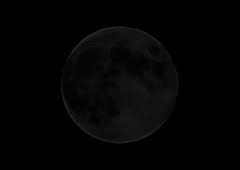
Name the moon phase
a)
First Quarter
b)
Last Quarter
c)
New Moon
d)
Full Moon
25.
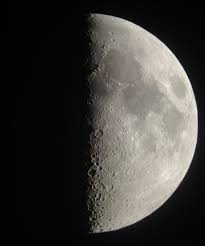
Name the moon phase
a)
First Quarter
b)
Last Quarter
c)
New Moon
d)
Full Moon
26.
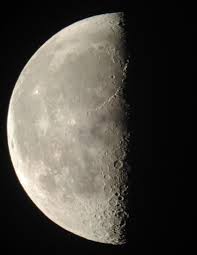
Name the moon phase
a)
First Quarter
b)
Last Quarter
c)
New Moon
d)
Full Moon
27.

Name the moon phase that would come AFTER this moon.
a)
waning crescent
b)
waxing crescent
c)
waning gibbous
d)
waxing gibbous
28.
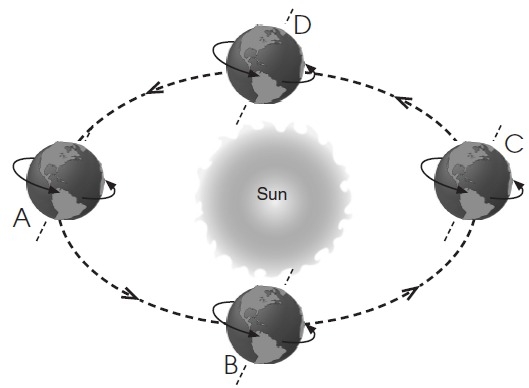
What season is letter A?
a)
Winter
b)
Summer
c)
Spring
d)
Fall
29.

Name the phase of the moon for letter a
a)
First Quarter
b)
Last Quarter
c)
Waxing Gibbous
d)
Waning Gibbous
30.

Name the phase of the moon for letter f
a)
Waning Gibbous
b)
Waxing Gibbous
c)
Waning Crescent
d)
Waxing Crescent
31.

Which type of eclipse is shown in this picture?
a)
Solar Eclipse
b)
Orbit
c)
Lunar Eclipse
d)
Total Eclipse
32.

Which type of eclipse is shown in the diagram?
a)
Solar Eclipse
b)
Lunar Eclipse
c)
Total Eclipse
d)
Partial Eclipse
33.
Balance this equation...
HgO --> 2Hg + O2
HgO --> 2Hg + O2
a)
It is balanced
b)
2HgO --> Hg + O2
c)
2HgO --> 2Hg + O2
d)
I don't know...Oh well!
34.
Is this balanced?...
Fe + S --> FeS
Fe + S --> FeS
a)
YES!
b)
NO!
35.
Is this balanced?...
Al + O2 --> 2Al2O3
Al + O2 --> 2Al2O3
a)
Yes!
b)
NO!
36.
Balance this equation...
H2 + Cl2 --> HCl
H2 + Cl2 --> HCl
a)
It is balanced
b)
3H2 + Cl2 --> 6H2Cl
c)
H2 + Cl2 --> 2HCl
d)
I don't know! Oh well.
37.
Which of the following shows the correct way to balance the chemical equation?
Fe + O2 -> Fe2O3
Fe + O2 -> Fe2O3
a)
4Fe + 3O2 -> 2Fe2O3
b)
2 Fe + 3O2 -> Fe2O6
c)
4 Fe + O6 -> 2Fe2O3
d)
None of the options are correctly balanced.
38.

Which organism do the owl and the weasel compete for in the food web?
a)
Hawk
b)
Spider
c)
Grasshopper
d)
Shrew
39.

Which of the following is a herbivore?
a)
cricket
b)
frog
c)
hawk
d)
shrew
40.

Which of the following would be the most likely effect, if there were a sudden increase in the cricket population?
a)
There would be a decrease in the small bird population.
b)
There would be a decrease in the grass/flowers population.
c)
There would be a decrease in the mice population.
d)
There would be an increase in the grass/flowers population.
41.

symbiotic relationship in which one organism benefits and the other organism is harmed
a)
secondary succession
b)
predation
c)
pioneer species
d)
parasitism
42.

largest number of individuals of a population that the environment can support
a)
carrying capacity
b)
primary succession
c)
denitrification
d)
mutualism
43.

symbiotic relationship in which one organisms benefits and the other organism is not affected
a)
invasive (non-native) species
b)
mutualism
c)
nitrogen fixation
d)
commensalism
44.

symbiotic relationship in which both organisms benefit
a)
competition
b)
Mutualism
c)
nitrogen fixation
d)
energy pyramid
45.

What structure is in plant cells but not animal cells.
a)
cell membrane
b)
mitochondria
c)
cell wall
d)
vacuole
46.

What are the reactants (what is needed) for photosynthesis?
a)
glucose and oxygen
b)
light, water, and carbon dioxide
47.
Which of the following is the correct equation for PHOTOSYNTHESIS?
a)
carbon dioxide + water --> oxygen + glucose
b)
carbon dioxide + glucose + water --> oxygen
c)
oxygen + water --> carbon dioxide + glucose
d)
glucose+ oxygen ---> water + carbon dioxide
48.

Label 5 is pointing to the...
a)
Chloroplasts
b)
Nucleus
c)
Vacuole
d)
Cytoplasm
49.
Animals cells are...
a)
round.
b)
triangular.
c)
rectangle.
d)
square
50.
Low Pressure is associated with this type of weather...
a)
Cloudy/Overcast Weather
b)
Cold Weather
c)
Warm Weather
d)
Fair Weather
51.
High Pressure is associated with this type of weather...
a)
Cloudy/Overcast Weather
b)
Cold Weather
c)
Warm Weather
d)
Fair Weather
52.
Our weather generally moves in this direction...
a)
West to East
b)
East to West
c)
North to South
d)
South to North
53.

What direction is the cold front moving?
a)
Northwest
b)
Southeast
c)
Northeast
d)
Southwest
54.

Which city can expect to see an increase in temperatures over the next 24 hours?
a)
Billings, Montana
b)
Atlanta, Georgia
c)
Minneapolis, Minnesota
d)
Miami, Florida
55.

After a warm front passes through what type of weather will there be?
a)
Rainy or stormy, and cloudy
b)
Clear, dry, and sunny
56.

After a cold front passes through, what type of weather will there be?
a)
Rainy or stormy, and cloudy
b)
Clear, dry, and sunny
57.

The picture represents a land breeze
a)
True
b)
False
c)
Not enough information
d)
Maybe
58.
The _____________ the isobars on a map are to/from one another the ___________ the wind.
a)
closer, slower
b)
closer, faster
c)
farther, faster
59.
What are lines on a weather map connecting points of equal temperature?
a)
Isotherms
b)
Isoclines
c)
Isobars
d)
Isochrons
60.
What are lines on a weather map connecting points of equal pressure?
a)
Isotherms
b)
Isoclines
c)
Isobars
d)
Isochrons
61.

The Jet Stream is a global pattern of atmospheric movement that influences patterns in local weather.
Rain and even severe thunderstorms are often associated with the passage of a cold front.
Based on this information, and that provided in the weather map, which city shown will most likely experience precipitation in the next few days?
Rain and even severe thunderstorms are often associated with the passage of a cold front.
Based on this information, and that provided in the weather map, which city shown will most likely experience precipitation in the next few days?
a)
Albany
b)
Bismarck
c)
Nashville
d)
San Diego
62.

The general pattern of winds around a high pressure area is clockwise, outward.
The general pattern of winds around a low pressure area is counterclockwise, inward.
Based on the information provided, the winds in Monterrey, Mexico, will be mainly from which direction?
The general pattern of winds around a low pressure area is counterclockwise, inward.
Based on the information provided, the winds in Monterrey, Mexico, will be mainly from which direction?
a)
North
b)
East
c)
South
d)
West
63.

The Jet Stream is a global pattern of atmospheric movement that influences patterns in local weather. Based on the information provided in the weather map, which city shown most recently experienced a rise in pressure and can expect a drop in pressure over the next few days?
a)
Atlanta
b)
Cleveland
c)
Los Angleles
d)
Omaha
64.

The Jet Stream is a global pattern of atmospheric movement that influences patterns in local weather.
Based on the information provided in the weather map, which city shown most recently experienced a rise in temperature?
Based on the information provided in the weather map, which city shown most recently experienced a rise in temperature?
a)
Armarillo
b)
Detroit
c)
Orlando
d)
Reno
65.
Research question: does the distance a person kicks a soccer ball effect how well they will do on their math test. What is the dependent variable?
a)
How far they kick the soccer ball
b)
who the person is
c)
how well they do on the math test
d)
Type of soccer ball.
66.
When experimenting with the growth of a plant, a scientist uses three (of the same type of) plants, two different fertilizers, equal light, and equal water. What type of variable is the fertilizer?
a)
Dependent
b)
Independent
c)
Control
d)
Compound
67.
Which variable depends on what is done at the beginning of an experiment?
a)
Dependent
b)
Independent
c)
Control
d)
Following
68.
What would the INDEPENDENT variable be in an experiment testing which types of paper airplane goes furthest?
a)
the paper used
b)
the type of paper airplane
c)
the distance of each plane's flight
d)
how hard the plane is thrown
69.
Ms. S set up an experiment to see how the mass of a ball affects the distance it rolls off a ramp. What is the dependent variable?
a)
Distance traveled by the ball
b)
Height of the ramp
c)
Mass of the ball
d)
Where the experiment took place.
70.
Mr. S normally uses praise as a reward to train his dog. He wants to know the best way to train his dog, so he sets up an experiment to find out if there is a better way to get his dog to respond to commands. What is his control variable?
a)
Type of reward
b)
Praise
c)
Walking
d)
Amount of time the dog follows commands
71.
A student is planning an experiment to find out how the height from which he drops a ball affects how high the ball bounces. What is the control variable?
a)
The ball used
b)
The height the ball bounces
c)
Height of the ball being dropped
72.
Suzan usually walks to school. She wants to see if running to school will help her do better on quizzes in first period. (Which would be a good constant for her?)
a)
How fast she runs
b)
How slow she walks
c)
How much she sleeps
d)
How much she sings to her cat
73.
An experiment is performed on plants to see how different liquids affect plant growth. Each plant in the experiment is given a different liquid; water, apple juice, or milk. Each plant has the same amount of soil, sunlight, and listens to the same music. In this investigation, what variables or factors need to be controlled and kept the same?
a)
Type of plant, amount of music, and sunlight
b)
Water, apple juice, milk
c)
Plant growth
74.

Which of the following is a quantitative observation?
a)
The bird is very colorful.
b)
The bird has 4 different colors on him.
c)
The bird has many, many feathers.
d)
It is a bird.
75.
An observation is...
a)
an educated guess that answers a testable question.
b)
a logical, reasonable conclusion to an experiment.
c)
information collected by your 5 senses.
d)
an explanation of what you learned at the end of an experiment.
76.
What is the factor in an experiment that is changed by the person conducting the experiment.
a)
dependent variable
b)
independent variable
c)
controlled variable
d)
responding variable
77.

What is the Responding (Dependent) Variable in this graph?
a)
Plant Growth
b)
Growth (cm)
c)
Hours
d)
15
78.
Which of the following best describes the tilt of the earth when it is summer in the southern hemisphere?
a)
The northern hemisphere is tilted toward the sun
b)
The northern hemisphere is tilted away from the sun
c)
The norther hemisphere is tilted neither toward or away from the sun
d)
Why are you talking about the northern hemisphere when you asked about the southern hemisphere?
79.
Which of the following best describes equinoxes?
a)
The earth is tilted neither toward or away from the sun
b)
The norther hemisphere is tilted toward the sun
c)
The northern hemisphere is tilted away from the sun
d)
The southern hemisphere is tilted toward the sun
80.

Which of the following best describes the tilt of the earth during the spring and fall equinoxes?
a)
The earth is tilted away from the sun (Northern hemisphere)
b)
The earth is tilted neither toward or away from the sun (tilt is side to side)
c)
The earth is tilted toward the sun (Northern hemisphere)
d)
The earth is not tilted during spring and fall
81.

Why does the area around the equator stay the same temperature all year?
a)
The equator rotates slower than the poles.
b)
The equator remains the same distance from the sun.
c)
The equator always receives direct sunlight.
d)
The equator has 18 hour days.
82.
What would seasons be like if Earth's axis were straight up and down?
a)
Seasons would be the same.
b)
Seasons would be more extreme.
c)
There would be no seasons.
83.
Which way to the global winds blow in each hemisphere?
a)
east to west in Northern Hemisphere and west to east in the Southern Hemisphere
b)
west to east in Northern Hemisphere and east to west in Southern Hemisphere
c)
North to south in the Northern Hemisphere and south to north in Southern Hemisphere
d)
south to north in the Northern Hemisphere and north to south in the Southern Hemisphere
84.
The two most important things to hurricanes are
a)
high pressure and cool water
b)
low pressure and cool water
c)
low pressure and warm water
d)
high pressure and warm water
85.
In the Northern Hemisphere, hurricane winds blow
a)
harder than in the Southern Hemisphere
b)
counterclockwise
c)
clockwise
d)
less than in the Southern Hemisphere
86.
The ______________________ is used to explain why objects moving in a straight path on an object that is rotating at a constant speed appear to be deflected to one side.
a)
hadley cells
b)
trade winds
c)
coriolis effect
d)
polar cells
87.
What is the name of the steady winds that flow from west to east between latitudes 30*N and 60*N and 30*S and 60*S?
a)
trade winds
b)
land breeze
c)
westerlies
d)
jet stream
88.
Steady winds that flow from east to west between 30*N latitude and 30*S latitude?
a)
jet stream
b)
breeze
c)
westerlies
d)
trade winds
89.
What is located at 0 degrees on Earth?
a)
Pole
b)
Doldrums
c)
Horse Latitude
d)
Polar Easterlies
90.
What global wind is located from 0 to 30 degrees North and South of the Equator?
a)
Trade Winds
b)
Prevailing Westerlies
c)
Polar Easterlies
d)
Doldrum
91.
What type of global wind flows toward the poles from west to east carrying moist air over the United States?
a)
Prevailing Westerlies
b)
Prevailing Easterlies
c)
Polar Easterlies
d)
Doldrums
100 %

