
 Worksheets
Asexual vs Sexual Reproduction
Total questions: 35
Worksheet time: 22mins
Name
Class
Date
1.
How many parent(s)are needed for asexual?
a)
4
b)
1
c)
9
d)
100
2.
Which process is considered to be faster?
a)
Asexual
b)
Sexual
3.
How are genetic traits passed down from generation to generation?
a)
Chromosomes
b)
Reproduction
c)
DNA
d)
Genes
4.
The passing of physical characteristics from parent to offspring
a)
Heredity
b)
Chromosome
c)
Genes
d)
Chemistry
5.
All of the offspring of an organism have the same genetic material, which is identical to the parent organism?
a)
makes its own food
b)
goes away
c)
live in a marine habitat
d)
reproduces asexually
6.
2 parents needed for this process.
a)
asexual
b)
sexual
7.
one parent needed for this process.
a)
sexual
b)
asexual
8.
more genetic diversity among offspring.
a)
sexual
b)
asexual
9.
occurs in more simple organisms.
a)
sexual
b)
asexual
10.
occurs in more complex organisms.
a)
sexual
b)
asexual
11.
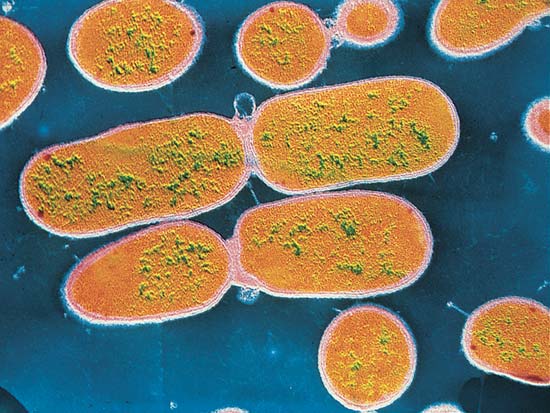
The offspring from asexually reproduced organisms are?
a)
Different than their parents
b)
Identical to parents
c)
Like a combination from both parents
d)
A different species
12.
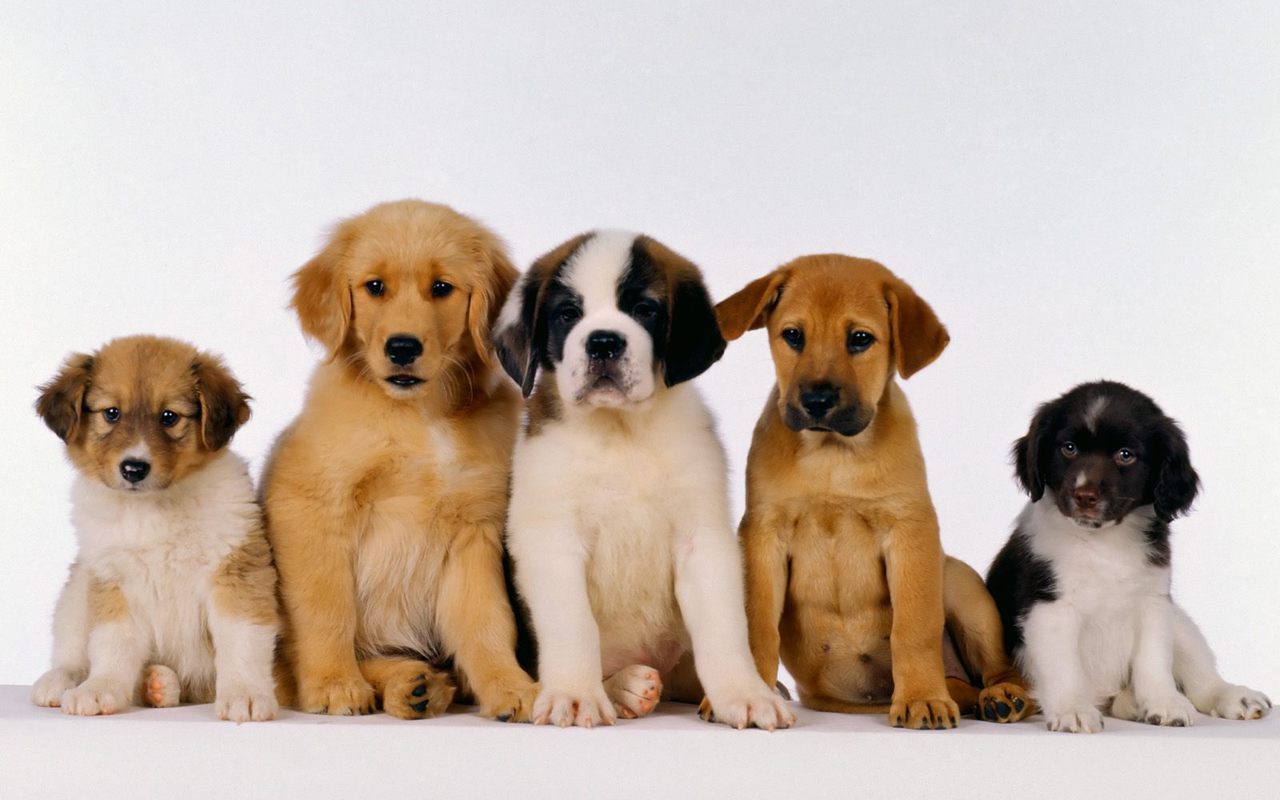
If two organisms reproduce sexually, then their offspring will exhibit a genetic makeup that is -
a)
identical to only one parent
b)
identical to all of its siblings
c)
a unique combination of traits
d)
the recessive traits of each parent
13.
How is meiosis related to sexual reproduction?
a)
Meiosis allows the offspring produced during sexual reproduction to grow and develop.
b)
Meiosis joins together the sex cells during sexual reproduction to produce new offspring
c)
Meiosis produces the sex cells that join to form new offspring during fertilization.
d)
Meiosis produces the body cells that join to form new offspring during fertilization.
14.
Which of these choices is made from the process of mitosis?
a)
Egg
b)
Sperm
c)
Sex Cell
d)
Skin Cell
15.
Which of these statements is true of asexual reproduction?
a)
It produces offspring genetically identical to each other and requires one parent.
b)
It produces offspring genetically identical to each other and requires two parents.
c)
It produces offspring genetically different from each other and requires one parent.
d)
It produces offspring genetically different from each other and requires two parents.
16.
How is the number of chromosomes in a human sex cell different from the number in a human body cell?
a)
A sex cell has 23 chromosomes and a body cell has 46.
b)
A sex cell has 46 chromosomes and a body cell has 23.
c)
A sex cell has chromosomes that are half
d)
A sex cell has chromosomes that are twice as long as those in a body cell.
17.

The diagram above shows a human cell. What type of cell is this?
a)
A reproductive cell (sex cell) made from mitosis
b)
A body cell made from mitosis
c)
A body cell made from meiosis
d)
A reproductive cell (sex cell) made from meiosis
18.
Which of these choices is NOT a reason for mitosis taking place in a multi-cellular organism?
a)
Growth
b)
Repairing Wounds
c)
Asexual Reproduction
d)
Making Sex Cells
19.
A group of scientists test three different types of cells – muscle cells, nerve cells, and skin cells – to find out which cell type goes through the steps of mitosis the fastest. The scientists time 100 cell divisions for each type of cell. The temperature and amount of light is the same for all of the cells. What is a controlled variable (or constant) in this investigation?
a)
The speed of the divisions
b)
The types of cells
c)
The temperature
d)
The age of the scientists
20.
What does meiosis create?
a)
Skin cells
b)
Reproductive (or sex) cells
c)
Only egg cells
d)
Nerve cells
21.
Which reason BEST explains why reproduction is necessary?
a)
The survival of every species depends on the ability of organisms to reproduce.
b)
Reproduction decreases differences in species
c)
Reproduction creates simpler body structures.
d)
Organisms reproduce so they can move from one ecosystem to another.
22.
Having a large number of offspring produced in a short time is an advantage of?
a)
Mitosis
b)
Meiosis
23.

Which members of the family above are afflicted with Huntington's Disease?
a)
I-1, II-2, II-3, II-7, and III-3
b)
I-1, I-2, II-3, II-7, and III-5
c)
I-1, I-3, II-8, and III-2
d)
I-2, II-1, II-4, II-5, II-6, II-8, III-1, III-2, III-4, and III-5
24.
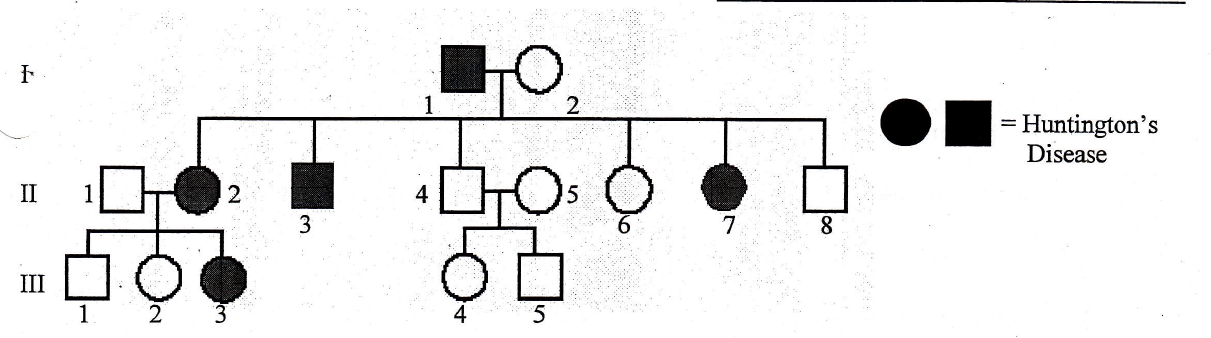
There are no carriers for Huntington's Disease- you either have it or you don't. Is Huntington's disease caused by a dominant or recessive trait?
a)
Dominant
b)
Recessive
25.

How many children did individuals I-1 and I-2 have?
a)
2
b)
4
c)
6
d)
8
26.

How many girls did II-1 and II-2 have?
a)
1
b)
2
c)
3
d)
4
27.

How are individuals III-2 and II-4 related?
a)
Cousins
b)
Dad and Daughter
c)
Uncle and Niece
d)
Grandpa and Granddaughter
28.

How are individuals I-2 and III-5 related?
a)
Grandpa and grandson
b)
Mom and son
c)
Uncle and nephew
d)
Grandma and grandson
29.

How are individuals I-2 and III-5 related?
a)
Grandpa and grandson
b)
Mom and son
c)
Uncle and nephew
d)
Grandma and grandson
30.

Is hitchhiker's thumb dominant or recessive? The carriers are not marked. Should there be carriers in this pedigree?
a)
Dominant
b)
Recessive
31.

T = tall an t = short
TT and Tt would result in the following phenotype
TT and Tt would result in the following phenotype
a)
short
b)
tall
c)
both tall and short
d)
neither tall or short
32.

G = green, g = yellow
The genotype for a yellow plant is...
The genotype for a yellow plant is...
a)
GG
b)
Gg
c)
gg
d)
all of the choices result in yellow
33.

B = brown fur b = white fur
In the punnett square, what is the probability for white fur?
In the punnett square, what is the probability for white fur?
a)
0%
b)
25%
c)
50%
d)
75%
34.
Two brown eyed parents (Bb) have a baby. What is the chance the baby is blue eyed?
a)
0 %
b)
25%
c)
50%
d)
75%
35.
B - black, b - brown. Two black mice mate and have some black and some brown mice. What is the genotype of the parents?
a)
BB x Bb
b)
BB x bb
c)
Bb x Bb
d)
Bb x bb
100 %

