
 Worksheets
SC Ready 5th Grade Science BAL
Total questions: 100
Worksheet time: 2hrs 2mins
Name
Class
Date
1.
Something that takes up space and has mass.
a)
volume
b)
matter
c)
mass
d)
density
2.
A state of matter that has a definite volume and shape.
a)
solid
b)
liquid
c)
gas
d)
matter
3.
Most earthquakes happen along the _________________.
a)
coast
b)
faults
c)
desert
d)
directions
4.
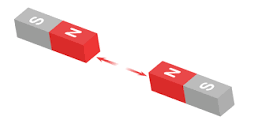
What will happen when these magnets are brought close together?
a)
They will attract each other.
b)
They will repel each other.
c)
Both magnets will turn to the left
d)
Both magnets will turn to the right
5.

Why does a compass needle point north?
a)
The compass is a bar magnet
b)
Because north is up
c)
Because it's magic
d)
It lines up with the Earth's magnetic field
6.

Where is Earth's magnetic field strongest?
a)
Along the outside lines
b)
Along the inside lines on either side
c)
Where the lines are close together at the poles
d)
In the space outside of the lines
7.
____________ allows electricity to flow.
a)
A conductor
b)
An insulator
c)
A magnet
8.
A deep valley with steep walls that cut into the earth caused by erosion from running water.
a)
Valley
b)
Canyon
c)
Gulf
d)
River
9.

A place where plants and animals live and grow is called a ____________. It provides, food, water, shelter, and air.
a)
shelter
b)
tree
c)
habitat
d)
organism
10.
Gas particles are...
a)
tightly packed.
b)
loosely bonded and flowing.
c)
free to fly in all directions.
d)
so hot that the electrons are removed from the nucleus.
11.
Which best describes an inherited trait?
a)
a characteristic one chooses to express
b)
a characteristic one receives from the food one eats
c)
a characteristic that is passed on from one’s parents
d)
a characteristic that is influenced by one’s surroundings
12.
What weather will most likely result from a low-pressure weather system?
a)
cloudy conditions
b)
sunny conditions
c)
snow
d)
Hurricane
13.
Which body system helps the circulatory system transport blood to all parts of the body?
a)
digestive system
b)
muscular system
c)
nervous system
d)
respiratory system
14.
Makari read in a science book that food should be chewed properly and never swallowed whole. For what reason would food need to be chewed properly?
a)
It allows for better breathing while eating
b)
It helps to taste food properly.
c)
It allows the nutrients to get absorbed in the mouth.
d)
It helps in the digestion of food that begins in the mouth.
15.
What is the reason for the similarity between the offspring and their parents?
a)
They eat the same foods.
b)
They have similar DNA.
c)
They speak the same language.
d)
They have the same interests.
16.
In a grassland ecosystem, if the population of eagles suddenly decreased, what will most likely be the effect on the rest of the ecosystem?
a)
The ecosystem will become overpopulated with snakes.
b)
There will be a decrease in the population of snakes in the ecosystem.
c)
The nutrition of the soil in the ecosystem will decrease.
d)
More types of plants will begin growing in the ecosystem.
17.
Which will most likely cause a decrease in predator populations?
a)
an increase in prey populations
b)
a decrease in prey populations
c)
a decrease in decomposers
d)
an increase in producers
18.
A baker uses oven mitts to protect his hands when removing a hot tray from the oven. Which mode of heat transfer is prevented by the use of the mitts?
a)
condensation
b)
conduction
c)
convection
d)
radiation
19.
Ms. Vance uses a solar heater to warm water. The solar panel on the roof of her house collects solar energy. How is the energy transferred from the Sun to the solar panel?
a)
absorption
b)
conduction
c)
convection
d)
radiation
20.
From which direction does weather typically move in the US?
a)
East to West
b)
West to East
c)
North to South
d)
South to North
21.
If you wanted to test the effect of gravity on an object, which set of materials should you choose?
a)
battery, wires, lightbulbs
b)
hot plate, water, thermometer
c)
two different types of balls, metric ruler
d)
two cups, two different types of soil, water and seeds
22.
A class learns about fossil fuels. They learn that coal, oil and natural gas are classified as nonrenewable resources because they take so long to form. How can the class conserve fossil fuels?
a)
Use both sides of notebook paper
b)
Arrange a car pool to and from school
c)
Create a backyard compost pile
d)
Plant flowers in front of the school
23.
All of the following are poor insulators of electricity EXCEPT -
a)
penny
b)
nail
c)
eraser
d)
paperclip
24.
Which mixture can be separated using a coffee filter?
a)
rocks and sand
b)
sand and water
c)
lemon juice and water
d)
sand and iron filings
25.
Plants are known as producers because they produce their own food. How do producers receive the energy for this process?
a)
By consuming soil nutrients
b)
By absorbing sunlight
c)
By releasing water
d)
By producing oxygen
26.
Students are combining dried beans and rice. What would be the most efficient way to separate the ingredients?
a)
Evaporation
b)
Coffee Filters
c)
Tweezers
d)
Microscope
27.
One of the brightest objects in the night sky is a planet that is closer to the sun than Earth is. What is the name of this planet?
a)
Mars
b)
Saturn
c)
Jupiter
d)
Venus
28.
Which alternative energy source is generated beneath Earth's crust and can be used to heat buildings?
a)
Hydroelectric Energy
b)
Geothermal Energy
c)
Wind Energy
d)
Solar Energy
29.
A student made a mixture using equal amounts of salt and pepper. The salt grains were the same as the pepper grains. What should the student do to most easily separate the pepper from the salt?
a)
Use a pair of tweezers to remove each grain of pepper
b)
Run a small magnet through the mixture to attract the pepper
c)
Put the mixture in water and filter the pepper out of the water
d)
Use a strainer with a fine wire screen to remove the pepper
30.
In a food chain, energy does NOT flow directly from---
a)
producer to decomposer
b)
producer to consumer
c)
consumer to decomposer
d)
consumer to producer
31.
A teacher wears protective gloves to lift a metal pan filled with boiling water from a hot plate. Why are the protective gloves necessary?
a)
The metal pan creates thermal energy
b)
The metal pan insulates thermal energy
c)
The metal pan conducts thermal energy
d)
The metal pan reduces thermal energy
32.
Which of the following would be an abiotic factor in a bear’s environment?
a)
berries
b)
salmon
c)
snow
d)
trees
33.
The birds, mammals, reptiles, and fish living in a pond ecosystem would create that ecosystem’s _____________
a)
community
b)
limiting factor
c)
food chain
d)
population
34.
A condition that keeps a population at a certain size is known as a(an) ___________
a)
abiotic factor
b)
environmental factor
c)
biotic factor
d)
limiting factor
35.
What is the plant’s main role in a food chain?
a)
carnivore
b)
consumer
c)
prey
d)
producer
36.
The population of predators in an ecosystem increases. Which of the following would be the best explanation for why this happened?
a)
There is a drought
b)
The season has changed
c)
There is a larger population of prey
d)
There is a small population of prey
37.
This process causes mass movements of land due to gravity, can cause buildings to fall, and can even occur on the continental slope in the ocean. Which natural process is it?
a)
earthquake
b)
landslide
c)
volcanic eruption
d)
deposition
38.
This process is most often caused by water. It breaks down rocks at or near the surface, and can be physical or chemical. Which natural process is it?
a)
flood
b)
erosion
c)
weathering
d)
landslide
39.

Which ocean floor feature does letter B identify?
a)
ocean trench
b)
continental shelf
c)
continental slope
d)
mid ocean ridge
40.
Which ocean floor feature does letter D identify?
a)
ocean trench
b)
continental shelf
c)
continental slope
d)
mid ocean ridge
41.
Which ocean floor feature does letter A identify?
a)
ocean trench
b)
continental shelf
c)
continental slope
d)
mid ocean ridge
42.
If the mid ocean ridge were located on land instead of underwater, what would it be called?
a)
plains
b)
valley
c)
canyon
d)
mountain range
43.
Emilio's teacher gave the class photos of different landforms to identify. Emilio received a photo of a wide, U-shaped valley. He correctly explained that the valley was formed by —
a)
a fast-flowing river
b)
a glacier
c)
ocean waves
d)
strong winds
44.
Elena took a trip with her family to see a beautiful canyon. What most likely formed this canyon?
a)
River water deposited sediment as it emptied into the ocean.
b)
River water eroded rock as it flowed through the area.
c)
Lava from a volcano hardened and cooled to form rock.
d)
An earthquake caused parts of the land to fall to a lower level.
45.

The drawing shows a landform.Which of the following is true of this landform? (it's a sand dune)
a)
It formed as a river emptied into a lake.
b)
It formed as a glacier eroded the land.
c)
It formed as wind deposited sand.
d)
It formed as gravity eroded sediment.
46.
What is an example of how deposition changes Earth's surface?
a)
A narrow valley forms as a glacier moves, grinding rock as it goes.
b)
A rock face becomes smooth as wind blasts away particles of rock from it.
c)
A river lays down sediment at the mouth of a river, forming a delta.
d)
A wide beach disappears as crashing ocean waves carry away much of the sand.
47.

The diagram shows a river that empties into the ocean. What most likely formed the triangular areas of land marked by the arrow?
a)
Lava from a volcano hardened and cooled to form rock.
b)
River water eroded all the rock surrounding these bits of land.
c)
Wind eroded dust, soil, and sand along the shore at the base of the river.
d)
River water deposited sediment as it slowed down and entered the ocean.
48.
Melinda crumples a sheet of paper into a small ball. She drops the crumpled ball of paper at the same time as she drops a flat sheet of paper. Why does the crumpled ball land before the sheet of paper?
a)
Air resistance slows the flat sheet of paper.
b)
Heavier objects fall faster than lighter objects.
c)
The force of gravity on the ball is greater than on the sheet of paper.
d)
Gravity acts on round objects only.
49.
Which of the following would cause an acceleration?
a)
a decrease in mass
b)
an increase in force
c)
a decrease in force
d)
all of the answer choices
50.
Maude kicks a soccer ball across a grassy field. What force causes the ball to eventually roll to a stop?
a)
gravity
b)
friction
c)
air resistance
d)
inertiea
51.
Which of the following is an example of increasing friction intentionally?
a)
waxing skis
b)
adding grease to gears on a bike
c)
throwing sand on an icy driveway
d)
oiling a squeaky door
52.

Katie places a rock in a graduated cylinder that holds about 22 mL of water. The rock sinks to the bottom of the cylinder, as shown.What can Katie conclude about the rock?
a)
The rock has less mass than the water.
b)
The rock has about the same volume as the water.
c)
The rock has a greater volume than the water.
d)
The rock has a smaller volume than the water.
53.
If you placed a coin in a cup of water and it sank, what would you conclude about the density of the coin and the water?
a)
The density of the coin is less than the density of water.
b)
The density of water is 1 gram per cubic centimeter.
c)
Water and the coin have the same density, but the volume of the water is greater.
d)
The density of the coin is greater than the density of water.
54.
What happens to the particles of a substance when the boiling point for that substance is reached?
a)
Liquid particles change to a gas.
b)
Solid particles change to a liquid.
c)
Liquid particles begin to rise and sink.
d)
None of the other answer choices
55.

a)
To stop erosion by blocking wind.
b)
To provide shade for his crops.
c)
To act as a fence and border.
d)
To attract birds to eat the seeds.
56.

a)
A Digestive System
b)
B Circulatory System
c)
C Nervous System
d)
NONE
57.

a)
A Oxygen
b)
B Carbon Dioxide
c)
C Nitrogen
d)
NONE OF THESE
58.
What is the freezing point of water?
a)
32 degreesCelsius
b)
-15 degrees Celsius
c)
0 degrees Celsius
d)
40 degrees Celsius
59.
What is the term for water changing from a liquid to a solid?
a)
cooling
b)
Freezing
c)
Liquifiying
d)
melting
60.
Which BEST describes how deltas form?
a)
Weathering
b)
Man made
c)
Pile of sediments
d)
Deposition
61.
What do plants release into the air that help other animals survive?
a)
Oxygen
b)
Carbon dioxide
62.
What is the term for a living thing that cannot makes its own food and must eat other living things?
a)
producer
b)
consumer
63.
What is the term for the ability of an object to sink or float?
a)
Relative density
b)
Magnitizm
c)
Mass size
d)
no gravitation
64.
What is the term for the process of something that disappears when mixed with liquid?
a)
Mixture
b)
Sticky
c)
Dissolve
d)
Magic
65.
Which of these is an alternative energy source?
a)
Coal
b)
Solar power
c)
Gasoline
66.
Energy that comes from the sun is...
a)
environment
b)
Alternative energy source
c)
Energy source
d)
Solar energy
67.
All the living and nonliving things that surround an organism
a)
Environment
b)
Solar energy
c)
Energy source
d)
Hydroelectric power
68.
Using less energy is known as...
a)
Solar energy
b)
Alternative energy source
c)
Energy efficient
d)
Environment
69.
True or False: Resources can ONLY be used as they are.
a)
False
b)
True
70.
True or False: Wind, wood, sand, coal, water, minerals, plants, animals, and soil are all examples of natural resources
a)
False
b)
True
71.
These resources can be replaced over short periods of time
a)
Nonrenewable
b)
Renewable
72.
Two wires carrying electricity can create a spark if they come too close together. This spark can start a fire. Wires carrying electricity are usuallly covered with plastic to keep them from starting a fire. Why does the plastic keep electricity from starting a fire?
a)
Plastic is a good insulator.
b)
Plastic can melt when heated.
c)
Plastic is softer than wire.
d)
Plastic conducts electricity.
73.
Erosion is one of the processes involved in the formation of sedimentary rock. Which of these best describes the process of erosion?
a)
Rocks are broken into smaller pieces that remain in the same location.
b)
Pressure compacts layers of sediment and turns them into rock.
c)
Pieces of rock or soil are carried from one place to another.
d)
Sediment grains fall to the bottom of a lake to form sedimentary layers.
74.
A student made a list of activities that involve energy.
-
1. Sharks chasing a school of fish
2. A toaster heating bread
3. A cell phone charging
4. A tree limb falling to the ground
5. Tomato plants absorbing sunlight
6. A canoe floating down a river
-
Which activities on the list are examples of the use of mechanical energy?
-
1. Sharks chasing a school of fish
2. A toaster heating bread
3. A cell phone charging
4. A tree limb falling to the ground
5. Tomato plants absorbing sunlight
6. A canoe floating down a river
-
Which activities on the list are examples of the use of mechanical energy?
a)
Activities 1, 4, and 6
b)
Activities 2, 4, and 5
c)
Activities 1 and 2
d)
Activities 3, 5, and 6
75.
A student combined powdered paint with water to make a small amount of a blue liquid paint mixture. The student left the paint mixture in an open container. Several days later the student found the container and observed that changes had occurred. What most likely happened to the mixture?
a)
The container was empty after the mixture evaporated into the air.
b)
The paint evaporated, leaving only clear water in the container.
c)
The water evaporated, leaving only a dry blue solid in the container.
d)
The liquid paint mixture was lighter in color after some water evaporated.
76.
A student puts four objects in a bucket filled with water. The objects are listed below.
-
Plastic ball
Glass marble
Metal paper clip
Wood block
-
Which two objects are most likely less dense than the water?
-
Plastic ball
Glass marble
Metal paper clip
Wood block
-
Which two objects are most likely less dense than the water?
a)
Wood block and metal paper clip
b)
Plastic ball and glass marble
c)
Metal paper clip and glass marble
d)
Wood block and plastic ball
77.
What would most likely happen to the carbon dioxide–oxygen cycle if Earth’s large forests were all cut down?
a)
There would be more carbon dioxide in the atmosphere because fewer plants would be using it to produce their own food.
b)
The remaining plants would stop producing carbon dioxide, and animals would use less oxygen.
c)
The remaining plants would produce more oxygen, and animals would produce less carbon dioxide.
d)
There would be more oxygen in the atmosphere because fewer plants would be using it to produce their own food.
78.
Which of these is not soluble in water?
a)
Oil
b)
Salt
c)
Honey
d)
Sugar
79.
A substance or object that does not allow energy to flow through it easily.
a)
conductor
b)
insulator
c)
temperature
d)
solubility
80.
The amount of matter in something.
a)
mass
b)
properties
c)
solution
d)
freezing point
81.
Anything that has mass and takes up space.
a)
mass
b)
volume
c)
matter
d)
melting point
82.
A combination of two or more substances that can be easily separated in some physical way.
a)
solution
b)
matter
c)
heat energy
d)
mixture
83.
The breaking of rocks into smaller particles by wind, water, or ice
a)
Erosion
b)
Deposition
c)
Weathering
84.
The movement of sediments by wind, water or ice
a)
Weathering
b)
Erosion
c)
Deposition
85.
The dropping off of sediments into a new location by wind, water or ice.
a)
Weathering
b)
Erosion
c)
Deposition
86.
A triangular landform where a river empties into ocean created by deposition is called
a)
Canyon
b)
Glacier
c)
Delta
d)
Dune
87.
This organism survives by eating the remains of dead, decaying organic matter...
a)
decomposer
b)
producer
c)
consumer
d)
prey
88.
An organism that only eats plants is called a...
a)
herbivore
b)
omnivore
c)
carnivore
d)
none of the above
89.
The organism that is hunted is known as the...
a)
predator
b)
prey
c)
omnivore
d)
producer
90.
This organism conducts photosynthesis to obtain energy...
a)
decomposer
b)
producer
c)
consumer
d)
carnivore
91.
Select the change of state that can be caused by heating.
a)
Solid melting to a liquid
b)
Liquid freezing to a solid
c)
Liquid melting to a solid
d)
Solid freezing to a liquid
92.

Students are asked to classify renewable and non-renewable resources during class. The classification chart is shown below.
Which two answer choices best complete the blanks.
Which two answer choices best complete the blanks.
a)
Petroleum and water
b)
Plants and coal
c)
Timber and natural gas
d)
Air and fish
93.
An energy company wants to build a hydroelectric power plant. Which of these characteristics of an area is most important to the development of a hydroelectric power plant?
a)
The area has a cool, rainy climate.
b)
The area is located in a valley with very little wind and frequent heavy fog.
c)
The area has a river that flows rapidly from nearby mountains through a valley.
d)
The area has no geysers or hot springs.
94.
This organelle is like the "brain" of the cell.
a)
Nucelus
b)
Organelle
c)
Cytoplasm
d)
Cell Membrane
95.
Which organelle is a jelly-like fluid that helps hold organelles in place?
a)
Cell Wall
b)
Cytoplasm
c)
Mitochondria
d)
Cell Membrane
96.
Which is an organelle that plant cells have that animal cells do not have?
a)
Vacole
b)
Cell Wall
c)
Mitochondria
d)
Nucleus
97.
The basic unit of life is known as ...
a)
Cell
b)
Cell Membrane
c)
Unicellular
d)
Person
98.
The "power plant" or power source of a cell. This organelle breaks down sugars in the cell.
a)
Golgi Body
b)
Mitochondria
c)
Cell Membrane
d)
Nucleus
99.
This organelle stores food and water in plants and animals.
a)
Vacuole
b)
Cell Membrane
c)
Ribosome
d)
Lysosome
100.
This is the organelle in which the genetic information of organisms is stored.
a)
Nucelus
b)
DNA
c)
Mitochondria
d)
Cell Membrane
100 %

