
 Worksheets
Core 1 Earth Science Trivia
Total questions: 100
Worksheet time: 1hrs 1mins
Name
Class
Date
1.
What is the opening in Earth's crust through which molten rock, gases, and ash erupt?
a)
Divergent Boundary
b)
Magma
c)
Subduction Boundary
d)
Volcano
2.
What is molten rock that has formed deep within the Earth?
a)
Hot Spot
b)
Magma
c)
Lava
d)
Volcano
3.
Why does magma tend to rise to the surface?
a)
It has large amounts of silica.
b)
It contains very little silica.
c)
It is denser than the surrounding material.
d)
It is less dense than the surrounding material.
4.
What is the principal ingredient to all types of magma?
a)
Iron
b)
Magnesium
c)
Silica
d)
Water
5.
What are solid rock fragments that are ejected during a volcanic eruption?
a)
Lahar
b)
Magma
c)
Pyroclastic Material
d)
Silica
6.
What type of volcano has steep slopes made of alternating layers of ash and silica rich lava?
a)
Caldera
b)
Cinder Cone
c)
Composite Volcano
d)
Shield Volcano
7.
What type of volcano is made of lava fragments that have been ejected from a volcanic vent?
a)
Caldera
b)
Cinder Cone
c)
Composite Volcano
d)
Shield Volcano
8.
What type of volcano is Kilauea, which is located in Hawaii?
a)
Caldera
b)
Cinder Cone
c)
Composite Volcano
d)
Shield Volcano
9.
Where are most volcanoes found?
a)
Southern Hemisphere
b)
Ring of Fire
c)
Mid-Atlantic Ridge
d)
Hot Spots
10.
What is molten rock that has reached the Earth's surface?
a)
Aa
b)
Lava
c)
Magma
d)
Pahoehoe
11.
What type of volcano is Mount St. Helens?
a)
Caldera
b)
Cinder Cone
c)
Composite Volcano
d)
Shield Volcano
12.
Which volcanic eruption was an example of pyroclastic flow?
a)
Mount Vesuvius buried the Roman city of Pompeii.
b)
Kilauea is currently forming the Hawaiian Islands.
c)
The Columbia Plateau was formed in parts of Washington, Oregon, and Hawaii.
d)
Mauna Loa is a shield volcano that was formed on Hawaii.
13.

What is the definition of dormant?
a)
sleeping
b)
extinct
c)
active
d)
invisible
14.

What are scientists that study volcanoes called?
a)
doctor
b)
vet
c)
volcanologist
d)
volcano scientist
15.

A volcano that has gentle sloping sides and is formed from runny lava
a)
Shield volcano
b)
Cinder cone
c)
Composite
d)
None of these
16.

Dormant volcanoes might erupt in the future.
a)
True
b)
False
17.

This city was destroyed in 79 A.D. by the eruption of Mt. Vesuvius.
a)
Rome
b)
Munich
c)
Pompeii
d)
Naples
18.
A live volcano
a)
Dormant volcano
b)
Active volcano
c)
Extinct volcano
d)
Shield volcano
19.
A boundary on Earth's crust where two plates collide
a)
Convergent boundary
b)
Divergent boundary
c)
Transform boundary
d)
Indirect boundary
20.
A plate boundary where the plates divide
a)
Indirect boundary
b)
Transform boundary
c)
Convergent boundary
d)
Divergent boundary
21.
A plate boundary where the plates slide past each other in opposite directions
a)
Indirect
b)
Transform boundary
c)
Convergent boundary
d)
Divergent boundary
22.

Name this boundary
a)
Convergent
b)
Divergent
c)
Transform
d)
Sergent
23.

Name the boundary
a)
divergent
b)
convergent
c)
transform
d)
sergent
24.

Name the boundary
a)
convergent
b)
transform
c)
divergent
d)
sergent
25.
Which of the following is associated with transform boundary?
a)
volcanoes
b)
mountains
c)
trenches
d)
earthquakes and fault line
26.
Which of the following land formation occurs at a divergent continental/continental boundary?
a)
mid-ocean ridge
b)
deep ocean trench
c)
Pacific hot spot
d)
rift valley
27.
Mountains form from....
a)
Plates sliding past one another
b)
collision of plates
c)
plates moving away from each other
d)
none of these
28.
Earth's plates are....
a)
Constantly moving and changing the face of the Earth
b)
Never moved
c)
Move seldom and very fast
d)
move when they feel like it
29.
What was the name given to all the continents when they were joined as one super continent?
a)
Supreme Continent
b)
Eurasia
c)
Plate tectonics
d)
Pangea
30.
Plate movement is caused by _____
a)
The rotation of the Earth
b)
Ocean tides
c)
Convection current in the mantle
d)
The moon's gravity
31.
Created by a divergent boundary
a)
rocky mountain
b)
Mariana's Trench
c)
mid-Atlantic ridge
d)
volano
32.

This is the theory that states that all the continents started as a single massive continent and have been MOVING apart for over 200 million years and the man that proposed it.
a)
The Big Bang Theory, Einstein
b)
The Pangea Theory, Hutton
c)
The Tectonic Plate Theory, Darwin
d)
The Continental Drift Theory, Wegner
33.

Himilayan Mountains
a)
converging continent to continent
b)
earthquake in subduction zone
c)
converging ocean to continent
d)
transformational
34.
What are two rocks formed by magma?
a)
Glow stone, Gabbro
b)
Crystals, Pumice
c)
Blue-Rock, Granite
d)
Obsidian, Basalt
35.
What is a tectonic plate?
a)
A peice of the earths crust
b)
A peice of the mantle
c)
A peice of the core
d)
A peice of the hole world
36.
This layer of Earth is the thickest part
a)
crust
b)
outer core
c)
mantle
d)
inner core
37.
What are the two types of crust
a)
continental and oceanic
b)
ocean and upper
c)
lower and upper
d)
pizza and subway
38.
A person who studies rocks is called_________.
a)
Geometrist
b)
Geologist
c)
Rockologist
39.
Rocks are made from __________.
a)
soil
b)
minerals
c)
dirt
40.
The layer that holds most plants' roots is _______.
a)
topsoil
b)
humus
c)
bedrock
41.
The layer that is made from rocks is _________.
a)
subsoil
b)
bedrock
c)
parent material
42.
The layer made of dead plants and animals is called _________.
a)
humus
b)
parent material
c)
topsoil
43.
_____ is the particle in the subsoil that is good for drainage.
a)
clay
b)
silt
c)
sand
44.
____ is the medium sized particle in the subsoil that is smooth and powdery.
a)
clay
b)
silt
c)
sand
45.
_____ is a particle in the subsoil that does not allow a lot of water to pass through and is NOT good for growing plants.
a)
clay
b)
sand
c)
silt
46.
Many plants cannot grow in sandy soil. Why is this true?
a)
Sandy soil does not hold enough water.
b)
Oxygen cannot pass through sandy soil.
c)
Roots cannot easily push through clay soil.
d)
Sandy soil has too many nutrients.
47.

Soil is made of
a)
Weathered rock
b)
decomposed plants and animals
c)
air and water
d)
all of the above
48.
All rocks are made up of what?
a)
crystals
b)
one or more minerals
c)
at least 5 kinds of minerals
49.
Weathering is
a)
the movement of rocks from one place to another
b)
the breakdown of rocks
c)
the movement of dirt
50.
How can chemical weathering wear away rocks
a)
acid rain falling
b)
wind blowing against the rock
c)
water flowing over the rock
51.
What does the decomposition return to the soil?
a)
nutrients and minerals
b)
chemicals
c)
sunshine
d)
photosynthesis
52.
Which of the following shows chemical weathering?
a)
rust in rocks
b)
roots in a pavement
c)
running water breaking rocks
d)
pounding rocks into pieces
53.
1. Ice Wedging is an example of
a)
physical weathering
b)
chemical weathering
c)
abrasion
d)
rock formation
54.
Weathering type that breaks down rocks from chemical interaction with primarily water
a)
physical
b)
chemical
c)
abrasion
d)
ice wedging
55.
Which statement BEST describes the role of decomposer in creating soil?
a)
They prevent soil from eroding
b)
They break down sand particles
c)
They provide food for plants
d)
They add organic matter making soil rich
56.
What is the best source of organic matter to make the soil rich and fertile?
a)
plant matter
b)
lava
c)
eroding sand
d)
bedrock
57.
What happens when large winds blow against large rocks?
a)
The rock grows much bigger.
b)
The rock starts to melt.
c)
Tiny pieces of the rock break off.
d)
Plants grow on top of the rock.
58.
What 4 things make up soil?
a)
water, sand, dirt, and seeds
b)
fossils, humus, water, and dirt
c)
air, grain, dirt, and tiny pieces of rock
d)
water, humus, air, and tiny pieces of rock
59.
Which is not a soil layer?
a)
bedrock
b)
flatrock
c)
subsoil
d)
topsoil
60.
Which one would be the possible effect of weathering and erosion on the of a mountain?
a)
the peak would become more pointed
b)
it would get softer and melt
c)
it turned into a volcano
d)
it would become more rounded and worn
61.
Erosion can be caused by
a)
wind
b)
water
c)
landslides
d)
all of the above
62.

Sand is made from broken rocks.
a)
true
b)
false
63.

What breaks down rocks into sand?
a)
wind
b)
water
c)
wind and water
d)
lettuce
64.

What are the three main types of rocks?
a)
sedimentary, metamorphic, igneous
b)
sand, gravel, water
c)
water, juice, air
d)
pebbles, sand, dirt
65.
Which of the following improves the fertility of soil by breaking down once living matter and adding oxygen to the soil?
a)
plant roots
b)
rock particles
c)
sunlight
d)
worms
66.
_____________ rocks are NOT one of the major types of rock.
a)
oceanic
b)
metamorphic
c)
sedimentary
d)
igneous
67.
Soil is a complex mixture of _______________________.
a)
mineral fragments
b)
air and water
c)
eroded rock
d)
all of the above
68.
Identify the farming practice that could help improve soil quality.
a)
clean weeding
b)
crop rotation
c)
continuous cropping
d)
mono cropping
69.
Which of the following activities most relies on high-quality soil?
a)
Hunting
b)
Hiking
c)
Coal mining
d)
Growing crops
70.
If you are digging in an area and find igneous rocks, what can you conclude?
a)
A glacier passed through at one time
b)
The area was once an ocean
c)
A volcano was near by at one time
d)
The rocks were probably carried there by ancient people
71.
These rocks form as a result of heat and pressure.
a)
igneous rocks
b)
sedimentary rocks
c)
metamorphic rocks
d)
lava rocks
72.
Soil with a high __________ content will drain more slowly.
a)
peat
b)
ash
c)
sand
d)
clay
73.
After rocks melt, what do they become?
a)
marble
b)
magma
c)
lava
d)
sandstone
74.
How do igneous rocks form?
a)
Metamorphic rocks melted, then cooled
b)
Metamorphic rocks are deposited and cemented
c)
Sedimentary rocks erode
d)
Sedimentary rocks are compacted
75.
Soil with approximately equal parts of sand, silt, and clay is called __________.
a)
bedrock
b)
loam
c)
"quality soil"
d)
topsoil
76.
How is metamorphic rock formed?
a)
Pressure over time binds sediments into rocks.
b)
Heat and/or pressure change the minerals into a new rock.
c)
A hot mixture of gases and minerals cools to form rock.
77.
Which two properties would be best to use to identify a mineral?
a)
shape and luster
b)
size and magnetism
c)
hardness and streak
78.
Which particles found in soil are the smallest?
a)
silt
b)
clay
c)
sand
79.
What is the measure of how difficult it is for a mineral to be scratched?
a)
streak
b)
texture
c)
luster
d)
hardness
80.
Taking care of the soil is called
a)
stewardship
b)
caretaket
c)
teacher
d)
environmentalist
81.
Layer of soil which is poor in humus but mineral rich and lighter is the
a)
topsoil
b)
subsoil
c)
parent material
d)
bedrock
82.
Layer of soil that has not weathered yet
a)
topsoil
b)
subsoil
c)
parent material
d)
bedrock
83.
Largest layer of the soil where rock is weathered
a)
topsoil
b)
subsoil
c)
parent material
d)
bedrock
84.
A solid inorganic material of natural occurrence which rocks contain is called
a)
mineral
b)
opal
c)
pumice
d)
lava rock
85.
Which type of igneous rock forms above ground?
a)
Intrusive
b)
Organic
c)
Extrusive
d)
Foliated
86.
Lava which cools on Earth's surface forms an
a)
metamorphic rock
b)
intrusive igneous rock
c)
extrusive igneous rock
d)
foliated metamorphic rock
87.
Which type of rock is most likely to contain fossils?
a)
Igneous
b)
Sedimentary
c)
Metamorphic
88.
When you watch a volcano erupt molten rock, you are seeing _____
a)
Lava
b)
Magma
c)
Mineral Crystals
d)
Igneous Rocks
89.
All of the following are causes of physical weathering EXCEPT...
a)
plant growth
b)
wind
c)
acid rain
d)
running water
90.
What is sediment?
a)
the process of rocks being broken down and carried away
b)
bits of rock and sand caused by the weathering of rocks
c)
the top layer of the soil
d)
decaying plant or animal material
91.
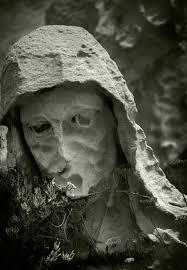
What type of weathering is it when acid rain breaks down and changes the rock?
a)
chemical weathering
b)
physical or mechanical weathering
c)
erosion
92.
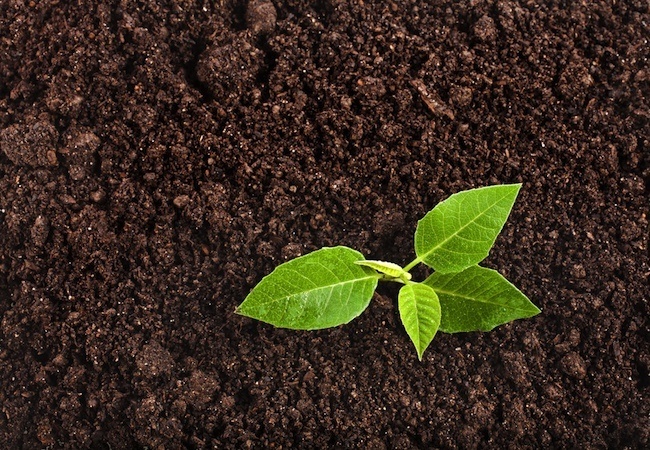
Which of the following is NOT one of the three types of soil?
a)
clay
b)
sand
c)
silt
d)
mud
93.
All of these things cause rocks to wear and break down EXCEPT... ?
a)
Glaciers
b)
Wind blowing sand
c)
Solar Eclipse
d)
Fast Moving water
94.
Potholes forming in the road after a cold winter is an example of:
a)
mechanical weathering
b)
chemical weathering
95.
Weeds growing into the cracks in a sidewalk and the sidewalk begins to crumble is an example of:
a)
mechanical weathering
b)
chemical weathering
96.
A piece of sandstone changing color (from brown to rusty red) from exposure to water and air is an example of:
a)
mechanical weathering
b)
chemical weathering
97.
Exposure to rain and oxygen causes the metal minerals in rocks to rust and fall apart. This is an example of:
a)
mechanical weathering
b)
chemical weathering
98.
What has the greatest effect on soil formation?
a)
time
b)
organisms
c)
climate
d)
slope
99.
What is the type of rock that is formed from the compaction and cementation of sediment?
a)
igneous rock
b)
sedimentary rock
c)
metamorphic rock
d)
metaigneous rock
100.
Which list is in order from largest to smallest grains?
a)
clay, sand, silt
b)
clay, silt, sand
c)
sand, clay, silt
d)
sand, silt, clay
100 %

