
 Worksheets
Cladograms and Evolution
Total questions: 44
Worksheet time: 44mins
Name
Class
Date
1.

How would you describe this picture? butterly vs. bat wing
a)
Homologous structure
b)
Analogous structure
c)
Structural adaption
d)
Functional adaption
2.
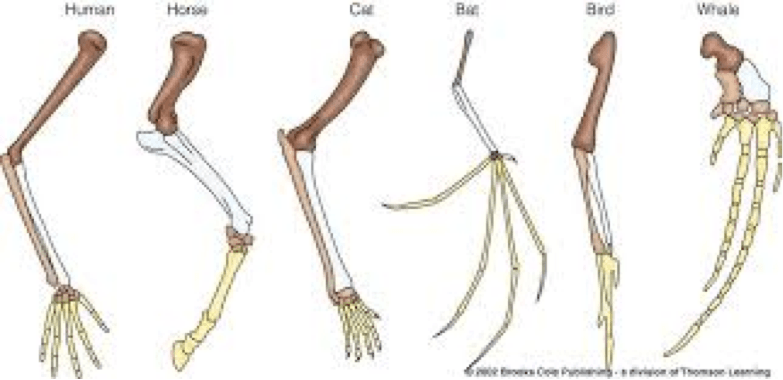
a)
Homologous
b)
Vestigial
c)
Analogous
3.

a)
Homologous
b)
Vestigial
c)
Analogous
4.
Whales are aquatic mammals that contain a pelvis bone. Even though it does not aid in its movement, the function must have been used by a common ancestor of the whale. Thus, the pelvis is referred to as a(n)...
a)
vestigial structure
b)
analogous structure
c)
homologous structure
5.

If an organism has a vestigial structure, that structure likely once had a function in a(n)...
a)
close relative
b)
early ancestor
c)
unrelated organism
d)
embryological stage
6.

a)
Homologous
b)
Vestigial
c)
Analogous
7.

Two organisms that are closely related would have...
a)
very similar DNA sequence
b)
exactly the same DNA sequences
c)
no proteins in common
d)
completely different DNA sequence
8.

a)
Homologous
b)
Vestigial
c)
Analogous
9.
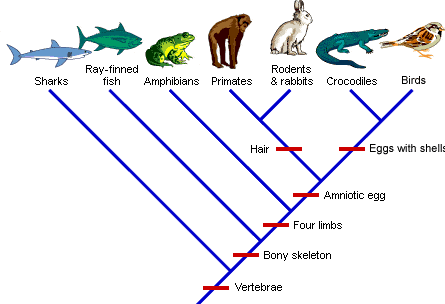
According to this cladogram, sharks are MOST closely related to which organism?
a)
Amphibians
b)
Ray finned fish
c)
Crocodiles
d)
Birds
10.

a)
homologous
b)
Vestigial
c)
Analogous
11.
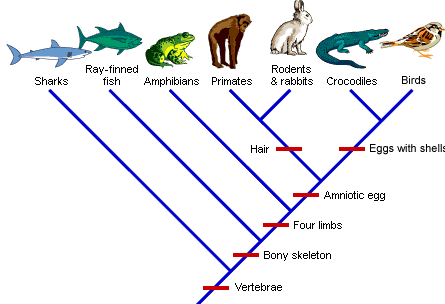
According to this cladogram, birds are LEAST related to:
a)
Amphibians
b)
Sharks
c)
Ray Finned Fish
d)
Crocodiles
12.

a)
Homologous
b)
Vestigial
c)
Analogous
13.
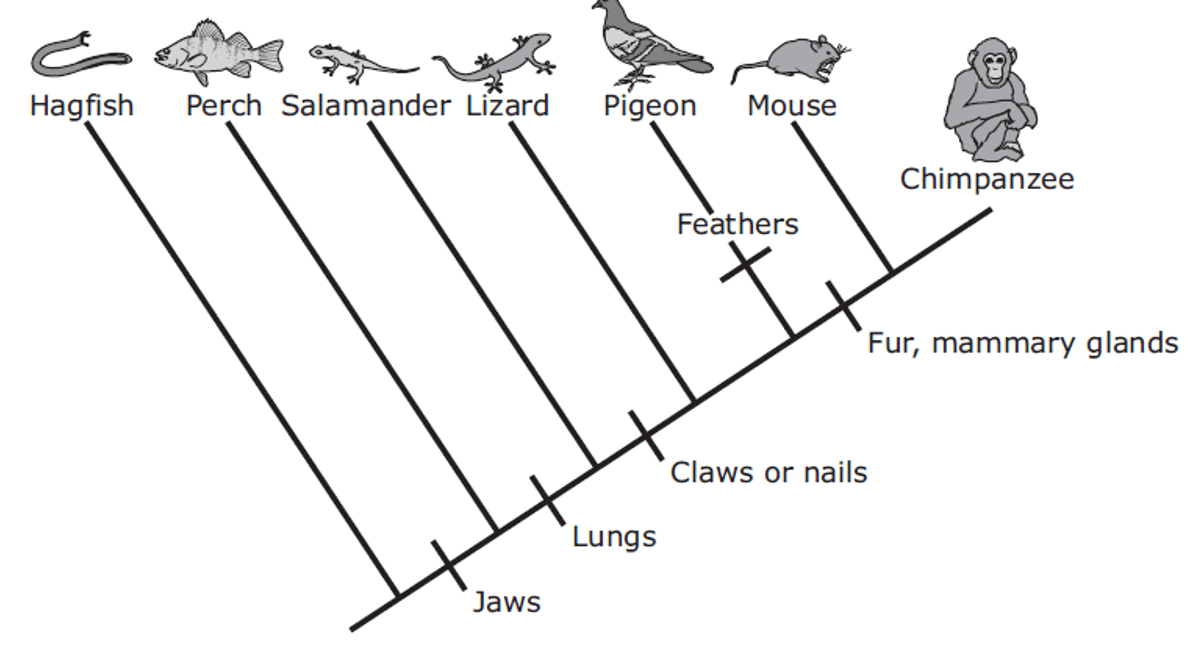
All the animals to the right of the hagfish would have the common characteristic of -
a)
Fur
b)
Claws or nails
c)
Lungs
d)
Jaws
14.

Which trait do only humans have, according to the cladogram?
a)
jaws
b)
mammary glands & hair
c)
terrestrial during all life stages
d)
opposable thumbs
15.

How many animals have an amniotic egg?
a)
2
b)
3
c)
4
d)
5
16.

What trait separates sharks from ray-finned fish?
a)
Vertebrae
b)
Bony skeleton
c)
Four limbs
d)
None
17.
Mutations are important because they bring about
a)
death of the organism in which they develop
b)
genetic variation needed for a population to evolve
c)
benefits for the individual, not for the population
d)
Hardey-Weinberg equilibrium within a population
18.
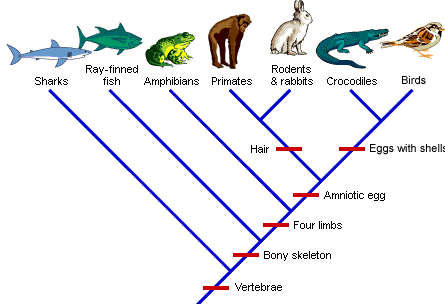
Which two orgainsms have hair?
a)
Sharks & Ray Finned Fish
b)
Primates & Rodents
c)
Birds & Crocodiles
d)
Rabbits & Birds
19.

On the cladogram, which number represents the common ancestor of organisms B & D?
a)
1
b)
2
c)
3
d)
A
20.
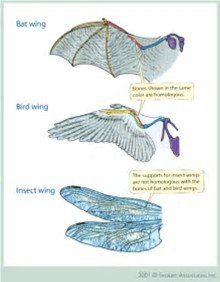
a)
Homologous
b)
Vesitigial
c)
Analogous
21.
A branching diagram that represents the proposed phylogeny or evolutionary history of a species or group
a)
Cladogram
b)
Cladistics
c)
Phylogeny
d)
Taxonomy
22.
Fossil record, molecular biology, comparative anatomy & embryology, biogeography - all are _____.
a)
Evidence of evolution
b)
Mechanisms of evolution
c)
Examples of evolution
23.

a)
Homologous
b)
Vestigial
c)
Analogous
24.
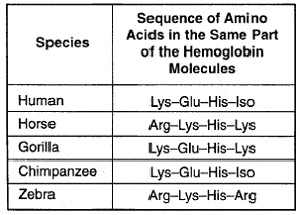
You look at two species and see very similar amino acid sequences. What does this likely tell you?
a)
These are the same animal.
b)
These animals have a common ancestor.
c)
These animals are not likely related.
d)
These animals are likely becoming one species.
25.

Individuals that are well adapted to their environment will survive and produce:
a)
Fewer mutations
b)
Stronger genes
c)
More offspring
d)
Better traits
26.
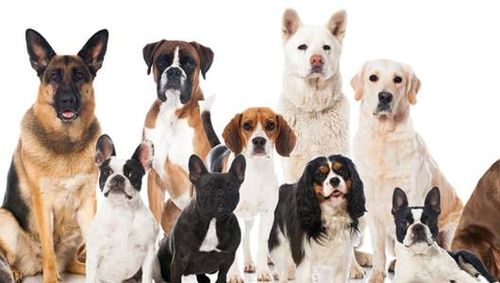
Breeding dogs for specific desired traits is an example of which type of evolutionary evidence?
a)
Artificial selection
b)
Embryology
c)
Fossils
d)
Biochemical molecules
27.

An illustration and a dichotomous key are given. What is the correct classification for this organism?
a)
Class Insecta
b)
Order Amblygygi
c)
Order Araneae
d)
Order Scorpiones
28.
According to this cladogram, birds are LEAST related to:
a)
Amphibians
b)
Sharks
c)
Ray Finned Fish
d)
Crocodiles
29.
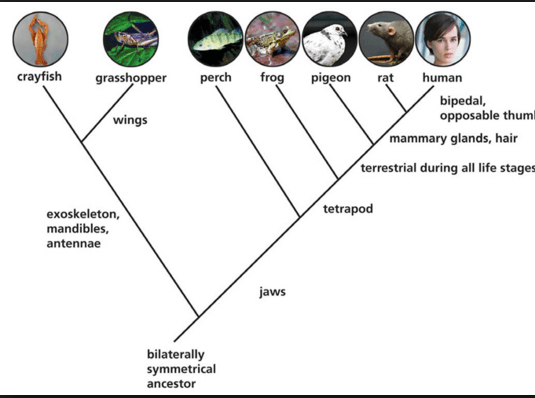
According to the cladogram, which organism is most distantly related to the human?
a)
crayfish
b)
grasshopper
c)
perch
d)
frog
30.

What genus does Bird Z belong to?
a)
Certhidea
b)
Geospiza
c)
Camarhynchus
d)
Platyspiza
31.
What genus does Bird X belong to?
a)
Certhidea
b)
Geospiza
c)
Camarhynchus
d)
Platyspiza
32.
Cladograms are constructed by grouping organisms together based on their____________ characteristics.
a)
shared
b)
different
c)
similar
d)
opposite
33.
What trait separates sharks from ray-finned fish?
a)
Vertebrae
b)
Bony skeleton
c)
Four limbs
d)
None
34.

What traits do crocodiles and amphibians have in common?
a)
Vertebrae and hair
b)
Four limbs and amniotic eggs
c)
Bony skeleton and vertebrae
d)
Amniotic eggs and hair
35.

Which of dot represents the most recent ancestor of a mushroom?
a)
A
b)
B
c)
C
d)
D
36.

The two most closely related organisms are
a)
hagfish and chimp
b)
perch and mouse
c)
salamander and bird
d)
mouse and chimp
37.
All plant cells have chloroplasts, this makes them a ___________ in evolutionary classification.
a)
acquired trait
b)
derived character
c)
conincidence
d)
physical feature
38.

What is this a picture of?
a)
Pedigree
b)
Cladogram
c)
Family Tree
d)
Oak Tree
39.

What do phylogenic trees do?
a)
Help you visualize how species are related.
b)
Provide windbreaks in your yard.
c)
Provide DNA details.
d)
Show the distribution of organisms
40.

Some organisms that share a common ancestor have features that have different functions, but similar structures. These are known as
a)
vestigial structures
b)
analogous structures
c)
homologous structures
d)
fossil structures
41.
Darwin's explanation for evolution was dependent on which scientific concept?
a)
The ability of organisms to learn
b)
The significance of social behaviors to survival
c)
The existence of variations in a population
d)
The relationship between size and survival
42.

which of the following is an example of a vestigial structure?
a)
the wings of a red-tailed hawk
b)
the hind limbs of a house cat
c)
the fins of sharks
d)
the wings of an ostrich
43.
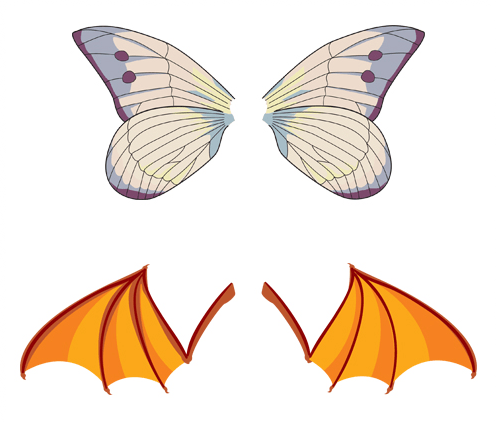
How would you describe this evolution?
a)
Homologous structure
b)
Analogous structure
c)
Structural adaption
d)
Functional adaption
44.
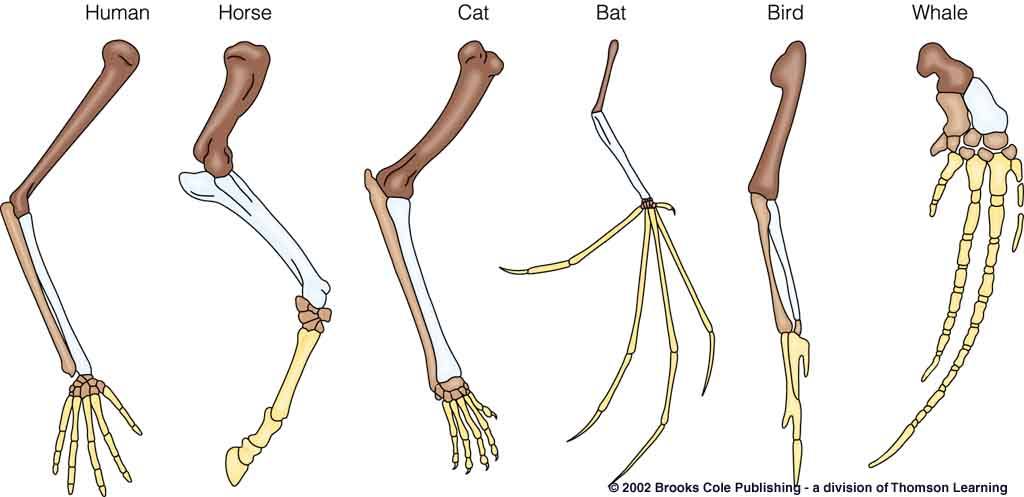
The structures shown are_________
a)
homologous
b)
heterologous
c)
analogous
d)
vestigial
100 %

