
 Worksheets
End of Year Quiz 1-100
Total questions: 100
Worksheet time: 1hrs 14mins
Name
Class
Date
1.
The main purpose of the ____________ system is to break food particles into pieces that can be used.
a)
circulatory
b)
respiratory
c)
digestive
d)
skeletal
2.
What is responsible for delivering oxygen and removing carbon dioxide from the body?
a)
cell nucleus
b)
excretory system
c)
nervous tissue
d)
respiratory system
3.
The __________ is the main organ of the nervous system.
a)
heart
b)
lungs
c)
brain
d)
skin
4.
___________ are the building blocks of life.
a)
cells
b)
legos
c)
blocks
d)
blood
5.
The circulatory system uses _________ to deliver oxygen to the rest of the body.
a)
blood cells
b)
lungs and nose
c)
blood vessels
d)
brain and spinal cord
6.
In multicellular organisms, tissues are comprised of _______.
a)
organs
b)
systems
c)
cells
d)
blood
7.
When tissues come together, they form ___________.
a)
cells
b)
atoms
c)
organs
d)
systems
8.
Which of the following shows the levels of organization of an organism from LEAST to MOST complex.
a)
cells-tissues-systems-organs
b)
organs-cells-systems-tissues
c)
systems-organs-tissues-cells
d)
cells-tissues-organs-systems
9.

What body system consists of the kidneys?
a)
Circulatory
b)
Excretory
c)
Digestive
d)
Muscular
10.

My spinal cord helps _________ travel between my brain and the nerves in my body.
a)
Memories
b)
Blood
c)
Waste
d)
Messages
11.

The air I breathe in goes down my trachea to my ______?
a)
Heart
b)
Lungs
c)
Brain
d)
Stomach
12.

My body needs ______ from the air to live.
a)
Oxygen
b)
Cardon Dioxide
c)
Carbon Monoxide
d)
Hydrogen Peroxide
13.

The food I eat goes down my esophagus to my __________.
a)
Bladder
b)
Kidney
c)
Stomach
d)
Big Toe
14.

My small and large ___________ break down the food so my body can use it for energy.
a)
Intestines
b)
Kidneys
c)
Stomach
d)
Bladder
15.

The liquid urine leaves my body through my _________.
a)
Stomach
b)
Bladder
c)
Ureters
d)
Urethra
16.
Where does digestion start?
a)
stomach
b)
mouth
c)
esophagus
17.
The _________ is/are responsible for urine storage.
a)
Bladder
b)
Kidneys
c)
Ureter
d)
Urethra
18.
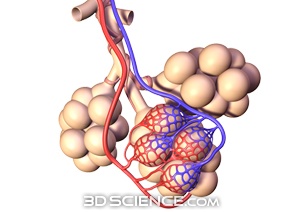
When you breathe, your lungs take in ___ and remove ___.
a)
air/oxygen
b)
oxygen/carbon dioxide
c)
carbon dioxide/waste
d)
waste/air
19.

Name the organ label # 6.
a)
alveoli
b)
bronchi
c)
trachea
d)
lungs
20.
Carbon dioxide is considered a _________________
a)
food
b)
waste
c)
energy
d)
fun party favor
21.
Red blood cells transport __________ around our body.
a)
oxygen
b)
plasma
c)
bones
d)
cardiac muscles
22.

This system carries oxygen, nutrients and waste around the body.
a)
Lymphatic
b)
Urinary
c)
Respiratory
d)
Circulatory
23.

One role of the pancreas is to create enzymes to help breakdown food. This function makes it part of which system?
a)
Endocrine
b)
Digestive
c)
Immune
d)
Urinary
24.

What is this a picture of?
a)
kidney
b)
stomach
c)
intestine
d)
liver
25.

What is this?
a)
mouth
b)
colon
c)
stomach
d)
liver
26.

The red organ is
a)
stomach
b)
small intestine
c)
large intestine
d)
liver
27.

Number Eight on the illustration shows the . . .
a)
Small intestine
b)
Liver
c)
Gall Bladder
d)
Large Intestine
28.

The liver is a part of which body system?
a)
Circulatory
b)
Digestive
c)
Excretory
d)
Respiratory
29.

What is the name of this organ?
a)
Large Intestine
b)
Pancreas
c)
Small Intestine
d)
Gallbladder
30.

What organ is this?
a)
Throat
b)
Esophagus
c)
Small intestine
d)
Lungs
31.

What organ is this
a)
Pancreas
b)
Large intestine
c)
Medium intestine
d)
Stomach
32.
Approved eye protection devices (such as goggles) are worn in the laboratory
a)
to avoid eye strain
b)
to improve your vision
c)
only if you don’t have corrective glasses
d)
any time chemicals, heat or glassware are used
33.
If a laboratory fire erupts, immediately
a)
notify your instructor
b)
run for the fire extinguisher
c)
throw water on the fire
d)
open the windows
34.
If you wear contact lenses in the school laboratory
a)
take them out before starting the lab
b)
you do not have to wear protective goggles
c)
advise your science instructor that you wear contact lenses
d)
keep the information to yourself
35.
If you do not understand a direction or part of a lab procedure, you should
a)
skip it and go on to the next part.
b)
ask the instructor before proceeding
c)
try several methods until something works
d)
figure it out as you do the lab
36.
After completing an experiment, all chemical wastes should be
a)
taken home
b)
dumped in the sink
c)
disposed of according to your instructor’s directions
d)
left at your lab station for the next class
37.
You are heating a substance in a test tube. Always point the open end of the tube
a)
away from all people
b)
toward another classmate
c)
toward your lab partner
d)
toward yourself
38.
You have been injured in the laboratory (cut, burn, etc.). First you should
a)
apply first aid yourself
b)
tell the science instructor at once
c)
see a doctor after school
d)
visit the school nurse after class
39.
Long hair in the laboratory must be
a)
tied back or kept entirely out of the way with a hair band, hairpins, or other confining device
b)
always neatly groomed
c)
held away from the experiment with one hand
d)
cut short
40.
In a laboratory, the following should not be worn.
a)
all of the answers
b)
dangling jewelry
c)
sandals
d)
loose clothing
41.
The following footwear is best in the laboratory.
a)
shoes appropriate for the weather
b)
open-toed shoes
c)
closed-toed shoes
d)
sandals
42.
Horseplay or practical jokes in the laboratory are
a)
okay if you are working alone
b)
not dangerous
c)
okay
d)
always against the rules
43.
When you finish working with chemicals, biological specimens, and other lab substances, always
a)
wipe your hands on your clothes
b)
wipe your hands on a towel
c)
wash your hands thoroughly with soap and water
d)
treat your hands with skin lotion
44.
All chemicals in the lab are to be considered dangerous
a)
True
b)
False
45.
Work areas should be kept clean and tidy
a)
True
b)
False
46.
Laboratory work can be started immediately upon entering the laboratory even if the instructor is not yet present
a)
True
b)
False
47.
Never remove chemicals or other equipment from the laboratory.
a)
True
b)
False
48.
Chipped or cracked glassware is okay to use.
a)
True
b)
False
49.
Read all procedures thoroughly before entering the laboratory
a)
True
b)
False
50.
All unauthorized experiments are prohibited.
a)
True
b)
False
51.
It’s okay to pick up broken glass with your bare hands as long as the glass is placed in the trash.
a)
True
b)
False
52.
Report any accident or injury to the teacher _______________, no matter how small it may appear
a)
at the end of the period
b)
immediately
c)
eventually
d)
after you get the situation under control
53.

Keep hands ________________ while using chemicals or preserved specimens
a)
away from face, eyes, mouth, and body
b)
in pockets
c)
to yourselves
d)
wet
54.

Perform only ______________________
a)
safe experiments
b)
experiments authorized by your teacher
c)
if you are a good actor
d)
experiments that cause FIRE!!!
55.
You accidentally cut yourself. It is small and barely bleeds. You should
a)
wash the cut
b)
call you mom
c)
run to the nurse
d)
tell the teacher
56.

Before leaving the lab you should always wash or sanitize your hands.
a)
True
b)
False
57.

When working in the lab, you always...
a)
work with only members of your group with a business-like attitude
b)
ask questions when in doubt about procedures
c)
clean up after yourself
d)
all of the above
58.
When smelling a chemical or liquid, it is best to:
a)
take a deep breath.
b)
pour it on your clothes.
c)
waft it towards you.
d)
taste it as well.
59.
You should hold the specimen securely in your hands as you cut on it.
a)
True
b)
False
60.
If you get a tiny cut, you should
a)
walk it off
b)
cry like a baby
c)
wipe blood on your partner
d)
tell the teacher
61.
Builds proteins
a)
Nucleus
b)
Ribosomes
c)
Mitochondria
d)
Chloroplast
62.
Stores food and water for the cell.
a)
Cytoplasm
b)
Cell Wall
c)
Vacuole
d)
Nucleus
63.
Controls what enters and leaves the cell
a)
Mitochondria
b)
Cell Membrane
c)
Cell Wall
d)
Nucleus
64.

What is the name of this organelle?
a)
Cell membrane
b)
Nucleus
c)
Cytoplasm
d)
Cell wall
65.

How would the cell function without this organelle?
a)
There would be nothing to regulate the flow of things in and out of the animal cell
b)
There wouldn't be a jelly like fluid to hold the organelles in place
c)
There wouldn't be an organelle that makes proteins
66.

What is the function of this organelle?
a)
This organelles holds all of the other organelles in place
b)
This organelle gets rid of waste
c)
This organelle packages and sends out proteins
d)
This organelle takes care of
67.

What would happen to the plant cell without the chloroplasts?
a)
There wouldn't be an organelle that performs photosynthesis
b)
There wouldn't be an organelle that serves as the resevoir for water and waste
c)
There wouldn't be an organelle that regulates what comes in and out of the cell
d)
They wouldn't be an organelle that makes necesary proteins
68.

What is the name of this organelle?
a)
Rough ER
b)
Mitochondria
c)
Lysosomes
d)
Nuclear Membrane
69.

What do all of these organisms have in common?
a)
They all have uniform offspring
b)
They are all made of cells
c)
They possess the same features
d)
They have the same internal and external structures
70.

According to cell theory, where did this cell come from?
a)
another living cell
b)
energy from sun
c)
a multicellular organism
d)
the nonliving environment
71.
In Biology class, Zach observes cells. Each cell has a structure that separates the inside of cell from the environment. Which structure is Zach observing?
a)
nucleus
b)
cytoskeleton
c)
cell membrane
d)
genetic material
72.

Robert Hooke, Anton van Leeuwenhoek, Theodor Schwann, Rudolf Virchow, and Matthias Schliden were all responsible for what theory?
a)
The Theory of Gravity
b)
The Theory of Relativity
c)
The Cell Theory
d)
The Theory of Continental Drift
73.
This scientist concluded that animals and, in fact, all living things are made of cells:
a)
Hooke
b)
Leeunwenhoek
c)
Schleiden
d)
Schwann
74.
This scientist concluded that plants are made of cells:
a)
Virchow
b)
Schwann
c)
Schleiden
d)
Leeunwenhoek
75.
What tool do you use to view the cells?
a)
metric ruler
b)
centrifuge
c)
microscope
d)
pipette
76.
Which of the following is NOT a cell theory.
a)
All non-living things are made of cells
b)
All cells come from pre-existing cells
c)
Cells are the basic unit of structure and function of all living things
77.
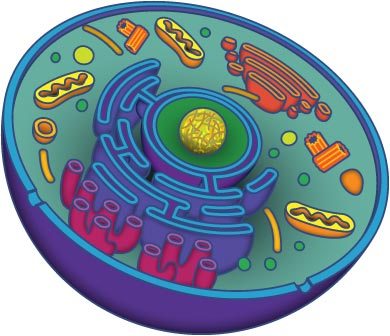
All living things are made up of...
a)
cells
b)
cell tissues
c)
organ
d)
organ systems
78.
Who are the three scientists credited with creating the Cell Theory?
a)
Schlieden, Schwann, Virchow
b)
Schindler, Schmeil, Vanderhoot
c)
Schwimmer, Shanazzek, Van Halen
79.
The first part of the Cell Theory states: "What happens in Cell Theory, stay in Cell Theory."
a)
True
b)
False
c)
I don't know
d)
Ummmm
80.
All cells come from___________ cells.
a)
pregnant
b)
pre-existing
c)
paternal
d)
pin size
81.
When observing cells, which of the following pieces of equipment is most appropriate?
a)
Hand lens
b)
Telescope
c)
Petri dish
d)
Microscope
82.
Rocks are not living because
a)
they never move
b)
they aren't needed for humans
c)
they are not made of cells
d)
they don't break down
83.
What is the basic structural and functional unit of all living things?
a)
atom
b)
cell
c)
molecule
d)
human
84.
All cells are produced ____________.
a)
from nothing
b)
from other cells
85.
An organism made of one cell is called
a)
unicellular
b)
multicellular
86.

The Golgi apparatus _____.
a)
packages cell products for export
b)
eliminates waste
c)
stores DNA
d)
makes energy
87.

What is the fluid inside a cell called?
a)
Endoplasimic Reticulum
b)
Orange Juice
c)
Water
d)
Cytoplasm
88.

Which of these is NOT a part of the Cell Theory?
a)
All cells are independent.
b)
Cells are the basic unit of living things.
c)
All living things are one or more cells.
d)
Cells come from cells.
89.

This organelle helps plants keep their rigid structure.
a)
Cell wall
b)
Cell membrane
c)
Chloroplast
d)
Nucleus
90.
This organelle eliminates waste.
a)
Nucleus
b)
ER
c)
Vacuole
d)
Lysosome
91.

This organelle makes proteins.
a)
Cell membrane
b)
Nucleus
c)
Ribosome
d)
ER
92.
This is a double layer of phospholipids that creates a barrier between the cells internal and external environments; it controls what comes in or out of the cell (selective permeable)
a)
Nucleus
b)
Cilia
c)
Cell membrane
d)
Flagella
93.

This organelle transports materials from throughout the cell.
a)
ER
b)
Ribosomes
c)
FedEx
d)
Golgi Complex
94.

What is known as the brain of a cell
a)
cell wall
b)
Cell membrane
c)
Nucleus
d)
Nuclues
95.

Chloroplasts carry out...
a)
Phagocytocis
b)
Phylocytosis
c)
Photosynthesis
d)
Respiration
96.
Geologists are studying a rock formation called Devil’s Tower. They want to know how and when it formed. Which method(s) would they most likely use to conduct their investigation?
a)
making careful measurements of the size of the formation
b)
observations of rock layers and dating of rock samples
c)
controlled experiments on weathering rates of rock material
d)
cataloging the wildlife living on or near Devil’s Tower
97.
A team of doctors is testing the effects of a new drug on sickle-cell anemia patients. The team organizes the patients into two groups. The experimental group is given the drug. The control group is given a placebo, or a substance that has no medicinal value. Neither group knows whether they received the drug or the placebo. Why is having a control group an important part of this experiment?
a)
Scientists can determine the effects of the drug by comparing those patients that have been treated with the drug to those that have not.
b)
By having two groups, it allows the scientists to have a larger sample size on which to test the drug.
c)
It provides the patients with a choice of whether they want to take the experimental drug.
d)
Scientists are able to study the effects of a second drug on the group that received the placebo.
98.
An astronomer is investigating whether sunspot activity on the Sun’s surface affects weather on Earth. Which method would the astronomer most likely use to make measurements of sunspot activity?
a)
controlled experiment
b)
casual observation
c)
modeling
d)
systematic observation
99.
Sal is studying the solar system. He makes a physical model using different-sized foam balls to represent the planets. Which best describes why a physical model is a useful tool for studying the solar system?
a)
Solar system models can be used to study a system that is too big to study directly.
b)
A model of the solar system eliminates the need for scientists to study the solar system directly.
c)
A model of the solar system provides an exact replica of the actual solar system, so scientists can experience what each planet is like.
d)
A model of the solar system can provide more data about the solar system than direct observations.
100.
Carol wants to determine how a fertilizer will affect the growth of marigolds. Which best explains why Carol would choose to investigate this topic using an experiment rather than systematic observations?
a)
Her research question requires comparison, not notation and measurements.
b)
Her research question should be answered using samples that are in identical circumstances.
c)
Her research question requires changing one variable to see how it affects others.
d)
Her research question involves studying a system that is too large or dangerous to study directly
100 %

