
NEW
Font size
S
M
L
XL
 Worksheets
Psychology Final
Total questions: 60
Worksheet time: 41mins
Name
Class
Date
1.

Split brain operations are done to
a)
shrink tumors
b)
increase memory
c)
help speech disorders
d)
help stop seizures
2.
Which of the following is NOT a neurotransmitter?
a)
dopamine
b)
norepinephrine
c)
acetycholine
d)
interneuron
3.

The four regions of the cerebral cortex are referred to as:
a)
lesions
b)
lobes
c)
pons
d)
corpus callosum
4.
The amygdala, the hypothalamus and the hippocampus are a part of
a)
limbic system
b)
cerebral cortex
c)
hindbrain
d)
forebrain
5.
The cerebral cortex is made of
a)
white matter
b)
gray matter
c)
pink goo
6.
Hemisphere that is associated with Verbal and Mathematical abilities
a)
Left Hemisphere
b)
Right Hemisphere
7.

Brain hemisphere associated with spatial abilities and recognizing others faces
a)
Left Hemisphere
b)
Right Hemisphere
8.
Controls heartbeat and breathing
a)
Pons
b)
Medulla
c)
Cerebellum
d)
Thalamus
9.

Damage this and you won't form new memories
a)
Hypothalamus
b)
Hippocampus
c)
Amygdala
d)
Thalamus
10.

Controls motivational behaviors, including: feeding, fight-flight response, and fornicating
a)
Hippocampus
b)
Amygdala
c)
Reticular Formation
d)
Hypothalamus
11.
The most widely used psychoactive drug
a)
alcohol
b)
marijuana
c)
Ecstacy
d)
caffeine
12.
The most widely abused psychoactive drug
a)
caffeine
b)
alcholol
c)
marijuana
d)
crack
13.
These mimic the effect of endorfins
a)
mdma
b)
amphetimines
c)
opiates
d)
tranquilizers
14.
Which of the following is not a stimulant
a)
caffeine
b)
cocaine
c)
meth
d)
MDMA
15.
The period of the sleep cycle when most dreaming occurs
is
a)
1
b)
REM
c)
NREM
d)
4
16.
A psychological state of possibly altered attention and
awareness in which the individual is unusually responsive to suggestions is
called
a)
hypnosis
b)
drugged
c)
unconcsiouss
d)
narcolepsy
17.
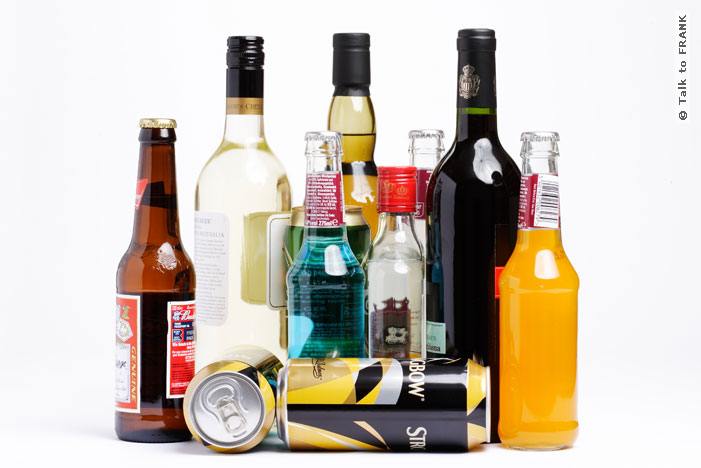
Drugs that calm neural activity and slow body functions...
a)
Depressants
b)
Stimulants
c)
Hallucinogens
d)
Hypnosis
18.
Characterized by a cessation (stop) in breathing, which causes a person to wake up repeatedly throughout the night
a)
Insomnia
b)
Narcolepsy
c)
Sleep Apnea
d)
Night Terrors
19.
When in REM sleep, a person's body is
a)
Moving
b)
Paralyzed
c)
Sleepwalking
d)
Acting out their dreams
20.
The theory that states that dreaming serves to work out our daily problems while we sleep.
a)
Wish Fulfilment
b)
Information Processing
c)
Activation-Synthesis
d)
Manifest Theory
21.
The sequence of age-related changes that occur as a person progresses from conception to death is known as
a)
maturation
b)
the peri-natal period
c)
development
d)
childhood
22.
Which of the following is the most accurate concerning fetal alcohol syndrome?
a)
Physical addition is what matters so the mother can have a few drinks now and then
b)
One drink a day is safe for the baby and mother
c)
Even normal social drinking by the expectant mother may be harmful to the fetus
d)
Alcohol consumption by the mother poses no risk in the last three months of pregnancy
23.
Jean Piaget defined egocentrism as:
a)
Th e belief that young adults don’t listen to their parents
b)
Th e idea that preschool children cannot see things from another’s point of view
c)
Th e understanding that young children cannot learn outside of a structured classroom
d)
Th e belief that children cannot do more than one task at a time
24.
An awareness that objects continue to exist when out of sight is called:
a)
Mental images
b)
Sensory-motor
c)
Object permanence
d)
Conservation
25.
Authoritative parents can best be defined as:
a)
Parents who befriend their children and do not use discipline
b)
Parents who are less controlling and behave with a more accepting attitude
c)
Parents who try to control the behavior of their children in accordance with a set standard of conduct
d)
Supportive parents who discuss their rules and policies with their children
26.
Which of the following parenting styles results in the most socially responsible adults?
a)
Authoritarian
b)
Authoritative
c)
Permissive
d)
Autocratic
27.
The ________________________________ parenting style uses a "hands off" approach, where children learn from the consequences of their actions. The parent considers themselves as a friend to their child.
a)
Authoritative
b)
Neglecting
c)
Permissive
d)
Authoritarian
28.

When the baby's cheek is stroked they turn towards the side it was stroked and begins making sucking motions
a)
rooting reflex
b)
sucking reflex
c)
grasp reflex
d)
Babinski reflex
29.
This style of parenting calls for imposing rules and demanding obedience without debate or discussion between parent and child.
a)
Permissive
b)
Neglectful
c)
Authoritative
d)
Authoritarian
30.

According to Piaget, accommodation refers to
a)
parental efforts to include new children in the existing family structure
b)
incorporating new experiences into existing schemas.
c)
developmental changes in a child's behavior that facilitate social acceptance by family and peers.
d)
adjusting current schemas in order to make sense of new experiences.
31.
The tendency of the body to return to or maintain a balanced state (same-state):
a)
Motivation
b)
Instincts
c)
Learned drive
d)
Homeostasis
32.
An internal state that activates behavior and directs it toward a goal:
a)
Motivation
b)
Instincts
c)
Learned drive
d)
Homeostasis
33.
Which of the following is a psychological need:
a)
Water
b)
Hamburger
c)
iPhone
d)
Belonging
34.
The word ‘reinforce’ is best associated with:
a)
Dehay Theory
b)
Drive reduction theory
c)
Instinct theory
d)
Incentive theory
35.
The “hierarchy of needs” was developed by
a)
J.W. Atkinson.
b)
David McClelland.
c)
Matina Horner.
d)
Abraham Maslow.
36.
Which of the following is a definition of set point:
a)
weight around which day-to-day weight tends to fluctuate
b)
point at which the pancreas releases insulin
c)
excess extrinsic motivation causes intrinsic motivation to decline
d)
tendency of organisms to correct imbalances
37.
Homeostasis is best defined as:
a)
the end of a hunger drive
b)
the tendency of organisms to correct imbalances
c)
the excess extrinsic motivation causes intrinsic motivation to decline
d)
the external cues that keep us in balance
38.
A complex pattern of organized, unlearned behavior that is species- specific is called
a)
a drive
b)
a motive
c)
an emotion
d)
an instinct
39.
In the first stage of Abraham Maslow's hierarchy of needs, humans are motivated to satisfy the need for
a)
food
b)
sex
c)
love
d)
faith
40.
In the second stage of Abraham Maslow's hierarchy of needs, humans are motivated to satisfy the need for
a)
food
b)
water
c)
safety
d)
faith
41.
"I am the most important person in the world" would most likely be said by someone who is
a)
schizophrenic
b)
dissociative
c)
narcissistic
d)
depressed
42.
Someone suffering from PTSD (post traumatic stress disorder) would most likely
a)
have flashbacks
b)
be unable to reintegrate with society
c)
become bipolar
d)
go to a mental institution
43.
What is the purpose of the DSM -5?
a)
to describe the causes of psychological disorders
b)
to explain biological causes of disorders and cures
c)
to list the diagnoses and symptoms so that disorders can be diagnosed easier
d)
summarize research studies on psychological disorders
44.
OCD symptoms include which of these?
a)
repetitive thoughts, images, or impulses that are unwelcome, produce anxiety and difficult to control
b)
fear of being in large social situations
c)
heightened elevated mood, increased activity and energy
d)
pattern of violating the rights of others
45.
Compulsions are best described as...
a)
persistent fears
b)
repetitive behaviors
c)
delusions
d)
hallucinations
46.
When a therapist attempts to see the world through the client's eyes and to feel some part of what he or she is feeling, the therapist is using
a)
authenticity
b)
empathy
c)
reflection
d)
ego-centering
47.
Obsessions are
a)
persistent, irrational fears of specific objects or situations.
persistent, irrational fears of specific objects or situations.
b)
hyperactive, wildly optimistic states of emotion.
hyperactive, wildly optimistic states of emotion.
c)
false beliefs of persecution or grandeur.
false beliefs of persecution or grandeur.
d)
offensive and unwanted thoughts that persistently preoccupy a person.
offensive and unwanted thoughts that persistently preoccupy a person.
48.
Which of the following disorders is classified as a mood disorder?
a)
catatonia
b)
bipolar disorder
bipolar disorder
c)
generalized anxiety disorder
generalized anxiety disorder
d)
agoraphobia
49.
The most common psychological disorder in the U.S. is/are:
a)
schizophrenia.
b)
alcohol abuse.
c)
mood disorders.
d)
phobias.
50.
Helping people gain insight into the unconscious origins of their disorder is a central aim of
a)
cognitive therapies.
b)
systematic desensitization.
c)
biomedical therapies.
d)
psychoanalysis.
51.
The mental stress or discomfort caused ban individual experiencing inconsistency between thoughts and actions.
a)
Cognitive Dissonance
b)
Groupthink
c)
Deindividuation
d)
Attitude
52.
Matching your attitudes and behaviors to a group standard.
a)
Obedience
b)
Conformity
c)
Altruism
d)
Lowball
53.
A belief that all members of a group share a common characteristic.
a)
Prejudice
b)
Stereotype
c)
Discrimination
d)
Social loafing
54.
Preferential or disadvantageous behavior toward an individual or group.
a)
Obedience
b)
Prejudice
c)
Discrimination
d)
Other-race-effect
55.
The tendency for observers to underestimate the influence of the situation and to overestimate the influence of personal traits on a person's behavior is called
a)
the bystander effect.
b)
the fundamental attribution error.
c)
deindividuation.
d)
the mere exposure effect.
56.
Feelings, often based on our beliefs, that predispose us to respond in a particular way to objects, people, and events are called
a)
roles.
b)
norms.
c)
attitudes.
d)
attributions.
57.
First agreeing to a small request tends to make it more likely that you will later agree to a larger request. This is known as the
a)
mere exposure effect.
b)
fundamental attribution error.
c)
chameleon effect.
d)
foot-in-the-door phenomenon.
58.
A failure to assume personal responsibility for helping in an emergency situation often plays an important role in the
a)
mere exposure effect.
b)
chameleon effect.
c)
bystander effect.
d)
fundamental attribution error.
59.
The reciprocity norm refers to the expectation that people should
a)
help those who need help.
b)
help those who ask for help.
c)
help those who help themselves.
d)
help those who have helped them.
60.
The Stanford Prison Experiment showed the world that people will:
a)
Readily Conform to Social Roles
b)
Misbehave when Unsupervised
c)
Behave According to Disposition
d)
Always treat prisoners unfairly
Reset

