
 Worksheets
Chemistry Final Review
Total questions: 90
Worksheet time: 1hrs 27mins
Name
Class
Date
1.
How many particles are in 13.5 grams of Beryllium?
a)
1.5 particles
b)
9 particles
c)
4x10²³ particles
d)
9x10²³ particles
2.
2 NaClO3 (s) --> 2NaCl (s) +3 O2 (g)
12.00 moles of NaClO3 will produce how many grams of O2?
12.00 moles of NaClO3 will produce how many grams of O2?
a)
256 g of O2
b)
576 g of O2
c)
288 g O2
3.
B2H6 + 3O2 -->2 HBO2 + 2 H2O
What mass of O2 will be needed to burn 36.1 g of B2H6?
What mass of O2 will be needed to burn 36.1 g of B2H6?
a)
13.8 g O2
b)
3.86 mol of O2
c)
124 g O2
4.
2. True or False?
A chemical reaction stops before the limiting reagent is used up.
A chemical reaction stops before the limiting reagent is used up.
a)
True
b)
False
5.
3. The reactant that is not completely used up in a chemical reaction is called the __________ .
a)
spectator reagent
b)
limiting reagent
c)
excess reagent
d)
catalyst
6.
When 12 moles of O2 reacts with 1.1 mole of C10H8 what is the limiting reactant? C10H8 + 12 O2 --> 10 CO2 + 4 H2O
a)
Oxygen
b)
C10H8
c)
Water
d)
Carbon Dioxide
7.
When does a chemical reaction stop?
a)
When the lab is finished
b)
When the excess reactant is used up
c)
When the limiting reactant is used up
d)
Chemical reactions never stop
8.
A + B → AB : is the general form for which reaction type?
a)
Double Replacement
b)
Synthesis
c)
Combustion
d)
Decomposition
9.
Which of the following is an example of synthesis?
a)
Na + Br2 --> NaBr
b)
KClO3 --> KCl + O2
c)
HgO + Cl2-->HgCl + O2
d)
Cl2 + NaBr --> NaCl + Br2
10.
Identify this type of reaction,
Cl2 + 2KI --> I2 + 2KCl
Cl2 + 2KI --> I2 + 2KCl
a)
Synthesis
b)
Single Replacement
c)
Double Replacement
d)
Decomposition
11.
Which chemical reaction forms Carbon Dioxide and Water?
a)
Double Replacement
b)
Single Replacement
c)
Combustion
d)
Decomposition
12.
Which chemical reaction breaks down into 2 substances?
a)
Double Replacement
b)
Single Replacement
c)
Synthesis
d)
Decomposition
13.
Which reaction type is the following: AgF + CaCl2 --> AgCl + CaF2
a)
Decomposition
b)
Single Replacement
c)
Synthesis
d)
Double Replacement
14.
Which reaction type is the following: Na + CaF2 --> Ca + NaF
a)
Decomposition
b)
Single Replacement
c)
Synthesis
d)
Double Replacement
15.
Which reaction type is the following: C5H10O4 + O2 --> CO2 + H2O
a)
Decomposition
b)
Single Replacement
c)
Combustion
d)
Double Replacement
16.
Which is the correct net ionic equation for the reaction of AgNO3 and CaCl2?
a)
Ca2+(aq) + 2Cl- (aq) → CaCl(s)
b)
Ag+(aq) + Cl- (aq) → AgCl(s)
c)
Ag + Cl → AgCl
d)
Ag+ + Ca2+ →Ag2Ca (s)
17.
Which chemical reaction switches 2 elements?
a)
Double Replacement
b)
Single Replacement
c)
Combustion
d)
Decomposition
18.
What coefficient should be used to make the following equation balanced?
N2+O2--> _NO
N2+O2--> _NO
a)
1
b)
2
c)
3
d)
4
19.
Balance this equation:
__Li + __Cl2 -> __LiCl
__Li + __Cl2 -> __LiCl
a)
2Li + Cl2 -> 4LiCl2
b)
2Li + Cl2 -> LiCl2
c)
2Li + Cl2 -> 2LiCl
20.
What is this element?
1s22s22p63s2
1s22s22p63s2
a)
Neon
b)
Magnesium
c)
Aluminum
d)
Potassium
21.
Electrons occupy orbitals of lowest energy first is part of what electron configuration rule?
a)
Hund’s Rule
b)
Aufbau Principle
c)
Pauli Exclusion Principle
22.
What is this element?
[Xe] 6s15d10
[Xe] 6s15d10
a)
Mercury
b)
Gold
c)
Platinum
d)
Thallium
23.
How many electrons can the first energy level hold?
a)
1
b)
2
c)
8
d)
0
24.

What is the number of neutrons?
a)
34
b)
79
c)
45
d)
35
25.

Which element is pictured?
a)
neon
b)
fluorine
c)
magnesium
d)
argon
26.
Which of the following is a p block element?
a)
Ca
b)
Ar
c)
Re
d)
Au
27.

Which element is depicted from this orbital diagram
a)
Fluorine
b)
Neon
c)
Chlorine
d)
Argon
28.

Which element is depicted from this atomic orbital diagram?
a)
Carbon
b)
Nitrogen
c)
Oxygen
d)
Phosphorus
29.

What is the shape of a p orbital?
a)
sphere
b)
it's just too complex to thing about it
c)
dumbbell
d)
I don't know this stuff.
30.
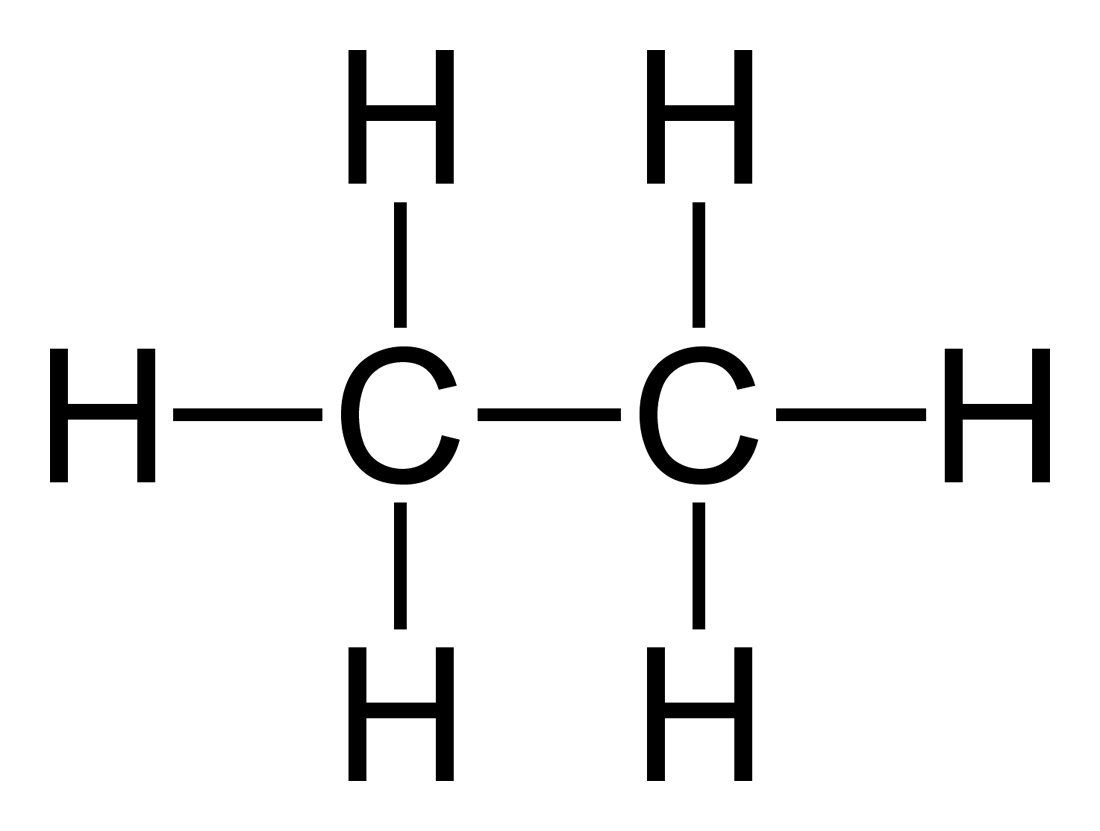
Name this alkane
a)
Methane
b)
Ethane
c)
Propane
d)
Butane
31.
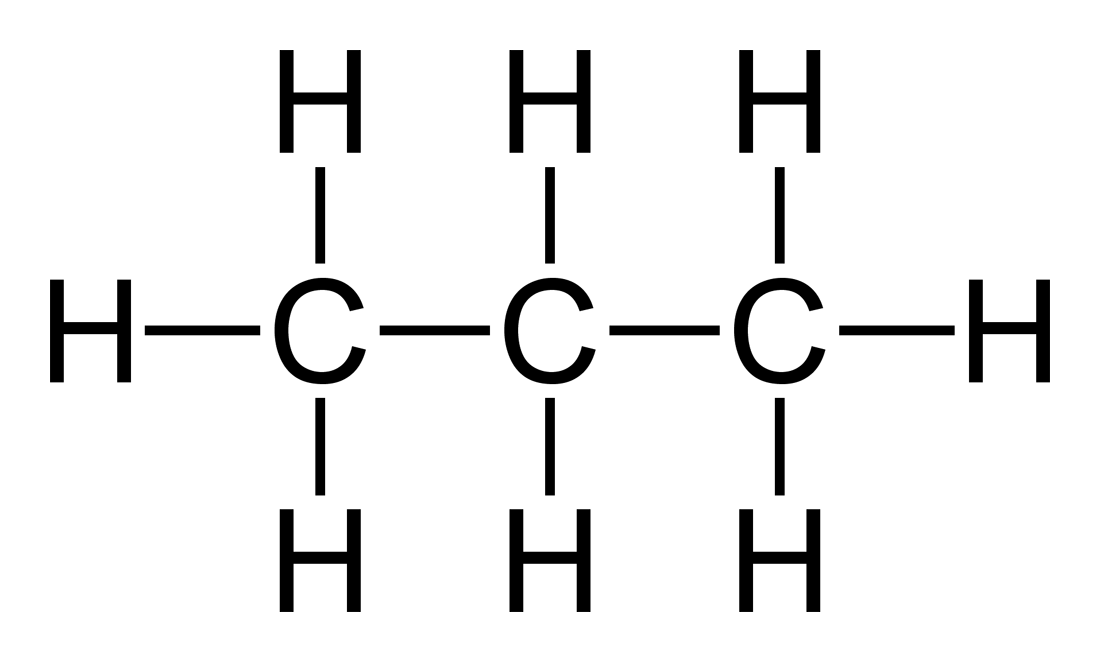
Name this alkane
a)
Methane
b)
Ethane
c)
Propane
d)
Butane
32.
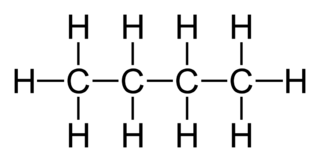
Name this alkane
a)
Methane
b)
Ethane
c)
Propane
d)
Butane
33.
How many carbon atoms are in methane?
a)
1
b)
2
c)
3
d)
4
34.

a)
Alkane
b)
Alkene
c)
Alkyne
35.

a)
Alkane
b)
Alkene
c)
Alkyne
36.

a)
3-ethyl-2,2-dimethyl-3-hexyne
b)
4-ethyl-5,5-methyl-2-hexayne
c)
4-butyl-2-hexayne
d)
4-ethyl-5,5-dimethyl-2-hexyne
37.

What is the structure of 2-methyl pent-2-ene ?
a)
a
b)
b
c)
c
d)
d
38.
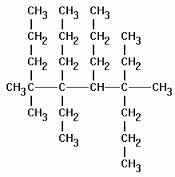
How many carbons are in the longest chain of the following molecule:
a)
11
b)
10
c)
9
d)
8
39.
The law of conservation of mass states that....
a)
Matter can be made
b)
Matter can be destroyed
c)
Matter can neither be made or destroyed
40.
The chemical formula of magnesium phosphide is
a)
MgP
b)
Mg₂P₃
c)
Mg₃P₂
d)
Mg₃(PO₄)₂
41.
The chemical formula of silver sulfide is
a)
AgS
b)
Ag₂S
c)
Au₂S
d)
Ag₂SO₄
42.
What is the formula for Sodium Fluoride?
a)
NaF
b)
NaF3
c)
Na3F
d)
Na1F2
43.
What is the FORMULA for....
beryllium iodide
beryllium iodide
a)
Be2I
b)
BeI
c)
BeI2
d)
BI2
44.
The symbol for a substance dissolved in water is
a)
(s)
b)
(l)
c)
(g)
d)
(aq)
45.
What are the reactants in the following chemical equation?
2H2 + O2 --> 2H2O
2H2 + O2 --> 2H2O
a)
H2
b)
O2
c)
2H2 + O2
d)
2H2O
46.
A substance that speeds up a chemical reaction without being permanently changed itself is a(n) ____.
a)
catalyst
b)
coefficient
c)
inhibitor
d)
reactant
47.
How many O's are in Al₂(SO₄)₃
a)
4
b)
12
c)
7
d)
24
48.

Based on the activity series, which metal could X represent in the reaction below?
X + Ca (NO3)2 --> Ca + X (NO3)2
X + Ca (NO3)2 --> Ca + X (NO3)2
a)
Ba
b)
Fe
c)
Mg
d)
Zn
49.
Which is not a diatomic molecule in nature?
a)
fluorine
b)
nitrogen
c)
boron
d)
bromine
50.
Which is the charge that results when oxygen becomes an ion?
a)
+3
b)
+2
c)
-2
d)
-3
51.
Which is the correct name for the compound FeS?
a)
iron (II) sulfide (II)
b)
iron (II) sulfide
c)
iron (I) sulfide
d)
iron sulfide
52.
Ionic bonds are formed by transferring an electron from a _______ to a ________.
a)
Metal to a metalloid
b)
Metalloid to a nonmetal
c)
Nonmetal to a nonmetal
d)
Metal to a nonmetal
53.
Covalent bonds are formed by sharing an electron from a _______ to a ________.
a)
Metal to a metalloid
b)
Metalloid to a nonmetal
c)
Nonmetal to a nonmetal
d)
Metal to a nonmetal
54.
MgO is an ionic compound. What is its name?
a)
Manganese Oxide
b)
Magnesium Oxide
c)
Magnesium Monoxide
d)
Magnesium(II) Oxide
55.
FeSO4 is an Ionic compound. What is its name?
a)
Iron(II) Sulfate
b)
Iron Sulfoxide
c)
Iron(III) Sulfate
d)
Ferrous Sulfide
56.
The relationship between wavelength and frequency is λ=c/f. Calculate the wavelength of light that has a frequency of 5.2 x 10¹² 1/s. The speed of of light is 3.0x 10⁸ m/s.
a)
5.8 x 10 -5 m
b)
5.8 x 10 -7 m
c)
5.19 x 10 14 m
d)
1.56 x 10 23 m
57.

High frequency waves have _________ wavelength.
a)
varying
b)
high
c)
the same
d)
low
58.
A common infrared laser operates at 1.06 x 10³ nm. What if the energy of a photon with this wavelength?
a)
7.02 x 10^-40 J
b)
6.25 x 10^-28 J
c)
3.54 x 10^-15 J
d)
1.87 x 10^-19 J
59.
What is the measured amount of a product obtained from a chemical reaction?
a)
mole ratio
b)
theoretical yield
c)
percentage yield
d)
actual yield
60.
How many liters of NH3 are needed to react completely with 30.0L of NO?
4NH3+6NO --> 5N2 + 6H2O
4NH3+6NO --> 5N2 + 6H2O
a)
5.0 L
b)
20.0 L
c)
7.5 L
d)
120.0 L
61.
What proposed the electron cloud model for the atomic model?
a)
John Dalton
b)
Erwin Shrodinger and Werner Heisenberg
c)
Ernest Rutherford
d)
Niels Bohr
62.
Who stated that electrons traveled in fixed orbits called shells?
a)
Niels Bohr
b)
JJ Thomson
c)
Ernest Rutherford
d)
John Dalton
63.
Hund’s rule states…
a)
Atomic orbitals have opposite spins and 2 electrons each
b)
Electrons occupy orbitals of highest energy first and energy level changes as you go up
c)
Electrons occupy orbitals of lowest energy first, starting with 1s
d)
Electrons occupy orbitals of equal energy, one electron enters EACH orbital ONE AT A TIME until orbitals of the entire energy level have one electron with the SAME SPIN.
64.
Electrons occupy orbitals of lowest energy first is part of what electron configuration rule?
a)
Hund’s Rule
b)
Aufbau Principle
c)
Pauli Exclusion Principle
65.
The Quantum Mechanical Model is the most recent/modern atomic model.
a)
True
b)
False
66.
Which scientist developed the Quantum Mechanical
a)
E. Schroedinger
b)
W. Heisenberg
c)
J. Dalton
d)
N. Bohr
67.
What is the Pauli Exclusion Principle?
a)
An atomic orbital can only hold a maximum of 2 electrons, each with opposite spins
b)
An atomic orbital can hold a minimum of 6 electrons, each with opposite spins
c)
An atomic orbital can hold a maximum of 6 electrons, each with the same spin
d)
An atomic orbital can hold a minimum of 2 electrons, each with opposite spins
68.
This "rule" of Quantum Chemistry states that no 2 electrons in an atom can be in the exact same state...each electron in an atom can be described by a unique set of quantum numbers.
a)
Hund's Rule
b)
Heisenberg Uncertainty Principle
c)
Aufbau Principle
d)
Pauli Exclusion Principle
69.
phosphate
a)
PO32-
b)
PO33-
c)
PO42-
d)
PO43-
70.
acetate
a)
C2H3O21-
b)
C3H2O31-
c)
C2H2O31-
d)
C3H3O21-
71.
chlorate
a)
ClO21-
b)
ClO31-
c)
ClO41-
d)
ClO1-
72.
cyanide
a)
CN2-
b)
CN1-
c)
CN21-
d)
CNO1-
73.
carbonate
a)
C4-
b)
CO42-
c)
CO32_
d)
CO31-
74.
sulfate
a)
SO22-
b)
SO43-
c)
SO32-
d)
SO42-
75.
nitrate
a)
N3-
b)
NO21-
c)
NO2-
d)
NO31-
76.
ammonium
a)
NH41+
b)
NH42+
c)
NH31+
d)
NH32+
77.
hydroxide
a)
H1-
b)
H1+
c)
OH1-
d)
OH21-
78.
chlorite
a)
ClO1-
b)
ClO31-
c)
ClO21-
d)
Cl21-
79.
nitrite
a)
N3-
b)
NO21-
c)
NO31-
d)
N2O1-
80.
What is the correct formula for carbonate ion?
a)
CO₃²⁻
b)
ClO⁻₃
c)
CrO₄²⁻
d)
HCO₃⁻
81.
What is the correct formula for chlorate ion?
a)
ClO⁻₂
b)
ClO⁻₃
c)
CrO₄²⁻
d)
HCO₃⁻
82.
What is the correct formula for chromate ion?
a)
CO₃²⁻
b)
ClO₂⁻
c)
CrO₄²⁻
d)
HCO₃⁻
83.
Name this ion: OH⁻
a)
hydroxide
b)
peroxide
c)
phosphate
d)
silicate
84.
The proper formula for magnesium hydroxide:
a)
MgOH
b)
Mg2OH
c)
Mg(OH)2
d)
Mg2OH2
85.
When naming ionic compounds with transition metals you need to include roman numerals to show the _____ of the metal..
a)
atomic number
b)
mass number
c)
charge
d)
ionization energy
86.
What's the name of the compound NH4NO3 ?
a)
nitrogen hydrogen oxygen
b)
ammonium nitrite
c)
nitrogenous water
d)
ammonium nitrate
87.
The chemical compound for sodium phosphate would be:
a)
NaPO4
b)
Na2PO4
c)
Na3PO4
d)
Na(PO4)3
88.
What is the exam definition of saturated?
a)
No single bonds
b)
Contains a double bond
c)
No single bonds, all double bonds
d)
No double bonds, all single bonds
89.
Unsaturated hydrocarbons contain ___.
a)
at least one double or triple bond between carbon atoms
b)
only double bonds
c)
only single bonds between carbon atoms
d)
only triple bonds
90.
Which of the following is true about structural isomers?
a)
Have the same molecular formula
b)
Have different physical and chemical properties.
c)
Have the same number of elements
d)
all of the above
100 %

