
 Worksheets
Year 7 Science Chemistry End of Year Revision
Total questions: 93
Worksheet time: 57mins
Name
Class
Date
1.
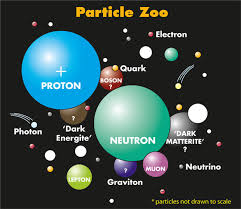
How do materials change from one state of matter to another?
a)
They gain or lose energy
b)
They break appart
c)
The particles get stickyer
d)
They are magnetised to themselves
2.
Can Solids be compressed?
a)
No
b)
Yes
c)
Sometimes (it depends what it's made of)
d)
Generally no
3.

How do gases behave in a container?
a)
Cluster together
b)
form a solid
c)
They take the shape of their container
d)
leak out
4.
What sorts of things are made of particles?
a)
Everything in the universe
b)
Anything solid
c)
Water
d)
Most solids, liquids and gases.
5.

Can a solid be easily broken apart?
a)
Yes
b)
No
c)
Sometimes (it depends on what it's made of)
d)
Generally no
6.
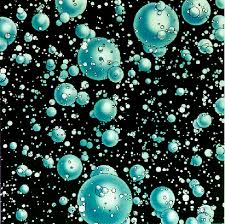
Which of the following is a property of a liquid
a)
Can't be compressed
b)
Can be compressed
c)
Particles are far appart
d)
Particles hold the object's shape
7.

Why is it convenient that water is a liquid?
a)
It is solid at room temperature
b)
It's heavy
c)
It can be easily compressed
d)
It can be used to flow, flush, and wash things
8.
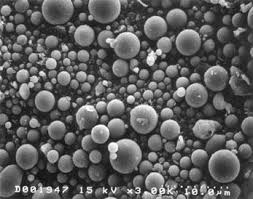
Which states allow easy flow of particles
a)
Gas and Solid
b)
Gas and Liquid
c)
Solid and Liquid
d)
Gas only
9.

What is represented in this image?
a)
Diffusion
b)
Thermal Expansion
c)
Compression
d)
Dissolving
10.

The drops of water that appear on the outside of a glass of cold juice on a warm day are an example of?
a)
sublimation
b)
condensation
c)
evaporation
11.

In a solid, the particles
a)
vibrate in place
b)
slide past one another
c)
overcome the strong attraction
12.

A gas
a)
has a definite shape but no definite volume
b)
has a definite volume but no definite shape
c)
has fast-moving particles
13.

Which of the following occurs when a liquid becomes a gas?
a)
the particles slow down
b)
the particles beak away from one another
c)
the particles move closer together
14.

At higher temperatures
a)
particles in an object have less energy
b)
particles in an object move faster
c)
a gas contracts
15.
What is evaporization?
a)
a gas becoming a liquid
b)
a liquid becoming a solid
c)
a gas becoming a solid
d)
a liquid becoming a gas
16.
______________________ takes place when a liquid changes to a solid.
a)
freezing
b)
melting
c)
boiling
d)
sublimation
17.
7. All phase changes (changing states) requires energy to be added or taken away.
a)
True
b)
False
18.

The phase change from water vapor to liquid water is known as...
a)
evaporation
b)
precipitation
c)
condensation
d)
sublimation
19.
What happens to particles when they are heated?
a)
They speed up and spread out
b)
They slow down and compress
c)
They stop moving
d)
They move closer together and speed up
20.
What is sublimation?
a)
phase change between solid and liquid
b)
pahse change from gas to solid
c)
phase change from solid to gas
d)
phase change from solid to solid
21.
Melting is ...
a)
liquid to solid
b)
solid to liquid
c)
solid to gas
d)
gas to liquid
22.
Freezing is...
a)
Solid to gas
b)
Liquid to solid
c)
Gas to solid
d)
Liquid to gas
23.
Boiling is ...
a)
liquid to gas
b)
gas to solid
c)
gas to liquid
d)
solid to liquid
24.
a liquid will take the shape of a container but cannot expand or be compressed
a)
false
b)
true
25.
Do all matter have the same boiling, melting, and freezing points
a)
Yes
b)
No
26.
What term describes a solid changing to a gas?
a)
Deposition
b)
Sublimation
c)
Evaporation
d)
Freezing
27.
Particles of a liquid
a)
are tightly packed together and stay in a fixed position.
b)
have no viscosity.
c)
decrease in volume with increasing temperature.
d)
are free to move around one another but still touch.
28.
In which state of matter do the particles spread apart and fill all the space available to them?
a)
crystal
b)
liquid
c)
gas
d)
solid
29.
Particles (molecules) in a ______________________ have more energy than the other states of matter.
a)
gas
b)
solid
c)
liquid
30.
When the temperature of matter increases the particles...
a)
speed up and move closer
b)
speed up and move farther apart
c)
slow down and move closer together
d)
slow down and move farther apart
31.
When the temperature of matter decreases the particles ...
a)
speed up and move farther apart
b)
speed up and move closer together
c)
slow down and move farther apart
d)
slow down and move closer together
32.
A pure substance that cannot be separated into simpler substances by chemical or physical means.
a)
Element
b)
Compound
c)
Mixture
d)
Chemical
33.
These contain only one kind of atom.
a)
element
b)
compound
c)
mixture
d)
water
34.
Elements can be broken down into simpler substances.
a)
false
b)
true
c)
sometimes
35.
A compound is made of ________ atoms.
a)
big
b)
similar
c)
different
36.
Carbon Dioxide is a ______
a)
compound
b)
element
c)
mixtures
d)
Battle of Bunker Hill
37.
Salt is a _________.
a)
compound
b)
element
c)
mixture
38.
Which of the following represents an element?
a)
H2O
b)
H2
c)
NaCl
d)
CaCO3
39.
Salt water boils and the water completely evaporates, salt (NaCl) is left in the bottom of the beaker. Which of the following is left in the beaker?
a)
Compound
b)
Element
c)
Mixture
d)
None of the Above
40.
A combination of substances that are not chemically combined is called a(n)____________.
a)
mixture
b)
compound
c)
physical
41.

This picture represents which of the following?
a)
element
b)
compound
c)
mixture of elements
d)
mixture of compounds
42.

This picture represents which of the following?
a)
element
b)
compound
c)
mixture
43.

This picture represents which of the following?
a)
element
b)
compound
c)
mixture
44.
compounds are chemically bonded together
a)
False
b)
true
c)
I don't know?
45.
Is salt (NaCI) a compound or a element
a)
Compound
b)
element
46.
Which one can be found on the periodic table?
a)
Compound
b)
Element
47.

a)
1
b)
2
c)
3
d)
4
48.
How many elements are represented in the compound?
Na2CO3
Na2CO3
a)
1
b)
2
c)
3
d)
4
49.
Which of the following is the most reactive in water?
a)
Lithium
b)
Sodium
c)
Potassium
50.
What is formed when sodium reacts with water?
a)
sodium oxide and hydrogen
b)
sodium hydroxide and hydrogen
c)
sodium hydroxide and oxygen
d)
sodium hydroxide and carbon dioxide
51.
What is the symbol equation for the reaction between sodium hydroxide and water?
a)
2Na + 2H2O → 2NaOH + H2
b)
Na + H2O → NaOH + H
c)
Na + H20 → NaCl + CO2
d)
2Na + 2H2O → 2NaH2 + O2
52.
Which of the following statements is true?
a)
In a chemical reaction atoms are created
b)
In a chemical reaction atoms are destroyed
c)
In a chemical reaction the arrangement of the atoms is changed
d)
In a chemical reaction the arrangement of the atoms remains the same, but the physical state (solid,liquid,gas) changes
53.
Which of the following is NOT an alkali metal
a)
Li
b)
Cl
c)
K
d)
Cs
54.
What is another name for the elements in group 7?
a)
The Halogens
b)
The Noble gases
c)
The Oxides
d)
The Alkali Metals
55.
Which is the lightest alkali metal?
a)
Aluminium
b)
Hydrogen
c)
Lithium
d)
Potassium
56.
When an alkali metal reacts with water, the hydroxide produced dissolves to form and alkaline solution, True or False?
a)
True
b)
False
57.
Alkali metals are found in which group of the periodic table?
a)
Group 1
b)
Group 2
c)
Group 7
d)
group 8
58.
Which of the following represents a chemical change?
a)
cutting a piece of paper with scissors
b)
cooling a mixture of air and kerosene vapor to obtain liquid kerosene
c)
burning a piece of notebook paper in the presence of oxygen
d)
heating water over a flame to its boiling point
59.
Which of the following is an example of a physical change?
a)
souring milk
b)
mixing baking soda and vinegar
c)
rusting metal
d)
mixing oil and vinegar
60.
Which of the following is a chemical change?
a)
the rusting of iron
b)
dissolving salt in water
c)
melting an ice cube
d)
bending a copper wire
61.
Which of the following is an example of a chemical change?
a)
rusting of a bicycle
b)
painting a house
c)
washing a dog
d)
tearing up a newspaper
62.
Which is an example of a physical change?
a)
sodium and chlorine form salt
b)
a copper ring turns white and green
c)
a log burns in a fire
d)
using sand and water to build a sand castle on a beach
63.
Which of the following is an example of a physical change?
a)
wood burning
b)
ice melting
c)
food digesting
d)
iron rusting
64.
Raising the temperature of a chemical reaction would make the reaction __________________.
a)
happen slower
b)
happen faster
c)
stop completely
d)
proceed as normal
65.
In any chemical reaction, the mass of the products is always:
a)
slightly less than the mass of the reactants
b)
much less than the mass of the reactants
c)
the same as the mass of the reactants
d)
greater than the mass of the reactants
66.
Your mother used pancake mix, eggs, and milk to make pancakes. Which of these is the product?
a)
the pancake mix
b)
the eggs
c)
the milk
d)
the pancakes
67.
Which of the following substances contain acid?
a)
An orange
b)
Bleach
c)
Distilled water
d)
Washing powder
68.
Which of the following substances contain an alkali?
a)
Baking powder
b)
Coca cola
c)
Distilled water
d)
Vinegar
69.
Which of the following pH numbers indicates a neutral substance?
a)
1
b)
5
c)
7
d)
14
70.
Which of the following pH numbers indicates a strong acid?
a)
1
b)
5
c)
7
d)
14
71.
Which of the following pH numbers indicate a strong alkali?
a)
1
b)
5
c)
7
d)
14
72.
Which of the following acids do we have in our stomach?
a)
Ethanoic acid
b)
Hydrochloric acid
c)
Nitric acid
d)
Sulphuric acid
73.
What colour is universal indicator in strong acid?
a)
Green
b)
Orange
c)
Purple
d)
Red
74.
What colour is universal indicator in a neutral solution?
a)
Green
b)
Orange
c)
Purple
d)
Red
75.
What colour is universal indicator in a strong alkali?
a)
Green
b)
Orange
c)
Purple
d)
Red
76.
Strong acids and strong alkalis are.......
a)
Able to turn blue litmus paper red
b)
Corrosive and/or caustic
c)
Sour
d)
Sweet
77.
What colour does pH paper turn when added to an alkali?
a)
Blue/Purple
b)
Red/orange
c)
Green
d)
Colourless
78.
What is the pH of pure water?
a)
pH 7
b)
pH 3
c)
pH 12
d)
pH 8
79.
What happens to the pH of a acid during neutralisation?
a)
It stays the same
b)
It moves up towards pH 7
c)
It moves down to pH 1
d)
It lowers
80.
A wasp sting is alkaline. Which one of these substances would neutralise the sting?
a)
Vinegar
b)
Bleach
c)
Baking soda
d)
Pure water
81.
Indigestion medicine is taken to neutralise excess stomach acid. What type of substance is this medicine?
a)
Alkali
b)
Acid
c)
Neutral
82.
What two substance are formed when an acid and alkali react together in equal amounts?
a)
Salt and water
b)
Alkali and water
c)
Acid and water
d)
Acid and alkali
83.
What substance could you use to test if a substance is an acid or alkali?
a)
Indicator
b)
Salt
c)
Catalyst
d)
Water
84.
When found in food, acids are ________
a)
Sour
b)
Bitter
c)
Salty
d)
Slippery
85.
The pH of a solution is tested, and it is found to be a basic solution. Of the following choices, what could the pH have been?
a)
3
b)
9
c)
7
d)
5
86.
What is an alkali?
a)
Has a pH of 3
b)
Has a pH of 7
c)
A soluble base
d)
An insoluble base
87.
What is an acid?
a)
a chemical substance that neutralizes alkalis, dissolves some metals, and turns litmus paper red
b)
Has a pH of 11
c)
Has a pH of 7
d)
a soluble base
88.
Based on its pH level, which of the following is an acid?
a)
sea water, pH=8.25
b)
detergent, pH=10
c)
milk, pH=6.5
d)
human saliva, pH=7
89.
Explain what happens when a strong acid and a strong base are poured into the same container.
a)
They form separate layers.
b)
They mix physically but not chemically.
c)
They break apart into separate elements.
d)
They react chemically to form a salt.
90.
A 4th grade class noticed the plants and animals in a nearby lake have recently begun to decrease. When the class tested the water, they found it had a pH of 4.5. What does this level indicate?
a)
The lake has become too acidic to support life.
b)
The lake has become too basic to support life.
c)
The lake does not have enough dissolved oxygen to support life.
d)
The lake contains too much suspended sediment to support life.
91.
Which of the following substances is the strongest acid?
a)
soda, pH 3
b)
tomatoes, pH 4.5
c)
stomach acid, pH 2
d)
coffee, pH 5
92.
Can a mixture be separated?
a)
No
b)
Yes
c)
Only sometimes
93.
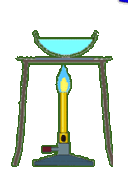
Which one of the following is the name for separation technique in the picture below
a)
distillation
b)
seiving
c)
evaporation
d)
decanting
100 %

