wayground logo

Free Printable Worksheets

Font size

S
M
L
XL
Worksheets

Final Exam Review

Total questions: 90

Worksheet time: 1hrs 4mins

Name
Class
Date
1.
What is the water cycle?
a)
the 3 forms of water
b)
the movement of water on, above, or below the surface of the Earth
c)
when water melts
d)
when clouds form
2.
What is the energy source for the water cycle?
a)
the sun
b)
the earth
c)
water
d)
the moon
3.
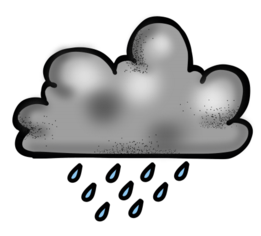
What part of the water cycle does this picture show?
a)
condensation
b)
precipitation
c)
evaporation
4.
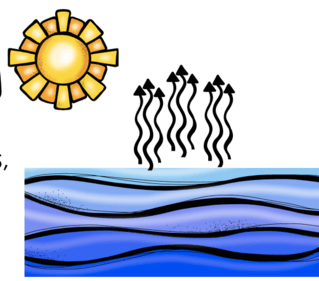
What part of the water cycle does this picture show?
a)
condensation
b)
precipitation
c)
evaporation
5.
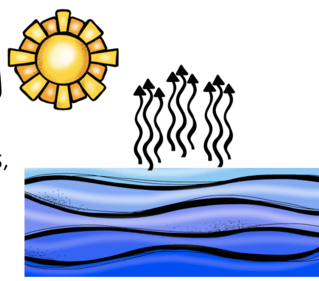
What part of the water cycle does this picture show?
a)
condensation
b)
precipitation
c)
evaporation
6.
What is evaporation?
a)
The part of the water cycle when the sun heats up water, turning it from a liquid into water vapor or steam. It rises from the ground into the air.
b)
The part of the water cycle when the water vapor in the air gets cold. The water turns back into a liquid and forms clouds.
c)
The part of the water cycle when clouds get heavy and can no longer hold the liquid water. This causes the water to fall from the sky to the earth as rain, snow, sleet, or hail.
7.
What is precipitation?
a)
The part of the water cycle when the sun heats up water, turning it from a liquid into water vapor or steam. It rises from the ground into the air.
b)
The part of the water cycle when the water vapor in the air gets cold. The water turns back into a liquid and forms clouds.
c)
The part of the water cycle when clouds get heavy and can no longer hold the liquid water. This causes the water to fall from the sky to the earth as rain, snow, sleet, or hail.
8.
When water condenses, the water vapor in the air gets ___________ and changes back into liquid.
a)
cold
b)
hot
c)
warm
d)
solid
9.
Precipitation happens when clouds of water droplets are too ______________.
a)
cold
b)
light
c)
heavy
d)
hot
10.
Evaporation happens when the sun ___________ water and turns it into vapor.
a)
cools
b)
heats up
c)
freezes
d)
lights up
11.
Which of these is not an example of precipitation?
a)
rain
b)
clouds
c)
sleet
d)
snow
12.
When Earth's rotation causes the wind to curve 
a)
cloudy 
b)
Coriolis effect
c)
high pressure
d)
low pressure 
13.

When heat rises cools then sinks

a)

high pressure

b)

convection cell

c)

low pressure

d)

stratospheric pressure

14.

What type of erosion is caused by acid rain?

a)

Physical

b)

Mechanical

c)

Biological

d)

Chemical

15.

What is erosion caused by wind?

a)

Mechanical

b)

Chemical

c)

Physical

d)

Biological

16.

What is the correct order for the stages of erosion?

a)

Sedimentation, Weathering, Transportation

b)

Weathering, Transportation, Sedimentation

c)

Sedimentation, Transportation, Weathering,

d)

Transportation, Weathering, Sedimentation

17.

What is a reason for prevailing winds?

a)

The moon's rotation

b)

The Earth's rotation

c)

Water

d)

Runodd

18.

What is true about air?

a)

Cold air rises

b)

Cold air stays still

c)

Hot air rises

d)

Hot air sinks

19.

What is a convection cell?

a)

The looping movement of air

b)

The movement of water

c)

The production of smog

d)

The movement of wind

20.

What causes smog?

a)

Trees and plants

b)

People breathing

c)

Dragon's fire

d)

Pollutants in the air

21.
The outside layer of the earth is called ______________________.
a)
core
b)
crust
c)
mantle
d)
outer core
22.
The huge pieces of the earth's crust are called ____________________________. 
a)
crust
b)
plates
c)
directions
d)
seismos
23.
The Richter scale measures:
a)
the amount of radon gas released
b)
the movement of plates
c)
the strength of an earthquake
d)
the weight of tectonic plates
24.

Magma that reaches the Earth's surface is called

a)

pyroclastic debris

b)

magma

c)

lava

d)

lahar

25.

Magma fills cracks at areas where two plates are , this is spreading area occurs at a

a)

convergent boundary.

b)

subduction zone.

c)

divergent boundary.

d)

transform boundary.

26.

Volcanoes can also be found in areas called

a)

Lahars.

b)

Cold spots.

c)

mantles.

d)

Hot spots.

27.
Liquid magma that reaches the surface... hardens into surface rock.
a)
magma
b)
basalt
c)
lava
d)
igneous
28.
The opening through which molten rock and gas leave a volcano.
a)
pipe
b)
crater
c)
vent
d)
aa
29.
What other geological event sometimes occurs in the same area as a volcano?
a)
tornado
b)
flood
c)
earthquake
d)
whirlwinds
30.
The pocket beneath a volcano where magma collects?
a)
vent
b)
caldera
c)
magma chamber
d)
pipe
31.
An  example of islands that formed over a hotspot are the
a)
Aleutian Islands
b)
Hawaiian Islands
32.
line of volcanic activity that surrounds the Pacific Ocean basin is the 
a)
Ring of Fire
b)
Aleutian Islands
c)
Hawaiian Islands
d)
Caribbean Islands
33.

Which of these is an example of erosion

a)

Light Shining onto a mountain

b)

Earthquakes

c)

Wind blowing away sediment

d)

All of the above

34.
What is the major cause of weathering and erosion to form canyons?
a)
wind
b)
ice
c)
glaciers
d)
moving water
35.
Name this boundary
a)
Convergent
b)
Divergent
c)
Transform
d)
Sergent
36.
Name the boundary
a)
divergent
b)
convergent
c)
transform
d)
sergent
37.
Name the boundary
a)
convergent
b)
transform
c)
divergent
d)
sergent
38.
Which of the following is where one plate slides under another plate?
a)
submarine zone
b)
divergence zone
c)
subduction zone
d)
lower zone
39.
Which of the following is associated with transform boundary?
a)
volcanoes
b)
mountains
c)
trenches
d)
earthquakes and fault line
40.
Mountains form from....
a)
Plates sliding past one another
b)
collision of plates
c)
plates moving away from each other
d)
none of these
41.
Plate movement is caused by _____
a)
The rotation of the Earth
b)
Ocean tides
c)
Convection current in the mantle
d)
The moon's gravity
42.
Plates moving apart would be...
a)
convergent
b)
divergent
c)
transform
43.
A subduction zone is formed....
a)
when one tectonic plate sinks below another
b)
at all plate boundaries
c)
when plates diverge
d)
at transform boundaries
44.
Which of the following is the softer moving area of the mantle that contains convection current?
a)
asthenosphere
b)
lithosphere
c)
outer core
d)
oceanic crust
45.
This area contains over 70 percent of volcanoes and 90 percent of earthquakes in the world.
a)
North American plate
b)
Ring of Fire
c)
Fiery rings
d)
African plate
46.
Which of the following is the softer moving area of the mantle that contains convection current?
a)
asthenosphere
b)
lithosphere
c)
outer core
d)
oceanic crust
47.

What is the hottest layer of the Earth?

a)

Mantle

b)

Core

c)

Crust

d)

Asthenosphere

48.

What is caused when an earthquake happens underwater?

a)

Earthquake

b)

Volcano

c)

Tsunami

d)

Faults

49.

What three reasons that led Wegner to form the theory of the super continent?

a)

Geographical Maps

b)

Same rock composition on two continents

c)

Fossils of same terrestrial mammal on two continents

d)

All of the above

50.

What is the freeze-thaw cycle?

a)

Water getting into cracks, freezing, and breaking the rocks or pavement apart

b)

Erosion cause by acid rain

c)

Transportation cause by snow

51.
Which organelle is only found in a plant cell? 
a)
nucleus
b)
chloroplast
c)
mitochondria
d)
cell membrane
52.
Directs all cell activities through the DNA located there.
a)
Lysosomes
b)
Nucleus
c)
ribosomes
d)
Mitochondria
53.
Which of the following is directly involved in the transportation of materials inside/within the cell?
a)
Endoplasmic Reticulum
b)
Vacuole
c)
Lysosome
d)
Mitochondria
54.
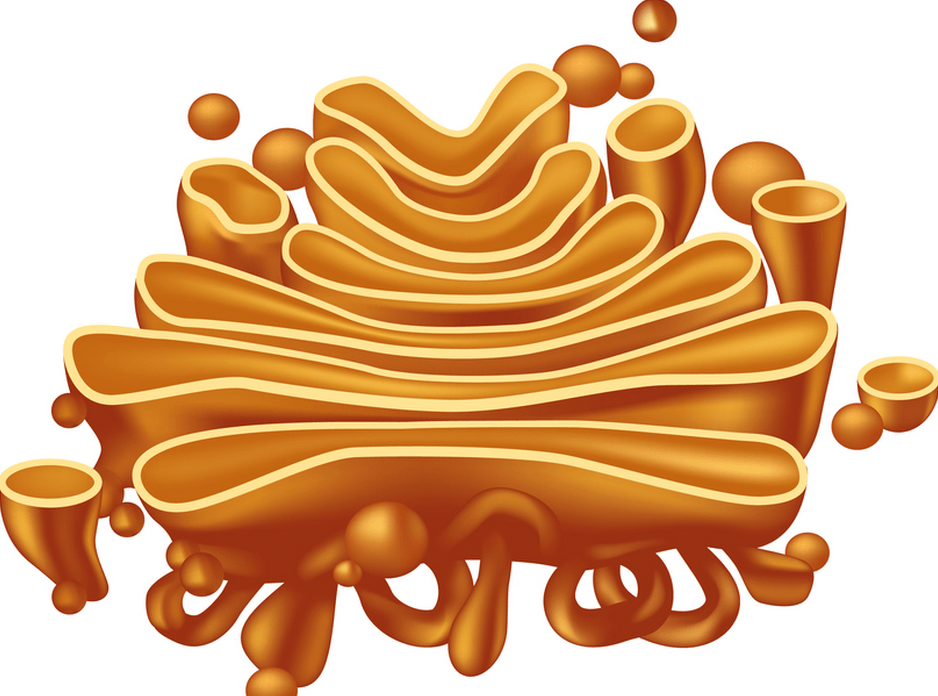
I am a protein packaging and shipping machine! Who am I?
a)
vacuole
b)
ribosome
c)
mitochondrion
d)
golgi apparatus
55.
You might think of me as the trash collector, but recycler is maybe more accurate. What am I?
a)
mitochondria
b)
lysosome
c)
vacuole
d)
ribosome
56.
What is the name of the genetic material that is inside the nucleus?
a)
ER
b)
ATP
c)
YOLO
d)
DNA
57.
Which part of the cell is often called "the brain of the cell"?
a)
nuclear membrane
b)
endoplasmic reticulum
c)
nucleus
d)
mitochondria
58.
What is found in both plant and animal cells but is much larger in plant cells?
a)
Nucleus
b)
Mitochondria
c)
Chloroplast
d)
Vacuole
59.
Where are proteins made?
a)
Golgi body
b)
Mitoichondria
c)
Chromosomes
d)
Ribosomes
60.
This organelle takes food and turns it into ENERGY for plant and animal cells.
a)
Chloroplast
b)
Mitochondria
c)
Lysosome
d)
Ribosome
61.
The site of photosynthesis
a)
ribosome
b)
mitochondria
c)
chloroplast
d)
nucleus
62.
I am the outer most layer of an animal cell. What am I?
a)
cell wall
b)
nucleus
c)
cell membrane 
d)
cell skin
63.
What are tiny organelles that convert glucose into ATP?
a)
Ribosomes
b)
Vesicles
c)
Cytoskeleton
d)
Mitochondria
64.
A rigid layer that lies outside the cell's  membrane is...
a)
Cytoskeleton
b)
Cilia
c)
Cell Wall
d)
Flagella
65.
What organelle is called the "powerhouse" of a cell?

a)
Endoplasmic Reticulum
b)
Nucleus
c)
Mitochondria
d)
Nucleolus
66.
What organelle helps with cell digestion?
a)
Lysosomes
b)
Ribosomes
c)
Golgi Complex
d)
ER
67.
What is the gel-like substance inside of cells called?

a)
photoplasm
b)
photosynthesis
c)
cytoskeleton
d)
cytoplasm
68.

Main producer of energy

a)

chloroplast

b)

mitochondria

c)

lysosome

d)

smooth er

69.
The ___________ is the basic unit of life
a)
organ
b)
cell
c)
atom
d)
tissue
70.
Which structures are found in every living cell?
a)
cell membrane and cytoplasm
b)
chloroplasts and mitochondria
c)
a cell wall and nucleus
d)
chloroplasts and cell wall
71.
Which cell structure is found in plant and animals cells and controls what can come into or leave a cell?
a)
cell membrane
b)
cytoplasm
c)
nucleus
d)
vacuole
72.
What is the function of the cell nucleus found in both plant and animal cells?
a)
to produce energy
b)
to control cell activity
c)
to remove waste products
d)
to allow molecules to enter the cell
73.
Cell organelles that are responsible for digesting food, worn out organelles and other cellular wastes are called ___________________.
a)
Mitochondria
b)
Vacuoles
c)
Lysosomes
d)
Chlororplasts
74.
What is one basic function of the vacuoles?
a)
circulating oxygen
b)
producing food
c)
controlling cell processes
d)
storing water
75.
Chloroplasts in plant cells allow the plant to perform a function that animal cells cannot do.  What is the main function of the chloroplasts found in plant cells?
a)
to absorb light energy and manufacture food
b)
to remove waste materials by active transport
c)
to manufacture chemical energy from food
d)
to control the shape of the cell
76.
All cells need energy to function.  Which cell organelle is responsible for producing energy in the cell?
a)
chloroplasts
b)
mitochondria
c)
nucleus
d)
vacuoles
77.
What is the function of a cell wall?
a)
to protect and support the cell
b)
to perform different functions in each cell
c)
to prevent water from passing through it
d)
to prevent oxygen from entering the cell
78.
What is the function of a cell wall?
a)
to protect and support the cell
b)
to perform different functions in each cell
c)
to prevent water from passing through it
d)
to prevent oxygen from entering the cell
79.
In what part of the plant cell does the process of photosynthesis take place?
a)
nucleus
b)
mitochondria
c)
chloroplasts
d)
vacuoles
80.
_ are organelles responsible for digesting certain materials within the cell.
a)
vacuoles
b)
chloroplasts
c)
lysosomes
d)
cell membrane
81.
This thin layer protects the cell and regulates what substances enter and leave the cell.
a)
cell membrane
b)
cell
c)
cell wall
d)
golgi body
82.
In a plant cell, a stiff wall surrounds the membrane, giving the cell a rigid, boxlike shape.
a)
cell membrane
b)
cell
c)
ribosome
d)
cell wall
83.
These organelles capture energy from sunlight and use it to produce food for the cell.
a)
cell membrane
b)
chloroplasts
c)
cell wall
d)
ribosomes
84.
What organelle controls the cell or is like "the brain" of the cell?  
a)
Lysosome
b)
Nucleus
c)
Nucleolus
d)
Chromosomes
85.
This cell part is in ALL cells. It is the gel-like substance that provides cell shape.
a)
Chloroplasts
b)
Chromosomes
c)
Cytoplasm
d)
Mitochondria
86.
What tool do you use to view cells?
a)
metric ruler
b)
magnifying glass
c)
microscope
d)
petri dish
87.
The movement of molecules from higher concentration to lower concentration is
a)
diffusion
b)
cell division
active transport
c)
active transport
d)
tonicity
88.
What organelle PRODUCES proteins?
a)
ribosomes
b)
centrioles
c)
lysosomes
d)
nucleus
89.
How much bigger is a magnitude 8 earthquake compared to magnitude 7 one on the Richter Scale?
a)
1 time bigger
b)
10 times bigger
c)
100 times bigger
d)
1000 times bigger
90.

Which of the following is NOT a clue that Wegner used to show that there was one super continent.

a)

Fossils

b)

Weather

c)

Continents fit like puzzle

d)

Rocks in two places