
 Worksheets
Unit 1 Review
Total questions: 78
Worksheet time: 3590secs
Name
Class
Date
1.
The central region of an atom where its neutrons and protons are is its
a)
nucleus
b)
electron cloud
c)
core
d)
center
2.
An atom with atomic number 6 would have how many protons
a)
6
b)
12
c)
3
d)
cannot be determined
3.
True or False? Neutrons have a negative charge
a)
True
b)
False
4.
What is the atomic number for an element with three protons?
a)
2
b)
1
c)
3
d)
6
5.

What is the number of protons that the element in this image contain?
a)
14
b)
7
c)
15
d)
18
6.
The positive particles of an atom are
a)
electrons
b)
positrons
c)
neutrons
d)
protons
7.
all matter is made of what
a)
energy
b)
atoms
c)
electrons
d)
compounds
8.
electrons have this type of charge?
a)
negative
b)
positive
c)
neutral
9.
Most of the mass in an atom is concentrated in the...
a)
electrons
b)
nucleus
c)
protons
d)
empty space
10.
What does the nucleus consist of?
a)
Protons + Electrons
b)
Neutrons + Electrons
c)
Atoms
d)
Protons + Neutrons
11.
The part of the atom that is moving around the nucleus is called?
a)
electron
b)
neutron
c)
proton
12.

What is the atomic number of berylium?
a)
4
b)
9.01
13.

How many neutrons does Potassium (K) have?
a)
19
b)
39
c)
30
d)
20
14.

How many protons does Potassium (K) have?
a)
19
b)
39
15.

The section labeled D is known as the?
a)
Electron cloud
b)
Neutron
c)
Nucleus
d)
Electron
16.

Letter A Is positively charged particle called?
a)
Neutron
b)
Proton
c)
Electron
d)
Atom
17.

How many protons does this element have?
a)
6
b)
4
c)
2
d)
3
18.

Which state of matter do the particles in this picture represent?
a)
solid
b)
liquid
c)
gas
d)
plasma
19.
______ is the amount of matter an object has
a)
mass
b)
volume
20.
When the temperature of matter decreases the particles ...
a)
speed up and move farther apart
b)
speed up and move closer together
c)
slow down and move farther apart
d)
slow down and move closer together
21.
When the temperature of matter increases the particles...
a)
speed up and move closer
b)
speed up and move farther apart
c)
slow down and move closer together
d)
slow down and move farther apart
22.
Gas particles have the ________ kinetic energy because they move the fastest.
a)
least
b)
most
23.
In the liquid phase, particles are tightly packed together, vibrating in a fixed position.
a)
True
b)
False, particles in a liquid are closely packed together but can slide past each other
c)
False, particles in a liquid are moving very rapidly and are very far apart
d)
False, liquids have a definite shape and volume
24.
Some power plants produce energy by burning coal. In these power plants, the heat from burning coal is used to boil water. Which statement best describes the changes that occur when burning coal and boiling water?
a)
Burning coal and boiling water are both physical changes
b)
Burning coal and boiling water are both chemical changes
c)
Burning coal is a chemical change, and boiling water is a physical change
d)
Burning coal is a physical change and boiling water is chemical change
25.
When 15 grams of zinc are combined with 20 grams of hydrochloric acid, two new products are created. What will be the combined weight of the products?
a)
5 grams
b)
15 grams
c)
20 grams
d)
35 grams
26.
The Law of Conservation of Mass state that mass is ALWAYS created and destoyed
a)
True
b)
False
27.
Color, Odor, Density, and Shape are all what?
a)
Physical Changes
b)
Chemical Changes
c)
Physical Properties
d)
Chemical Properties
28.
How do you test the hardness of a mineral?
a)
Throw it against a wall
b)
Step on it
c)
Scratch Test
d)
Kick it until it breaks
29.
An attractive force for some metals.
a)
Conductivity
b)
Solubility
c)
Magnetism
d)
Mass
30.
When paper is folded to make an origami bookmark, what physical property of the paper changes?
a)
mass
b)
weight
c)
shape
d)
smell
31.
Example for Physical property
a)
Odor
b)
burns in air
32.
ability for a solid to be hammered without shattering
a)
Density
b)
Conductivity
c)
Malleability
d)
Viscosity
33.
Definition of Physical property
a)
properties are those that can be observed without changing the identity of the substance
b)
Properties that describe how a substance changes into a completely different substance
34.
An example of a physical property wold be?
a)
rust
b)
world war 1
c)
change of state
d)
Asia
35.
Which is an example of a physical property?
a)
rusting
b)
boiling point
c)
combustion
d)
reactivity with water
36.
A description of objects that can be measured and observed.
a)
gas
b)
mustangs
c)
physical properties
d)
melting point
37.

Which of these best describes the texture of this metal pan?
a)
small
b)
smooth
c)
flexible
d)
shiny
38.

Look at the rock. What BEST describes the texture of the rock?
a)
bumpy
b)
rough
c)
jagged
d)
smooth
39.

Look at the rock. Which BEST describes this rock?
a)
rough
b)
shiny
c)
dull
d)
grainy
40.

A rock with a rough texture would
a)
Be shiny
b)
Be smooth
c)
Have jagged edges
d)
Be found in river beds
41.

When Classifying rocks, a geologist sorts them by
a)
taste
b)
color
c)
smell
d)
sound
42.

What type of change is this?
a)
A chemical change
b)
A physical change
c)
A light change
43.

What type of change would this be?
a)
Physical Change
b)
Chemical Change
44.

What type of change is in the image?
a)
Physical change
b)
Chemical change
c)
Ionic change
d)
Metallic change
45.
A chemical change is usually not reversible.
a)
True
b)
False
46.

Aluminum foil can be easily shaped into other objects. It is very ________.
a)
Malleable
b)
Voluminous
c)
Massive
d)
State of Matter
47.
Which of the following is a sign that a chemical reaction has occurred?
a)
change in shape
b)
melting
c)
formation of a gas
d)
dissolving
48.
Is hammering wood together to build a house a chemical or physical change?
a)
chemical
b)
physical
49.
Is melting butter for popcorn a chemical or physical change?
a)
chemical
b)
physical
50.
Is bleaching your hair a physical or chemical change?
a)
physical
b)
chemical
51.

Is burning wood a chemical or physical change?
a)
chemical
b)
physical
52.
Kim puts an ice cube in a beaker and it melts. This is a good example of:
a)
a physical change.
b)
a chemical change.
c)
an experiment.
d)
an analysis.
53.

Photosynthesis is an example of a
a)
physical change
b)
chemical change
54.
When you break a cracker into pieces it is a
a)
Chemical change
b)
Physical change
c)
Chemical Weathering
d)
Physical Weathering
55.
Adding baking soda and vinegar together and it fizzes and creates carbon dioxide.
a)
Chemical
b)
Physical
56.
What is an example of a Chemical change?
a)
Ripped paper
b)
boiled egg
c)
cracked egg
d)
sugar in water
57.
Which is a Chemical property?
a)
Thermal Conductivity
b)
Density
c)
Malleability
d)
Flammability
58.
Jayden asked Gabe what she could do to an egg for a chemical change. Gabe answered correctly and said...
a)
You can drop the egg.
b)
You can cook the egg.
c)
You can crack the egg.
d)
You can paint the egg.
59.
Which of the following is a chemical property of water?
a)
Reacts with pure sodium.
b)
Boils at 100 oC.
c)
Dissolves sugar easily.
d)
Has a density of 1 gm/mL
60.
Which of the following is NOT a physical property?
a)
breaking a window
b)
color
c)
denisty
d)
freezing point
61.
what is the definition of chemical change?
a)
any change that results in the formation of new chemical substances.
b)
changing clothes
c)
matter cannot be created or destroyed, only change form
d)
changes affecting the form of a chemical substance, but not its chemical composition.
62.

Is gatorade powder dissolving in water physical or chemical change?
a)
Physical
b)
Chemical
63.
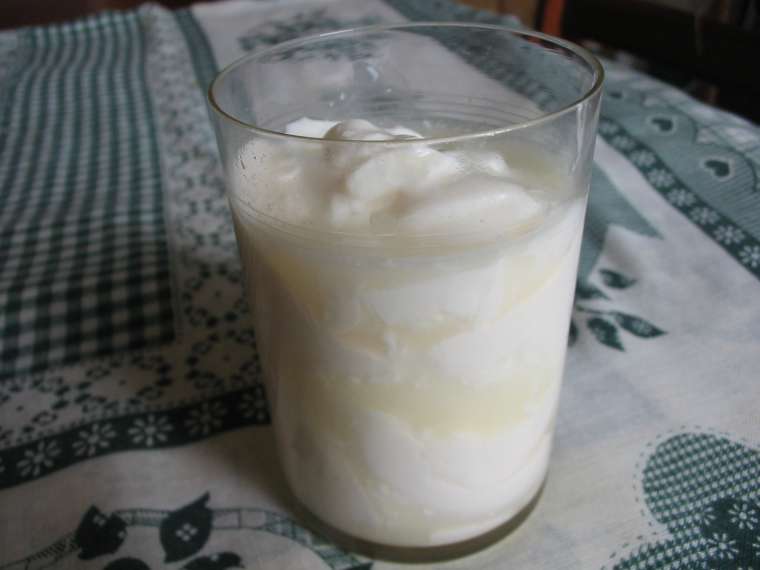
Is milk going sour a physical or chemical change?
a)
Physical
b)
Chemical
64.

Which of the following is NOT an example of a chemical change?
a)
burning match
b)
a car rusting
c)
baking a cake
d)
melting ice
65.

Which table correctly identifies changes taking place?
a)
Table A
b)
Table B
c)
Table C
d)
Table D
66.

Which shows evidence that a chemical change has occurred?
a)
slicing potato
b)
apple/potato turns brown
c)
biting apple
d)
peeling apple/potato
67.

Which evidence demonstrates that a chemical change has occurred.
a)
water level rises
b)
water becomes cloudy
c)
gas is produced (bubbles)
d)
tablet dissolves
68.

Which of the following is a physical change?
a)
precipitate
b)
color change
c)
change in temperature (colder, hotter)
d)
gas/bubbles
69.
What will weigh more when a chemical change is complete? The reactants before the chemical reaction, or the product after the reaction is complete?
a)
They both will weigh the same
b)
The product always weighs more than the reactant
c)
The reactant will weigh more than the product
d)
They both will loose mass after the reaction
70.
Since gasses weigh nothing, when they are produced in a reaction they do not have to be accounted for.
a)
True
b)
False
71.
A precipitate is a
a)
liquid that forms when two solids are reacted
b)
a solid that forms when two liquids are mixed
c)
a gas that forms when vinegar and baking soda react
d)
a change of color in a solution
72.
In a reaction A + B ----> C, reactant A has 5g and product C has 9g. How many grams does reactant B should have?
a)
4g
b)
5g
c)
9g
d)
14g
73.
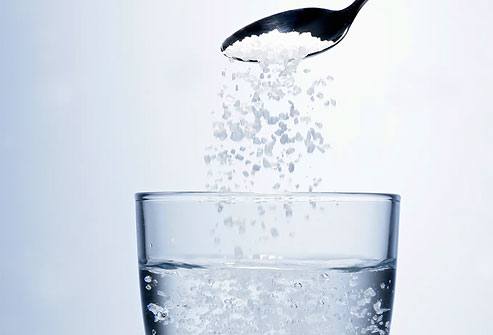
If 10 grams of water are added to 5 grams of salt, how much salt water will be made?
a)
2 grams
b)
5 grams
c)
10 grams
d)
15 grams
74.

A rock weighing 60 g is broken into 2 pieces. What are possible weights for the two pieces of rock?
a)
20 g and 20 g
b)
30 g and 20 g
c)
30 g and 30 g
d)
45 g and 10 g
75.

In chemical reactions, what does the principle of conservation of mass mean?
a)
matter is not created or destroyed
b)
the total mass of the reactants is greater than the total mass of the products
c)
the total mass of the reactants is less than the total mass of the products
d)
matter is not changed
76.
Which of the following always results from a chemical reaction?
a)
Fire
b)
Bubbles
c)
A new substance that is a solid
d)
A new substance that can be a solid, liquid, or gas
77.
In the reaction methane + oxygen turns into carbon dioxide + water, the methane and oxygen are called _______________.
a)
reactants
b)
products
c)
neutrals
d)
energizers
78.
What is the Law of Conservation of mass?
a)
Mass is created in a chemical reaction
b)
Mass is created in a physical change
c)
New chemicals formed from a chemical reaction have a larger overall mass than the original reactants
d)
Mass is never created or destroyed
100 %

