
 Worksheets
AP Biology Ch. 2 Review
Total questions: 60
Worksheet time: 2hrs 22mins
Name
Class
Date
1.
Neutrons are
a)
negative
b)
positive
c)
neutral
d)
atoms
2.
The positive particles of an atom are
a)
electrons
b)
atoms
c)
neutrons
d)
protons
3.
The central region of an atom where its neutrons and protons are is called the
a)
nucleus
b)
electron cloud
c)
energy level
d)
center
4.
Electrons are
a)
negative and in the nucleus
b)
positive and in energy leveles
c)
positive and in the nucleus
d)
negative and in energy levels
5.
What is matter?
a)
any visible solid that has mass
b)
any liquid that takes up space and has mass
c)
anything that takes up space and has mass
d)
any liquid or solid that takes up space
6.
What kind of chemical bond is formed when one atom gives electrons to another atom?
a)
magnetic
b)
ionic
c)
van der waahls
d)
covalent
7.
A chemical bond that occurs when atoms share electrons is a(n) _______ bond.
a)
ionic
b)
covalent
c)
van der waals
d)
magnetic
8.

Ionic, covalent, van der Waals forces
a)
are types of atoms
b)
are compounds
c)
hold molecules and atoms together
d)
are of no consequence in life forms
9.

Physical and chemical properties are different from the elements that make them up in
a)
mixtures
b)
compounds
c)
atoms
10.

A number of elements have different number of neutrons, these elements are called
a)
compounds
b)
molecules
c)
isotopes
d)
atoms
11.

The ____ charge of a proton is exactly balanced by the ____ charge of (an) _______
a)
negative, positive, electron
b)
positive, neutral, neutron
c)
positive, negative, electron
d)
neutral, negative, electron
12.

Electrons move around the nucleus of an atom in pathways called
a)
nuclues
b)
energy levels
c)
circles
d)
rings
13.

If a substance contains two or more elements of different types, it is considered
a)
a compound
b)
a monomer
c)
a molecule
d)
organic
14.
What is the study of the composition, structure, and properties of MATTER?
a)
Chemistry
b)
Biology
c)
Geology
d)
Physics
15.
What are the building blocks of MATTER?
a)
Atoms
b)
Cells
c)
Protons
d)
Neutrons
16.
The nucleus of an atom is made up of...
a)
Protons and Neutrons
b)
Neutrons and Electrons
c)
Protons and Electrons
17.
A(n) ____________________ is a pure substance made of a single type of atom and cannot be broken down.
a)
Element
b)
Compound
c)
Molecule
d)
Mixture
18.
What holds atoms, molecules, and compounds together?
a)
Chemical Bonds
b)
Electromagnetism
c)
Magnetism
d)
Electricity
19.
What is the weakest of all the bonding types?
a)
Covalent
b)
Ionic
c)
van der waals forces
d)
they are all equal
20.
True or False? Isotopes are atoms of the same element that differ in mass number and number of neutrons
a)
True
b)
False
21.

What are the 3 particles that make-up the atom?
a)
protons, neutrons, and isotopes
b)
neutrons, isotopes, and electrons
c)
positives, negatives, and electrons
d)
protons, neutrons, and electrons
22.
Ions are:
a)
atoms with a positive or negative charge
b)
atoms with no charge
c)
atoms with ONLY a positive charge
d)
atoms with ONLY a negative charge
23.
What is the dense, positively charged center of the atom?
a)
neutron
b)
nucleus
c)
proton
d)
cation
24.
NaCl (table salt) is an example of a/n __________
a)
atom
b)
element
c)
compound
d)
subatomic particle
25.
Iron (Fe) is an element.
a)
true
b)
false
26.

What two elements make up water?
a)
Helium and oxygen
b)
Hydrogen and oxygen
c)
helium and carbon
d)
oxygen and carbon
27.

What word describes when water is attracted to other substances?
a)
cohesion
b)
adhesion
c)
capillary action
d)
surface tension
28.
Why can water have no net charge but have slight charges in different parts of the molecule?
a)
The oxygen end is slightly negative and the hydrogen end is slightly positive
b)
The hydrogen end is slightly negative and the oxygen end is slightly positive
c)
The hydrogen and oxygen ends change in polarity
d)
Because it is hydrophobic
29.

Attractions between water molecules are called
a)
Covalent bonds
b)
Ionic bonds
c)
Polar bonds
d)
Hydrogen bonds
30.

The attraction that causes water and other liquids to form drops on thin films is called ________________. This is also water’s ability to be attracted to other water molecules.
a)
adhesion
b)
capillary action
c)
cohesion
d)
surface tension
31.

tendency of molecules of the same kind to stick to one another
a)
cohesion
b)
adhesion
c)
solution
d)
polar molecule
32.

molecule in which opposite ends have opposite electric charges
a)
cohesion
b)
polar molecule
c)
hydrogen bond
d)
solution
33.
Why does ice float?
a)
As water freezes, it expands and its density decreases.
b)
As water freezes, it takes up more hydrogen from the atmosphere, causing it to have a greater buoyancy.
c)
As water freezes, air becomes trapped between the hydrogen bonds of water molecules.
d)
As water freezes, it takes up more oxygen from the atmosphere, causing it to have a greater buoyancy.
34.

A molecule with electrically charged areas is called a _______________.
a)
magnet
b)
polar molecule
c)
solution
d)
electrical molecule
35.
Which end of the water molecule has a slightly positive charge?
a)
the oxygen end
b)
the hydrogen end
c)
both ends are slightly positive
d)
neither end is positive
36.
Which types of compounds dissolve easily in water?
a)
Polar and Nonpolar
b)
Polar and Ionic
c)
Nonpolar and Ionic
d)
Covalent and Nonpolar
37.

Water droplets take a spherical shape (as pictured) because of ____________
a)
adhesion
b)
cohesion
c)
capillary action
d)
solubility
38.

The reason the water balloon did NOT pop while held over a flame is water's _________.
a)
Less dense than air.
b)
Hydrogen bonds between water molecules.
c)
polarity.
d)
high specific heat capacity.
39.
Water molecules are attracted to other kinds of molecules because of the property.
a)
Cohesion
b)
Adhesion
c)
Surface Tension
d)
Universal Solvent
40.
Water is a universal solvent because it...
a)
It can be found anywhere
b)
It freezes when it gets cold
c)
floats when frozen
d)
Dissolves most substances
41.
Water beads up on the surface of a penny because of this property.
a)
Adhesion
b)
High Surface Tension
c)
Universal Solvent
d)
Changes in Density
42.
Most of water's properties occur because it is...
a)
A polar covalent
b)
Made with oxygen
c)
A polar ionic
d)
Makes up 75% of the Earth
43.
What is the reason why oil and water don't mix?
a)
Oil is too heavy to mix with water
b)
Water can only mix with polar molecules
c)
Water can only mix with non-polar molecules
d)
Oil is too light to mix with water
44.
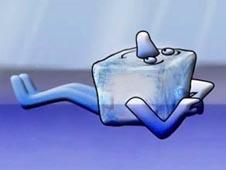
The fact that ice floats on liquid water is due to the fact that water's solid is ___________ than it's liquid form
a)
less polar
b)
more polar
c)
less dense
d)
more dense
45.

Water molecules require a lot of energy to separate one from the others. This gives water a high
a)
density
b)
polarity
c)
solvency
d)
specific heat
46.
Which of the following compounds would contain a polar covalent bond?
a)
Cl2
b)
NaCl
c)
H2O
d)
CH4
47.
Because of the unique properties of water associated with hydrogen bonding, water evaporates from pores on the leaves of plants and draws molecules in a continuous chain from the roots up through the vascular tissues of plants. Which of these groups of terms describes the properties of water that explain this?
a)
adhesion, cohesion, and translocation
b)
adhesion, cohesion, and transcription
c)
cohesion, hybridization, and transpiration
d)
cohesion, adhesion, and transpiration
48.
Many __________ come together to form one ______________.
a)
monomers; polymer
b)
polymers; monomer
49.
Which of these categories includes all of the others shown?
a)
disaccharide
b)
carbohydrate
c)
starch
d)
polysaccharide
50.
Which of the following elements is NOT found in carbohydrates?
a)
Carbon
b)
Hydrogen
c)
Nitrogen
d)
Oxygen
51.
Organisms use carbohydrates for
a)
Energy
b)
Structural Building Blocks
c)
Hereditary Information
d)
Energy & Structural Building Blocks
52.
Simple sugars, like glucose, are called
a)
monosaccharides
b)
disaccharides
c)
polysaccharides
d)
starch
53.
An important carbohydrate polymer is
a)
lactose
b)
glucose
c)
starch
d)
fructose
54.
_________ is a carbohydrate polymer that humans cannot digest and that make up cell walls of plants.
a)
Starch
b)
Cellulose
c)
Glucose
d)
Lactose
55.
Which of the following about UNSATURATED fats is true?
a)
They are more common in animals than in plants.
b)
They have double bonds in their fatty acid chains.
c)
They generally solidify at room temperature.
d)
They contain more hydrogen than saturated fats having the same number of carbon atoms.
56.
Lipids are ____________, and are ____________ in water.
a)
polar; soluble
b)
polar; insoluble
c)
nonpolar; soluble
d)
nonpolar; insoluble
57.
In which of the following ways is the structure of a triglyceride different than that of a phospholipid?
a)
A phospholipid has a polar region.
b)
A triglyceride contains glycerol region and a phospholipid doesn't.
c)
A phospholipid has fatty acid tails, and a triglyceride doesn't.
d)
A triglyceride has a polar region.
58.
Which has more energy, 1.0 g of carbohydrate or 1.0 g of lipid?
a)
Carbohydrate
b)
Lipid
59.
A fatty acid chain with only C-C bonds (single bonds) is ________________ and makes the molecule a solid at room temperature, like butter or lard.
a)
saturated
b)
unsaturated
60.
Lipid bilayers are the basis for what important cell structure?
a)
Cytoskeleton
b)
Ctyoplasm
c)
Cell membrane
d)
Cell wall
100 %

