
 Worksheets
Year 10 Mock exam Revision
Total questions: 62
Worksheet time: 36mins
Ba
Compound
Element
Mixture
KCl2
Compound
Element
Mixture
H
Compound
Element
Mixture

Salt (NaCl)
Compound
Element
Mixture

What type of matter is this?
compound
element
mixture

What type of matter is this?
compound
element
mixture

What type of matter is this?
compound
element
mixture
The formula of copper(II) oxide is
CuO
Cu2O
CuO2
The formula of magnesium chloride is
MgCl
MgCl2
MgCl3
The formula of calcium hydroxide is
CaOH
Ca(OH)2
Ca(OH)3
The formula of sodium carbonate is
NaCO3
Na(CO3)2
Na2CO3
The formula of iron(II) hydroxide is
FeOH2
FeOH
Fe(OH)2
Fe(OH)3
The formula of ammonium ion is
NH3
NH3+
NH4
NH4+
The formula of silver nitrate is
AgNO3
Ag2NO3
Ag(NO3)2
The formula of sodium sulphate is
NaSO4
Na2SO4
Na(SO4)2
Na2(SO4)3
Which alkali metal is most reactive out of the following
rubidium
potassium
sodium
lithium
How many electrons do the alkali metals have in their outer shell?
1
2
8
7
Is hydrogen an alkali metal?
no
yes
maybe
What happens to the melting point of the alkali metals as you move down the group?
decreases
increases
Which gas is released when the alkali metals react with water?
hydrogen
oxygen
hydroxide
carbon dioxide
What is the charge of a group 1 metal ion?
1+
2+
1-
2-
Which of the following is NOT a property of group 1 metals?
More dense than water
less dense than water
low melting point
soft
Which alkali metal is the least reactive?
lithium
sodium
potassium
rubidium
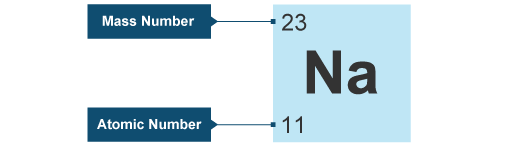
How many protons does a sodium atom have?
11
23
12
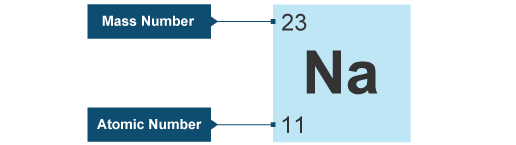
How many electrons does a sodium atom have?>
11
23
12
It has yellow color if you conduct flame test to this element. This element is ...
Lithium
Sodium
Potassium
Rubidium
Which group of the periodic table are alkali metals found in?
Group 1
Group 2
Group 7
Group 8
Which of the followings is the most reactive alkali metal in water?
Lithium
Sodium
Potassium
Hydrogen
What is formed when sodium reacts with water?
Sodium oxide and hydrogen
Sodium hydroxide and hydrogen
Sodium hydroxide and oxygen
Sodium hydroxide and carbon dioxide
What is the symbol equation for the reaction between Potassium and water?
2K + 2H2O → 2KOH + H2
2Na + 2H2O → 2NaOH + H
2K + H2O → 2KOH + CO2
2Na + 2H2O → 2NaOH + CO2
What is the atomic number?
the number of protons in the nucleus
the number of protons and neutrons in the nucleus
the number of neutrons in the nucleus
the number of protons in the energy levels
What is the mass number?
the number of protons in the nucleus
the number of protons and neutrons in the nucleus
the number of neutrons in the nucleus
the number of protons and electrons in the atom
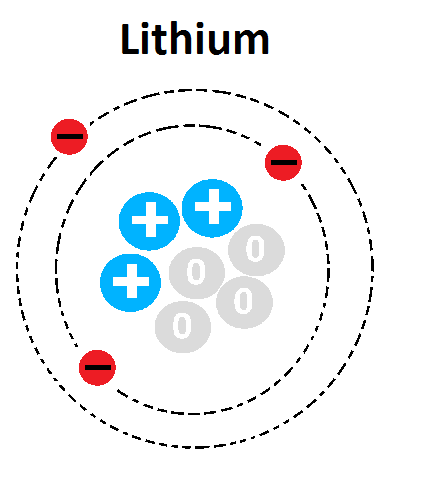
What is the atomic number of this atom?
1
3
4
7
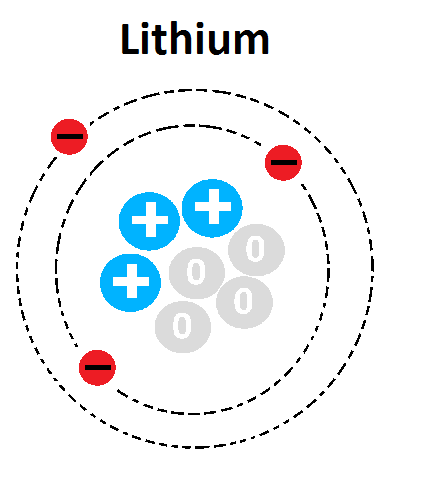
What is the mass number of this atom?
1
3
4
7
The removal of salt from brackish or ocean water is known as:
denitrification
desalination
re-salination
hyper salination

Which substance is used in a sewage treatment system to kill harmful bacteria?
ammonia
chlorine
sand
soap

Fluoride can naturally be found in water
True
False
water changing from liquid to vapor
sublimation
condensation
evaporation
Complete the following sentence "Hard water is water that
forms a lather easily with water.
does not form a lather easily with water
Which of the following compounds are responsible for causing temporary hardness in water?
CaCl2
Ca(HCO3)2
CaSO4
Mg(HCO3)2
_________ hardness can be removed by boiling while __________ hardness cannot by removed by boiling.
(a)
Which of the following would be considered to be caused by temporary hardness in water?
Blocking of pipes with limescale
Furring of kettles
Scum formation when using soap
Coating of heating element of dishwasher, shower, washing machine with limescale
Which of the following are methods used to remove permanent hardness in water?
Distillation
Adding washing soda crystals
Boiling the water
Using an ion exchange resin
The removal of temporary hardness in water that is heated, is represented by which of the following equations?
H2O + CO2 ➡️ H2CO3
H2CO3 + CaCO3 ➡️ Ca(HCO3)2
Ca(HCO3)2 ➡️ CaCO3 + CO2 + H2O
When cold water containing temporary hardness is heated, an insoluble substance precipitates out of the water. What is the formula for this insoluble precipitate?
CaCO3
CaCO3
CO2
H2O
6.15: Which of these is not a property of noble gases?
Colourless
Odourless
Flammable
Gas at room temperature
The reason that Noble Gases do not react is because
Their outer electron shell is filled
Their inner electron shell is filled
They are able to bond to fill their outer shell
None of the above, Noble Gases are highly reactive
Which of the "Halogens" is found in liquid state at room temperature?
Flourine
Astatine
Iodine
Bromine
What group are the Halogens?
6.9
7
8
3
All Halogens are Toxic.
True
False
How many electrons do Halogens have in their outer shell?
0
1
6
7
Which equation shows the displacement of bromine by chlorine?
2NaBr + Cl2 → 2NaCl + Br-
NaBr + Cl- → NaCl + Br2
2NaBr + Cl2 → 2NaCl + Br2
NaBr + 2Cl- → NaCl + 2Br-
As you move down the group, halogens' reactivity...
increases
decreases
doesn't change
shows no trend.
Which halogens can displace bromide ions to make bromine?
Fluorine and iodine.
Fluorine and bromine.
Fluorine and chlorine
Chlorine and iodine.

A displacement reaction involves...
a solution turning brown or yellow.
a less reactive element taking the place of a more reactive element.
a dislocated hip.
a more reactive element taking the place of a less reactive element.
Would a displacement reaction occur for Bromine + Potassium Iodide?
Yes
No
Maybe

