wayground logo

Free Printable Worksheets

Font size

S
M
L
XL
Worksheets

IED Unit 1 Review 2025

Total questions: 66

Worksheet time: 2hrs 48mins

Name
Class
Date
1.
The first thing you have to do in the design process after identifying the problem is
a)
Build a model 
b)
Generate concepts
c)
advertise what you make
d)
pick materials
2.
What is the final step in the design process?
a)
Present the design solution
b)
Identify the problem
c)
Build a prototype
d)
Select an approach
3.
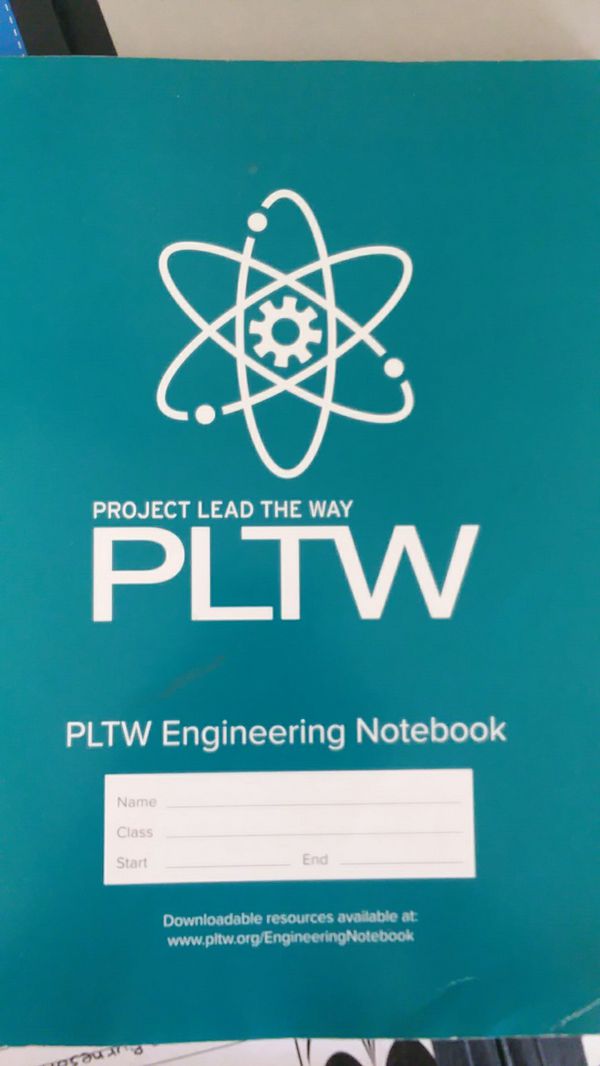
The image to the right is an example of a(n) ______________________.
a)
A.  Project Portfolio
b)
B. Design Brief
c)
C.  Technical Report
d)
D.  Engineer’s Notebook
4.
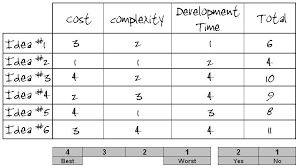
What tool used during the design process is pictured to the right and used in the Generate Concepts step.
a)
A. Parts list
b)
B.  Bill of materials
c)
C.  Specialization sheet
d)
D.  Decision Matrix
5.
What term best describes the list of items below?
_ Must be made out of 4 to 6 pieces
-Must be "interlocking"
-part cannot extend more than 3 units in any direction
-no two parts can be the same.
a)
A. client
b)
B. Problem statement
c)
C.  Deliverables
d)
D. Constraints
6.
_____________ is a systematic problem-solving strategy, with criteria and constraints, used to develop many possible solutions to solve a problem or satisfy human needs and wants and to winnow (narrow) down the possible solutions to one final choice..
a)
Blue Print
b)
Engineer's Notes
c)
Design Process
d)
Design
7.
Writing with a pen is best for entering data into an Engineer’s notebook.
True or False
a)
True
b)
False
8.
Engineers can add pages to their notebook if they wish.
True or False
a)
True
b)
False
9.
Engineers must draw a diagonal line through any empty space on an engineering notebook page and sign the line.
True or False
a)
True
b)
False
10.
What is a group technique for solving problems, generating ideas, stimulating creative thing, etc. by unrestrained spontaneous participation in discussion?
a)
Piling-on
b)
Design Brief
c)
Brainstorming
d)
Constraint
11.
A new brainstorm idea that produces a similar idea or an enhanced idea.
a)
Brainstorm
b)
Capacity
c)
Piling-on
d)
Balsamic
12.

What are the four main disciplines of engineering?

a)

Automotive, Chemical, Civil, Electrical

b)

Computer, Biomedical, Industrial, & Electrical

c)

Manufacturing, Electrical, Industrial, & Mechanical

d)

Chemical, Civil, Electrical, & Mechanical
13.
What is Chemical Engineering?
a)
•Apply scientifically the principles of chemistry, physics, and engineering to design an operation of plants for the production of materials that undergo chemical changes during their processing
b)
•Plan, design, and supervise the construction of facilities in both the public and private sectors
c)
•Deals with the motion of electrons in metals
d)
•Apply the principles of mechanics and energy to the design of machines and devices
14.
What is Electrical Engineering?
a)
•Apply scientifically the principles of chemistry, physics, and engineering to design an operation of plants for the production of materials that undergo chemical changes during their processing
b)
•Plan, design, and supervise the construction of facilities in both the public and private sectors
c)
•Deals with the motion of electrons in metals
d)
•Apply the principles of mechanics and energy to the design of machines and devices
15.
What is Mechanical Engineering?
a)
•Apply scientifically the principles of chemistry, physics, and engineering to design an operation of plants for the production of materials that undergo chemical changes during their processing
b)
•Plan, design, and supervise the construction of facilities in both the public and private sectors
c)
•Deals with the motion of electrons in metals
d)
•Apply the principles of mechanics and energy to the design of machines and devices
16.
What is Civil Engineering?
a)
•Apply scientifically the principles of chemistry, physics, and engineering to design an operation of plants for the production of materials that undergo chemical changes during their processing
b)
•Plan, design, and supervise the construction of facilities in both the public and private sectors
c)
•Deals with the motion of electrons in metals
d)
•Apply the principles of mechanics and energy to the design of machines and devices
17.
A legal document that is used in patent activities to prove origin of idea, when events or ideas occurred, diligence in turning the idea into a solution, when an idea became a working solution is what?
a)
Engineering Notebook
b)
Design Brief
c)
Problem Statement
d)
Product Design
18.
What's a a prototype?
a)
An improvement of an existing technological product, system, or method of doing something.
b)
A new product, system, or process that has never existed before, created by study and experimentatio
c)
A full-scale working model used to test a design concept by making actual observations and necessary adjustments.
d)
A tangible artifact produced by means of either human or mechanical work, or by biological or chemical process.
19.
An innovation is a new product, system, or process that has never existed before, created by study and experimentation. True or False?
a)
True
b)
False
20.
A limit to a design process or a limitation or restriction.
a)
Problem Identification
b)
Short-Circuit
c)
Constraint
d)
Hexapod
21.
A book in which an engineer will formally document, in chronological order, all of his/her work that is associated with a specific design project.
a)
Engineering Notebook
b)
Design Brief
c)
Justifiable
d)
Neutron
22.
What is the first step of the Engineering Design Process?
a)
Research the problem
b)
Define the problem
c)
Create a hypothesis
d)
Brainstorm solutions
23.
A process that repeats a series of steps over and over until the desired outcome is obtained.
a)
Centroid
b)
Iterative
c)
Design Brief
d)
Mass
24.
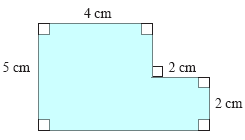
What is the area of the shaded region?
a)
20 sq cm
b)
4 sq cm
c)
30 sq cm
d)
24 sq cm
25.
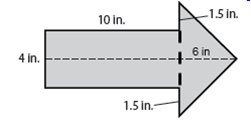
The arrow shown is on a sign. What is the area of the arrow?
a)
17 in2
b)
40 in2
c)
52 in2
d)
61 in2
26.

Mason needs to purchase new glass for the window pictured here. How many square feet of glass will he need?

a)

12.6 ft2

b)

11.4 ft2

c)

25.9 ft2

d)

19.5 ft2

27.

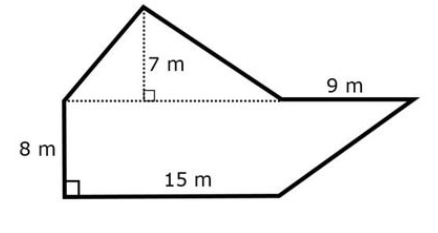
What is the area of this figure?

a)

208.5 m2

b)

109.5 m2

c)

415.7 m2

d)

322.4 m2

28.
What is this formula used to find?
V=πr2h
a)
The volume of a cylinder
b)
The volume of a cone
c)
The volume of a sphere
d)
The area of a circle
29.
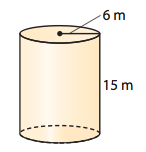
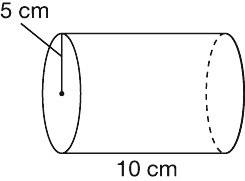
Find the volume of the cylinder.
a)
4239
b)
1696
c)
1130
d)
565
30.
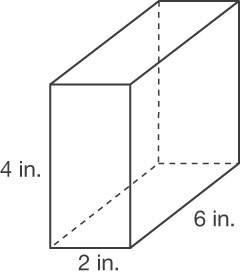
Find the total surface area of the prism.
a)
48 square inches
b)
64 square inches
c)
88 square inches
d)
76 square inches
31.
Find the surface area of the cylinder.
a)
471.24 square centimeters
b)
157.08 square centimeters
c)
314.16 square centimeters
d)
296.72 square centimeters
32.

What is the significance of prototyping in the engineering design process?

a)

It is solely for marketing purposes.

b)

It allows the design team to test and refine the functionality of a design before full-scale production.

c)

It is a legal requirement.

d)

It determines the color scheme of the product.

33.

Is the first step in the design process. Includes the problem being identified, validated, and justified. The design requirements are determined and the design brief is created.

a)

prototype

b)

Valid

c)

define the problem

d)

present solution

e)

construct/test prototype

34.
This step in Design process includes researching past solutions and brainstorming possible new solutions. Selecting an approach using a Decision Matrix.
a)
generate concepts
b)
Justifiable
c)
Brainstorm
d)
Iterative
e)
evaluate solution
35.

This step in Design process includes creating a detailed design solution and detailed technical drawings.

a)

present solution

b)

define the problem

c)

Valid

d)

Prototype

e)

develop solution

36.
This step in Design process includes building the a testable prototype. Then testing it for performance/ usability/ durability, collecting the data, analyzing the date and creating a test report of the findings.
a)
construct/test prototype
b)
generate concepts
c)
Justifiable
d)
Brainstorm
e)
Iterative
37.

This step in Design process includes evaluating the solution's effectiveness, reflecting on design, making recommendation for improvements of the design, and revising design documents.

a)

develop solution

b)

evaluate solution

c)

define the problem

d)

Valid

e)

Prototype

38.
This is the last step in the Design process and is when the project portfolio is shared usually during a formal presentation.
a)
present solution
b)
construct/test prototype
c)
generate concepts
d)
Justifiable
e)
Brainstorm
39.
A full- scale working model used to test a design concept
a)
Prototype
b)
present solution
c)
construct/test prototype
d)
generate concepts
e)
Justifiable
40.

A group technique for solving problems, generating ideas, stimulating creative thinking, etc. by unrestrained spontaneous participation in discussion

a)

define the problem

b)

Iterative

c)

evaluate solution

d)

develop solution

e)

brainstorm

41.
A systematic problem-solving strategy, with criteria and constraints, used to develop many possible solutions to a problem or to satisfy human needs and wants and winnow (narrow) down the possible solutions to one final choice. 
a)
Design Process
b)
Brainstorming
c)
Design
d)
Decision Matrix
42.

Is the word "DESIGN" a verb or a noun?

a)

verb

b)

noun

c)

both a noun and a verb

43.

When you build your prototype it is really important to do this...

a)

Rebuild it

b)

Test it many times

c)

Present it

44.

Which step of the design process includes "Brainstorming"?

a)

Define problem

b)

Generate concepts

c)

Build a prototype

45.

Presenting your solution is like:

a)

Looking for flaws

b)

Pitching your sales idea

c)

Brainstorming

46.

Asking things like "What is the issue we need to solve?", or "What are my criteria/constraints?"...would be which step?

a)

Design a solution

b)

Generate Concepts

c)

Define Problem

47.

Using one of these will help your group decide on which model to build:

a)

Design Brief

b)

Design Evaluator

c)

Decision Matrix

48.

If I find flaws in my solution I should....

a)

Create a technical drawing instead

b)

Be formal and perfect

c)

go back and make modifications before moving forward
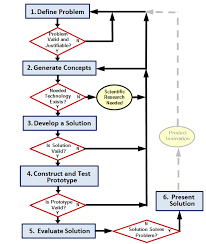
49.

Why are there arrows going in all directions here?

a)

To show that many ideas come from everyone

b)

To show that the chart is incomplete

c)

To show that you can go back to previous steps if needed

50.

Based on this chart, which idea was best?

a)

Idea 2

b)

Idea 6

c)

Idea 3

d)

Idea 4

51.

A manufacturer has developed a textured surface for plastic cups. The manufacturer has produced prototypes. Which of the following is the next step in the engineering design process?

a)

market the new textured cups

b)

redesign the textured surface

c)

test and evaluate the prototypes

52.

An automobile company plans to develop an electric car to sell in urban areas. Which of the following will help the company evaluate the potential market for these cars?

a)

scale models

b)

field tests

c)

consumer surveys

53.
This step in Design process includes researching past solutions and brainstorming possible new solutions. Selecting an approach using a Decision Matrix.
a)
generate concepts
b)
Justifiable
c)
Brainstorm
d)
Iterative
e)
evaluate solution
54.

This step in Design process includes creating a detailed design solution and detailed technical drawings.

a)

present solution

b)

define the problem

c)

Valid

d)

Prototype

e)

develop solution

55.
This step in Design process includes building the a testable prototype. Then testing it for performance/ usability/ durability, collecting the data, analyzing the date and creating a test report of the findings.
a)
construct/test prototype
b)
generate concepts
c)
Justifiable
d)
Brainstorm
e)
Iterative
56.
A full- scale working model used to test a design concept
a)
Prototype
b)
present solution
c)
construct/test prototype
d)
generate concepts
e)
Justifiable
57.

A group technique for solving problems, generating ideas, stimulating creative thinking, etc. by unrestrained spontaneous participation in discussion

a)

define the problem

b)

Iterative

c)

evaluate solution

d)

develop solution

e)

brainstorm

58.
A systematic problem-solving strategy, with criteria and constraints, used to develop many possible solutions to a problem or to satisfy human needs and wants and winnow (narrow) down the possible solutions to one final choice. 
a)
Design Process
b)
Brainstorming
c)
Design
d)
Decision Matrix
59.

Which step of the design process includes "Brainstorming"?

a)

Define problem

b)

Generate concepts

c)

Build a prototype

60.

Using one of these will help your group decide on which model to build:

a)

Design Brief

b)

Design Evaluator

c)

Decision Matrix

61.
What is an engineering notebook used for?
a)
To collect ideas
b)
A diary
c)
a legal method to prove you are the originator of an idea
d)
a notepad for various to do lists and scribblings
62.
When using your engineering notebook you should…? Check all that apply
a)
Sign and Date
b)
Add a title
c)
Update the table of contents
d)
Scribble or scratch out things that you found out are incorrect
63.
It's ok to literally copy and paste items into your engineering notebook.
a)
true
b)
false
64.
What is the proper way to correct a mistake in your engineering notebook?
a)
scratch it out with pen
b)
erase it
c)
use whiteout
d)
put a single line through it and your initials
65.
Can more than one person write in an engineering notebook?
a)
Yes
b)
No
66.
You can use a notebook in a court of law to protect yourself.
a)
true
b)
false