
NEW
Font size
S
M
L
XL
 Worksheets
Unit 2 Cells
Total questions: 50
Worksheet time: 1hrs 8mins
Name
Class
Date
1.
surrounds the cell; regulates what enters/leaves cell; maintains homeostasis
a)
vacuole
b)
cell wall
c)
cell membrane
d)
lysosome
2.
control the cell's activities; contains the cell's DNA
a)
mitochondria
b)
cell membrane
c)
nucleus
d)
golgi body
3.
breaks down glucose to release energy for the cell
a)
nucleus
b)
lysosomes
c)
mitochondria
d)
vacuole
4.
What is the cell organelle that stores water, food and waste called?
a)
The cytoplasm
b)
The lysosomes
c)
The vacuole
d)
The mitochondria
5.
What is the main
difference between prokaryotic and eukaryotic cells?
a)
Prokaryotic cells have a nucleus and Eukaryotic cells do not
b)
Prokaryotic cells are unicellular and Eukaryotic cells are multicellular.
c)
Prokaryotic cells do not have a nucleus, Eukaryotic cells do have a nucleus.
d)
Prokaryotic cells are plant cells and Eukaryotic cells are animal cells.
6.
The main function of chloroplasts is:
a)
To control what enters and leaves the cell.
b)
To break down food to release energy for the cell.
c)
To control all activities of the cell.
d)
To produce food for the cell using the sun's energy.
7.
The cytoplasm
a)
Is the gel-like fluid that holds other organelles in place.
b)
Breaks down food to produce energy for the cell.
c)
Is known as the "brain" of the cell.
d)
Is where photosynthesis takes place.
8.
Which statement is NOT part of the Cell Theory?
a)
Only animals are made of cells.
b)
Cells are the basic unit of structure and function in all living things.
c)
All living things are made of cells.
d)
New cells come from existing cells.
9.
Which early scientist first discovered and named cells?
a)
Robert Brown
b)
Theodore Schwann
c)
Matthias Schleiden
d)
Robert Hooke
10.
Identify which of these is NOT a major difference between plant and animal cells.
a)
Only plant cells have a cell wall.
b)
Only animal cells have mitochondria.
c)
Animal cells do NOT contain chloroplasts.
d)
Plant cells have a large central vacuole.
11.
Ribosomes are the cell organelle that
a)
Break down food to produce energy for the cell.
b)
Produce proteins for the cell.
c)
Break down broken cell parts.
d)
Make food for the cell using the sun's energy.
12.
Organisms composed of many cells are called
a)
Prokaryotic
b)
Eukaryotic
c)
Unicellular
d)
Multicellular
13.
Which types of organisms are Prokaryotes?
a)
Animals
b)
Plants
c)
Fungi
d)
Bacteria
14.
Unicellular organisms are
a)
Prokaryotic
b)
Eukaryotic
c)
Made of many cells
d)
Made of one cell
15.
Plant and animal cells are identical.
a)
True
b)
False
16.
This organelle helps plants keep their rigid structure.
a)
Cell wall
b)
Cell membrane
c)
Chloroplast
d)
Nucleus
17.

Using this image, what organelle is G?
a)
Vacuole
b)
Flagella
c)
Rough ER
d)
Nucleus
18.

Using this image, what organelle is N?
a)
Centrioles
b)
Cell Membrane
c)
Golgi Apparatus
d)
Ribosome
19.

Using this image, what organelle is C?
a)
Cell Wall
b)
Mitochondria
c)
Large Cell Vacuole
d)
Chloroplast
20.
Using this image, what organelle is G?
a)
Cell Wall
b)
Mitochondria
c)
Vacuole
d)
Chloroplast
21.
Using this image, what organelle is E?
a)
Cell Wall
b)
Nucleus
c)
Vacuole
d)
Chloroplast
22.

Using this image, what organelle is A?
a)
Cell Wall
b)
Large Central Vacuole
c)
Mitochondria
d)
Chloroplast
23.
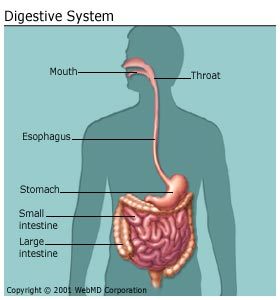
This is a example of........
a)
organ system
b)
cells
c)
organ
d)
tissue
24.
What is the correct order of organization
a)
tissues-cells-organs-organ systems-organism
b)
cell-tissue-organs-organ systems-organism
c)
organism-cells-tissues-organ systems-organism
d)
tissues-cells-organs-organ sytems-organism
25.
A group of cells that have similar functions? Examples are nervous, epithelial, muscle and connective
a)
cells
b)
tissues
c)
organs
d)
atoms
26.
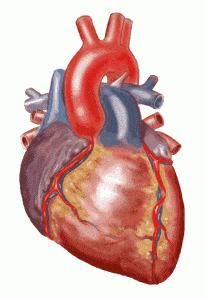
This is a example of ........
a)
cell
b)
organ system
c)
organ
d)
tissue
27.
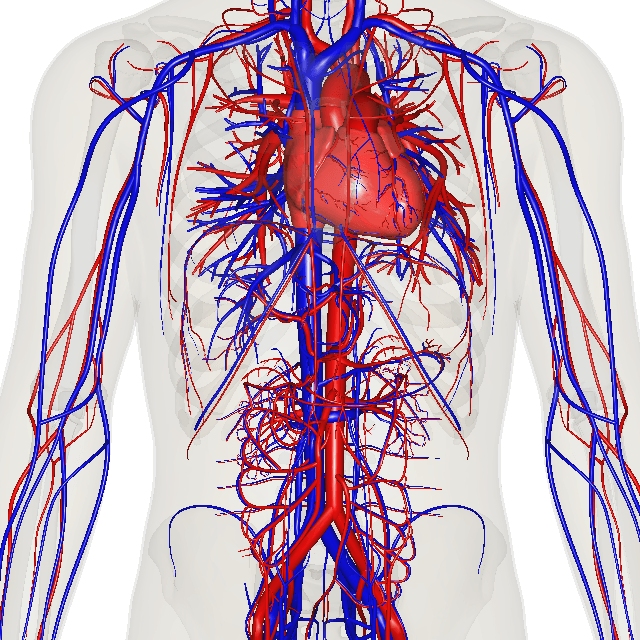
This is a example of ........
a)
organ
b)
organ system
c)
tissue
d)
cell
28.
Which invention from the 17th century allowed for the development of modern cell theory?
a)
x-rays
b)
computers
c)
the light microscope
d)
the scanning electron microscope
29.
"All animals are made of cells". This fact was discovered by...
a)
Matthias Schleiden
b)
Theodor Schwann
c)
Robert Hooke
d)
Rudolf Virchow
30.
All plants are made of cells. This was discovered by....
a)
Matthias Schleiden
b)
Rudolf Virchow
c)
Robert Hooke
d)
Aristotle
31.
Which is not a part of cell theory?
a)
All organisms are made of cells
b)
All existing cells come from preexisting cells
c)
All matter is composed of living cells
d)
The cell is the most basic unit of life
32.
Which organelle is only found in a plant cell?
a)
nucleus
b)
chloroplast
c)
mitochondria
d)
cell membrane
33.
Where is DNA stored in a cell?
a)
Lysosomes
b)
Golgi Complex
c)
Ribosomes
d)
Nucleus
34.
What is the fluid inside a cell called?
a)
Endoplasimic Reticulum
b)
Orange Juice
c)
Water
d)
Cytoplasm
35.
This organelle turns the light energy into a simple sugar.
a)
Mitochondria
b)
ER
c)
Chloroplast
d)
Nucleus
36.
This organelle makes proteins.
a)
Cell membrane
b)
Nucleus
c)
Ribosome
d)
ER
37.
Where does photosynthesis occur?
a)
mitochondria
b)
stomata
c)
xylem
d)
chloroplast
38.
What is the function of the vacuole?
a)
Sac that stores water, nutrients, and waste products
b)
Sac filled with digestive chemicals
c)
Jelly-like substance within the plasma membrane
d)
stack of membranes that packages chemicals
39.
Oxygen molecules move across cell membranes through a process called _____.
a)
diffusion
b)
osmosis
40.
The diffusion of _____ molecules through a selectively permeable membrane is called osmosis.
a)
oxygen
b)
water
41.
Unlike the cell wall, the cell membrane
a)
is found in all cells.
b)
is made of chromatin.
c)
protects the nucleus with a rigid layer of cellulose.
d)
produces energy for the cell.
42.
Which term refers to the movement of molecules from an area of higher concentration to an area of lower concentration?
a)
collision
b)
diffusion
c)
active transport
d)
concentration
43.
How does a bacterial cell differ from a plant or animal cell?
a)
It is larger.
b)
It does not have a nucleus.
c)
It has no cytoplasm.
d)
It has not organelles.
44.

Which scientist concluded cells can only come from other cells?
a)
Anton van Leeuwenhoek
b)
Robert Hooke
c)
Rudolph Virchow
d)
Theodor Schwann
45.

The organelle that looks like small dots. It makes proteins.
a)
nucleus
b)
cell membrane
c)
ER
d)
ribosomes
46.

The jelly-like fluid that supports the organelles in place.
a)
nucleus
b)
cell membrane
c)
chloroplast
d)
cytoplasm
47.

Which statement is not part of the cell theory?
a)
All cells come from other cells.
b)
All living things have one or more cells.
c)
Cells are a living thing's basic unit of structure and function.
d)
All cells have a nucleus.
48.
Animal cells have all of the following except
a)
ribosomes
b)
cell wall
c)
cell membranes
d)
lysosomes
49.
The part of the cell that carries hereditary information is the
a)
cytoplasm
b)
nucleus
c)
cytoskeleton
d)
cell membrane
50.
Homeostasis occurs when an organisms
a)
competes for living space
b)
eats
c)
drinks
d)
maintains stable internal conditions
Reset

