
 Worksheets
Earth Science Review
Total questions: 75
Worksheet time: 43mins
Name
Class
Date
1.
What is the softest mineral?
a)
Diamond
b)
Gypsum
c)
Calcite
d)
Talc
2.
What type of rock is made from weathering and erosion?
a)
Sedimentary
b)
Metamorphic
c)
Magma
d)
Cooling
3.
Which layer of the Earth is the thickest?
a)
Crust
b)
Mantle
c)
Inner core
d)
Outer core
4.
Which plate boundary forms a mountain?
a)
Converging
b)
Diverging
c)
Transform
d)
Sedimentary
5.
What has the highest rank on the hardness scale?
a)
Shoes
b)
Talc
c)
iPhones
d)
Diamond
6.
What is a result of heat and pressure?
a)
Metamorphic
b)
Silver
c)
Gold
d)
Air
7.
If the inner core is the hottest, which would be the coolest?
a)
Crust
b)
Mantle
c)
Outer core
d)
Inner core
8.
What is the rate of movement of the tectonic plates?
a)
1 to 10 miles per year
b)
1 to 10 centimeters per year
c)
1 to 10 inches per year
d)
1 to 10 earths per year
9.
What does the word "inorganic" mean?
a)
Living
b)
Hardness
c)
Nonliving
d)
Color
10.
How many minerals are rocks made of?
a)
none
b)
one
c)
seven or more
d)
two or more
11.
What are the two types of crust?
a)
Pizza crust and pie crust
b)
Oceanic crust and continental crust
c)
Any crust
d)
Earth crust and Moon crust
12.
What is the definition of tectonic plates?
a)
The moving of oceanic and continental crust
b)
Pieces of the lithosphere that move on top of the asthenosphere
c)
Movement of the Earth's core
13.
What is an inorganic substance?
a)
plants
b)
humans
c)
minerals
d)
animals
14.
Which rock is made of cooling magma?
a)
metamorphic
b)
sedimentary
c)
diamond
d)
igneous
15.
What describes the inner core?
a)
Very dense, very hot metal
b)
Any layer of the earth that is liquid
c)
It is mostly made of rock
d)
The core is the top of the earth
16.
Which describes a transform boundary?
a)
Two plates come together
b)
Two plates slide past each other
c)
Two plates drift apart
d)
Two plates slide down into the mantle
17.
What is the hardest mineral in the world?
a)
Diamond
b)
Talc
c)
Granite
d)
Pillow
18.
Which is the thickest layer of Earth?
a)
Crust
b)
Inner core
c)
Outer core
d)
Mantle
19.

Which is a picture of Pangea?
a)
A
b)
B
c)
C
d)
D
20.
Tectonic plates float on which layer of Earth?
a)
Mantle (the asthenosphere part)
b)
Crust (the lithosphere part)
c)
Mantle (the mesophere part)
d)
Outer core
21.

Which type of plate boundary is in the picture?
a)
Divergent
b)
Convergent
c)
Transform
22.
Which of the following is NOT a way to describe a mineral?
a)
Streak
b)
Luster
c)
Density
d)
Weight
23.
Which of the following are the layers of the Earth?
a)
Crust, mantle, inner core, and outer core
b)
Crust, mantle, hot core, and cool core
c)
Crust, potato, inner core, and outer core
d)
Crust peanut butter, liquid, and solid
24.

What mineral is harder than talc but softer than calcite?
a)
Diamond
b)
Feldspar
c)
Gypsum
d)
Flourite
25.
How is metamorphic rock made?
a)
Cooling
b)
Heat and pressure
c)
Compaction
d)
Melting
26.
What layer of the earth is the only liquid layer?
a)
Outer core
b)
Inner core
c)
Mantle
d)
Crust
27.
What was it called when all the land was together millions of years ago?
a)
Penguin
b)
Pangea
c)
Pancake
d)
Chocolate
28.
What are the three main types of rock?
a)
Sedimentary, Mineral, Magma
b)
Sedimentary, Igneous, Metamorphic
c)
Metamorphic, Mineral, Igneous
d)
Convergent, Sedimentary, Metamorphic
29.
Which of these is a plate boundary?
a)
Sedimentary
b)
Igneous
c)
Transform
d)
Magma
30.
How are sedimentary rocks made?
a)
Melting rock
b)
Cooling rock
c)
Heat and pressure
d)
Compaction and cementation
31.
What layer is between the outer core and the crust?
a)
Mantle
b)
Crust
c)
Inner core
d)
Peanut butter
32.
What happens when two continental plates collide?
a)
Mountains
b)
Earthquakes
c)
Rift valleys
d)
Sandwiches
33.
How many layers of the earth are there?
a)
4
b)
15
c)
1
d)
56,789
34.
Can you describe a mineral by its weight?
a)
Yes
b)
No
35.
What type of rock is formed when smaller rocks (sediments) are compacted?
a)
Igneous
b)
Sedimentary
c)
Magma
d)
Rock
36.
What is the hottest layer called?
a)
Outer core
b)
Mantle
c)
Inner core
d)
Crust
37.
What is the name of the plate boundary that forms a mountain?
a)
Convergent
b)
Divergent
c)
Sliding
d)
Mountain
38.

What is the hardness of Apatite?
a)
2
b)
7
c)
3
d)
5
39.
How is an igneous rock made?
a)
Melting
b)
Erosion
c)
Heat and pressure
d)
Cooling
40.
There are two different types of crusts.
a)
True
b)
False
41.
India is pushing into Asia.
a)
True
b)
False
42.
Describe how an igneous rock becomes a sedimentary rock.
a)
Heat and pressure
b)
Cooling
c)
Melting
d)
Weather, erosion, and compaction
43.
The center of the earth is mostly made of...
a)
Solid nickel
b)
Liquid iron
c)
Solid iron
d)
Pineapples
44.
What is the other name for the plate tectonics?
a)
Pangea
b)
Lithosphere
c)
Continental drift
d)
Sea floor spreading
45.
What can scratch a diamond?
a)
A penny
b)
A nail
c)
Another diamond
d)
Barbeque
46.
What makes igneous rock?
a)
cooling magma/lava
b)
weathering and erosion
c)
melting rock
d)
tacos
47.
Which earth layer is made of solid iron and nickle?
a)
crust
b)
mantle
c)
outer core
d)
inner core
48.
Where do most earthquakes happen?
a)
around plate boundaries
b)
in the middle of a plate
c)
North Pole
d)
Equator
49.

Which mineral property is being shown here?
a)
luster
b)
hardness
c)
cleavage
d)
streak
50.
Wind, water, and ice breaking down rock is called
a)
Erosion
b)
Deposition
c)
Compaction
d)
Weathering
51.
Magma cooling and hardening below Earth's surface forms an
a)
Intrusive igneous rock
b)
Extrusive igneous rock
c)
Foliated metamorphic rock
d)
Organic sedimentary rock
52.
Scientists classify rocks by their composition and
a)
chemicals
b)
size
c)
color
d)
texture
53.
Sediment being moved from one area to another is called
a)
erosion
b)
deposition
c)
weathering
d)
compaction
54.
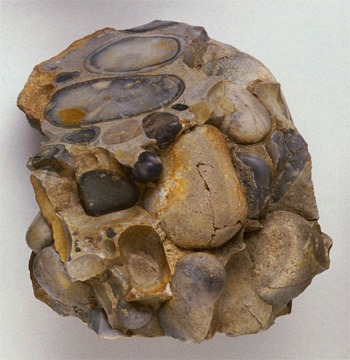
This rock was formed by smaller pieces of rock that settled at the bottom of a lake millions of years ago. What type of rock is this?
a)
Sedimentary
b)
Igneous
c)
Metamorphic
55.

This rock was another type of rock that was heated and compressed over time. What type of rock is this?
a)
Sedimentary
b)
Igneous
c)
Metamorphic
56.
The thinest layer
a)
crust
b)
inner core
c)
mantle
d)
outer core
57.
The thickest layer
a)
crust
b)
inner core
c)
mantle
d)
outer core
58.

Which earth layer is #3?
a)
Crust
b)
Mantle
c)
Outer core
d)
Inner core
59.
Which earth layer is #2?
a)
Crust
b)
Mantle
c)
Outer core
d)
Inner core
60.
Which earth layer is #1?
a)
Crust
b)
Mantle
c)
Outer core
d)
Inner core
61.
Which earth layer is #4?
a)
Crust
b)
Mantle
c)
Outer core
d)
Inner core
62.
This layer contains most of Earth's mass.
a)
Inner Core
b)
Mantle
c)
Outer Core
d)
Crust
63.
Which layer consists of about 70% water?
a)
Crust
b)
Inner core
c)
Mantle
d)
Outer core
64.
Which layer of made of dense, liquid iron?
a)
Crust
b)
Mantle
c)
Outer core
d)
Inner core
65.
Which layer of earth molten, semi-liquid rock?
a)
Crust
b)
Mantle
c)
Outer core
d)
Inner core
66.

Where is the earth’s crust the thickest?
a)
A. (ocean)
b)
B. (mountain)
c)
C. (North pole)
d)
D. (Equator)
67.
How deep would you have to drill to reach the center of the earth?
a)
About 60,000 kilometers
b)
About 600,000 kilometers
c)
About 600 kilometers
d)
About 6,000 kilometers
68.
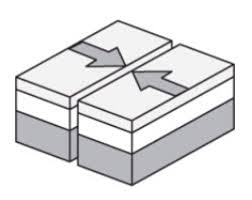
Name the boundary
a)
convergent boundary
b)
divergent boundary
c)
transform boundary
d)
sergent boundary
69.
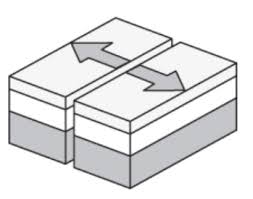
Name the boundary
a)
convergent boundary
b)
divergent boundary
c)
transform boundary
d)
sergent boundary
70.
A subduction zone is formed...
a)
when one tectonic plate sinks below another
b)
at every type of convergent plate boundary
c)
at every type of divergent plate boundary
d)
at transform boundaries
71.
Which human activity would preserve nonrenewable resources?
a)
deforestation
b)
removing
carnivores from a forest
c)
recycling
d)
heating homes with fossil fuels
72.
Which human activity is correctly paired with its likely future consequence?
a)
overfishing
in the Atlantic — increase in supply of flounder and salmon as food for people
b)
development
of electric cars or hybrid vehicles — increased rate of global warming
c)
use
of fossil fuels — depletion of underground coal, oil, and natural gas supplies
d)
genetically
engineering animals — less food available to feed the world’s population
73.
Which human activity would most likely deplete nonrenewable resources?
a)
use
of natural enemies to eliminate insect pests
b)
development
of wildlife refuges
c)
governmental
restriction of industrial pollution
d)
increased use of fossil fuels
74.
Which of the following is a renewable resource?
a)
coal
b)
solar energy
c)
natural gas
d)
oil
75.
Global warming has been linked to a decrease in
a)
the
size of the polar ice caps
b)
the
temperature of Earth
c)
the
rate of species extinction
d)
the
rate of carbon dioxide production
100 %

