
 Worksheets
The Ultimate Mega-Grande Semester 2 Review
Total questions: 70
Worksheet time: 53mins
Name
Class
Date
1.
Temperature, light, air, water, and soil are all _____ parts of the environment
a)
alive
b)
biotic
c)
abiotic
d)
living
2.
All of the living AND non-living things in an particular area is called a(n):
a)
ecosystem
b)
house
c)
community
d)
mountain
3.
If the population of prey increases, the population of predators will ________because of the availability of food.
a)
decrease
b)
stay the same
c)
increase
4.
All the members of one species (organisms) that live within an area of an ecosystem is a?
a)
population
b)
community
c)
niche
5.
How do consumers get their energy?
a)
laying in the sun
b)
eating other organisms
c)
providing food for other organisms
d)
surviving in an ecosystem
6.

A group of the same type of organisms living in the same place at the same time.
a)
threatened species
b)
populations
c)
community
d)
limiting factor
7.

Something that limits the size of a population.
a)
maxfactor
b)
factor tree
c)
the x factor
d)
limiting factor
8.
What type of rock is formed when magma and lava cools and hardens?
a)
minerals
b)
sedimentary
c)
igneous
d)
metamorphic
9.
What type of rock is formed when an existing rock has been changed into a new rock?
a)
sedimentary
b)
igneous
c)
minerals
d)
metamorphic
10.
True or False:
A mineral is a solid, nonliving material with a definite chemical makeup.
A mineral is a solid, nonliving material with a definite chemical makeup.
a)
True
b)
False
11.
Which of the following is NOT a property that can be used to identify a mineral?
a)
luster
b)
color
c)
weight
d)
hardness
12.
Means that a mineral cannot come from something that was once living.
a)
Inorganic
b)
Organic
c)
Naturally Occurring
d)
Not Living
13.
Means that the substance must occur in nature, it cannot be created or manufactured by people
a)
Inorganic
b)
Organic
c)
Naturally Occurring
d)
Not Living
14.
This means the particles that make a mineral line up in a pattern that repeats over and over again.
a)
Chemical Composition
b)
Crystal Structure
c)
Fracture
d)
Solid
15.
This is how a mineral reflects light.
a)
Cleavage
b)
Density
c)
Hardness
d)
Luster
16.
Which layer of the Earth is the only liquid layer?
a)
Outer Core
b)
Inner Core
c)
Mantle
d)
Lithosphere
17.
What are the two type of crust?
a)
Continental and Landforms
b)
Oceanic and Mountains
c)
Mountains and Landforms
d)
Oceanic and Continental
18.
How are scientist able to estimate the thickness of each layer of the Earth?By studying __________
a)
radio waves
b)
sonar waves
c)
laser waves
d)
seismic waves
19.
Which layer is considered the thinnest layer?
a)
Mesosphere
b)
Core
c)
Mantle
d)
Crust
20.
The lithosphere combines what two layers?
a)
Athenosphere & Crust
b)
Crust & Upper Mantel
c)
Mantel & Athenosphere
21.
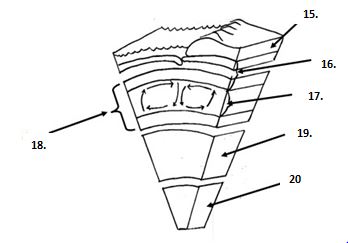
Identify layer #20.
a)
mantle
b)
asthenosphere
c)
inner core
d)
outer core
22.
The type of plate boundary where two plates come together is a .....
a)
Convergent Boundary
b)
Divergent Boundary
c)
Transform Boundary
d)
Plate Boundary
23.
Which of the following causes Earth's tectonic plates to move?
a)
Energy from the Sun
b)
Magnetic Pole Reversal
c)
Convection currents in the mantle
d)
Faults in Mountain Ranges
24.

What type of event will occur at this boundary?
a)
Earthquake
b)
Volcano Eruption
c)
Tornado
d)
Mountain Building
25.
A divergent boundary occurs when plates ....
a)
Pull apart
b)
Come together
c)
Slide past each other
d)
subducting
26.
Oceanic Trenches are formed by _______ plate boundaries
a)
Convergent
b)
Transform
c)
Plate
d)
Divergent
27.
Mountains are created when....
a)
Two continental plates collide
b)
Two oceanic plates pull apart
c)
An Oceanic plate subducts under a Continental Plate
d)
Two continental plates pull apart
28.
When one plate sides under neath another, it _________ and the magma _________.
a)
hardens, sinks
b)
melts, sinks
c)
hardens, rises
d)
melts, rises
29.
The area where two tectonic plates meet.
a)
mantle
b)
focus
c)
plate boundary
d)
convection
30.

Cattle egrets forage (feed) in fields among cattle. The egret gets easy access to flying insects stirred up by the cattle, and the cattle don't care if they are there or not.
a)
mutualism
b)
commensalism
c)
competition
d)
parasitism
31.
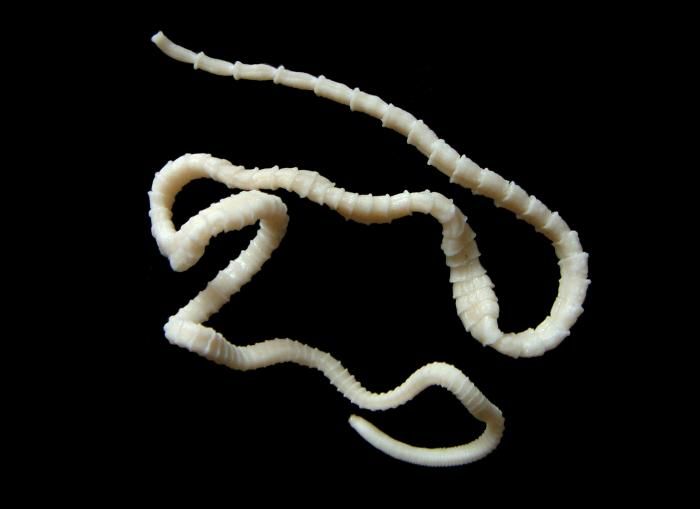
A tapeworm and a cat have this type of relationship.
a)
mutualism
b)
parasitism
c)
commensalism
d)
competition
32.
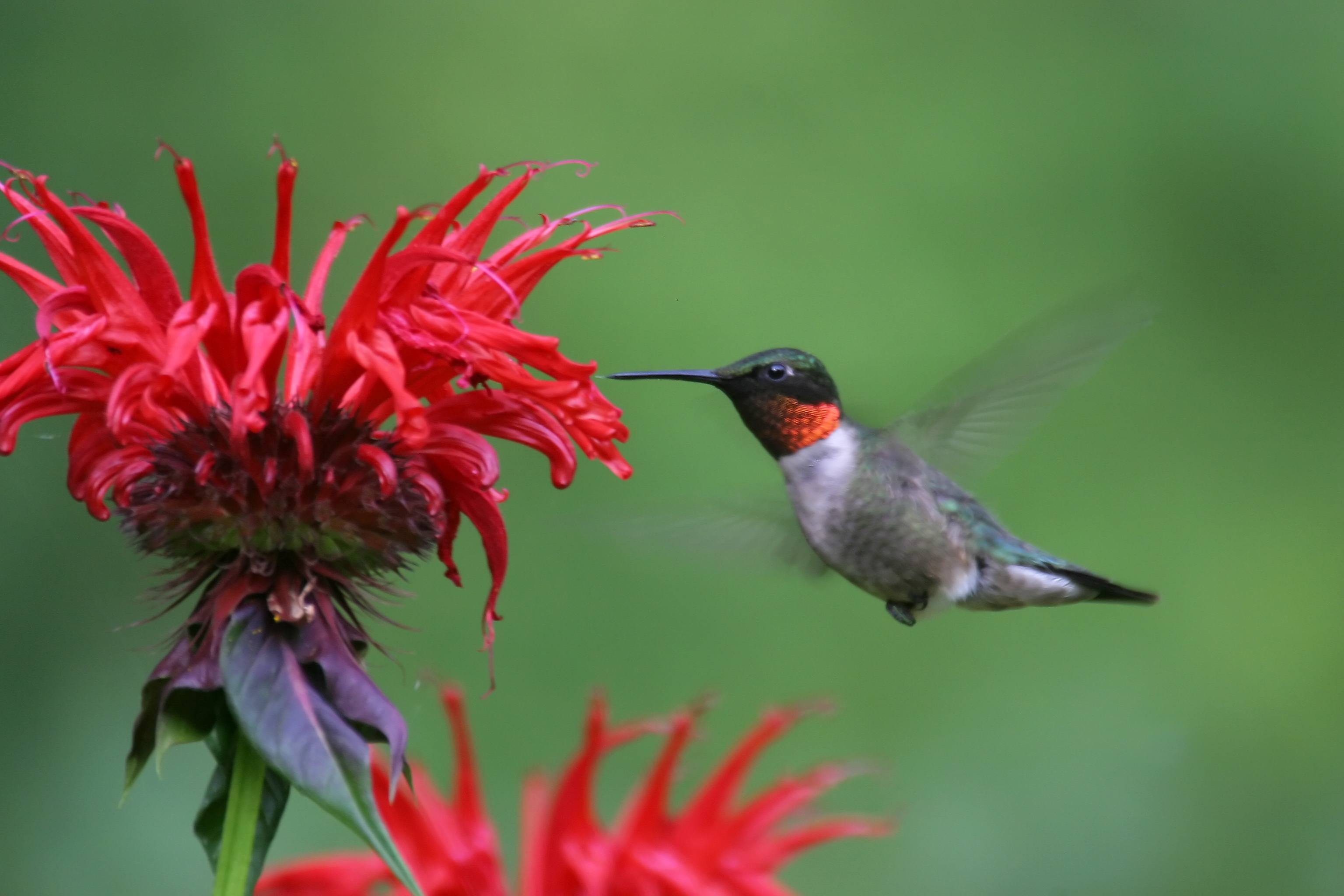
What type of symbiosis? Hummingbirds feed on nectar from flowers. The flowers are pollinated by hummingbirds as they move from flower to flower.
a)
commensalism
b)
mutualism
c)
parasitism
d)
predation
33.
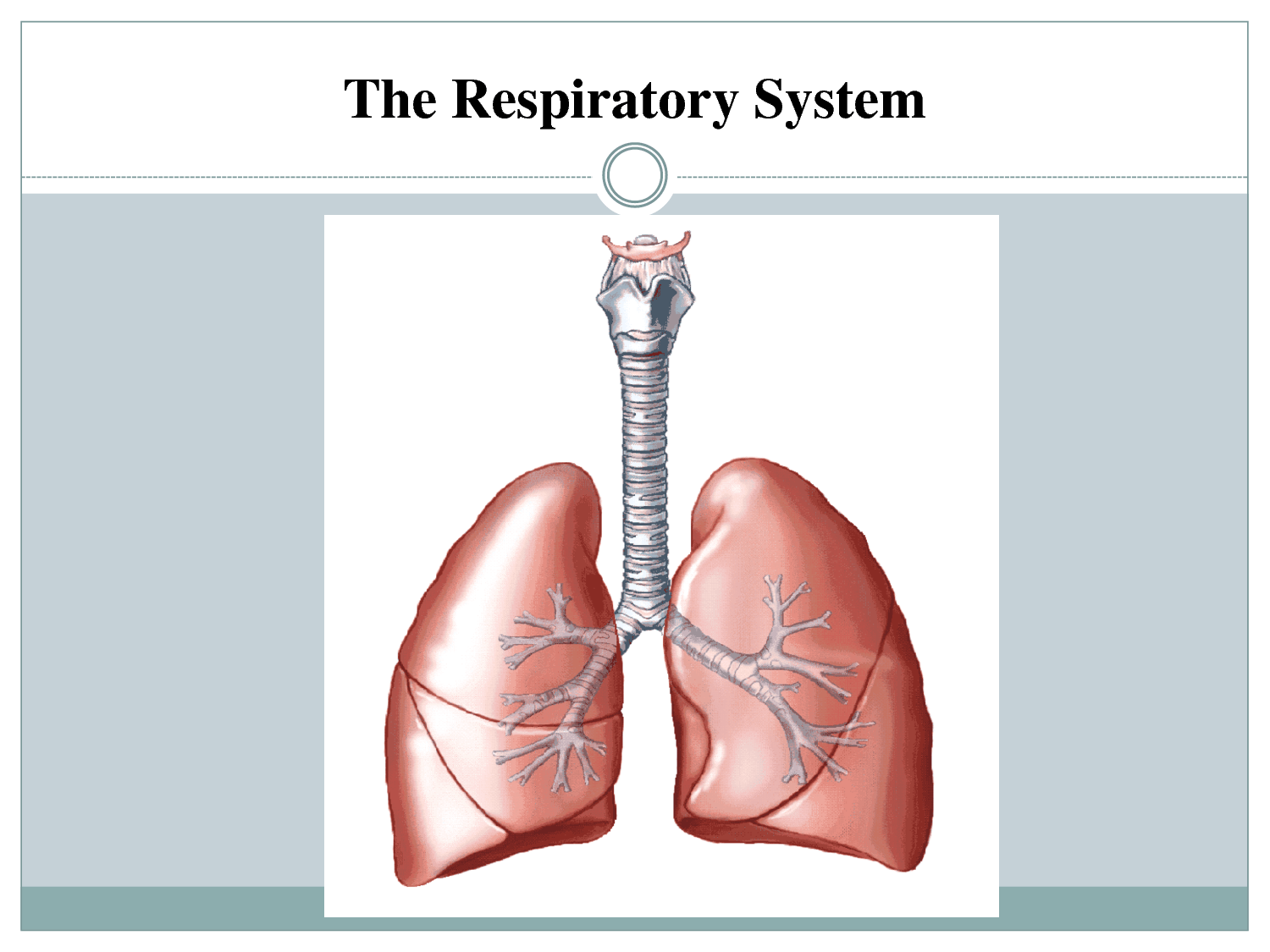
What is the main function of the respiratory system?
a)
to provide oxygen and remove carbon dioxide from the body
b)
to bring oxygen to the body
c)
to break down food and absorb nutrients
d)
to remove oxygen from the body and deliver carbon dioxide
34.
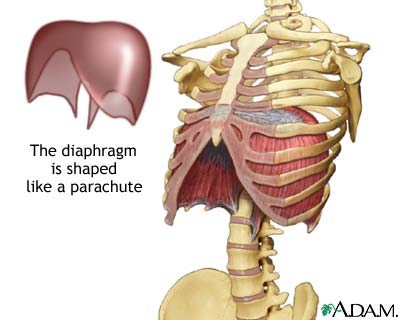
What is function of the dome-shaped diaphragm?
a)
This is where gas exchange happens.
b)
Air passes through the diaphragm on the way to the lungs.
c)
It attaches to the lungs to help in breathing.
d)
It is under the lungs and keeps them from falling down to your stomach.
35.
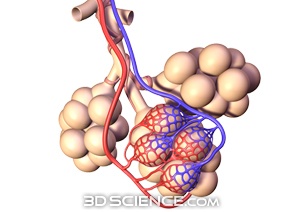
When you breathe, your lungs take in ___ and remove ___.
a)
air/oxygen
b)
oxygen/carbon dioxide
c)
carbon dioxide/waste
d)
waste/air
36.
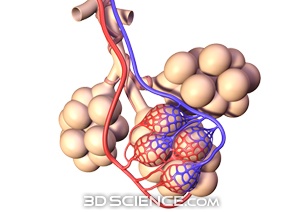
The air sacs that are covered with capillaries where gas exchange takes place
a)
bronchi
b)
lungs
c)
oxygen
d)
alveoli
37.
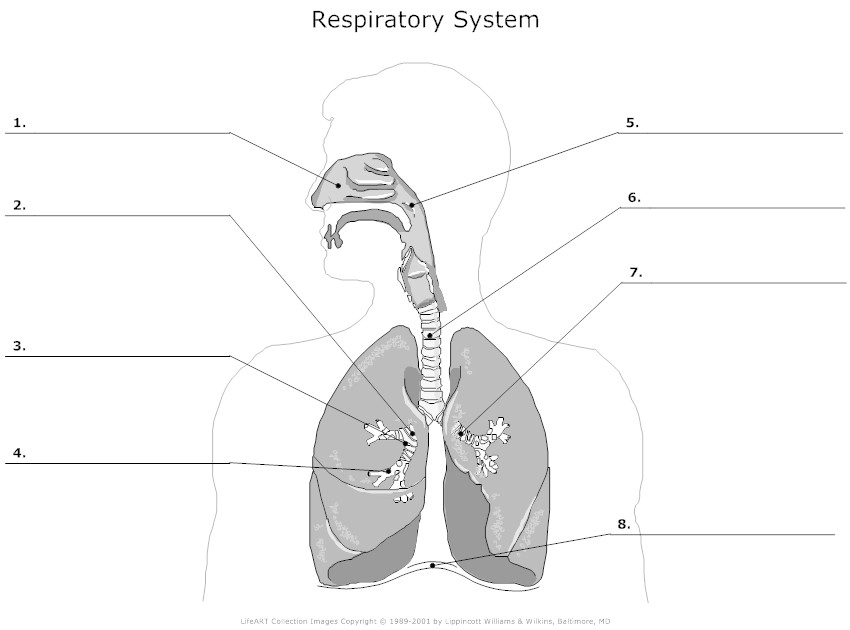
Name the organ label # 6.
a)
alveoli
b)
bronchi
c)
trachea
d)
lungs
38.
What does the Larynx hold ?
a)
The larynx holds the whole respitory system.
b)
The larynx holds the trachea.
c)
The larynx holds the vocal chords.
d)
The larynx hold the wind pipe.
39.
Arteries carry oxygen rich blood away from the heart.
a)
True
b)
False
40.
Veins carry oxygen poor blood back to the heart.
a)
False
b)
True
41.
______________ are the smallest blood vessels.
a)
Arteries
b)
Veins
c)
Capillaries
42.
The circulatory system works with the ___________ system to provide our body with oxygen.
a)
respiratory
b)
digestive
c)
muscular
d)
skeletal
43.
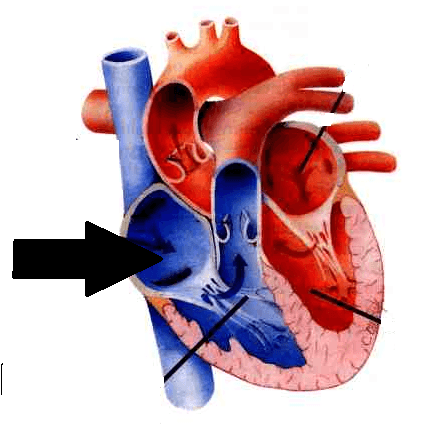
Identify
a)
Left atrium
b)
Right atrium
c)
Left ventricle
d)
Right ventricle
44.
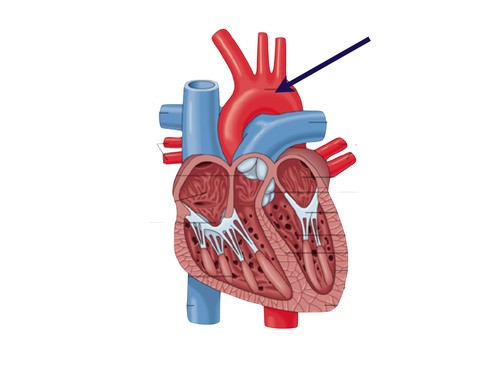
Identify
a)
Pulmonary veins
b)
Pulmonary artery
c)
Aorta
d)
Vena cava
45.

A flap of tissue that prevents blood from flowing backward
a)
Aorta
b)
Atrium
c)
Septum
d)
Valve
46.

What do Red-Blood cells do?
a)
Carry oxygen from the lungs to the body cells and transport carbon dioxide from the cells back to the lungs
b)
keeps blood flowing in one direction to the heart and prevent blood from flowing backwards
c)
Collects blood from the capillaries and drain it into the veins
d)
Bring nutriients to the cells and carries away waste materials.
47.

What does blood do?
a)
Carries Water to cells
b)
Carries Oxygen to cells
c)
Carries Food to cells
d)
All of the above
48.
What is the oxygen carrying pigment in blood?
a)
hematocrit
b)
hemopoesis
c)
hemoglobin
d)
hemostasis
49.
The liquid part of blood
a)
plasma
b)
water
c)
cytoplasm
d)
collagen
50.

The nervous system is composed of the ___, ___, and ___.
a)
heart, brain, kidneys
b)
lungs, liver, stomach
c)
brain, spinal cord, nerves
d)
eyes, pancreas, veins
51.

Two major branches of the nervous system
a)
central and peripheral
b)
peripheral and motor
c)
motor and sensory
d)
central and motor
52.

Major function of the nervous system
a)
movement
b)
sensation
c)
thought
d)
all of these
53.

The brain is part of the ____ nervous system.
a)
central
b)
peripheral
c)
motor
d)
internal
54.

The nerves in your fingertips are part of the ___ nervous system
a)
central
b)
peripheral
c)
internal
d)
cardiovascular
55.

An example of involuntary movement would be:
a)
heart beating
b)
walking
c)
talking
d)
wiggling toes
56.

An example of voluntary movement would be:
a)
smiling
b)
heart beat
c)
digestion
d)
breathing
57.

This portion of the brain helps you coordinate your body movements.
a)
Cerebellum
b)
Frontal lobe
c)
brain stem
d)
Amygdala
58.
A nerve cell that is the basic working unit of the brain and nervous system which processes and transmits information
a)
axon
b)
neuron
c)
dendrite
d)
neurotransmitter
59.

Which of the following is a herbivore?
a)
cricket
b)
frog
c)
hawk
d)
shrew
60.
A consumer that hunts is called:
a)
a producer.
b)
an omnivore.
c)
a predator.
d)
a herbivore.
61.
What percentage of energy is passed on to each tropic level?
a)
10%
b)
50%
c)
90%
d)
100%
62.
How do producers obtain energy?
a)
They conduct photosynthesis.
b)
They consume plants.
c)
They consume primary consumers.
d)
They consume secondary consumers.
63.

diagram that shows the energy available to each trophic level in an ecosystem; 10% is passed on to upper levels, the rest is lost as heat
a)
succession
b)
cellular respiration
c)
energy pyramid
d)
biochemical cycle
64.

largest number of individuals of a population that the environment can support
a)
carrying capacity
b)
primary succession
c)
denitrification
d)
mutualism
65.
What is an omnivore?
a)
An organism that only eats plants for energy
b)
An organism that eats animals for energy
c)
An organism that eats both plants and animals for energy.
66.

Raccoons eat meat AND plants. They are ____.
a)
Carnivores
b)
Herbivores
c)
Omnivores
67.

Leaving one's home to live in a new place
a)
Emigration
b)
Immigration
c)
Urbanization
d)
Ruralization
68.
The ________ is a rope-like bundle of nerves. It is also the main pathway for information.
a)
Nerves
b)
Spinal Cord
c)
Brain
69.

The brain lobe controlling vision is the:
a)
Frontal
b)
Occipital
c)
Temporal
d)
Parietal
70.

Autonomic life functions such as heartbeat and breathing are centred in the:
a)
Amygdala
b)
Brain Stem
c)
Cerebellum
d)
Limbic System
100 %

