
 Worksheets
Semester 1 Review
Total questions: 73
Worksheet time: 7hrs 33mins
Name
Class
Date
1.
A guide scientists use to solve problems or answer questions in an orderly way.
a)
Biology
b)
Reference book of High School science
c)
Hypothesis
d)
Scientific Method
2.
Which of the steps of the scientific method is in the correct order?
a)
Identify the problem, Organize the data, Hypothesis, Conclusion, Perform the Experiment
b)
Hypothesis, Identify the Problem, Organize the data, Perform the experiment, Conclusion
c)
Identify the problem, Hypothesis, Perform the experiment, Organize the data, Conclusion
d)
Identify the problem, Hypothesis, Organize the data, Perform the experiment, Conclusion
3.
You suggest that warm water could accelerate (speed up) the process of skittles losing their color when placed in warm water. This is a(n)...
a)
Analysis
b)
Hypothesis
c)
Conclusion
d)
Experiment
4.

Refer to the following graph. The INDEPENDENT variable is...
a)
The rate of oxygen production (mL/s)
b)
The concentration of catalase (%)
c)
The change in hydrogen peroxide
d)
The enzyme temperature
5.

Refer to the following graph. The DEPENDENT variable is...
a)
The rate of oxygen production (mL/s)
b)
The concentration of catalase (%)
c)
The change in hydrogen peroxide
d)
The enzyme temperature
6.
Tomato plants require sunlight, water, and carbon dioxide to grow. You learned that the tomatoes could grow larger with extra fertilizer added too. You design this experiment:
Tomato Plant #1: 50 g of fertilizer
Tomato Plant #2: 25 g of fertilizer
Tomato Plant #3: 10 g of fertilizer
Tomato Plant #4: No fertilizer
You keep everything else the same: same amount of sunlight, same type of tomato plants, same size pot, same amount of water.
What are the controlled variables?
Tomato Plant #1: 50 g of fertilizer
Tomato Plant #2: 25 g of fertilizer
Tomato Plant #3: 10 g of fertilizer
Tomato Plant #4: No fertilizer
You keep everything else the same: same amount of sunlight, same type of tomato plants, same size pot, same amount of water.
What are the controlled variables?
a)
The extra fertilizer added
b)
The direction the plants grow
c)
The angle that the tomato plants are in
d)
The tomato plant with no fertilizer, amount of sunlight, type of tomato plants, size of pots, amount of water added.
7.
I have been raising cows in a pasture for the last 5 years. I believe if I give the cows more space, like in a larger pasture area, they will produce more milk. I build a large area: 1 square acre (wide and long). I put half of my cows in this large space. I leave the other half of my cows in the smaller space: 50 square feet (wide and long).
I feed them the same amount of extra hay, the same type of hay, the same amount of water. The cows in the larger space are...
I feed them the same amount of extra hay, the same type of hay, the same amount of water. The cows in the larger space are...
a)
The control group of the experiment
b)
The dependent variable of the experiment
c)
The experimental group of the experiment.
d)
The independent variable of the experiment
8.
You have designed an experiment to test the effect of car traffic noise on the growth of banana trees. In this case, the sound of the traffic noise represents...
a)
Independent variable
b)
Control group
c)
Experimental group
d)
Controlled variable
9.
The stable (balanced) level of internal conditions of an organism is known as the:
a)
Stimuli
b)
Irritability
c)
Homeostasis
d)
Development
10.
Which one of the options below includes characteristics of living things?
a)
All living things breath oxygen.
b)
All living things respond to their environment (evolve), grow & develop (reproduce), are organized.
c)
All living things have organ systems.
d)
All living things can blink their eyes and move from place to place.
11.

Based on the graph, what can you conclude about the relationship between enzyme concentration and reaction rate?
a)
Reaction rate decreases with increasing enzyme concentration.
b)
Reaction rate increases with decreasing enzyme concentration.
c)
Reaction rate increases with increasing enzyme concentration.
d)
The variables are not related.
12.
Based on the graph, what can you conclude about the relationship between enzyme concentration and reaction rate?
a)
Reaction rate decreases with increasing enzyme concentration.
b)
Reaction rate increases with decreasing enzyme concentration.
c)
Reaction rate increases with increasing enzyme concentration.
d)
The variables are not related.
13.
Organisms that use photosynthesis to obtain energy are called _________ while organisms that consume other organisms for energy are called _________.
a)
autotroph, heterotroph
b)
heterotroph, autotroph
c)
asexual, sexual
d)
multicellular, unicellular
14.
Which one of the "characteristics of living things" below explains this statement: In individual cells, specific structures have specific jobs. In multicellular organisms, cells and groups of cells are organized by their function. Living things take in substances from the environment and organize them in complex ways.
a)
All living things are made of cells.
b)
All living things grow and develop.
c)
All living things reproduce.
d)
All living things are highly organized.
15.
In _________, cells from two different parents unite to produce the first cell of the new organism, but in ____________, the new organisms have a single parent.
a)
mitosis, meiosis
b)
sexual reproduction, asexual reproduction
c)
autotrophic, heterotrophic
d)
binary fission, cloning
16.
Which level of living things (hierarchy of life) is in the correct order (from smallest to largest).
a)
atom, element, molecule, organelle, cell, tissue, organ, organ system, organism, population, community, ecosystem, biosphere
b)
element, organ system, organism, community, biosphere, ecosystem, cell, organ, tissue, organelle, atom, population, molecule
c)
molecule, element, atom, cell, tissue, organelle, organ, organ system, ecosystem, organism, population, community, biosphere
d)
atom, organelle, molecule, element, cell, tissue, organ, organ system, organism, ecosystem,community, population, biosphere
17.
Which of the following characteristics of living things best explains why leaves fall off of trees in the fall (before the weather gets colder)?
a)
Living things are made up of unit called units.
b)
Living things are highly organized.
c)
Living things are based on a genetic code and have DNA.
d)
Living things respond to their environment.
18.
Which of the following is INCORRECT?
a)
A community is all living organisms in a particular area.
b)
A population is all the same species interacting with each other.
c)
An ecosystem is composed of all the living things and nonliving components of the environment (water, air, soil, light) in a particular area.
d)
An organ is a specialized structure within a cell that performs specific cellular functions.
19.
Growth of a cell happens by...
a)
inferring and adapting
b)
adaptation and evolution
c)
organization and reproduction
d)
cell division and cell enlargement
20.

"E" created the cells that create the following organs. Identify what "C" is.
a)
Stem cell
b)
Muscle cell
c)
Liver
d)
Neuron
21.
What organ system includes:
Brain, spinal cord, and peripheral nerves?
Brain, spinal cord, and peripheral nerves?
a)
Nervous system
b)
Digestive system
c)
Circulatory system
d)
Skeletal system
22.
Which organ system includes the mouth, pharynx, esophagus, stomach, small intestine, large intestine, and rectum?
a)
Nervous system
b)
Respiratory system
c)
Circulatory system
d)
Digestive system
23.
Which organ system includes the heart, arteries, veins, and capillaries?
a)
Nervous system
b)
Digestive system
c)
Circulatory system
d)
Skeletal system
24.
Which organ system includes the bones, cartilage, ligaments, and tendons?
a)
Nervous system
b)
Respiratory system
c)
Skeletal system
d)
Circulatory system
25.
Which organ system includes the nose, pharynx, larynx, trachea, bronchi, and lungs?
a)
Digestive system
b)
Respiratory system
c)
Circulatory system
d)
Skeletal system
26.

Which list of functions below matches with the correct human organ system?
a)
A: Digestive
B: Skeletal
C: Circulatory
D: Muscular
E: Nervous
F: Respiratory
B: Skeletal
C: Circulatory
D: Muscular
E: Nervous
F: Respiratory
b)
A: Skeletal
B: Muscular
C: Digestive
D: Respiratory
E: Nervous
F: Circulatory
B: Muscular
C: Digestive
D: Respiratory
E: Nervous
F: Circulatory
c)
A: Circulatory
B: Digestive
C: Nervous
D: Muscular
E: Respiratory
F: Skeletal
B: Digestive
C: Nervous
D: Muscular
E: Respiratory
F: Skeletal
d)
A: Skeletal
B: Nervous
C: Muscular
D: Digestive
E: Circulatory
F: Respiratory
B: Nervous
C: Muscular
D: Digestive
E: Circulatory
F: Respiratory
27.
This organelle takes food and turns it into ENERGY for plant and animal cells.
a)
Chloroplast
b)
Mitochondria
c)
Lysosome
d)
Ribosome
28.
The site of photosynthesis
a)
ribosome
b)
mitochondria
c)
chloroplast
d)
nucleus
29.
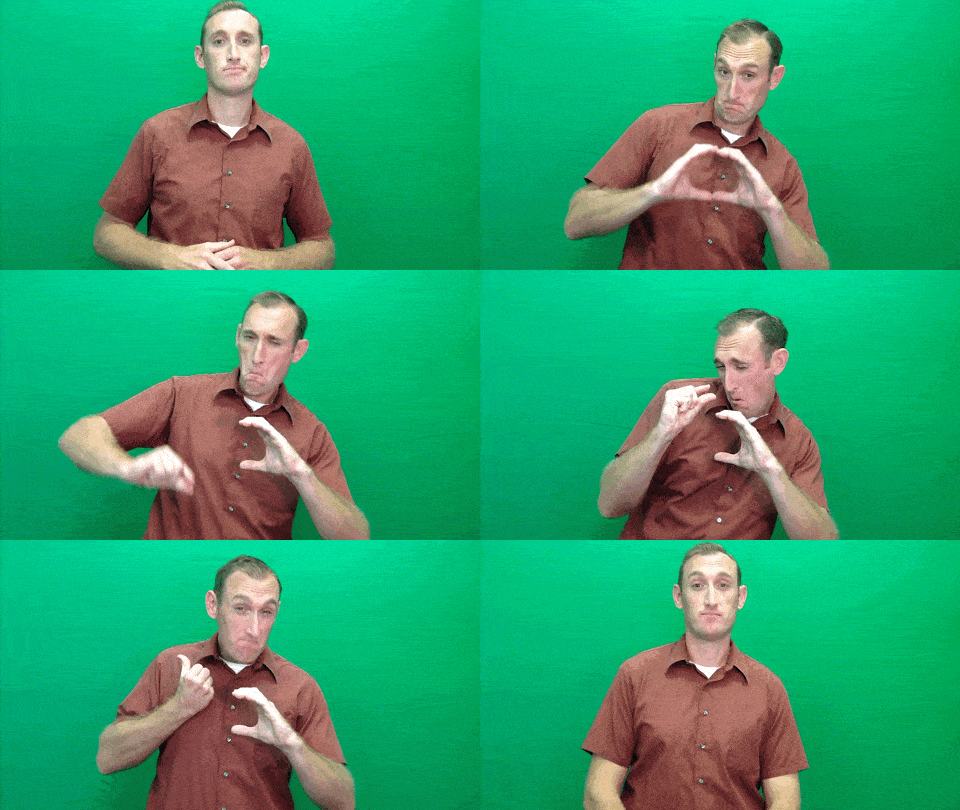
The ___________ is the basic unit of life
a)
organ
b)
cell
c)
atom
d)
tissue
30.
When many organ systems work together it can form...
a)
organ
b)
cells
c)
organ system
d)
organism
31.

This is a example of........
a)
organ system
b)
cells
c)
organ
d)
tissue
32.

This is a example of ........
a)
cell
b)
organ system
c)
organ
d)
tissue
33.
The brain is a part of which organ system?
a)
nervous
b)
skeletal
c)
muscular
d)
digestive
34.
The lungs and the kidneys are examples of
a)
cells
b)
organs
c)
tissues
d)
organ systmes
35.
Which organelle is only found in a plant cell?
a)
nucleus
b)
chloroplast
c)
mitochondria
d)
cell membrane
36.

Directs all cell activities through the DNA located there.
a)
Lysosomes
b)
Nucleus
c)
ribosomes
d)
Mitochondria
37.
Which of the following is directly involved in the transportation of materials inside/within the cell?
a)
Endoplasmic Reticulum
b)
Vacuole
c)
Lysosome
d)
Mitochondria
38.
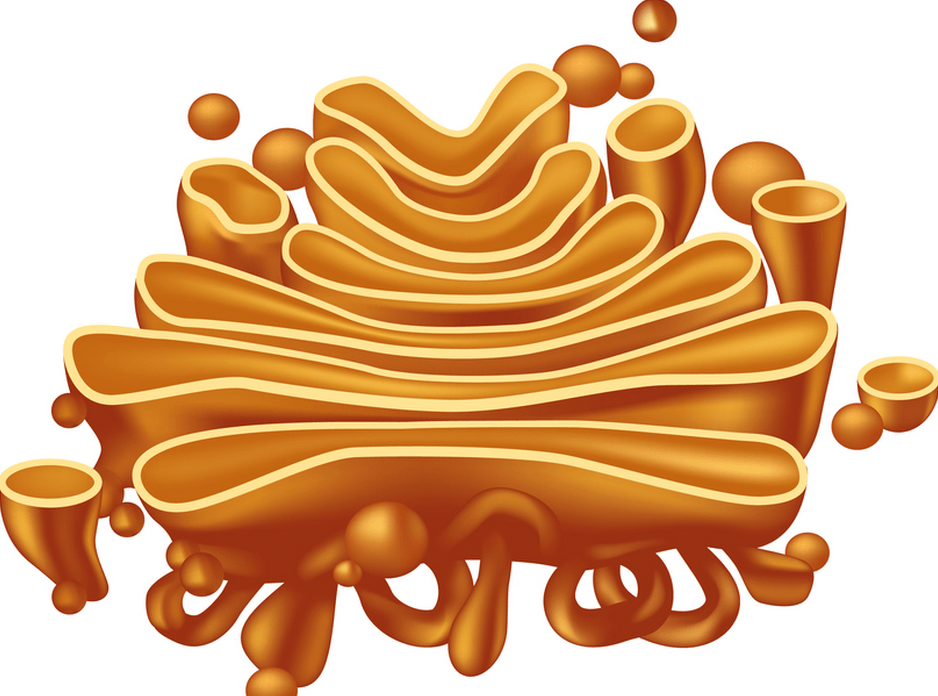
I am a protein packaging and shipping machine! Who am I?
a)
vacuole
b)
ribosome
c)
mitochondrion
d)
golgi apparatus
39.
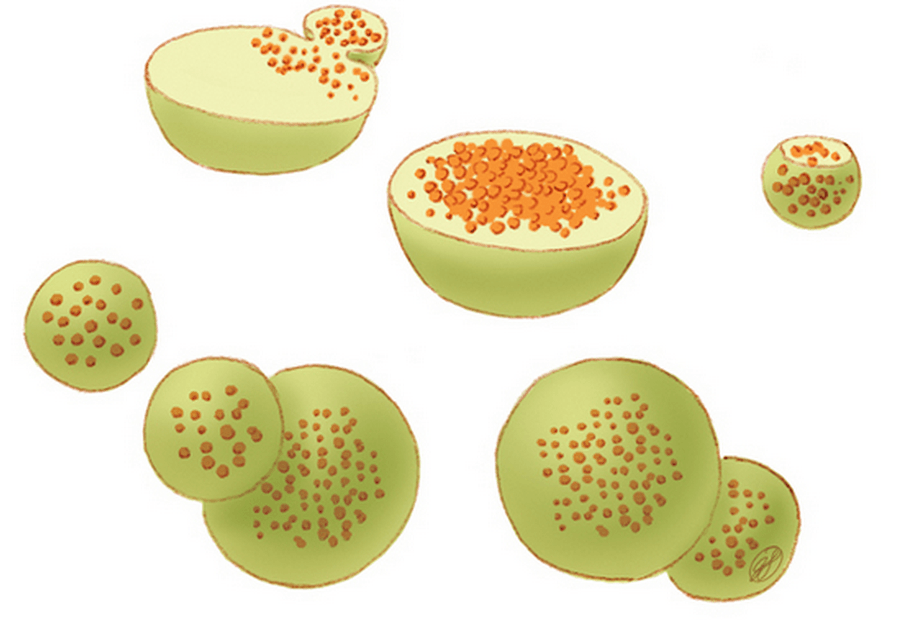
You might think of me as the trash collector, but recycler is maybe more accurate. What am I?
a)
mitochondria
b)
lysosome
c)
vacuole
d)
ribosome
40.
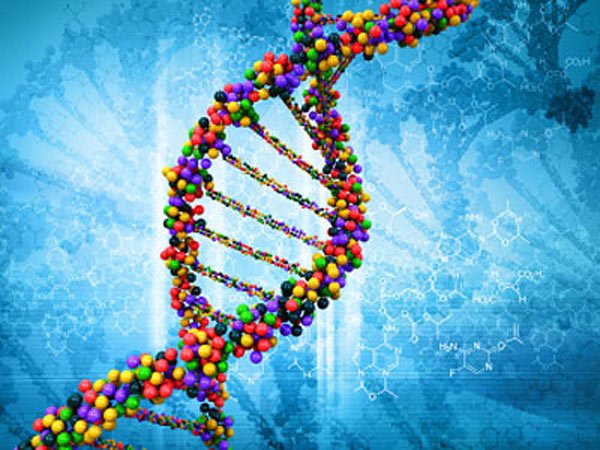
What is the name of the genetic material that is inside the nucleus?
a)
ER
b)
ATP
c)
YOLO
d)
DNA
41.

Which part of the cell is often called "the brain of the cell"?
a)
nuclear membrane
b)
endoplasmic reticulum
c)
nucleus
d)
mitochondria
42.
What is found in both plant and animal cells but is much larger in plant cells?
a)
Nucleus
b)
Mitochondria
c)
Chloroplast
d)
Vacuole
43.
Where are proteins made?
a)
Golgi body
b)
Mitoichondria
c)
Chromosomes
d)
Ribosomes
44.

I am the outer most layer of an animal cell. What am I?
a)
cell wall
b)
nucleus
c)
cell membrane
d)
cell skin
45.
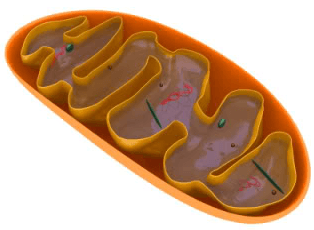
What are tiny organelles that convert glucose into ATP?
a)
Ribosomes
b)
Vesicles
c)
Cytoskeleton
d)
Mitochondria
46.
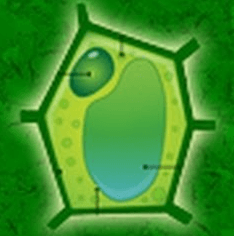
A rigid layer that lies outside the cell's membrane is...
a)
Cytoskeleton
b)
Cilia
c)
Cell Wall
d)
Flagella
47.
What organelle is called the "powerhouse" of a cell?
a)
Endoplasmic Reticulum
b)
Nucleus
c)
Mitochondria
d)
Nucleolus
48.
What organelle helps with cell digestion?
a)
Lysosomes
b)
Ribosomes
c)
Golgi Complex
d)
ER
49.
What is the gel-like substance inside of cells called?
a)
photoplasm
b)
photosynthesis
c)
cytoskeleton
d)
cytoplasm
50.
Main producer of ATP in all eukaryotes
a)
chloroplast
b)
mitochondria
c)
lysosome
d)
smooth er
51.
A group of tissues that work together to perform a similar function is called_____. (Examples include the heart, lungs or stomach)
a)
cells
b)
tissues
c)
organs
d)
organ system
52.
A group of cells that have similar functions? Examples are nervous, epithelial, muscle and connective
a)
cells
b)
tissues
c)
organs
d)
atoms
53.
Organs that work together to perform a related function is called _____________?
a)
cells
b)
tissues
c)
organ system
d)
organs
54.
What organelles is NOT found in a PROkaryote
a)
nucleus
b)
cell membrane
c)
Chromosomes (DNA)
DNA
DNA
d)
ribosomes
55.
Active transport requires
a)
energy
b)
the nucleus
c)
chloroplasts
d)
lysosomes
56.
The movement of molecules from higher concentration to lower concentration is
a)
diffusion
b)
cell division
active transport
active transport
c)
active transport
d)
tonicity
57.
What is diffusion
a)
active transport
b)
passive transport
c)
cell division
d)
cell mutation
58.
The diffusion of WATER across a semi-permeable membrane is
a)
osmosis
b)
diffusion
c)
endocytosis
d)
exocytosis
59.
What is the membrane around the NUCLEus called?
a)
nuclear membrane
b)
mitochondria
c)
cell membrane
cell emmbrane
cell emmbrane
d)
nucleolus
60.
water moves from
a)
higher conc. H20 => lower conc H20
b)
lower conc. H20 => higher conc. H20
61.
If there is too much salt in your cells...
a)
you need more water
b)
you need to lose water
62.
how are chloroplasts and mitochondria similar? They both...
a)
produce energy products
b)
are found in animal cells
c)
are found in prokaryotes
d)
destroy cell products
63.
The cell membrane
a)
regulates what enters/leaves cell
b)
helps maintain homeostasis
c)
keeps contents of cell in place
d)
all of the above
64.
What organelle PRODUCES proteins?
a)
ribosomes
b)
centrioles
c)
lysosomes
d)
nucleus
65.
Which of the following is NOT a cell theory.
a)
All non-living things are made of cells
b)
All cells come from pre-existing cells
c)
Cells are the basic unit of structure and function of all living things
66.
Which of the following is NOT a cell theory.
a)
All non-living things are made of cells
b)
All cells come from pre-existing cells
c)
Cells are the basic unit of structure and function of all living things
67.

Robert Hooke, Anton van Leeuwenhoek, Theodor Schwann, Rudolf Virchow, and Matthias Schliden were all responsible for what theory?
a)
The Theory of Gravity
b)
The Theory of Relativity
c)
The Cell Theory
d)
The Theory of Continental Drift
68.

According to cell theory, where did this cell come from?
a)
another living cell
b)
energy from sun
c)
a multicellular organism
d)
the nonliving environment
69.
Which scientist was the first to observe cells under a microscope? Hint: He looked at cork.
a)
Hooke
b)
Virchow
c)
Schwann
d)
Leeuwenhoek
70.
Which scientist was the first to observe living cells under a microscope?
a)
Hooke
b)
Leeuwenhoek
c)
Schleiden
d)
Schwann
71.
Who was the scientist who said that all cells come from cells?
a)
Hooke
b)
Schwann
c)
Virchow
d)
Leeuwenhoek
72.
Who was the scientist that concluded all plants are made of cells?
a)
Scheiden
b)
Schwann
c)
Leeuwenhoek
d)
Virchow
73.
Who was the scientist that concluded all animals are made of cells?
a)
Scheiden
b)
Schwann
c)
Leeuwenhoek
d)
Virchow
100 %

