wayground logo

Free Printable Worksheets

Font size

S
M
L
XL
Worksheets

Anatomy - Unit 1 Review

Total questions: 76

Worksheet time: 43mins

Name
Class
Date
1.
___________ are the building blocks of life.
a)
cells
b)
legos
c)
blocks
d)
blood
2.
Which of the following body systems work together for support, protection, and movement?
a)
respiratory and cardiovascular
b)
skeletal and muscular
c)
skeletal and integumentary
d)
digestive and respiratory
3.
Which of the following shows the levels of organization of an organism from LEAST to MOST complex.
a)
cells-tissues-systems-organs
b)
organs-cells-systems-tissues
c)
systems-organs-tissues-cells
d)
cells-tissues-organs-systems
4.
Gas exchange between the blood and the outside occurs in which system?
a)
Respiratory
b)
Circulatory
c)
Lymphatic
d)
Integumentary
5.
Which system uses hormones to regulate body activities?
a)
Integumentary
b)
Urinary
c)
Endocrine
d)
Immune
6.
Which system detects changes in the environment and sends electrical signals in response to these changes?
a)
Nervous
b)
Endocrine
c)
Lymphatic
d)
Reproductive
7.
This system carries oxygen, nutrients and waste around the body.
a)
Lymphatic
b)
Urinary
c)
Respiratory
d)
Circulatory
8.
What is the main function of the respiratory system?
a)
to provide oxygen and remove carbon dioxide from the body
b)
to bring oxygen to the body
c)
to break down food and absorb nutrients
d)
to remove oxygen from the body and deliver carbon dioxide
9.
What is the function of the digestive system?
a)
to break down and absorb nutrients
b)
to support and protect our bodies
c)
to produce vitamin D
d)
to help us move
10.
Which system produces sperm and egg cells?  In females, it also nourishes the fetus.
a)
reproductive
b)
endocrine
c)
nervous
d)
lymphatic
11.
Your skin and hair are parts of your ___________
a)
endocrine system
b)
excretory system
c)
lymphatic system
d)
integumentary system
12.
The brain and spinal cord belong to what system?
a)
Lymphatic System
b)
Circulatory System
c)
Nervous System
d)
Reproductive System
13.
The study of the functions of living organisms and their parts is:
a)
anatomy
b)
histology
c)
physiology
d)
epidermiology
14.
The ability of an organism to maintain constant internal conditions is called
a)
Homeostasis
b)
Osmosis
c)
Cellular Respiration
d)
Adaptation
15.
Homeostasis
a)
allows for a wildly fluctuating internal environment
b)
is impossible in vertebrates
c)
is the maintenance of a relatively stable internal environment and often incorporates a form of feedback regulation
d)
is the maintenance of a relatively stable external environment and often incorporates a form of feedback regulation
16.
The heart is________to the stomach
a)
superficial
b)
deep
c)
superior
d)
inferior
17.
Anterior means
a)
toward the front
b)
toward the back
c)
toward the middle
d)
toward the side
18.
When tissues come together, they form ___________.
a)
cells
b)
atoms
c)
organs
d)
systems
19.
The study of the structure of an organism is called
a)
homeostasis
b)
anatomy
c)
physiology
d)
atrophy
20.
Which of the following best describes the anatomical position?
a)
sitting
b)
standing erect with palms facing backward
c)
standing erect with palms facing forward 
d)
curled up like a fetus
21.
What term means "toward the MIDLINE of the body?
a)
Medial 
b)
Lateral
c)
Intermediate
d)
Ipsilateral
22.
What term means AWAY from the midline of the body?
a)
Medial
b)
Lateral
c)
Contralateral
d)
Ipsilateral
23.
The knee is _______ to the ankle.
a)
proximal
b)
lateral
c)
distal
d)
medial
24.
The head is ______ to the chest.
a)
superior
b)
dorsal
c)
inferior
d)
ventral
25.

This system is responsible for protecting us from the outside world and acts as a barrier.

a)

Muscular

b)

Integumentary

c)

Skeletal

d)

Lymphatic

26.

Which of the following is the skeletal system NOT responsible for?

a)

Movement

b)

Hormones

c)

Protection

d)

Shape

27.

The nervous system is responsible for....

a)

Receives, processes, & responds to stimuli around us

b)

Circulates blood around the body to deliver nutrients and remove waste

c)

System that cleans blood and rids body of waste

d)

System that controls body processes via hormones

28.

Which of the following is something we need to be alive?

a)

Pressure

b)

Oxygen

c)

Water

d)

Heat

29.

____________ is the structure of the body, while ____________ is the function of the body.

a)

Physiology ; Anatomy

b)

Anatomy ; Physiology

30.

The proper levels of organization from atom --> organism are:


Atom - Molecule - __________ - _________ - Cell - Tissue - Organ - _______ - Organism

a)

Organelle, Organ System, Macromolecule

b)

Macromolecule, Organelle, Organ System

c)

Organ System, Macromolecule, Organelle

31.
a)

Buccal

b)

Orbital

c)

Cervical

d)

Oral

32.
a)

Mammary

b)

Gluteal

c)

Inguinal

d)

Coxal

33.
a)

Pelvic

b)

Inguinal

c)

Sacral

d)

Umbilical

34.

The _________ system is responsible for movement (and also posture).

a)

Muscular

b)

Nervous

c)

Lymphatic

d)

Integumentary

35.

What does the root “cardi” mean?

a)

Same

b)

B

c)

Heart

d)

Above Normal

36.
a)

Cephalic

b)

Occipital

c)

Axillary

d)

Mandible

37.
a)

Popliteal

b)

Patellar

c)

Femoral

d)

Fibular

38.
a)

Thoracic

b)

Orbital

c)

Nasal

d)

Cervical

39.
a)

Antecubital

b)

Brachial

40.
a)

Left Lumbar

b)

Right Lumbar

c)

Right Hypochondriac

d)

Left Hypochondriac

41.
a)

Umbilical

b)

Epigastric

c)

Hypogastric

42.
a)

Epigastric

b)

Hypogastric

c)

Umbilical

43.
a)

Epigastric

b)

Hypogastric

c)

Umbilical

44.

Root 'pulm' means...

a)

Blood

b)

Lung

c)

Heart

d)

Breathe

45.

Which plane is this?

a)

Sagittal

b)

Transverse

c)

Frontal

46.

The terms 'distal' and 'proximal' are used for...

a)

Above/Below

b)

Limbs only

c)

Head/Thorax Region

47.

The buccal region is _______ to the oral area.

a)

Distal

b)

Proximal

c)

Superior

d)

Inferior

48.

The antecubital is ______ to the carpal region.

a)

Proximal

b)

Distal

c)

Superior

d)

Inferior

49.

The organs are _______ to the skeleton.

a)

Deep

b)

Superficial

c)

Posterior

d)

Anterior

50.
a)

Deltoid

b)

Scapular

c)

Thoracic

d)

Vertebral

51.

The umbilical is ______ to the vertebral cavity.

a)

Anterior

b)

Posterior

c)

Superficial

d)

Deep

52.
a)

Patellar

b)

Popliteal

c)

Femoral

d)

Fibular

53.
a)

Carpals

b)

Tarsals

c)

Digits

54.

The “great toe” (Big toe) is __________ to the little toe.

a)

Medial

b)

Lateral

c)

Proximal

d)

Distal

55.

The palms are ________ to the knuckles.

a)

Anterior

b)

Posterior

c)

Ventral

d)

Dorsal

56.

What is a reaction to a change inside or outside of the body?

a)

Movement

b)

Excretion

c)

Metabolism

d)

Responsiveness

57.

What is the term for changing absorbed substances into chemically different forms?

a)

Metabolism

b)

Excretion

c)

Digestion

d)

Assimilation

58.

This body system controls body processes via hormones

a)

Lymphatic

b)

Endocrine

c)

Skeletal

d)

Urinary

59.

Which plane is this?

a)

Sagittal

b)

Transverse

c)

Frontal

60.

Which plane is this?

a)

Sagittal

b)

Transverse

c)

Frontal

61.
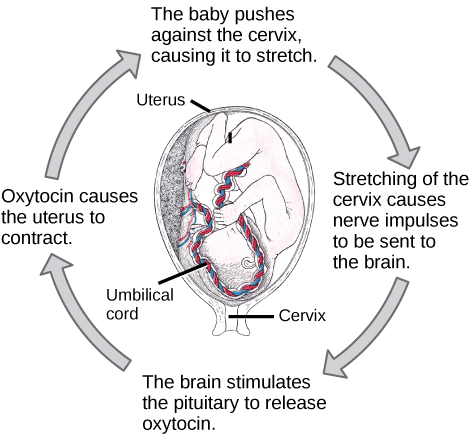
What type of feedback loop is shown?
a)
negative
b)
neutral 
c)
positive
62.
When glucose levels in the blood rise, your brain sends a signal to your pancreas. The pancreas releases insulin, which opens channels in cell membranes to allow glucose to enter the cell, lowering blood sugar levels. 
a)
Positive Feedback Response
b)
Negative Feedback Loop 
63.

Ventral is to anterior as ______ is to _________

a)

Dorsal and Posterior

b)

Lateral and Ipsilateral

c)

Proximal is to distal

d)

Distal and superficial

64.

What are the two main body cavities select all....

a)

Ventral

b)

Lumbar

c)

Dorsal

d)

Umbilical

65.
Which body cavity is labeled D
a)
Cranial
b)
Spinal
c)
Abdominal
d)
Thoracic
66.
Which body cavity contains organs including the stomach, spleen, liver, gallbladder, and pancreas?
a)
abdominal
b)
pelvic
c)
thoracic
67.
This body cavity is created by the bones of the skull to protect the brain.
a)
cranial
b)
spinal
c)
vertebral
68.
If the environment gets cold, we will often shiver in order to:
a)
keep body temperature the same as the external temperature
b)
decrease body temperature
c)
increase body temperature
d)
regulate blood pressure
69.
The "cause" for something to happen is the
a)
response
b)
effect
c)
stimulus
d)
homeostasis
70.
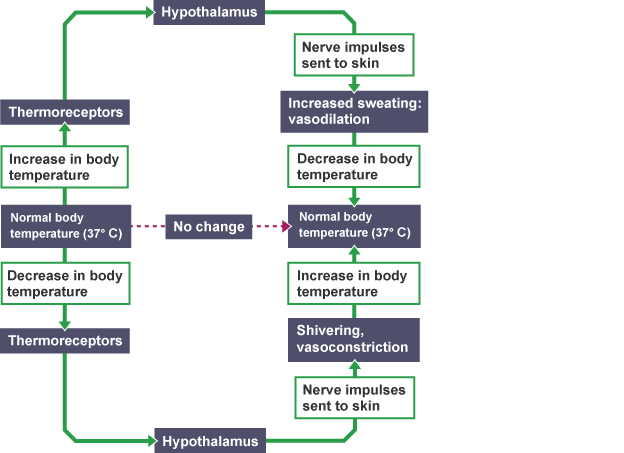
What type of feedback loop is shown?
a)
Positive
b)
Neutral
c)
Negative
71.
Failure to maintain homeostasis could result in:
a)
lack of internal balance
b)
eventual death
c)
difficulty carrying on metabolism 
d)
all three
72.

receives the message and coordinates a response

a)

control center

b)

effector

c)

glucagon

d)

homeostasis

73.

responds to the output from the control center

a)

control center

b)

receptor

c)

thermoregulation

d)

effector

74.

detects change and sends a message to the control center

a)

receptor

b)

control center

c)

effector

d)

regulation

75.

reverses the direction of change

a)

positive feedback

b)

effector

c)

hypothalamus

d)

negative feedback

76.

increases or speeds up original change

a)

negative feedback

b)

positive feedback

c)

endotherm

d)

ectotherm