
 Worksheets
Final Test Review
Total questions: 75
Worksheet time: 25mins

The scientific name for an organism is made from the:
class and family name
genus and species name
domain and kingdom name
kingdom and phylum name
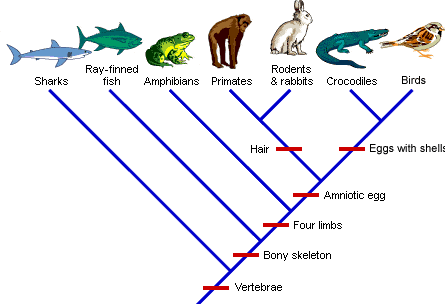
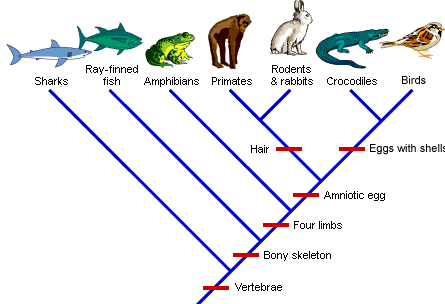


Which species is most closely related to species C?
A
B
D
After a cell goes through cytokinesis, it starts mitosis all over again.

Flowers and Cones function is to ____________________.
Look Pretty
Decorate Christmas Wreath
Help the plant reproduce
Anchor to the ground

Where does photosynthesis takes place?
The flower
The leaf
The stem
The root

What is NOT a function of the root system?
Anchor the plant to the ground
Absorb water and nutrients
Store energy for example in potatoes or carrots
Create food for the plant through photosynthesis
What is the functions of a stem?
Absorbs water and nutrients
Produces pollen
Transports water and nutrients
Photosynthesis is _______________________.
how plants use sunlight to produce food
how plants release water to the air
how plants use sugars and oxygen to produce energy to grow
What are the 3 reactants of photosynthesis? The reactants are the things needed for photosynthesis to occur.
oxygen, glucose, sunlight
sunlight, oxygen, water
water, oxygen, carbon dioxide
carbon dioxide, sunlight, water
What are the 2 products of photosynthesis? The products are the things made in the process of photosynthesis.
water, sunlight
glucose, carbon dioxide
oxygen, glucose
sunlight, oxygen

Which product is "waste" and mostly released by the producer (plant)?
oxygen
carbon dioxide
sugar
glucose
Which of the following are TRUE statements? (Select ALL that apply)
Photosynthesis takes place in the chloroplasts of leaf cells
Photosynthesis means "making food using sun"
Photosynthesis can occur in the dark
All plants, plant-like protists, and some bacteria go through photosynthesis
During asexual reproduction in a certain organism, a new organism begins to form on the adult's body. Eventually, when the new organism is large enough, it breaks off from the adult and lives separately. This type of reproduction is known as
parthenogenesis.
binary fission.
budding.
regeneration/fragmentation.


My small and large ___________ break down the food so my body can use it for energy.
Intestines
Kidneys
Stomach
Bladder
What is the biggest function of the respiratory system?
to pump blood
to help us digest food
to take in oxygen and release carbon dioxide
to help us fight disease and infection
Which two body systems are primarily responsible for gas exchange between the body and the environment?
skeletal and muscular
circulatory and respiratory
circulatory and digestive
respiratory and excretory
How does the respiratory system depend on the circulatory system in order to function?
The circulatory system brings waste gases to the lungs and exchanges them for oxygen.
The circulatory system provides structural support and protection to the respiratory system.
The circulatory system pushes gases out of the body through the mouth and nose.
The circulatory system sends messages to the lungs so that one can breathe in and out.
How does the circulatory system depend on the skeletal system?
The skeletal system removes carbon dioxide from the circulatory system.
The skeletal system produces blood cells in the bone marrow.
The skeletal system is responsible for voluntary movement.
The skeletal system helps to digest food for the circulatory system.
Which two systems are responsible for voluntary movement?
circulatory and excretory
digestive and circulatory
skeletal and muscular
skeletal and circulatory
Which is not an important organ in the excretory system?
Bladder
Large Intestine
Esophagus
Kidneys
How does the immune system depend on the circulatory system in order to function?
The circulatory system produces antibodies used by the immune system.
The circulatory system sends bacteria and viruses to the immune system.
The circulatory system transports immune system cells throughout the body.
The circulatory system protects the immune system from diseases.
Which of the following statements describes the function of the small intestine?
The small intestine transports blood to other organs.
The small intestine helps digest food and absorbs nutrients.
The small intestine releases carbon dioxide from the body.
The small intestine produces cells needed for reproduction.
Which of the following statements describes the function of bones?
Bones store food for later use.
Bones destroy foreign cells.
Bones protect organs in the body.
Bones send instructions to body parts.
Which two systems work together to remove wastes?
digestive and excretory
respiratory and skeletal
skeletal and circulatory
digestive and respiratory

This is a complex system in our body that transports needed materials. It includes the heart and blood vessels.
skeletal system
respiratory system
digestive system
circulatory system

This is a system in the body that includes the brain, spinal cord, and nerves. It coordinates and controls the body's actions.
digestive system
nervous system
circulatory system
muscular system

How many types of muscles are there?
2
4
3
1
Skeletal muscles are attached to which of the following?
Bones and ligaments
Ligaments and tendons
Tendons and bones
Bones and fat
Smooth muscle is located where?
heart
bones
toes
internal organs

Which is the esophagus?
A
B
C
D
The tube after the small intestine where water is absorbed.
large intestine
small intestine
rectum
stomach
Place the following events in sequence:
A) Food enters your large intestines
B) Food enters your small intestines
C) Food enters your esophagus
A, B, C
C, B, A
C, A, B
B, A, C

Which organ prevents food from entering the windpipe?
The uvala
The tongue
The trachea
The epiglottis
What causes change in pressure when we breathe?
Carbon dioxide levels
Oxygen levels
Diaphragm movement
Hypoxia

tiny sacs of lung tissue specialized for the movement of gases between air and blood.
lungs
bronchi
alveoli
diaphragm
the windpipe; a passage through which air moves in the respiratory system.
trachea
lungs
larynx
bronchi
the passages that direct air into the lungs.
lungs
trachea
bronchi
alveoli

What can you infer about the function of the ribcage?
It protects the lungs.
It helps the lungs pump oxygen.
It delivers oxygen from the lungs to the bloodstream.
It connects the trachea to the lungs.
Where does the transfer of oxygen into the bloodstream take place?
In the heart
In the trachea
In the alveoli
In the nasal passages
The walls of the alveoli and capillaries are permeable. What does this mean?
Substances can pass through them.
They are made of muscle.
They are located throughout the body.
They are made of bone.
What is the dome-shaped muscle beneath the lungs that helps us breathe.
diagram
dialysis
diaghragm
diorama
The immune system works with all of the following system EXCEPT...
the integumentary
the lymphatic
the muscular
the cardiovascular
Pathogens are...
Foreign substances that attack the body.
White blood cells that attack foreign substances that enter the body.
A type of internal defense mechanism in the immune system.
Carbs that cause disease.

