wayground logo

Free Printable Worksheets

Font size

S
M
L
XL
Worksheets

Cells

Total questions: 58

Worksheet time: 21mins

Name
Class
Date
1.
The site of photosynthesis
a)
ribosome
b)
mitochondria
c)
chloroplast
d)
nucleus
2.
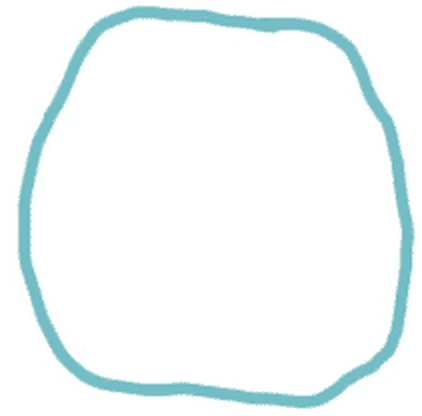
This is a example of........ 
a)
organ system
b)
cells
c)
organ
d)
tissue
3.
This is a example of ........
a)
cell
b)
organ system
c)
organ
d)
tissue
4.
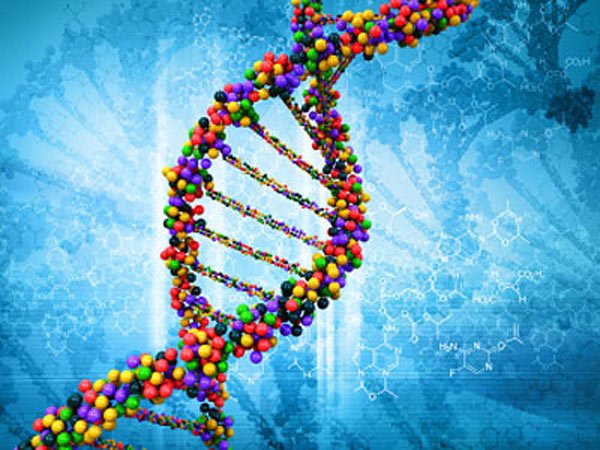
Directs all cell activities through the DNA located there.
a)
Lysosomes
b)
Nucleus
c)
ribosomes
d)
Mitochondria
5.

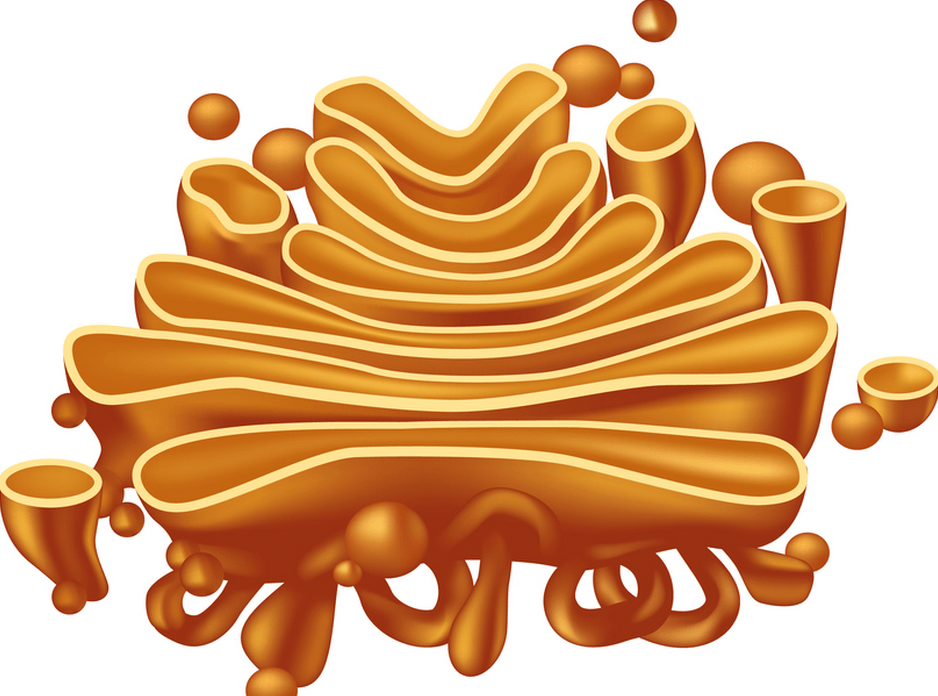
I am a protein packaging and shipping machine! Who am I?

a)

vacuole

b)

ribosome

c)

mitochondrion

d)

Golgi apparatus

6.
What is the name of the genetic material that is inside the nucleus?
a)
ER
b)
ATP
c)
YOLO
d)
DNA
7.

Where are proteins made?

a)

Golgi body

b)

Mitochondria

c)

Chromosomes

d)

Ribosomes

8.
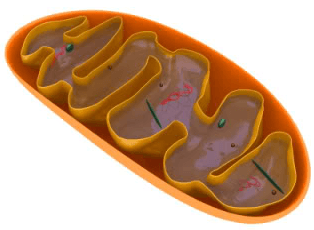
What are tiny organelles that convert glucose into ATP?
a)
Ribosomes
b)
Vesicles
c)
Cytoskeleton
d)
Mitochondria
9.
A rigid layer that lies outside the cell's  membrane is...
a)
Cytoskeleton
b)
Cilia
c)
Cell Wall
d)
Flagella
10.
I am the outer most layer of an animal cell. What am I?
a)
cell wall
b)
nucleus
c)
cell membrane 
d)
cell skin
11.
What organelle is called the "powerhouse" of a cell?

a)
Endoplasmic Reticulum
b)
Nucleus
c)
Mitochondria
d)
Nucleolus
12.
What is the gel-like substance inside of cells called?

a)
photoplasm
b)
photosynthesis
c)
cytoskeleton
d)
cytoplasm
13.
What organelle helps with cell digestion?
a)
Lysosomes
b)
Ribosomes
c)
Golgi Complex
d)
ER
14.
A group of tissues that work together to perform a similar function is called_____. (Examples include the heart, lungs or stomach)
a)
cells
b)
tissues
c)
organs
d)
organ system
15.
 A group of cells that have similar functions? Examples are nervous, epithelial, muscle and connective
a)
cells
b)
tissues
c)
organs
d)
atoms
16.
Controls what enters and leaves the cell
a)
Mitochondria
b)
Cell Membrane
c)
Cell Wall
d)
Nucleus
17.
Stores food and water for the cell.
a)
Cytoplasm
b)
Cell Wall
c)
Vacuole
d)
Nucleus
18.
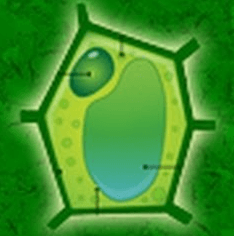
What would happen to the plant cell without the chloroplasts?
a)
There wouldn't be an organelle that performs photosynthesis
b)
There wouldn't be an organelle that serves as the resevoir for water and waste
c)
There wouldn't be an organelle that regulates what comes in and out of the cell
d)
They wouldn't be an organelle that makes necesary proteins
19.
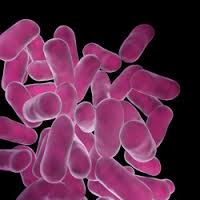
What do all of these organisms have in common?
a)
They all have uniform offspring
b)
They are all made of cells
c)
They possess the same features
d)
They have the same internal and external structures
20.
According to cell theory, where did this cell come from?
a)
another living cell
b)
energy from sun
c)
a multicellular organism
d)
the nonliving environment
21.

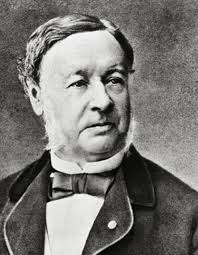
Theodor Schwann, Rudolf Virchow, and Matthias Schleiden were all responsible for what theory?

a)

The Theory of Gravity

b)

The Theory of Relativity

c)

The Cell Theory

d)

The Theory of Continental Drift

22.

What tool do you use to view the cells?

a)

metric ruler

b)

telescope

c)

microscope

d)

pipette

23.
Which of the following is NOT a cell theory.
a)
All non-living things are made of cells
b)
All cells come from pre-existing cells
c)
Cells are the basic unit of structure and function of all living things
24.

What is the basic structural and functional unit of all living things?

a)

organelle

b)

cell

c)

bacteria

d)

human

25.

This organelle helps plants keep their rigid structure.

a)

Cell wall

b)

Cell membrane

c)

Chloroplast

d)

Nucleus

26.
This is a double layer of phospholipids that creates a barrier between the cells internal and external environments; it controls what comes in or out of the cell (selective permeable)
a)
Nucleus
b)
Cilia
c)
Cell membrane
d)
Flagella
27.
Cells with a nucleus and membrane-bound organelles are called ____________________.
a)
prokaryotes
b)
eukaryotes
c)
bacteria
d)
protists
28.
Which of the following is not part of the cell theory?
a)
cells must contain DNA 
b)
all living things are made from cells
c)
cells can only come from other cells
d)
cells are the basic unit of life
29.
Who was the first  person to see cells under the microscope and give them their name?
a)
Mattias Schleiden
b)
Robert Hooke
c)
Theordor Schwann
d)
Anton van Leeuwenhoek
30.

He discovered that all plants are made of cells:

a)

Anton van Leeuwenhoek

b)

Theordor Schwann

c)

Robert Hooke

d)

Mathias Schleiden

31.
What organelles are only found in PLANT cells
a)
lysosomes & centrioles
b)
cell wall & chloroplasts
c)
nucleus & nucleolus
d)
mitochondria & ribosomes
32.

What organelles is NOT found in a prokaryote

a)

nucleus

b)

cell membrane

c)

Chromosomes (DNA)

DNA

d)

ribosomes

33.

What is the membrane around the nucleus called?

a)

nuclear membrane

b)

mitochondria

c)

cell membrane

d)

nucleolus

34.
The mitochondria....
a)
produces energy
b)
causes cell division
c)
is not an organelle
d)
is found in a prokaryote
35.
What is on the same level of organization as the brain?
a)
stomach
b)
nervous system
c)
protein molecule
d)
flower
36.

If you look under the microscope at muscle tissue, you will see...

a)

cells working together

b)

chloroplasts

c)

an organ system

d)

plant cells

37.
Which of the following is likely to be found in a cell from a maple leaf but not in a human nerve cell?
a)
cell wall
b)
mitochondria
c)
cell membrane
d)
cytoplasm
38.
Which of the following is a common example of prokaryotic cells?
a)
plants
b)
fungi
c)
bacteria
d)
animals
39.
Prokaryotic cells have ________________.
a)
one circular chromosome
b)
one linear chromosome
c)
more than one circular chromosome
d)
more than one linear chromosome
40.
Identify the most complete description of the distinction between prokaryotic and eukaryotic cells.
a)
Prokaryotic cells have no nuclei, and eukaryotic cells do.
b)
Prokaryotic cells have no membrane-bound organelles, and eukaryotic cells do.
c)
Prokaryotic cells have no DNA, and eukaryotic cells do.
d)
Prokaryotic cells have no cytoplasm, and eukaryotic cells do.
41.
How are unicellular organisms different from multicellular organisms? 
a)
There are no differences.
b)
They are made of many cells. 
c)
They are only classified as prokaryotes.
d)
They are made of only one cell. 
42.
Which is NOT part of the Cell Theory
a)
New cells are produced from existing cells
b)
All living things are composed of cells
c)
Only eukaryotic cells have a nucleus
d)
Cells are the basic unit of structure & function in living things
43.
Which of the following scientists was the first to observe bacteria under a microscope?
a)
Anton van Leuwenhoek
b)
Matthais Schleiden
c)
Robert Hooke
d)
Theodor Schwann
44.
Which of the following scientists concluded that all animals are made of cells?
a)
Rudolf Virchow
b)
Matthais Schleiden
c)
Robert Hooke
d)
Theodor Schwann
45.
What is one way in which all living things on Earth are alike?
a)
All living things have hair.
b)
All living things are made of cells and come from other cells.
c)
The cells of all living things have chloroplast.
d)
All living things can move. 
46.
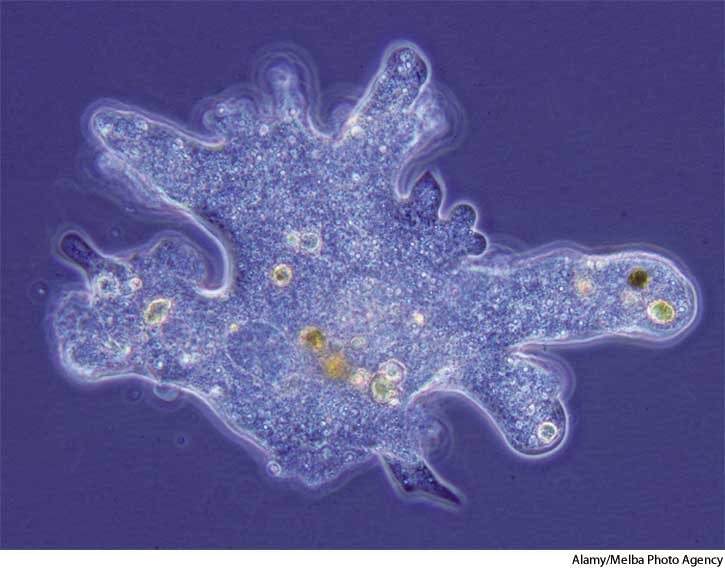
An Amoeba is a unicellular, animal-like protist that lives in ponds and streams. According to cell theory, where did this cell come from?
a)
another pre-existing amoeba cell.
b)
energy from sun that allowed the protist to reproduce.
c)
a multicellular organism.
d)
the nonliving environment.
47.
Complex cell. Can be plant or animal. Contains membrane bound organelles. 
a)
Eukaryotic Cell
b)
Prokaryotic Cell
c)
Bacteria
d)
Blood cell
48.
Organelles inside nucleus function is to make ribosomes
a)
Golgi Body
b)
Lysosome
c)
Rough E.R.
d)
Nucleolus
49.
This organelle makes/transports fats or lipids. 
a)
Rough E.R.
b)
Smooth E.R.
c)
Golgi Bodies
d)
Lysosomes
50.

This organelle helps transport proteins rapidly.

a)

Ribosomes

b)

Rough E.R.

c)

Golgi Body

d)

Smooth E.R.

51.
The function of this organelle is to break down food, worn out cell/cell organelles.
a)
Nucleus
b)
Vacuole
c)
Ribosome
d)
Lysosome
52.
This nucleotide is made in the mitochondria and is fuel for all cells.
a)
Chloroplasts
b)
Glucose
c)
ATP
d)
ADP
53.
This organelle function is to package, modify and transport materials in/out of cell.
a)
Rough E.R.
b)
Smooth E.R.
c)
MItochondria
d)
Golgi Body
54.
This is a green pigment found in plants. 
a)
Chloroplasts
b)
Chlorophyll
c)
Cytoplasm
d)
MItochondria
55.
The function of this organelle is to store water. Large ones are found in plants. 
a)
Lysosome
b)
Golgi Body
c)
Cytoplasm
d)
Vacuole
56.

I provide structure from within the cell so it doesn't collapse inwards upon itself. I am made of micro-filaments. I am the...

a)

Cytoskeleton

b)

Cytoplasm

c)

Baconidis

d)

Cell Wall

57.

The receiving end of the Golgi body is known as

(a)  

58.

ATP, better known as (a)   , is the energy produced by the mitochondria in the process of cellular respiration.