
 Worksheets
Otsego - cells
Total questions: 160
Worksheet time: 3hrs 30mins
Name
Class
Date
1.
This thin layer protects the cell and regulates what substances enter and leave the cell.
a)
cell membrane
b)
cell
c)
cell wall
d)
golgi body
2.
In a plant cell, a stiff wall surrounds the membrane, giving the cell a rigid, boxlike shape.
a)
cell membrane
b)
cell
c)
ribosome
d)
cell wall
3.
Prokaryotic and eukaryotic cells have many differences, but they also share some common features. Which of the following may be found in either type of cell?
a)
Golgi bodies
b)
ribosomes
c)
mitochondria
d)
nucleus
4.

What type of cell is pictured?
a)
Prokaryotic
b)
Eukaryotic
c)
Plant
d)
Animal
5.
Which is true of prokaryotic and eukaryotic cells?
a)
Prokaryotic cells are larger than eukaryotic cells.
b)
Eukaryotic cells do not have nuclei, and prokaryotic cells do have nuclei.
c)
Prokaryotic cells lack membrane-bound organelles, and eukaryotic cells contain membrane-bound organelles.
d)
Eukaryotic cells are simpler than prokaryotic cells.
6.
Viruses are prokaryotic cells.
a)
True
b)
False
7.
Which of the following is the smallest unit of life that can carry out all life functions?
a)
the mitochondria
b)
the vacuoles
c)
the nucleus
d)
the cell
8.
Which structures are found in every living cell?
a)
cell membrane and cytoplasm
b)
chloroplasts and mitochondria
c)
a cell wall and nucleus
d)
chloroplasts and cell wall
9.
What is the function of the cell nucleus found in both plant and animal cells?
a)
to produce energy
b)
to control cell activity
c)
to remove waste products
d)
to allow molecules to enter the cell
10.
Cell organelles that are responsible for digesting food, worn out organelles and other cellular wastes are called ___________________.
a)
Mitochondria
b)
Vacuoles
c)
Lysosomes
d)
Chlororplasts
11.
What is one basic function of the vacuoles?
a)
circulating oxygen
b)
producing food
c)
controlling cell processes
d)
storing water
12.
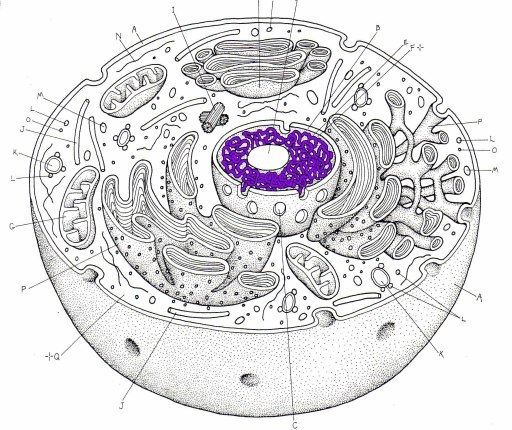
What kind of cell is this?
a)
Eukaryotic
b)
Prokaryotic
13.
What type of cell has a nucleus?
a)
eukaryotic
b)
prokaryotic
14.
Plants and animal cells are examples of ___ cells
a)
prokaryotic cells
b)
eukaryotic cells
15.
Bacteria is what kind of cell?
a)
Eukaryotic
b)
Prokaryotic
16.
First type of cell to appear on Earth?
a)
Plant
b)
Animal
c)
Prokaryotic
d)
Eukaryotic
17.
Which of the following in NOT a characteristic of eukaryotic cells?
a)
DNA is separated from the cytoplasm by a nuclear membrane
b)
Large
c)
Complex
d)
Lack membrane-bound organelles
18.
Which of the following is NOT a type of eukaryotic cell?
a)
mushroom cell
b)
pea leaf cell
c)
bacterial cell found in Swiss cheese
d)
alligator stomach cell
19.
Which of the following would be found in both eukaryotic AND prokaryotic cells?
a)
chloroplast
b)
cytoplasm
c)
nucleus
d)
endoplasmic reticulum
20.
Some prokaryotes and eukaryotes have a cellular structure called a flagella. What is the purpose of the flagella?
a)
to transport molecules across the cell membrane
b)
to propel the cell through liquid
c)
to collect food for the cell
d)
to tell the cell the direction of a food source
21.
Proteins are produced at which cellular structures?
a)
nuclei
b)
ribosomes
c)
mitochondria
d)
chloroplasts
22.
Which of the following in NOT a characteristic of eukaryotic cells?
a)
DNA is separated from the cytoplasm by a nuclear membrane
b)
Large
c)
Complex
d)
Lack membrane-bound organelles
23.

What is the function of A?
a)
movement through watery environment
b)
store genetic instructions
c)
stick to host cells
d)
store genes for antibiotic resistance
24.

What number is pointing to the cell membrane?
a)
1
b)
2
c)
3
d)
4
25.
Which of the following is found inside a prokaryote?
a)
cytoplasm
b)
DNA
c)
ribosomes
d)
all of these
26.
Has membrane bound organelles
a)
Prokaryote
b)
Eukaryote
c)
both
27.
Where is the DNA found in a prokaryotic cell?
a)
floating around in the cytoplasm
b)
in the nucleus
28.

Which type of cell?
a)
Prokaryote
b)
Eukaryote
29.

Which type of cell?
a)
Prokaryote
b)
Eukaryote
30.
Which type of cell is bigger?
a)
Prokaryotic
b)
Eukaryotic
31.

Golgi Apparatus function:
a)
Transports proteins
b)
Makes proteins
c)
Packages proteins
d)
Digests proteins
32.

Lysosome function:
a)
Stores water
b)
Gets rid of waste
c)
Transports materials
d)
Hold genetic material
33.

What organelles transfer energy from organic molecules to ATP?
a)
Ribosomes
b)
Vesicles
c)
Cytoskeleton
d)
Mitochondria
34.

In what organelle is the genetic material found inside?
a)
Endoplasmic Reticulum
b)
Golgi Complex
c)
Nucleolus
d)
Nucleus
35.

Ribosome function:
a)
makes protein
b)
contains genetic material
c)
in animal cell only
d)
makes sugar
36.

Vacuole function:
a)
Stores proteins
b)
Digests waste
c)
Stores water (large in plants)
d)
Contains genetic material
37.
Mitochondria function:
a)
Converts light energy to sugar
b)
In plant cell only
c)
Converts sugar to ATP (power for cell- cellular respiration)
d)
Photosynthesis
38.
Which structures are present in animal and plant cells?
a)
Vacuole, nucleus and cell membrane
b)
Nucleus, cell wall, cytoplasm
c)
Nucleus, cell membrane, cytoplasm
d)
Cell membrane, chloroplast, cell wall
39.
What is the function of the cell membrane?
a)
Supports and protects the cell
b)
Controls the cell
c)
Controls what enters and leaves the cell
d)
Metabolic reactions occur here
40.

Which of these best completes this concept map?
a)
an animal cell
b)
a prokaryotic cell
c)
a plant cell
d)
a bacteria
41.

Which organelle is the site where amino acids are synthesized into proteins?
a)
1
b)
2
c)
3
d)
4
42.

Number 1:
a)
Chloroplast
b)
Mitochondria
c)
Centriole
d)
nucleus
43.

Number 2:
a)
Chloroplast
b)
Mitochondria
c)
Endoplasmic reticulum
d)
Golgi apparatus
44.

Humans are...
a)
Prokaryotes
b)
Eukaryotes
45.

Plants are:
a)
Prokaryotes
b)
Eukaryotes
46.
1. All living things are made of one or more cells.
2. Cells are the building blocks of life.
3. All cells come from preexisting cells.
What is this theory called?
2. Cells are the building blocks of life.
3. All cells come from preexisting cells.
What is this theory called?
a)
The Eukaryotic Theory
b)
The Prokaryotic Theory
c)
The Cell Theory
d)
The Nucleus Theory
47.

Plant cells are the same as animal cells.
a)
True
b)
False
48.
Captures energy from the sunlight and uses it to produce food in a plant cell
a)
Chloroplast
b)
Ribosomes
c)
Nucleus
d)
Cell Wall
49.
Controls what comes into and out of a cell.
a)
Cell Membrane
b)
Cell Wall
c)
Cytoplasm
d)
Vacuoles
50.
Gel-like fluid where the organelles are found.
a)
Cytoplasm
b)
Lysosomes
c)
Golgy Bodies
d)
Endoplasmic Reticulum
51.
Control Center of the cell; contains DNA.
a)
Mitochondria
b)
Nucleus
c)
Nucleolus
d)
Chromatin
52.
Found inside the nucleus and produces ribosomes.
a)
Nucleus
b)
Nucleolus
c)
Chrloroplasts
d)
Golgi Bodies
53.
Ridged outer layer of a plant cell.
a)
Cell Membrane
b)
Cell Wall
c)
ER
d)
Ribosomes
54.
Uses chemical to break down food and worn out cell parts.
a)
Lysosomes
b)
Golgi Bodies
c)
Vacuoles
d)
Cytoplasm
55.
Receives protein and materials from the ER, packages them, and distributes them.
a)
Golgi Bodies
b)
Mitochondria
c)
Endoplasmic Reticulum
d)
Large Central Vacuole
56.
Produces the energy a cell needs to carry out its functions.
a)
Mitochondria
b)
Ribosomes
c)
Lysosomes
d)
Golgi Bodies
57.
Assembles amino acids to create proteins.
a)
Ribosomes
b)
Nucleus
c)
Vaculoes
d)
Chromatin
58.
Stores food, water, wastes, and other materials.
a)
Vacuoles
b)
Mitochondria
c)
Chloroplasts
d)
Golgi Bodies
59.
Has passageways that carry proteins and other materials from one part of cell to another.
a)
Endoplasmic Reticulum
b)
Cytoplasm
c)
Ribosomes
d)
Lysosomes
60.

What cell part is NOT found in all cells?
a)
Cell Wall
b)
Cell Membrane
c)
Cytoplasm
d)
Genetic Material
61.
The shape of this type of cell is rectangular.
a)
Plant Cell
b)
Animal Cell
c)
Bacteria Cell
62.
Where are chloroplasts found?
a)
Plant cells only
b)
Both plant and animal cells
c)
Animal cells only
63.
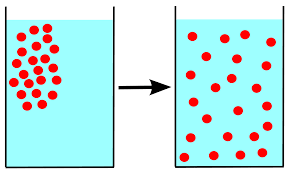
The picture below is an example of _________________.
a)
osmosis
b)
isotonic
c)
diffusion
d)
active transport
64.
Osmosis is the movement of _____ across a membrane.
a)
food
b)
energy
c)
oxygen
d)
water
65.
During osmosis
a)
water moves from high to low concentration
b)
large or oddly shaped molecules move across a cell membrane
c)
water moves when energy is used
d)
proteins are built
66.
Permeable means
a)
things can pass through
b)
the concentration levels are different
c)
it is permanent
d)
things are stuck
67.

Where is there a low concentration of perfume?
a)
in the bottle
b)
on the hand
c)
in the room
d)
in the top
68.

What is the definition of Selective Permeability?
a)
The movement of materials across the cell membrane that requires NO ENERGY from the cell.
b)
The movement of materials through (or across) the cell membrane
c)
The ability of the cell membrane to allow some things to pass through while preventing other things from passing through.
d)
The movement of molecules from an area of high concentration to a area of low concentration
69.
What a cell needs to transport particles by active transport?
a)
Sun
b)
Wind
c)
Energy
d)
Channels
70.
When both inside and outside of a cell have the same amount of water it is said that the cell has reached a state of
a)
Osmosis
b)
Diffusion
c)
Equilibrium
71.
A person should never drink salty water because their cells would
a)
shrink
b)
expand
72.
The movement of molecules against a concentration gradient
a)
simple diffusion
b)
facilitated diffusion
c)
active transport
d)
osmosis
73.
Passive transport requires no
a)
concentration gradients
b)
osmosis
c)
motion
d)
energy
74.

The picture is an example of...
a)
active tranport
b)
passive transport
c)
diffusion
d)
osmosis
75.
What is diffusion?
a)
when molecules move
b)
when molecules move from a high concentration to a low.
c)
no movement
d)
molecules move everywhere
76.

TRUE OR FALSE? This is a plant cell.
a)
True
b)
False
77.

Label 6 is pointing to the...
a)
Chloroplasts
b)
Nucleus
c)
Vacuole
78.

Label 1 is pointing to the...
a)
Chloroplasts
b)
Nucleus
c)
Vacuole
d)
Cell wall
79.

What is the main difference and function between the plant cell and animal cell?
a)
chloroplast vacuole and cell wall
b)
nucleus
c)
cytoplasm
d)
cell membrane
80.
The movement of molecules against a concentration gradient
a)
simple diffusion
b)
facilitated diffusion
c)
active transport
d)
osmosis
81.

_______ regulates what enters and leaves a cell.
a)
Cell Membrane
b)
Nucleus
c)
Mitochondria
d)
Cytoplasm
82.

The picture is an example of _________________.
a)
isotonic
b)
diffusion
c)
osmosis
d)
active transport
83.

The picture below is an example of _________________.
a)
osmosis
b)
isotonic
c)
diffusion
d)
active transport
84.

Which way will the water molecules move during osmosis?
a)
Out of the cell, so the cell shrinks.
b)
Out of the cell, so the cell swells.
c)
Into the cell, so the cell shrinks.
d)
Into the cell, so the cell swells.
85.

Name structure #5.
a)
rough ER
b)
nucleus
c)
vesicle
d)
cytoplasm
86.

Name structure #9.
a)
rough ER
b)
mitochondria
c)
smooth ER
d)
cell wall
87.

a)
Anaphase
b)
Cytokinesis
c)
Telophase
d)
Metaphase
88.

a)
Cytokinesis
b)
Interphase
c)
Anaphase
d)
Metaphase
89.

a)
Anaphase
b)
Cytonkinesis
c)
Interphase
d)
Prophase
90.

a)
Cytokinesis
b)
Anaphase
c)
Telophase
d)
Prophase
91.

Which is Metaphase?
a)
A
b)
E
c)
C
d)
F
92.

How many chromosomes do humans have?
a)
46
b)
21
c)
10
93.

Structure (b) is a ____.
a)
chromosome
b)
chromatid
c)
centromere
94.

Structure (c) is a ____.
a)
chromosome
b)
chromatid
c)
centromere
95.

Name the phase:
a)
Prophase
b)
Metaphase
c)
Anaphase
d)
Telophase
96.

Name the phase:
a)
Prophase
b)
Metaphase
c)
Anaphase
d)
Telophase
97.

The stages of mitosis in order
a)
Metaphase, Anaphase, Prophase, Telophase
b)
Prophase, Anaphase, Metaphase, Telophase
c)
Prophase, Metaphase, Anaphase, Telophase
d)
Anaphase, Prophase, Telophase, Metaphase
98.

This picture shows which process?
a)
mitosis
b)
meiosis
c)
the cell cycle
99.

Which part of the Cell Cycle is this?
a)
Prophase
b)
Interphase
c)
Anaphase
d)
Telophase
100.
G1 & G2 = Growth
What is the S phase?
What is the S phase?
a)
making centrioles
b)
making spindle fibers
c)
doubling the DNA
d)
cutting the DNA in half
101.

Which part of the cell cycle is the longest?
a)
Interphase
b)
Mitosis
c)
Cytokenesis
102.
This produces cells for growth and repair.
a)
mitosis
b)
meiosis
103.
What are chromosomes?
a)
different versions of genes
b)
condensed DNA
c)
uncoiled DNA
104.
You inherited...
a)
most of your chromosomes from your mother
b)
most of your chromosomes from your father
c)
a random number of chromosomes from each parent
d)
half your chromosomes from your mother and half from your father.
105.
Most of the cells in the human body are produced by
a)
mitosis
b)
meiosis
106.
During which phase does the chromosomes become visible because DNA start to condense?
a)
Prophase
b)
Telophase
c)
Anaphase
d)
Metaphase
107.

Mitosis is the....
a)
identical replication of cells
b)
genetic variation
108.

A is:
B is:
C is:
B is:
C is:
a)
A: chromatid
B: centromere
C: chromosome
B: centromere
C: chromosome
b)
A: chromosome
B: chromatid
C: centromere
B: chromatid
C: centromere
c)
A: chromosome
B: centromere
C: chromatid
B: centromere
C: chromatid
d)
A: centromere
B: chromosome
C: chromatid
B: chromosome
C: chromatid
109.

Place these cells in order of mitosis.
a)
A, B, C, D, E
b)
B, E, D, A, C
c)
C, E, A, D, B
d)
B, D, A, E, C
110.
Large particles encased in a vesicle and brought out of the cell.
a)
endocytosis
b)
exocytosis
c)
passive transport
d)
active transport
111.

In this image, the cell is using which type of molecular transport?
a)
Osmosis
b)
Diffusion
c)
Endocytosis
d)
Exocytosis
112.
A type of active transport that releases particles that were enclosed from a cell when the membrane of the vesicle fuses with that of the cell membrane
a)
Exocytosis
b)
Osmosis
c)
Mitosis
d)
Endoyctosis
113.

What is this picture showing?
a)
Endocytosis
b)
Mitosis
c)
Photosynthesis
d)
Cellular Respiration
114.

What is this picture showing?
a)
Photosynthesis
b)
Diffusion
c)
Exocytosis
d)
Mitosis
115.
Maintaining a constant internal state in a changing environment.
a)
Homeostasis
b)
Active Transport
c)
Mitosis
d)
Photosynthesis
116.

What is this picture showing?
a)
Osmosis
b)
Diffusion
c)
Mitosis
d)
Passive Transport
117.
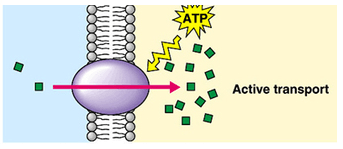
a)
Passive Transport
b)
Active Transport
118.

What type of transport is this?
a)
Endocytosis
b)
Diffusion
c)
Exocytosis
d)
Osmosis
119.
Endocytosis
a)
Passive Transport
b)
Active Transport
120.
Exocytosis
a)
Passive Transport
b)
Active Transport
121.
Low to High
a)
Passive Transport
b)
Active Transport
122.
Uses ATP
a)
Passive Transport
b)
Active Transport
123.

a)
Passive Transport
b)
Active Transport
124.
Facilitated Diffusion
a)
Passive Transport
b)
Active Transport
125.
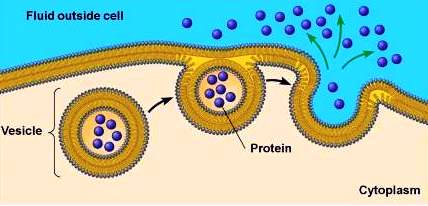
Which form of active transport is being shown?
a)
Pinocytosis
b)
Endocytosis
c)
Exocytosis
d)
Osmosis
126.
What is the difference between active and passive transport?
a)
Active does not need energy and passive uses ATP (energy)
b)
Active uses ATP (energy) and passive does not need energy
c)
Active stores transport proteins and passive releases
d)
Active uses hormones and passive does not
127.
When cells take in a liquid through active transport, what is it called?
a)
Exocytosis
b)
Phagocytosis
c)
Pinocytosis
d)
Osmosis
128.
When cells take in food particles through active transport, what is it called?
a)
Pinocytosis
b)
Phagocytosis
c)
Exocytosis
d)
Osmosis
129.
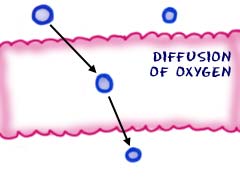
a)
Passive Transport
b)
Active Transport
130.
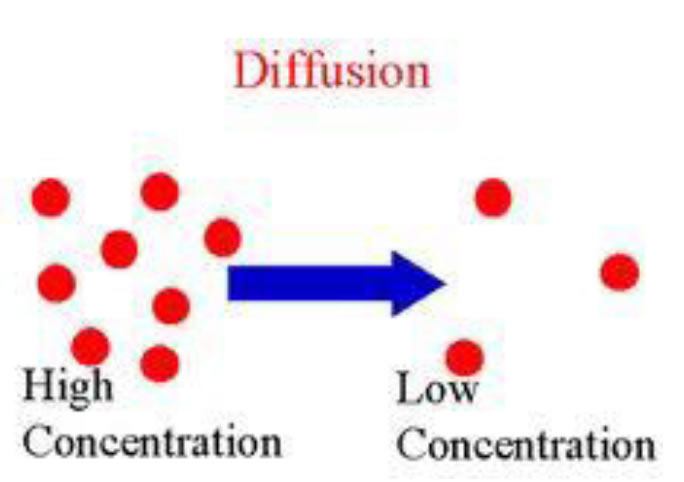
Movement of particles from high to low concentration.
a)
Passive Transport
b)
Active Transport
131.
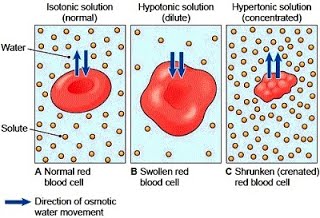
a)
Passive Transport
b)
Active Transport
132.
What is it called when molecules move across the cell membrane from an area of high concentration to an area of low concentration through a carrier protein?
a)
Diffusion
b)
Osmosis
c)
Active Transport
d)
Facilitated Diffusion
133.
Before a cell can divide, what must happen?
a)
Nothing, it is always ready to divide
b)
The number of chromosomes must be cut in half
c)
The number of chromosomes must double
d)
The number of chromosomes must triple.
134.
When a cell is not actively dividing, it is in what phase?
a)
interphase
b)
anaphase
c)
prophase
d)
telophase
135.
In which type of cells will mitosis occur?
a)
egg cells
b)
sperm cells
c)
jail cells
d)
Body cells except the sperm and egg cells
136.

Which is Metaphase?
a)
A
b)
E
c)
C
d)
F
137.

Name the phase:
a)
Prophase
b)
Metaphase
c)
Anaphase
d)
Telophase
138.

What is the next phase of mitosis?
a)
Prophase
b)
Metaphase
c)
Anaphase
d)
Telophase
139.

These structures pull the spindle fibers and attached chromosomes to opposite ends of the cell.
a)
Spindle fiber
b)
Centriole
c)
Nucleus
d)
Centromere
140.
Chromatid pairs line up in the middle of the cell.
a)
Metaphase
b)
Telophase
c)
Anaphase
d)
Interphase
141.
Chromatid pairs can be seen, spindle fibers form and nuclear membrane disappears
a)
Metaphase
b)
Telophase
c)
Anaphase
d)
Prophase
142.
Two new nuclei form and the cytoplasm splits
a)
Metaphase
b)
Telophase
c)
Anaphase
d)
Prophase
143.
Chromosomes duplicate, the cell grows and develops
a)
Metaphase
b)
Telophase
c)
Interphase
d)
Anaphase
144.
Mitosis is a type of ________________ reproduction.
a)
Sexual
b)
Asexual
145.
How many daughter cells are produced in mitosis?
a)
1
b)
2
c)
4
d)
6
146.
90% or more of the cell cycle is spent here.
a)
Interphase
b)
Mitosis
c)
Cytokinesis
d)
Anaphase
147.
Which of these lists presents the stages of the cell cycle in the correct order?
a)
interphase, mitosis, cytokinesis
b)
cytokinesis, mitosis, interphase
c)
mitosis, interphase, cytokinesis
d)
interphase, cytokinesis, mitosis
148.

Which phase of the cell cycle is this cell in?
a)
Prophase
b)
Metaphase
c)
Anaphase
d)
Interphase
149.
Which of the following shows the correct sequence of the cell cycle?
a)
Mitosis-> G1->S->G2->cytokinesis
b)
S->G1-> G2-> mitosis-> cytokinesis
c)
cytokinesis->mitosis->G1->S->G2
d)
G1->S->G2->mitosis->cytokinesis
150.

What is the picture
a)
ribosome
b)
nucleus
c)
cell wall
d)
mitochondrion
151.

I am the outer most layer of an animal cell. What am I?
a)
cell wall
b)
nucleus
c)
cell membrane
d)
cell skin
152.

Name the phase:
a)
Prophase
b)
Metaphase
c)
Anaphase
d)
Telophase
153.

Name the phase:
a)
Prophase
b)
Metaphase
c)
Anaphase
d)
Telophase
154.

Name the phase:
a)
Anaphase
b)
Telophase
c)
Metaphase
d)
Prophase
155.

Name the phase:
a)
Prophase
b)
Metaphase
c)
Anaphase
d)
Telophase
156.

In this time period of interphase the cell grows in preparation for DNA replication.
a)
Synthesis
b)
G1
c)
G2
d)
Mitosis
157.

Which phase of the cell cycle or mitosis is this?
a)
Prophase
b)
Metaphase
c)
Interphase
d)
Anaphase
158.

Which phase of the cell cycle or mitosis is this?
a)
Prophase
b)
Metaphase
c)
Anaphase
d)
Telophase
159.

Which phase of the cell cycle or mitosis is this?
a)
Prophase
b)
Metaphase
c)
Anaphase
d)
Telophase
160.
What is the correct order of the phases of mitosis?
a)
Prophase, Interphase, Anaphase, Telophase
b)
Interphase, Anaphase, Prophase, Metaphase, Telophase
c)
Prophase, Metaphase, Anaphase, Telophase
d)
Interphase, Prophase, Metaphase, Anaphase, Telophase
100 %

