
NEW
Font size
S
M
L
XL
 Worksheets
DNA
Total questions: 63
Worksheet time: 45mins
Name
Class
Date
1.
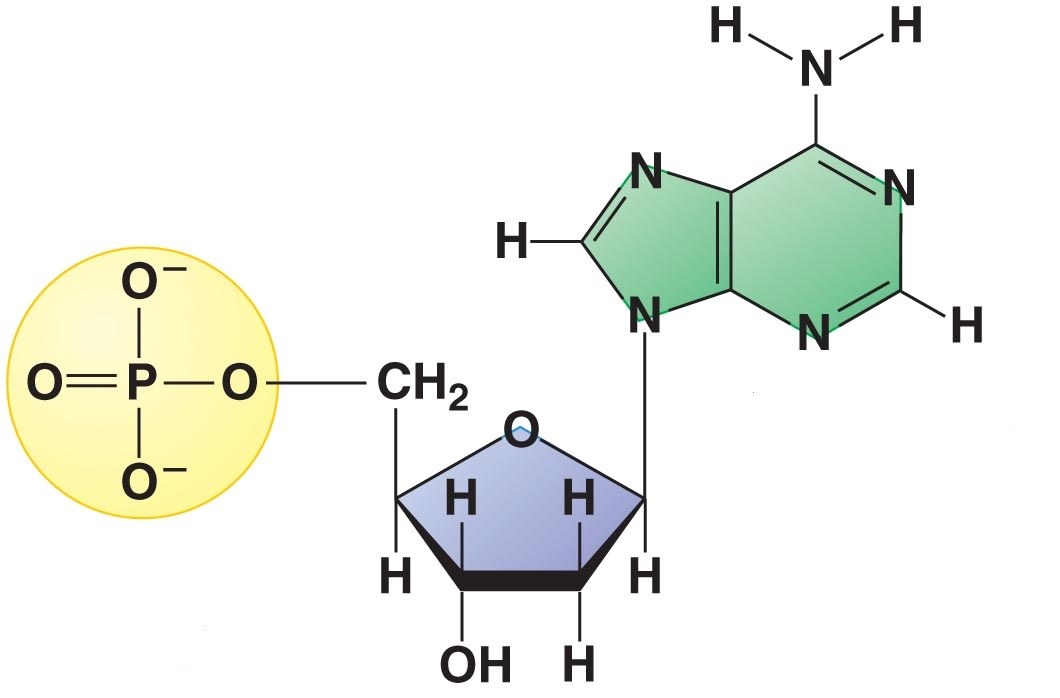
Name this structure
a)
double helix
b)
nucelotide
c)
twisted ladder
d)
hydrogen bond
2.
Which shows the correct complementary base pairing for DNA?
a)
C-A, T-G
b)
A-G, C-T
c)
C-G, U-A
d)
T-A, G-C
3.

Which of the following best describes a DNA molecule?
a)
double helix
b)
contains ribose
c)
made of amino acids
d)
contains Uracil
4.

In a molecule of double-stranded DNA, the amount of Adenine present is always equal to the amount of
a)
cytosine
b)
guanine
c)
thymine
d)
uracil
5.
Which organelle is DNA usually found in?
a)
cell membrane
b)
vacuole
c)
ribosome
d)
nucleus
6.
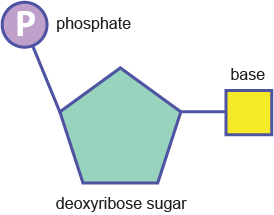
Nucleotides are made up of a sugar, phosphate, and..?
a)
nitrogenous base
b)
nucleic acid
c)
cholesterol
d)
fatty acid
7.
What does DNA stand for?
a)
Deoxyribonucleic acid
b)
Denitrogenous acid
c)
Deribonucleic acid
d)
Diribonucleic acid
8.
Guanine bonds with ______________.
a)
Adenine
b)
Guanine
c)
Cytosine
d)
Thymine
9.
Rosalind Franklin's "Photo 51" allowed Watson and Crick to determine the ___ of DNA.
a)
Shape
b)
Backbone
c)
Nitrogen bases
d)
Hydrogen bonds
10.

Who was responsible for the experiment depicted by the image?
a)
Friedrich (Fritz) Miescher
b)
Watson and Crick
c)
Frederick Griffith
d)
Rosalind Franklin
11.

Who was responsible for the model shown?
a)
Oswald Avery, et. al.
b)
Watson and Crick
c)
Erwin Chargaff
d)
Linus Pauling
12.
The two strands of DNA are held together by what type of bond?
a)
Ionic
b)
Covelant
c)
Polar
d)
Hydrogen
13.
Given the following sequence - ATGCGTGACGATA
The complimentary sequence would be...
The complimentary sequence would be...
a)
ATGCGTGACGATA
b)
UACGCACUGCUAU
c)
TACGCACTGCTAT
d)
TACGTCGATATGE
14.
These two scientists worked well together to solve the riddle of DNA
a)
Franklin and Wilkins
b)
Crick and Franklin
c)
Watson and Crick
d)
Watson and Wilkins
15.
These two scientists did not work well together in their quest to solve DNA
a)
Pauling and Crick
b)
Crick and Watson
c)
Wilkins and Franklin
d)
Wilkins and Pauling
16.
What was Watson and Crick's main scientific accomplishment?
a)
Building the first accurate model of DNA
b)
Isolating strains of pneumonia causing bacteria
c)
Determining base pairing rules
d)
Discovering the process of genetic transformation
17.
What makes up the rails, or backbone, of a DNA molecule?
a)
Alternating sugars and nitrogen bases
b)
Nitrogen base pairs
c)
A sugar, a phosphate, and a nitrogen base
d)
Alternating sugars and phosphates
18.
A sugar, a phosphate, and a nitrogen base make up a ___ subunit.
a)
Amino acid
b)
Nucleotide
c)
Protein
d)
Pyrimidine
19.
The process of DNA replication occurs in which organelle?
a)
Cytoplasm
b)
Ribosome
c)
Nucleus
d)
Mitochondria
20.
Replication use___ to make more ___.
a)
DNA, RNA
b)
RNA, RNA
c)
DNA, DNA
d)
DNA, Protein
21.
DNA replication produces ___ molecules of DNA.
a)
2 Identifcal
b)
2 Different
c)
4 Identical
d)
4 Different
22.
If the original sequence is CGA TTA AGC, what would be the complementary nucleotides added during DNA replication?
a)
GCU AAU UCG
b)
GCT AAT TCG
c)
ATC GGC CTA
d)
CGA ATT AGC
23.
What is the site where DNA separates and replication occurs?
a)
Replication sites
b)
Replication spoons
c)
Replication split
d)
Replication forks
24.
What are the chemical components of DNA?
a)
A phosphate, nitrogenous base, and an amino acid
b)
A nitrogenous base, a sugar, and an amino acid
c)
A phosphate, a sugar, and a nitrogenous base
d)
A nitrogenous base, sugar, and a helix
25.

Why is DNA important?
a)
it is very small and very complicated
b)
it's in everything
c)
it serves as the blueprint for traits of all living things
d)
because we eat it every day for energy
26.
Which type of RNA is made in the nucleus?
a)
mRNA
b)
rRNA
c)
tRNA
27.
Which of the following is the sugar found in RNA?
a)
Ribose
b)
Maltose
c)
Deoxyribose
d)
Amylose
28.
Which of the following bases is NOT found in RNA?
a)
Thymine
b)
Adenine
c)
Guanine
d)
Cytosine
29.
Which of the following is a correct difference between RNA and DNA?
a)
RNA is single stranded and DNA is double stranded
b)
RNA is double stranded and DNA is single stranded
c)
DNA uses Uracil and RNA uses Thymine
d)
RNA has deoxyribose and DNA has ribose
30.
Which statement is TRUE regarding DNA and RNA?
a)
DNA's sugar is ribose; RNA's sugar is deoxyribose
b)
DNA is single stranded; RNA is double stranded
c)
DNA contains thymine; RNA contains uracil
d)
DNA is in cytoplasm; RNA is in nucleus
31.

Nitrogenous bases are joined by which type of bond?
a)
polar bonds
b)
ionic bonds
c)
covalent bonds
d)
hydrogen bonds
32.
I have the sugar ribose.
a)
DNA
b)
RNA
33.
I have the sugar dioxyribose.
a)
DNA
b)
RNA
34.
I include the bases Guanine, Cytosine, Adenine and Uracil .
a)
DNA
b)
RNA
35.
RNA has how many strands?
a)
one
b)
two
36.
DNA has how many strands?
a)
one
b)
two
37.

Which molecule is DNA?
a)
A
b)
B
38.
_______ is made during transcription and ________ is made during translation.
a)
mRNA / a protein
b)
a protein / mRNA
c)
Ribosome / Nucleus
d)
mRNA / tRNA
39.
Which process is used to copy DNA in the nucleus?
a)
replication
b)
transcription
c)
translation
40.
Which process is used to make mRNA from the DNA in the nucleus?
a)
transcription
b)
translation
c)
replication
41.
A triplet of mRNA is called a
a)
codon
b)
anticodon
c)
amino acid
d)
peptide bond
42.
Translation takes place in the
a)
ribosome
b)
chloroplast
c)
nucleus
d)
mitochondria
43.
Brings the amino acids to the ribosome
a)
mRNA
b)
tRNA
c)
rRNA
d)
DNA
44.
What would be the tRNA anticodon for the mRNA codon CAG?
a)
GTC
b)
GUC
c)
CUG
d)
CAG
45.
What is the term for a three-nucleotide sequence that codes for an amino acid?
a)
base
b)
codon
c)
amine
d)
serine
46.

Which phase of which process does this picture show?
a)
Transcription
b)
Translation
c)
Replication
47.
How many amino acids are coded for by this sequence of nucleotides:
ATG GGA ACT CCA
ATG GGA ACT CCA
a)
4
b)
2
c)
6
d)
12
48.
ATTTGAGCC- Original
ATTGAGCC - Mutated
The example above is an example of a
ATTGAGCC - Mutated
The example above is an example of a
a)
Insertion- Frameshift
b)
Deletion- Substitution
c)
Deletion -Frameshift
d)
All of the above
49.
Which of the following is not a Mutagenic factor(causes mutations).
a)
X-rays
b)
Chemicals we smoke or eat
c)
Drinking water
d)
Tanning
50.
In a point mutation, this would have the worst effect on the function of the protein
a)
an insertion or deletion near the end of a gene
b)
an insertion or deletion at the beginning of the gene
c)
an insertion at the middle of the gene
d)
a base substitution
51.
If you are missing or have an extra base at the end of your mutated DNA . What type of mutation occurred?
a)
Substitution
b)
Frameshift
c)
Duplication
d)
Insertion
52.
Which of the following would result in a frameshift mutation?
a)
Insertions only
b)
Substitution only
c)
Deletion only
d)
Insertions and Deletions
53.
What mutation has occurred here?
T-G-A-C-C-A
T-G-A-G-C-A
T-G-A-C-C-A
T-G-A-G-C-A
a)
Substitution
b)
Deletion
c)
Insertion
d)
Frameshift
54.
Are all mutations bad?
a)
Yes
b)
No
55.
Any change in the sequence of DNA is...
a)
transgenic shift
b)
Single Genotype
c)
Monohybrid Trait
d)
Mutation
56.

In a molecule of double-stranded DNA, the amount of Adenine present is always equal to the amount of
a)
cytosine
b)
guanine
c)
thymine
d)
uracil
57.
What is a codon?
a)
It is a three letter section of bases that are read by ribosomes to stamp amino acids into a protein
b)
They are the codes on the DNA (hence "code-on"
c)
It is a type of mutation that occurs when there has been a substitution, deletion or insertion.
d)
It is a made up word for this quiz. Nice try, Wampler.
58.
What are the building blocks of proteins call?
a)
DNA
b)
RNA
c)
Ribosomes
d)
Amino Acids
59.
Why are insertion and deletion mutations so harmful?
a)
They change all of the codons from the mutation on down the line, which changes the amino acid sequence
b)
They insert things that an organism doesn't need.
c)
They often delete things that organisms need.
d)
Insertion and deletions are not any more harmful than substitution mutations.
60.
Why is the order of amino acids so important?
a)
The order of amino acids dictates what shape the protein will fold into.
b)
It is not important. The protein folding chamber will force the protein to fold into the correct shape.
61.
What is it called when body cells grow uncontrollably
a)
Spinal Stenosis
b)
Anemia
c)
Cancer
62.
What method did Watson and Crick use to discover the structure of DNA?
a)
Model building
b)
mathematical equations
c)
X Ray photographs
63.
What method did Franklin and Wilkins use to discover the structure of DNA?
a)
Model building
b)
mathematical equations
c)
X Ray photographs
Reset

