
 Worksheets
Complete Nervous
Total questions: 63
Worksheet time: 46mins
Name
Class
Date
1.

Part of the nervous system made of the brain and spinal cord.
a)
central nervous system
b)
peripheral nervous system
2.

Part of the nervous system made of the nerves that are not part of the brain or spinal cord.
a)
central nervous system
b)
peripheral nervous system
3.
Which part of a neuron RECIEVES information?
a)
axon
b)
dendrite
c)
cell body
d)
axon terminal
4.
Which part of the neuron is a long fiber that send information to other cells?
a)
dendrite
b)
terminal
c)
cell body
d)
axon
5.

Label the Neuron-What does the letter "A" represent?
a)
Axon
b)
Dendrite
c)
Axon Terminal
d)
Cell Body
6.

Label the Neuron-What does the letter "D" represent?
a)
Dendrite
b)
Axon
c)
Myelin Sheath
d)
Node of Ranvier
7.

Label the Neuron-What does the letter "E" represent?
a)
Schwann Cell
b)
Node of Ranvier
c)
Axon Terminal
d)
Myelin Sheath
8.
What is the insulating membrane that surrounds parts of the axon that helps the impulses travel faster called?
a)
Axon
b)
Dendrites
c)
Node of Ranvier
d)
Myelin Sheath
9.
What is the chemical used by a neuron to transmit an impulse across a synapse to another nerve cell?
a)
Neurotransmitters
b)
Synapse
c)
Threshold
d)
Impulse
10.

What is structure labeled H in the picture?
a)
Nucleus
b)
Schwann Cell
c)
Node of Ranvier
d)
Myelin Sheath
11.
The afferent neuron:
a)
monitor changes both inside and outside body and sends signal to control center.
b)
gathers information and decides what to be done.
c)
activates effector organs
12.
Muscle contraction is an example of:
a)
autonomic
b)
somatic
13.
Urinary system is an example of:
a)
somatic
b)
autonomic
14.
The neuroglial cell that digest debris and bacteria.
a)
microglial cells
b)
oligodendrocytes
c)
astrocytes
d)
ependymal cells
15.

The neuroglial cell that produces myelin sheath.
a)
oligodendrocytes
b)
astrocytes
c)
ependymal cells
d)
microglial cells
16.
The myelinated axons; quicker moving signal
a)
White matter
b)
grey matter
17.
When a neuron is depolarized, what are the first channels to open?
a)
Sodium
b)
Potassium
c)
Calcium
d)
ACTH
18.
When a neuron is resting, the inside of the axon has a ____________ charge.
a)
positive
b)
negative
19.
When a neuron is not engaged in an impulse.
a)
Resting potential
b)
Action potential
c)
Neural potential
d)
Synaptic potential
20.
Which is the correct nerve pathway?
a)
dendrite > axon > cell body > synapse > dendrite
b)
dendrite > cell body > axon > synapse > dendrite
c)
axon > cell body > dendrite > synapse > axon
d)
axon > cell body > dendrite > synapse > axon
21.
The junction between two communication neurons is called the
a)
Synapse
b)
Neurotransmitter
c)
Nerve Pathway
d)
Calcium Channel
22.
What is the name of the Neuron that is also described as the Integration Center in the Reflex Arc?
a)
Sensory Neuron
b)
Motor Neuron
c)
Interneuron
d)
Primary Neuron
23.

At resting potential, the neuron is
a)
polarized
b)
depolarized
c)
repolarized
24.
When the neuron is depolarized, which ion(s) is/are inside of the neuron?
a)
sodium
b)
potassium
c)
sodium and potassium
25.

During repolarization, which ion(s)moves outside of neuron?
a)
sodium
b)
potassium
c)
sodium and potassium
26.

What is the correct steps of action potential?
1. sodium ions diffuse inward; the membrane becomes depolarized
2. sodium channels open
3. potassium ions diffuse outward while sodium is actively transported out of the cell; the membrane becomes repolarized
4. potassium channels open
1. sodium ions diffuse inward; the membrane becomes depolarized
2. sodium channels open
3. potassium ions diffuse outward while sodium is actively transported out of the cell; the membrane becomes repolarized
4. potassium channels open
a)
2,1,4,3
b)
1,2,3,4,
c)
4,3,2,1,
d)
3,2,4,1,
27.
The tube that connects the ear to the pharynx
a)
esophagus
b)
Eustachian tube
c)
palatine
d)
tympanic
28.
Tubes are inserted into the tympanic membrane to relieve pressure in the middle ear
a)
tympanectomy
b)
myringotomy
c)
cerumenectomy
d)
excision
29.
the mucous membrane that lines the eyelids and covers the front of the eye
a)
sclera
b)
retina
c)
cornea
d)
conjunctiva
30.
The outermost layer of the eye
a)
conjunctiva
b)
sclera
c)
retina
d)
Choroid coat
31.
the mucous membrane that lines the eyelids and covers the front of the eye
a)
sclera
b)
retina
c)
cornea
d)
conjunctiva
32.
the colored portion of the eye
a)
iris
b)
cornea
c)
retina
d)
pupil
33.
the sense of smell is made possible by
a)
taste receptors
b)
nasal receptors
c)
olfactory receptors
d)
sense receptors
34.
the tongue is a mass of muscle tissue with projections called
a)
olfactory receptors
b)
taste buds
c)
papillae
d)
villi
35.
sensors of the black and white shades
a)
cones
b)
conjunctiva
c)
rods
d)
schlera
36.
What is known as the "blind spot"?
a)
cornea
b)
optic disc
c)
optic nerve
d)
retina
37.
What is the name of the small bones in the ear?
a)
auricle
b)
ossicles
c)
cochlea
d)
tympanic membrane
38.

What is D?
a)
external auditory canal
b)
cochlea
c)
Eustachian tube
d)
stapes
39.

What is A?
a)
ossicles
b)
semicircular canals
c)
cochlea
d)
cochlear nerve
40.

What is 4?
a)
lens
b)
optic disc
c)
cornea
d)
iris
41.

What is 7?
a)
optic nerve
b)
optic disc
c)
retina
d)
lens
42.

What is 5?
a)
retina
b)
cornea
c)
iris
d)
optic disc
43.

What number is the iris?
a)
4
b)
3
c)
2
d)
6
44.

What number is the pupil?
a)
3
b)
2
c)
1
d)
4
45.

What is 1?
a)
cornea
b)
pupil
c)
iris
d)
optic disc
46.

What carries signals from the nose to the brain for processing?
a)
olfactory nerves
b)
receptor cells
c)
olfactory bulb
d)
auditory canal
47.
What do the orbits, eye lashes and lacrimal glands provide?
a)
lubrication
b)
protection
c)
nutrition
d)
excretion
48.
When you cry and your nose runs, what fluid is coming out of your nose?
a)
cerebrospinal fluid
b)
aqueous humor
c)
mucus
d)
tears
49.
When you look in the mirror, what part of your eye can you NOT see?
a)
iris
b)
pupil
c)
retina
d)
sclera
50.
Hearing loss due to hardening of the ossicles, infection or wax build up
a)
sensory hearing loss
b)
conductive hearing loss
51.
Hearing loss due to lesions or dysfunction of parts of the ear
a)
sensory hearing loss
b)
conductive hearing loss
52.

a)
Hippocampus
b)
Thalamus
c)
Amygdala
d)
Corpus Callosum
53.

a)
Frontal Lobe
b)
Brain Stem
c)
Cerebellum
d)
Occipital Lobe
54.

a)
Cerebellum
b)
Brain Stem
c)
Occipital Lobe
d)
Temporal Lobe
55.
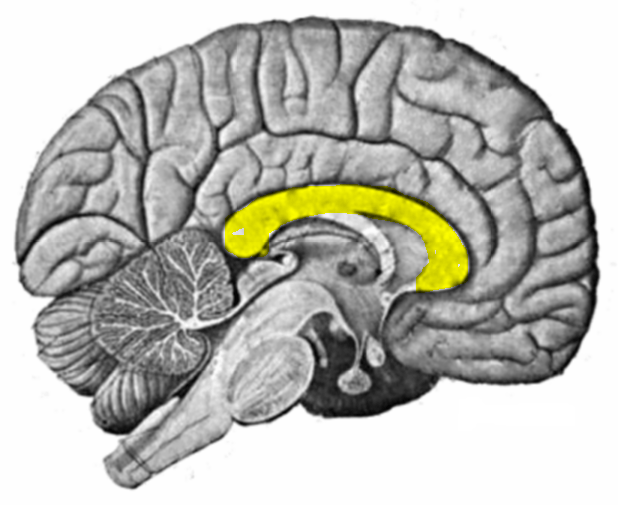
a)
Corpus Callosum
b)
Amygdala
c)
Thalamus
d)
Hypothalamus
56.

a)
Frontal Lobe
b)
Parietal Lobe
c)
Temporal Lobe
d)
Occipital Lobe
57.

a)
Amygdala
b)
Corpus Callosum
c)
Thalamus
d)
Hippocampus
58.

a)
Hypothalamus
b)
Cerebellum
c)
Hippocampus
d)
Thalamus
59.

a)
Frontal Lobe
b)
Parietal Lobe
c)
Occipital Lobe
d)
Temporal Lobe
60.

a)
Frontal Lobe
b)
Parietal Lobe
c)
Occiptal Lobe
d)
Temporal Lobe
61.

a)
Thalamus
b)
Pineal Gland
c)
Thalamus
d)
Hippocampus
62.

a)
Frontal Lobe
b)
Parietal Lobe
c)
Temporal Lobe
d)
Occipital Lobe
63.

a)
Hippocampus
b)
Hypothalamus
c)
Amygdala
d)
Thalamus
100 %

