wayground logo

Free Printable Worksheets

Font size

S
M
L
XL
Worksheets

Scientific Design and the Study of Life

Total questions: 64

Worksheet time: 1hrs 24mins

Name
Class
Date
1.

Report any accidents to your teacher ______________.

a)

later

b)

immediately

c)

tomorrow

d)

October 13th

2.

You cut your finger during a lab experiment. The first course of action is to...

a)

Visit the school nurse after class

b)

See a doctor after school

c)

Tell the teacher at once

d)

Apply first aid yourself

3.

Long hair should be ____________ in the laboratory

a)

tied back

b)

cut

c)

down

d)

curled

4.

Do not eat ___________ during the lab.

a)

Takis

b)

pizza

c)

tacos

d)

ANYTHING

5.

You are required to wear goggles when ________.

a)

chemicals are used.

b)

heated glass is used.

c)

working with fire.

d)

chemicals, heated glass, or fire are being used.

6.

True or False:

Chipped or cracked glassware is ok to use

a)

True

b)

False

7.
If you get a chemical in your eyes ___________
a)
rub your eyes six times
b)
blink really fast
c)
rinse with the eyewash
d)
call your mom
8.
A prediction or guess based on observations.
a)
data
b)
scientific process
c)
hypothesis
d)
question
9.

The information you collect while doing your experiment is called

a)

conclusions

b)

data

c)

hypotheses

d)

procedures

10.

The information you collect while doing your experiment is called

a)

conclusions

b)

data

c)

hypotheses

d)

procedures

11.
The independent variable is the ONE thing you _____.
a)
change on purpose
b)
control or keep constant
c)
measure
12.

The variable that is being measured or observed is called the _______________. Hint: this is the variable that is the result or effect

a)

independent variable

b)

dependent variable

c)

control variable

13.

What is a constant/control in an experiment?

a)

Things that do not change in a experiment. It's the variable that stays the same. You can have many variables stay the same.

b)

It's the variables that the scientist changes in the experiment

c)

It's the variables that are being measured in an experiment

14.
What is being changed in this experiment?
a)
ramp height
b)
the speed that the ball rolls
c)
type of ball
15.
What is being kept constant?
a)
ramp height
b)
speed of the ball rolling
c)
type of ball
16.

How many independent variables should you have in an experiment?

a)

two

b)

as many as possible

c)

four

d)

one

17.
What is the Responding (Dependent) Variable in this graph?
a)
Plant Growth
b)
Growth (cm)
c)
Hours
d)
15
18.

What is the dependent variable of the graph?
a)
Grade
b)
Number of Students
19.

A student wants to test the effects of different types of exercise on heart rate.  What would be the dependent variable of the experiment?

a)

the measurement of heart rate

b)
type of exercise
c)
amount of exercise
d)
time of day exercise occurs
20.
What would the INDEPENDENT variable be in an experiment testing which  paper airplane design goes furthest?
a)
the paper used
b)
the paper airplane design
c)
the distance of each plane's flight
d)
how hard the plane is thrown
21.
Josie was performing an experiment where she grew the same kind of tomatoes in the same soil and amount of water.  She sat one in the sun and one in a closet for 14 days.  What is the independent variable in Josie's experiment?
a)
tomatoes
b)
soil
c)
sunlight
d)
water
22.

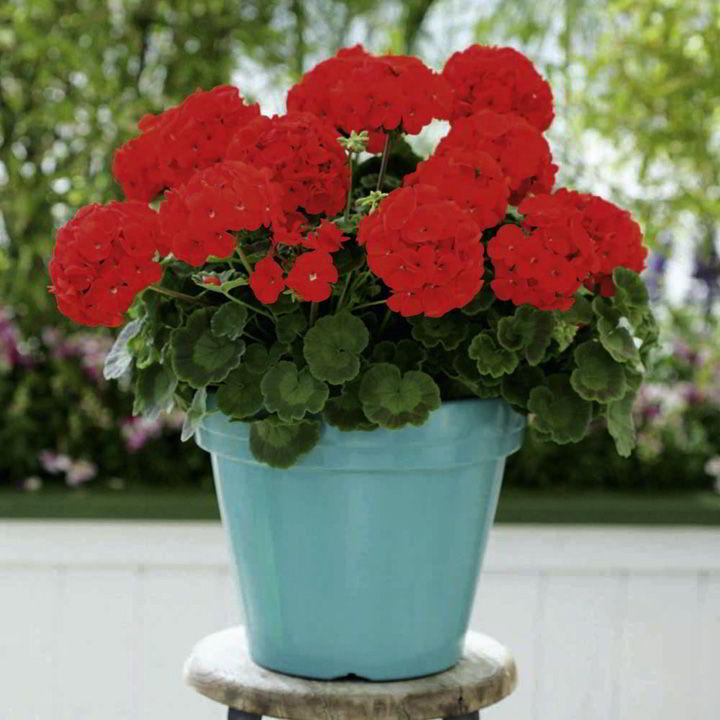
Susan said, “If I fertilize my geranium plants, then they will have more flowers.”

a)

recognize a problem

b)

test the hypothesis with an experiment

c)

form a hypothesis

d)

draw conclusions

23.
It feels smooth.
a)
Qualitative 
b)
Quantitative
24.
It tastes sweet.
a)
Qualitative
b)
Quantitative
25.
The leaf is 5mm wide.
a)
Qualitative
b)
Quantitative
26.
It makes a loud crackling sound.
a)
Qualitative
b)
Quantitative
27.
The temperature of the room is decreasing by 4 degrees Celsius.
a)
Qualitative
b)
Quantitative
28.
The mass of the chocolate cake is 250 g.
a)
Qualitative
b)
Quantitative
29.
The flower has 6 petals.
a)
Qualitative
b)
Quantitative
30.
The liquid is a pink color.
a)
Qualitative
b)
Quantitative
31.

There were four dogs in the group.

a)

Qualitative

b)

Quantitative

32.

The dogs were small.

a)

Qualitative

b)

Quantitative

33.
A claim is ______________________________.
a)
a kind of shellfish often used in chowder. 
b)
a fact.
c)
a statement or conclusion that answers the original question or problem
d)
a bad thing to make about something.
34.
Evidence is ___________________
a)
A statement or conclusion that answers a question
b)
Scientific data that supports the claim
c)
A justification that connects the claim to the evidence
d)
Not vital when using an argument
35.
Reasoning is __________________.
a)
A statement of conclusion that answers the original question/problem
b)
Scientific data that supports the claim
c)
A justification that connects the evidence to the claim
d)
Empirical Evidence
36.
Read the sentence below and tell whether it is a claim, evidence or reason.

According to the article, the coach said, "15 out 20 students participated in sports during the Fall season year 2016-2017." 
a)
Claim
b)
Evidence
c)
Reason
37.

"Since the TV turned on after I put fresh batteries in the remote control, the old batteries must have been drained."


Which type of statement is this?

a)

claim

b)

evidence

c)

observation

d)

reasoning

38.
Air is matter. We found that the weight of the ball increases by .5lbs each time we pumped more air into it. This shows that air has weight, one of the characteristics of matter.
Which sentence is the claim?
a)
Air is matter.
b)
We found that the weight of the ball increases by .5lbs each time we pumped more air into it.
c)
This shows that air has weight, one of the characteristics of matter.
39.
Air is matter. We found that the weight of the ball increases by .5lbs each time we pumped more air into it. This shows that air has weight, one of the characteristics of matter.
Which sentence is the evidence?
a)
Air is matter.
b)
We found that the weight of the ball increases by .5lbs each time we pumped more air into it.
c)
This shows that air has weight, one of the characteristics of matter.
40.

___________a molecule that is present in all living cells and that contains the information that determines the traits a living thing inherits and needs to live.

a)

Cell

b)

Stimulus

c)

Homeostasis

d)

DNA

41.
When you step out into the cold, your body shivers in order to keep its temperature at 98.6F.
a)
All living things use energy
b)
All living things contain cells
c)
All living things maintain homeostasis
d)
All living things grow
42.
Green plants produce their own food through the process of photosynthesis.
a)
All living things use energy
b)
All living things contain cells
c)
All living things maintain homeostasis
d)
All living things grow
43.
A camel has eyelashes that work to keep the dust and sand out of its eyes.
a)
All living things adapt to their environment
b)
All living things grow
c)
All living things have cells
d)
All living things use energy
44.
Over three years, Tim's height has increased from 5'4" to 5'11".
a)
All living things contain cells
b)
All living things maintain homeostasis
c)
All living things use energy
d)
All living things grow
45.
The roots of a plant grow towards a source of ground water.
a)
All living things use energy
b)
All living things reproduce
c)
All living things respond to their environment
d)
All living things grow
46.
YOU are a multi-celled organism but an amoeba is a single celled organism.
a)
All living things have cells
b)
All living things grow
c)
All living things use energy
d)
All living things respond to their environment
47.

Living things are made up of units called

a)

DNA

b)

Cells

c)

Homeostasis

d)

Seeds

48.
Rocks are not living because
a)
they never move
b)
they aren't needed for humans
c)
they are not made of cells
d)
they don't break down
49.
In order for something to be considered a living organism, it must display _____ of the eight characteristics of living things.
a)
one
b)
some
c)
all
d)
more than half
50.
The basic unit of structure and function in the human body is the....
a)
organ
b)
organ system
c)
cell
d)
tissue
51.
A group of similar cells that come together to perform a specific function is a/an
a)
organ
b)
organism
c)
organ system
d)
tissue
52.
When many organ systems work together it can form...
a)
organ
b)
cells
c)
organ system
d)
organism 
53.
This is a example of........ 
a)
organ system
b)
cells
c)
organ
d)
tissue
54.
Which is an example of an organism?
a)
a beetle
b)
a lake
c)
a rock
d)
a shell
55.

A collection of living organisms that belong to different populations but all live in the same area and interact with one another is a...

a)

Population

b)

Ecosystem

c)

Community

d)

Ecosphere

56.

1000 m = ___________ km

a)

100

b)

10

c)

1

d)

0.1

57.

2,804 mg = ___________ g

a)

0.2804

b)

2.804

c)

28.04

d)

280.4

58.

List these length units in order from LARGEST to SMALLEST. (Put the largest measurement first)

a)

kilometer

b)

meter

c)

centimeter

d)

millimeter

1)
2)
3)
4)
59.
Which unit is the smallest?  
a)
km
b)
mm
c)
m
d)
cm 
60.

What are the 3 base units of the metric system?

a)

meter, liter, gram

b)

mile, gallon, pound

c)

kilogram, kilometer, kiloliter

d)

meter, pound, ton

61.

Which is the SI unit of measurement for mass?

a)

Grams

b)

Kilograms

c)

Pounds

d)

Kilopounds

62.

Which is the SI unit of measurement for length?

a)

Centimeters

b)

Meters

c)

Millimeters

d)

Red Strings

63.

Metric unit used to measure temperature

a)

Celsius (c)

b)

Fahrenheit (f)

c)

grams (g)

d)

minutes (min)

64.

How tightly packed together the molecules in an object are

a)

mass

b)

density

c)

temperature

d)

force