
 Worksheets
Finals Review 2
Total questions: 68
Worksheet time: 2hrs 46mins
Name
Class
Date
1.
Osmosis is the movement of _____ across a membrane.
a)
food
b)
energy
c)
oxygen
d)
water
2.

This picture represents what type of cell transport?
a)
endocytosis
b)
exocytosis
c)
osmosis
d)
passive transport
3.

This picture represents which type of cellular transport?
a)
passive transport
b)
endocytosis
c)
exocytosis
d)
osmosis
4.
Which is true about active transport?
a)
It requires energy
b)
it does not require energy
c)
It moves substances down the concentration gradient
d)
it moves material from high to low concentration
5.
The concentration of water is higher in the soil than in plant root cells. Water moves into root cells of a plant by...
a)
Facilitated Diffusion
b)
Simple Diffusion
c)
Active Transport
d)
Osmosis
6.
Molecules diffusing with the concentration gradient through a protein channel is...
a)
Facilitated Diffusion
b)
Simple Diffusion
c)
Active Transport
d)
Osmosis
7.
Due to the higher concentration of oxygen in the air than your blood, oxygen goes from the lungs into the red blood cells by....
a)
Facilitated Diffusion
b)
Simple Diffusion
c)
Active Transport
d)
Osmosis
8.
In a nerve cell, ATP energy is used to pump sodium (Na) out of the cell and potassium (K) into the cell. This is an example of...
a)
Facilitated Diffusion
b)
Simple Diffusion
c)
Active Transport
d)
Osmosis
9.
This cell organelle helps organisms maintain homeostasis by controlling what substances may enter or leave cells.
a)
vacuole
b)
nucleus
c)
cell membrane
d)
cell wall
10.
The dispersal of ink in a breaker of water is an example of
a)
osmosis
b)
diffusion
c)
active transport
11.
Passive transport requires no
a)
concentration gradients
b)
osmosis
c)
motion
d)
energy
12.

The cell below is in a _________ solution.
a)
Hypotonic
b)
Hypertonic
c)
Isotonic
13.

The cell below is in a _____________ solution.
a)
Hypertonic
b)
Hypotonic
c)
Isotonic
14.
A cell in an isotonic solution will
a)
swell
b)
shrink
c)
stay the same size
d)
impossible to tell
15.
A cell in a hypotonic solution will
a)
swell
b)
shrink
c)
stay the same size
d)
impossible to tell
16.
When a cell is placed in a hypertonic (more concentrated) solution water
a)
moves from the inside of the cell to the solution
b)
moves from the solution to the inside of the cell
c)
moves equally in and out of the cell
d)
none of these
17.
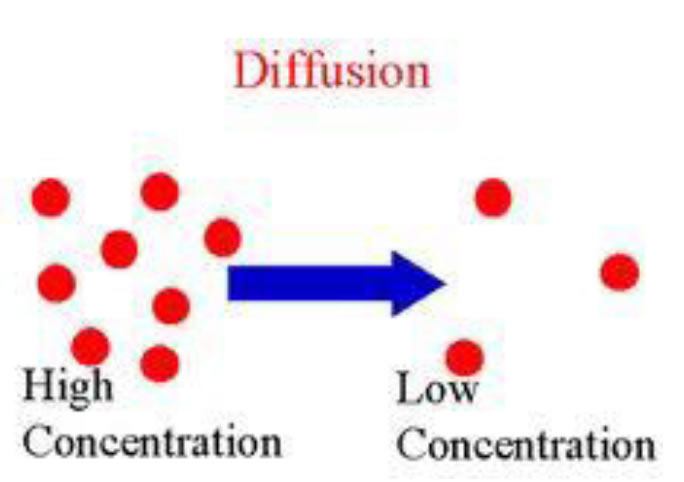
Movement of particles from high to low concentration.
a)
Passive Transport
b)
Active Transport
18.
Solutes move with the concentration gradient, therefore no energy is used.
a)
Passive Transport
b)
Active Transport
19.
This uses energy
a)
endocytosis
b)
exocytosis
c)
both
20.
Spraying Axe body spray in a corner of the room and someone on the opposite corner smells it is an example of what?
a)
Osmosis
b)
Facilitated diffusion
c)
Active transport
d)
Diffusion
21.
What are the products of photosynthesis?
a)
water and carbon dioxide
b)
oxygen and glucose
c)
oxygen and carbon dioxide
d)
oxygen and water
22.
What molecule absorbs sunlight for photosynthesis?
a)
chloroplast
b)
thylakoid
c)
grana
d)
chlorophyll
23.
Which statement about photosynthesis is correct?
a)
Plants get the energy they need for photosynthesis from water.
b)
Plants get the energy they need for photosynthesis from soil.
c)
Plants get the energy they need for photosynthesis from sunlight.
d)
Plants do not require energy to perform photosynthesis.
24.
The raw materials or reactants of photosynthesis are
a)
sugar and water.
b)
sugar and oxygen.
c)
carbon dioxide and water.
d)
carbon dioxide and oxygen.
25.
The main source of energy for all life comes from ____.
a)
the Earth
b)
the moon
c)
the sun
d)
the food we eat/make
26.
Where does photosynthesis occur?
a)
mitochondria
b)
stomata
c)
xylem
d)
chloroplast
27.
Which of the following is the correct equation for PHOTOSYNTHESIS?
a)
6CO2 + 6H2O --> 6O2 + C6H12O6
b)
6CO2 + C6H12O6 + 6H2O --> O2
c)
6O2 + 6H2O --> 6CO2 + C6H12O6
d)
C6H12O6 + 6O2 ---> 6H2O + 6CO2
28.
What is the purpose of cellular respiration?
a)
to break down food
b)
to create energy in the body
c)
to release energy from food
d)
there is none; it's a waste of time
29.

The rabbit's ORIGINAL source of energy is from the...
a)
plant
b)
sun
c)
ATP
d)
glucose
30.

What is the name of this process?
a)
cellular respiration
b)
photosynthesis
c)
glycolysis
d)
stomata
31.
The two main types of fermentation are called
a)
alcoholic and aerobic
b)
aerobic and anaerobic
c)
alcoholic and lactic acid
d)
lactic acid and anaerobic
32.
What is a disadvantage of fermentation as a process?
a)
It produces too much ATP
b)
It only produces 2 ATP
c)
It occurs in the absence of oxygen
d)
It is only for quick bursts of energy
33.
What is the function of the hydrogen ions produced during the light dependent reaction?
a)
Produce glucose
b)
Provide the energy needed for the Calvin cycle
c)
Absorb the sunlight during photosynthesis
d)
Break the water molecules
34.
What gas does the process of photosynthesis release into the atmosphere?
a)
oxygen
b)
carbon dioxide
c)
water
d)
nitrogen
35.
Glucose is broken down into pyruvate in a process known as
a)
glycolysis
b)
electron transport
c)
the Krebs cycle
d)
phosphorylation
36.
This is the "powerhouse" of the cell. Most of an eukaryotic cell's energy is made here.
a)
mitochondria
b)
ribosomes
c)
chloroplasts
d)
nucleus
37.
Cellular respiration uses 1 molecule of glucose to produce approximately
a)
2 ATP
b)
4 ATP
c)
32 ATP
d)
36 ATP
38.
Lactic acid fermentation occurs in
a)
bread dough
b)
any environment containing oxygen
c)
muscle cells
d)
mitochondria
39.
What is one of the reactants of cellular respiration?
a)
energy
b)
glucose
c)
carbon dioxide
d)
water
40.
What is the correct equation for cellular respiration?
a)
6O2 + C6H12O6 -> 6CO2 + 6H2O + Energy
b)
6O2 + C6H12O6 + Energy -> 6CO2 + 6H2O
c)
6CO2 + 6H2O -> 6O2 + C6H12O6 + Energy
d)
6CO2 + 6H2O + Energy -> 6O2 + C6H12O6
41.
Mike has four aquatic plants of the same size and the same species. He submerges the plants in a separate beaker filled with 200 ml of water. She then sets each beaker under a different intensity of light. Mike observes that, of the four plants, the plant in the beaker under the most intense light gives off the most gas bubbles in a 20 minute period.
Which of the following statements best explains Mike’s observations?
Which of the following statements best explains Mike’s observations?
a)
Cells decompose most quickly under the most intense light.
b)
Water evaporates from plants faster under the most intense light.
c)
Photosynthesis occurs at the highest rate under the most intense light.
d)
Gases in the leaves of plants expand most under the most intense light
42.

The diagram shows the relationship between photosynthesis and cellular respiration and the organelles in which they occur.
Which statement describes how photosynthesis and cellular respiration are interrelated?
Which statement describes how photosynthesis and cellular respiration are interrelated?
a)
Oxygen is produced during cellular respiration and stored during photosynthesis.
b)
Carbon dioxide and water released by cellular respiration are used in photosynthesis.
c)
Photosynthesis releases the energy that is stored during the process of cellular respiration.
d)
Glucose is used during cellular respiration to produce food that is broken down during photosynthesis.
43.

A diagram representing the relationship between photosynthesis and cellular respiration is shown.
The numbered boxes in the diagram represent which of the following?
The numbered boxes in the diagram represent which of the following?
a)
1 - water; 2 - nitrogen
b)
1 - nitrogen; 2 - oxygen
c)
1 - oxygen; 2 - carbon dioxide
d)
1 - carbon dioxide; 2 – water
44.
One of the principal compounds that living things use to store energy is
a)
DNA
b)
ATP
c)
H20
d)
CO2
45.
What happens during photosynthesis?
a)
Heterotrophs consume ATP.
b)
Heterotrophs produce ATP.
c)
Autotrophs consume carbohydrates.
d)
Autotrophs produce carbohydrates.
46.
Before cells can divide, what must be copied?
a)
mitochondria
b)
cytoplasm
c)
DNA
d)
Cell Wall
47.
The division of the nucleus is known as:
a)
Synthesis
b)
Mitosis
c)
G1
d)
G2
48.
Humans have ________ pairs of chromosomes.
a)
21
b)
23
c)
46
d)
None of the above
49.
Eukaryotic cells store their genetic information(DNA) in __________.
a)
Chromosomes
b)
Centromeres
c)
karyotypes
d)
Proteins
50.
Uncontrollable cell growth is known as _____
a)
obesity
b)
cancer
c)
diabetes
d)
hepatitis
51.
In the G2 stage of cell division, ______________ are made.
a)
organelles
b)
structures for cell division
c)
proteins
d)
all of the above
52.
In the S stage of interphase_______________
a)
the cell grows
b)
the nucleus divides
c)
the cell membrane divides
d)
the DNA is replicated
53.
A human cell has 46 chromosomes before mitotic division. How many chromosomes will the daughter cells after mitosis.
a)
12
b)
23
c)
46
d)
92
54.

Fruit fly body cells have 8 chromosomes. After mitosis, you would expect a resulting fruit fly daughter cell to have ...
a)
16 chromosomes.
b)
46 chromosomes.
c)
8 chromosomes.
d)
4 chromosomes.
55.
The time between cell divisions in the life cycle of the cell is called
a)
anaphase
b)
interphase
c)
prophase
d)
metaphase
56.
Asexual reproduction will result in
a)
Identical offspring to the parent
b)
Twins
c)
Meiosis
d)
Non-identical offspring to the parent
57.
Why do we need meiosis?
a)
To double the number of chromosomes going into sex cells
b)
To halve the number of chromosomes going into sex cells
c)
To triple the number of chromosomes going into sex cells
d)
To not change the number of chromosomes going into sex cells
58.
Diploid Cells are represented by
a)
2n
b)
n
c)
4n
d)
1/2 n
59.
A cell with only half the normal number of chromosomes is called a ___________ cell.
a)
haploid
b)
prokaryotic
c)
heterotrophic
d)
eubacterial
60.
Cytoplasmic division is also known as
a)
cytokinesis
b)
mitosis
c)
interphase
d)
cytotoxic
61.

What happens during Interphase?
a)
Mitosis and Meiosis
b)
Growth and DNA synthesis
c)
DNA synthesis and mitosis
d)
Growth and mitosis
62.

In which phase of the cell cycle does this occur:
The chromosomes line - up along the middle of the cell.
The chromosomes line - up along the middle of the cell.
a)
Cytokinesis
b)
Telophase
c)
Metaphase
d)
Anaphase
63.

If a parent cell has 12 chromosomes, how many chromosomes will each gamete have after meiosis?
a)
4
b)
6
c)
12
d)
24
64.

Which process and type of resulting cells are represented?
a)
Mitosis, gametes
b)
Mitosis, body cells
c)
Meiosis, gametes
d)
Meiosis, body cells
65.
What are somatic cells?
a)
Body cells
b)
Sex cells
c)
Body and Sex cells
d)
It varies from organism to organism
66.
If a parent cell started with 60 chromosomes per cell, the daughter cells would each have ___ chromosomes after MITOSIS.
a)
30
b)
60
c)
120
d)
15
67.

When an area of a chromatid is exchanged with the matching area on a chromatid of its homologous chromosome, _________________ occurs
a)
Crossing over
b)
Mutagenesis
c)
Hybridization
d)
Fertilization
68.

The process on the left is:
The process on the right is:
The process on the right is:
a)
Left: meiosis
Right: meiosis
Right: meiosis
b)
Left: meiosis
Right: cloning
Right: cloning
c)
Left: mitosis
Right: meiosis
Right: meiosis
d)
Left: mitosis
Right: mitosis
Right: mitosis
100 %

