
 Worksheets
Cells Review
Total questions: 72
Worksheet time: 1hrs 4mins
Name
Class
Date
1.
What organelle is called the "powerhouse" of a cell?
a)
Endoplasmic Reticulum
b)
Nucleus
c)
Mitochondria
d)
Nucleolus
2.

Using this image, what organelle is C?
a)
Cell Wall
b)
Mitochondria
c)
Large Cell Vacuole
d)
Chloroplast
3.
What is the function of the mitochondria?
a)
Structure that manufactures ribosomes
b)
Structures that converts nutrients to energy
c)
Stack of membranes that packages chemicals
d)
Structure that contains DNA and directs the cell
4.
What is the function of the vacuole?
a)
Sac that stores water, nutrients, and waste products
b)
Sac filled with digestive chemicals
c)
Jelly-like substance within the plasma membrane
d)
stack of membranes that packages chemicals
5.
What is the function of nucleus?
a)
Structure that organizes motion of chromosomes.
b)
Structure that contains DNA and directs the cell
c)
Membrane that surrounds and protects the cell
d)
Stack of membranes that packages chemicals
6.

I store water in both plant and animal cells. What am I?
a)
cytoplasm
b)
ribosomes
c)
vacuole
d)
lysosomes
7.

I make proteins for the cell. What am I?
a)
ribosome
b)
mitochondria
c)
chloroplast
d)
lysosome
8.
What can only be found in plant cells?
a)
Cell membrane
b)
Vacuole
c)
Chloroplast
d)
Mitochondrion
9.
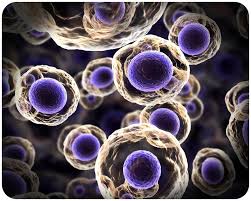
The two kinds of cells are Prokaryotes and Eukaryotes. How are they different?
a)
Prokaryotes have a nucleus.
b)
Eukaryotes have a nucleus.
c)
Prokaryotes are plant cells.
d)
There is no difference.
10.

What cell part is NOT found in all cells?
a)
Cell Wall
b)
Cell Membrane
c)
Cytoplasm
d)
Genetic Material
11.

Complex cell. Can be plant or animal. Contains membrane bound organelles.
a)
Eukaryotic Cell
b)
Prokaryotic Cell
c)
Bacteria
d)
Blood cell
12.
This organelle takes food and turns it into ENERGY for plant and animal cells.
a)
Chloroplast
b)
Mitochondria
c)
Lysosome
d)
Ribosome
13.

Which part of the cell is often called "the brain of the cell"?
a)
nuclear membrane
b)
endoplasmic reticulum
c)
nucleus
d)
mitochondria
14.
Where are proteins made?
a)
Golgi body
b)
Mitoichondria
c)
Chromosomes
d)
Ribosomes
15.
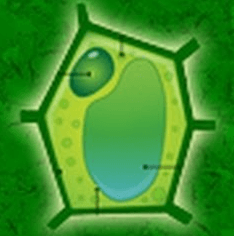
A rigid layer that lies outside the cell's membrane is...
a)
Cytoskeleton
b)
Cilia
c)
Cell Wall
d)
Flagella
16.
What can only be found in plant cells?
a)
Cell membrane
b)
Vacuole
c)
Chloroplast
d)
Mitochondrion
17.
Only eukaryotic cells have....
a)
membrane-bound organelles
b)
DNA
c)
ribosomes
d)
cell membranes
18.

What does this organism use for movement?
a)
Pseudopod
b)
Cilia
c)
Flagella
d)
legs
19.
Consists of a jellylike substance that contains many organelles.
a)
ribosomes
b)
cytoplasm
c)
chloroplasts
d)
cell wall
20.
Which organelle uses energy from sunlight to make sugar?
a)
mitochondria
b)
nucleus
c)
chloroplasts
d)
vacuoles
21.
Which structure is found in plant cells and not in animal cells?
a)
cell wall
b)
centriole
c)
nucleus
d)
cytoplasm
22.

I am the outer most layer of an animal cell. What am I?
a)
cell wall
b)
nucleus
c)
cell membrane
d)
cell skin
23.

You might think of me as the trash collector or recycler is maybe more accurate. What am I?
a)
cytoplasm
b)
lysosme
c)
vacuole
d)
ribosome
24.

I am a protein packaging and shipping machine! Who am I?
a)
vacuole
b)
ribosome
c)
endoplasmic reticulum
d)
golgi apparatus
25.

What is this?
a)
mitochondria
b)
lysosomes
c)
chloroplast
d)
endoplasmic reticulum
26.
What type of cell has a nucleus?
a)
eukaryotic
b)
prokaryotic
27.

Under a microscope, what kind of cells lack membrane-bound internal organelles?
a)
Prokaryotes
b)
Eukaryotes
c)
Plants
d)
Animals
28.
Controls what enters/leaves a cell
a)
cell membrane
b)
Nuclear membrane
c)
cell wall
d)
cytoplasm
29.
packages proteins for delivery
a)
Endoplasmic reticulum
b)
ribosomes
c)
golgi apparatus
d)
lysosomes
30.
hold/store water, mainly found in plant cells
a)
nuclolus
b)
ribosomes
c)
golgi bodies
d)
vacuoles
31.
break down (digest) worn out cell parts, mostly in animal cells
a)
cytoplasm
b)
lysosomes
c)
mitochondria
d)
vacuoles
32.
jello-like material, fills the space between cell organelles, is where many chemical reactions occur
a)
cytoplasm
b)
chromatin
c)
chloroplast
d)
cell membrane
33.
Transportation network for the cell, moves materials around in the cell
a)
Lysosome
b)
Nuclear Membrane
c)
Endoplasmic Reticulum
d)
Centriole
34.
All living things are made of...
a)
atoms
b)
cells
c)
bacteria
d)
plants
35.
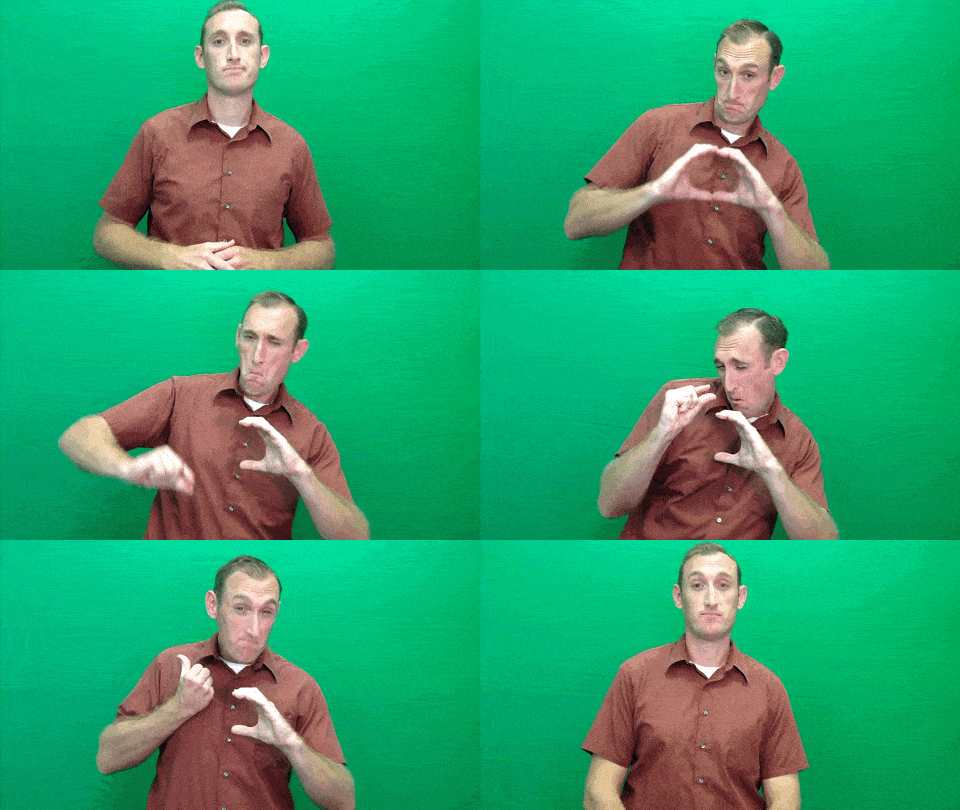
The ___________ is the basic unit of life
a)
organ
b)
cell
c)
atom
d)
tissue
36.
What makes the endoplasmic reticulum rough?
a)
Vessicles
b)
Vacuoles
c)
Ribosomes
d)
Chromosomes
37.
Cell membranes are found in
a)
Only animal cells
b)
Only plant cells
c)
Some plant and animal cells
d)
All plant and animal cells
38.
Organisms as different as bacteria, mushrooms, algae, oak trees and human beings are all made of cells. Which statement is true for all cells?
a)
All cells have the same shape.
b)
All cells need energy to survive.
c)
All cells are surrounded by a rigid wall.
d)
All cells belong to organ systems.
39.

The Golgi apparatus _____.
a)
packages cell products for export
b)
eliminates waste
c)
stores DNA
d)
makes energy
40.
True or False: Human cells have cell walls
a)
True
b)
False
41.

What's the job of chloroplasts?
a)
Turn food into energy for cell
b)
Turn sunlight into energy for cell
c)
To surround, protect, and support cell
d)
To be in control of the cell
42.

What's the job of the cell membrane?
a)
It's the digestive system of the cell and crushes up food and cell parts
b)
The organelles float / held in place by it
c)
It transports materials within the cell
d)
It surrounds the cell, keeps everything in, and controls what comes in and out
43.

What's the job of the cell wall and what type of cell is it in?
a)
To create proteins; Animal
b)
To support, surround, and protect the cell; Plant
c)
To support, surround, and protect the cell; Animal
d)
To fill up the empty space of the cell; Plant
44.

What's the job of the nucleus?
a)
To control / direct the cell's activities
b)
To store water, food, and waste products
c)
To create energy for the cell
d)
To create protein for the cell
45.

What's the job of the vacuole?
a)
It's the digestive system of the cell
b)
It turns food into energy
c)
It stores water, food, and waste
d)
It receives proteins. Then, it sorts, packages, and sends them off.
46.

What's the job of the cytoplasm?
a)
It surrounds the plant cell
b)
It directs the cell's activities
c)
It fills the cell and holds organelles in place, where they float
d)
It transports materials throughout the cell
47.

What's the job of the golgi bodies?
a)
To receive, sort, package, and send proteins
b)
To allow materials in and out of the cell
c)
To be the solar power plant of the cell
d)
To be the boss of the cell
48.
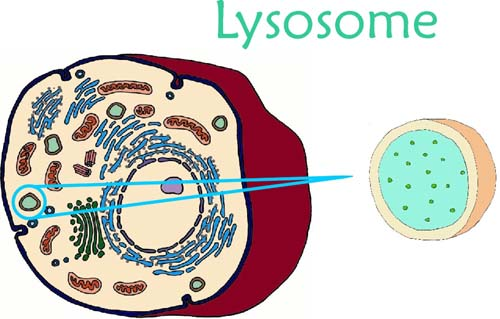
What's the job of lysosomes?
a)
To control what comes in and out of the cell
b)
To create energy for the cell
c)
To turn sunlight into energy for the cell
d)
To break down food and old cell parts and release them to be used
49.

What's the job of the endoplasmic reticulum?
a)
To receive, sort, package, and send proteins
b)
To control the cell
c)
To transport materials around the cell
d)
To hold organelles in place / fill the cell
50.

What's the job of the mitochondria?
a)
To store water, food, and waste
b)
To create energy for the cell from food we eat
c)
To be the digestive system of the cell
d)
To turn sunlight into energy
51.

What's the job of ribosomes?
a)
To control the cell
b)
To fill the empty space of the cell
c)
To help with photosynthesis
d)
To create protein for the cell
52.
In what organelle does the food making process in plants take place?
a)
Endoplasmic Reticulum
b)
Vacuole
c)
Chloroplasts
d)
Mitochondria
53.
In what organelle is the genetic material found inside?
a)
Endoplasmic Reticulum
b)
Golgi Complex
c)
Nucleolus
d)
Nucleus
54.
What organelle helps with cell digestion?
a)
Lysosomes
b)
Ribosomes
c)
Golgi Complex
d)
ER
55.

Using this image, what organelle is D?
a)
Endoplasmic Reticulum
b)
Flagella
c)
Rough ER
d)
Smooth ER
56.

Using this image, what organelle is N?
a)
Centrioles
b)
Cell Membrane
c)
Golgi Apparatus
d)
Ribosome
57.

Using this image, what organelle is C?
a)
Cell Wall
b)
Mitochondria
c)
Large Cell Vacuole
d)
Chloroplast
58.

Using this image, what organelle is A?
a)
Cell Wall
b)
Large Central Vacuole
c)
Mitochondria
d)
Chloroplast
59.

What is the difference between rough and smooth ER?
a)
There is no difference.
b)
Plants have rough ER, animals have smooth ER.
c)
What type of injuries the Doctors treat.
d)
Rough has ribosomes, smooth does not.
60.
True or False: Animal Cells have chloroplasts.
a)
True
b)
False
61.
True or False: Both animal and plant cells have vacuoles.
a)
True
b)
False
62.

This organelle creates energy.
a)
Nucleus
b)
Ribosome
c)
Mitochondria
d)
ER
63.

Which of these is NOT a part of the Cell Theory?
a)
All cells are independent.
b)
Cells are the basic unit of living things.
c)
All living things are one or more cells.
d)
Cells come from cells.
64.

This organelle moves materials throughout the cell.
a)
ER
b)
Ribosomes
c)
FedEx
d)
Golgi Complex
65.

What are tiny organelles that convert glucose into ATP?
a)
Ribosomes
b)
Vesicles
c)
Cytoskeleton
d)
Mitochondria
66.
Using this image, what organelle is N?
a)
Centrioles
b)
Cell Membrane
c)
Golgi Apparatus
d)
Ribosome
67.

a)
control center of the cell
b)
captures energy from sunlight
c)
found in plant and animal cells
68.

What is the function of the organelle labeled number 2?
a)
To store food
b)
To store sunlight
c)
To produce energy
d)
To direct cell activities
69.

The endoplasmic reticulum is often covered in ribosomes. Which structure is the endoplasmic reticulum?
a)
Structure 2
b)
Structure 3
c)
Structure 7
d)
Structure 8
70.
Miguel is looking at cells through a microscope. His teacher, Mrs. Sheng, has told him he is either viewing a plant or animal cell. Read the information above, Mrs. Sheng would like Migues to figure out what what cell he is viewing. What cell structures should Miguel be looking for to determine if the cell came from a tomato plant or a animal cell?
a)
Mitochondria
b)
Chloroplasts
c)
Ribosomes
d)
DNA
71.

What type of cell is pictured?
a)
Plant cell
b)
Animal cell
c)
Nerve cell
d)
Blood cell
72.
Sally looked through her microscope and found the following cell structures - cell wall, nucleus, chloroplasts, and endoplasmic reticulum. What type of cell was Sally looking at?
a)
Plant Cell
b)
Animal Cell
c)
Nerve Cell
d)
Muscle Cell
100 %

