wayground logo

Free Printable Worksheets

NEW

Font size

S
M
L
XL
Worksheets

RMHS ENERGY UNIT REVIEW

Total questions: 70

Worksheet time: 1hrs 2mins
Name
Class
Date
1.
According to the Law of Conservation of Energy, energy cannot be _________ or ____________. 
a)
destroyed, destroyed
b)
created, saved
c)
created, destroyed
d)
lost, found
2.
What is energy changing from one form to another?
a)
energy conservation
b)
energy transformation
c)
energy creation
d)
mechanical energy
3.
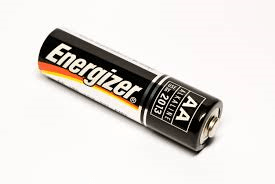
what type of energy is stored in a battery?
a)
electrical
b)
chemical
c)
thermal
d)
mechanical
4.
Energy you get from eating an apple
a)
nuclear energy
b)
electromagnetic energy
c)
sound energy
d)
chemical energy
5.
Can you destroy energy?
a)
Yes
b)
No
6.

Enzymes are an example of

a)

Lipids

b)

Carbohydrate

c)

Protein

d)

Nucleic Acid

7.
What is the purpose  of an enzyme?
a)
give permission for the reaction
b)
raise activation energy
c)
speed up reactions
d)
control how many reactions occur
8.
Enzymes are capable of increasing the rate of a chemical reaction within a living cell.  Enzymes accomplish this through which of the following means?
a)
reducing the number of products   
b)
reducing the activation energy
c)
increasing the temperature of the cell
d)
increasing the concentration of reactants 
9.
Each enzyme only has 1 substrate that will fit its active site.  What is this called?
a)
reusable
b)
catalyst
c)
specific
d)
fragile
10.
What 3 letters do enzymes typically end in?
a)
-ose
b)
-ase
c)
-ese
d)
-tic
11.
Any substance that is acted upon by an enzyme is called a(n)?
a)
Coenzyme
b)
Substrate
c)
Vitamin
d)
Polypeptide
12.
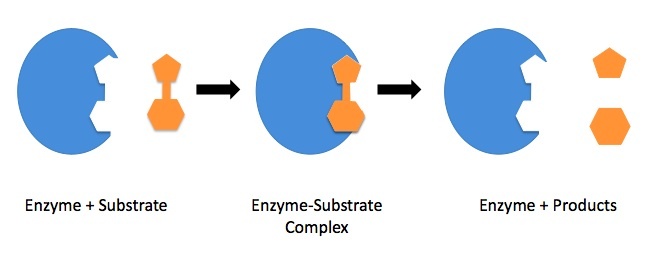
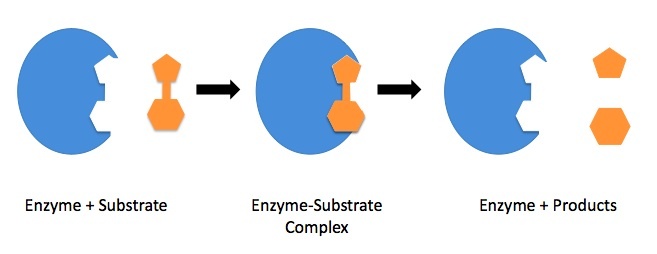
After the enzyme and substrate bind together and perform the reaction, what does the substrate become?
a)
a substrate
b)
an enzyme
c)
a product
d)
an active site
13.
Enzymes provide a site where reactants called substrates can be brought together in an enzyme-catalyzed reaction. The site is called the
a)
enzyme substrate complex.
b)
reaction site.
c)
active site.
d)
lock and key.
14.
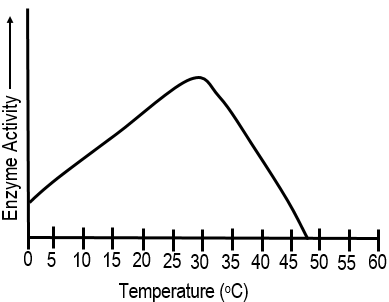
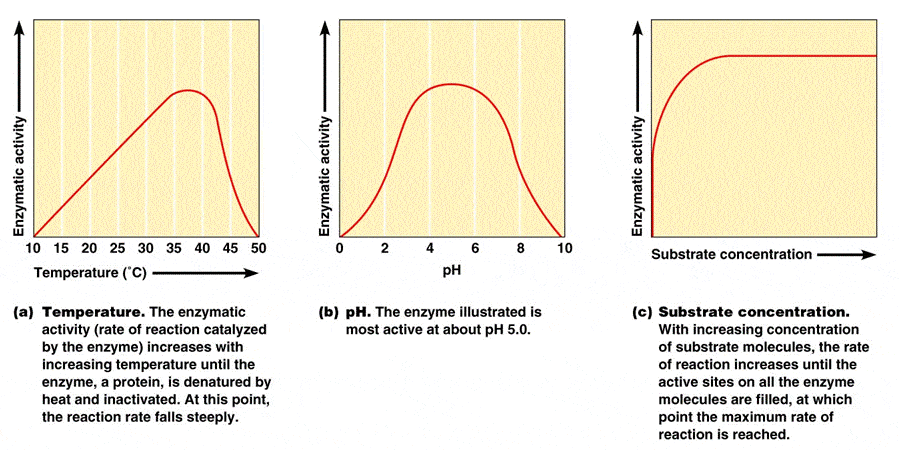
Based on the graph, what is the optimal temperature for this enzyme? 
a)
15oC
b)
40oC
c)
30oC
d)
35oC
15.
An enzyme speeds up a chemical reaction in the cell but can only be used once.  True or False? 
a)
true
b)
false
16.
The current model of enzyme action is referred to as the:
a)
Induced Fit Model
b)
Lock & Key Model
c)
Singer-Nicolson Model
d)
Davson-Danielli Model
17.
At high temperatures enzyme activity declines because of:
a)
Denaturation
b)
Decreased Kinetic Motion
c)
Increased H-Bonding
d)
Dissociation of Ionic Compounds
18.
At low temperatures enzyme activity declines because of:
a)
Denaturation
b)
Decreased Kinetic Motion
c)
Increased H-Bonding
d)
Dissociation of Ionic Compounds
19.
When a molecule can occupy the same active site as the substrate, a situation called __________________ can result
a)
Competitive lnhibition
b)
Allosteric Regulation
c)
Non-Competitive Inhibition
d)
Feedback Inhibition
20.

What is a substance called if it speeds up a chemical reaction but is not changed in the process?

a)

reusable

b)

catalyst

c)

specific

d)

fragile

21.
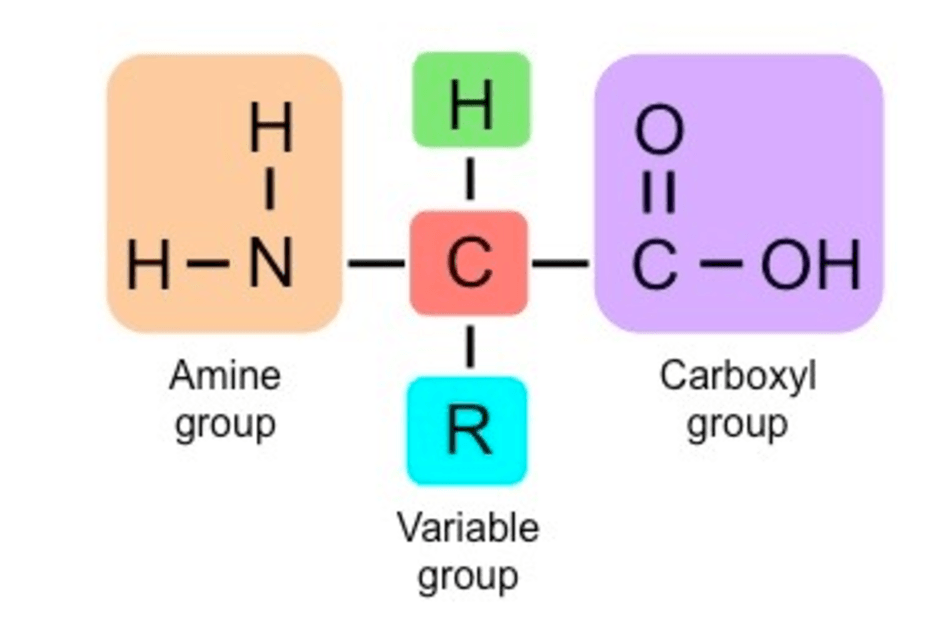
What is the monomer of a protein?
a)
amino acid
b)
monosaccharide
c)
fatty acid
d)
nucleic acid
22.

Why is folding so important in proteins?

a)

It gives them a unique, functional shape

b)

It makes them look tidier

c)

It makes every protein molecule different from the next even if they are the same type

d)

The folding is random so is not that important at all

23.

The tertiary structure folding in proteins is primary due to the interactions of....

a)

the 'R' groups

b)

the 'P' groups

c)

the 'A' groups

d)

the 'S'

24.
an atom or molecule which has gained or lost one or more of its valence electrons
a)
Covalent Bond
b)
Chemical Formula
c)
Ion
d)
Compound
25.
tells us the number of atoms of each element in a compound
a)
Coeffecient
b)
Exponent
c)
Chemical Formula
d)
Calculator
26.

During photosynthesis, the energy from the sun is used to split water molecules into hydrogen and oxygen.

a)

True

b)

False

27.

Chlorophyll is:

a)

The substance that makes plants green.

b)

Found inside the chloroplast cells.

c)

Used to absorb energy from the sun.

d)

All of the above.

28.

The openings that are found in the leaves of plants are called:

a)

Stomata

b)

Chlorophyll

c)

Xylem

d)

Chloroplast

29.

The process of photosynthesis takes place in the:

a)

Leaves of the Plant.

b)

Stem of the plant.

c)

Roots of the plant.

d)

All of the above.

30.
What do plants give off after photosynthesis?
a)
Oxygen
b)
carbon
c)
nitrogen
d)
hydrogen
31.
Plants need ________from the air for photosynthesis
a)
oxygen
b)
soil
c)
carbon dioxide
d)
sugar
32.
Which gas is removed from the atmosphere during photosynthesis?
a)
hydrogen
b)
oxygen
c)
nitrogen
d)
carbon dioxide
33.
The main source of energy for all life comes from ____.
a)
the Earth
b)
the moon
c)
the sun
d)
the food we eat/make
34.
After photosynthesis, plants store their energy as _________ .
a)
chlorophyll
b)
pigment
c)
glucose (sugar)
d)
Oxygen
35.
Which of these is NOT AN IMPACT photosynthesis has on an ecosystem:
a)
Oxygen for animals and humans to breathe
b)
Food for us to eat
c)
Taking CO2 out of the air
d)
Taking oxygen out of the air
36.

Which organelle stores water for use in photosynthesis?

a)

Chloroplast

b)

Cell Membrane

c)

Vacuole

d)

Nucleus

37.

Which of the following is the correct equation for PHOTOSYNTHESIS?

a)

light + carbon dioxide + water --> glucose + oxygen

b)

carbon dioxide + sugar + water --> oxygen + light

c)

oxygen + light + water --> carbon dioxide + sugar

d)

carbon dioxide + oxygen + water --> Light+ Sugar

38.
Which of the following is an example of an AUTOTROPH?
a)
Appletree
b)
Dog
c)
Mushroom
d)
Human
39.
What is the correct equation for cellular respiration?
a)
6O2 + C6H12O6 -> 6CO2 + 6H2O + Energy
b)
6O2 + C6H12O6 + Energy -> 6CO2 + 6H2O
c)
6CO2 + 6H2O -> 6O2 + C6H12O6 + Energy
d)
6CO2 + 6H2O + Energy -> 6O2 + C6H12O6
40.

Cellular Respiration's goal is to

a)

make water

b)

charrrrrge ATP

c)

make glucose

d)

make oxygen

41.
The enzyme catalase speeds up the chemical reaction that changes hydrogen peroxide into oxygen and water. The amount of oxygen given off is an indication of the rate of the reaction. Based on the graph, what can you conclude?
a)
Reaction rate decreases with increasing enzyme concentration.
b)
Reaction rate increases with decreasing enzyme concentration.
c)
Reaction rate increases with increasing enzyme concentration.
d)
The variables are indirectly proportional.
42.
Which concentration of catalase will produce the fastest reaction rate?
a)
5%
b)
10%
c)
15%
d)
20%
43.
Which of the factors does NOT affect enzymatic activity?
a)
Temperature
b)
pH
c)
Concentration
d)
Color
44.
An enzyme is a catalyst.
a)
True
b)
False
45.
What type of catalyst is an enzyme?
a)
Biological
b)
Mechanical
c)
Chemical
d)
Electrical
46.

The enzyme known as ‘catalase’ is involved in the breakdown of hydrogen peroxide molecules into separate water and oxygen molecules. During this reaction, what happens to the ‘catalase’?

a)

The enzyme would become products: O2 and H20

b)

The enzyme would be fully used up and discarded.

c)

The enzyme would remain unchanged in any way.

d)

The enzyme would become a new type of enzyme.

47.

This is the "powerhouse" of the cell (uggh). Most of an eukaryotic cell's energy is made here.

a)
mitochondria
b)
ribosomes
c)
chloroplasts
d)
nucleus
48.
This term refers to the production of ATP without oxygen being present.
a)
anaerobic
b)
prokaryotic
c)
biogenic
d)
organic
49.
Fermentation occurs in the cell's 
a)
cytoplasm
b)
nucleus
c)
cell membrane
d)
cristae
50.
To make large amounts of energy, an eukaryotic cell must use oxygen and 
a)
glucose
b)
water
c)
carbon dioxide
d)
light
51.
What is a disadvantage of fermentation as a process? 
a)
It produces too much ATP
b)
It only produces 2 ATP
c)
It occurs in the absence of oxygen
d)
It is only for quick bursts of energy
52.
When animals exercise with a lack of oxygen their muscles can form
a)
lactic acid
b)
alcohol
c)
minions
d)
oxygen
53.
What molecule is broken down to provide energy for life processes?
a)
oxygen
b)
carbon dioxide
c)
glucose
d)
water
54.
What are the products of aerobic respiration?
a)
Glucose and oxygen
b)
Carbon dioxide and water
c)
Lactic acid
d)
Carbon monoxide
55.
Which organ excretes carbon dioxide?
a)
Lungs
b)
Liver
c)
Heart
d)
Kidney
56.

The correct word equation for Anaerobic respiration is

a)

glucose → lactic acid + oxygen

b)

glucose → lactic acid (+ energy released)

c)

glucose + oxygen → lactic acid (+ energy released)

d)

lactic acid → energy released

57.

The correct word equation for aerobic respiration is

a)

carbon dioxide + water (+ energy) → glucose + oxygen

b)

water + oxygen → carbon dioxide + glucose (+ energy)

c)

glucose + oxygen → carbon dioxide + water (+ energy)

d)

glucose + water → carbon dioxide + water (+ energy)

58.

BONUS: Which organ breaks down lactic acid?

a)

Liver

b)

Lung

c)

Heart

d)

Bladder

59.
Where does glycolysis take place?
a)
Cytoplasm
b)
Stroma
c)
Thylakoid
d)
Mitochondria
60.
Where does aerobic respiration take place?
a)
Cytoplasm
b)
Mitochondria
c)
Stroma
d)
Thylakoid
61.
What is the net gain of ATP during glycolysis?
a)
1
b)
2
c)
4
d)
34
62.
What are the two reactants of cellular respiration?
a)
C6H12O6 & 6CO2
b)
6 CO2 & 6H2O
c)
C6H12O& 6O2
d)
6CO2 & 6O2
63.
Along with 2ATP, what is produced during glycolysis?
a)
6CO2
b)
6O2
c)
C6H12O6
d)
2 pyruvate
64.
What is the first stage of aerobic respiration called?
a)
Citric acid cycle
b)
Calvin cycle
c)
Glycolysis
d)
ETC
65.
What is the second stage of aerobic respiration?
a)
Calvin cycle
b)
Kreb's cycle
c)
Glycolysis
d)

Electron Transport Chain

66.
What is the name of the process that helps make beer and wine?
a)
Fermentation
b)
Alcoholic fermentation
c)
Lactic acid fermentation
d)
Glycolysis
67.
Which type of fermentation occurs in muscles?
a)
Alcoholic 
b)
Lactic acid
68.
How does the amount of energy resulting from fermentation compare with that of aerobic respiration? 
a)
Aerobic respiration results in less energy.
b)
Each process results in equal amounts of energy.
c)
Aerobic respiration results in more energy.
d)
Each process results in variable amounts of energy. 
69.
ATP is called a cell's "energy currency" because
a)
ATP catalyzes all metabolic reactions
b)
ATP allow one organelle to be exchanged for another between cells
c)
glucose is made of ATP
d)
most of the energy that drives metabolism is supplied by ATP
70.
When a phosphate group is removed from an ATP molecule, 
a)
a substantial amount of energy is released
b)
an enzyme is formed
c)
energy is stored
d)
activation energy is increased