
 Worksheets
Chem Fall Final Review
Total questions: 65
Worksheet time: 1hrs 26mins
Name
Class
Date
1.
What kind of properties result in the substance changing into a new substance?
a)
Liquid Properties
b)
Physical Properties
c)
Chemical Properties
d)
Real Properties
2.
Which of the following is a physical property?
a)
Density
b)
Flammability
c)
Oxidation
d)
Reactivity
3.
Which of the following tells you that a chemical change has occurred?
a)
Change Shape
b)
Melting
c)
Vaporizing
d)
Change in color
4.
What happens in ALL chemical changes?
a)
Change in state of matter
b)
A new substance is formed
c)
Bubbles are produced
d)
An explosion
5.
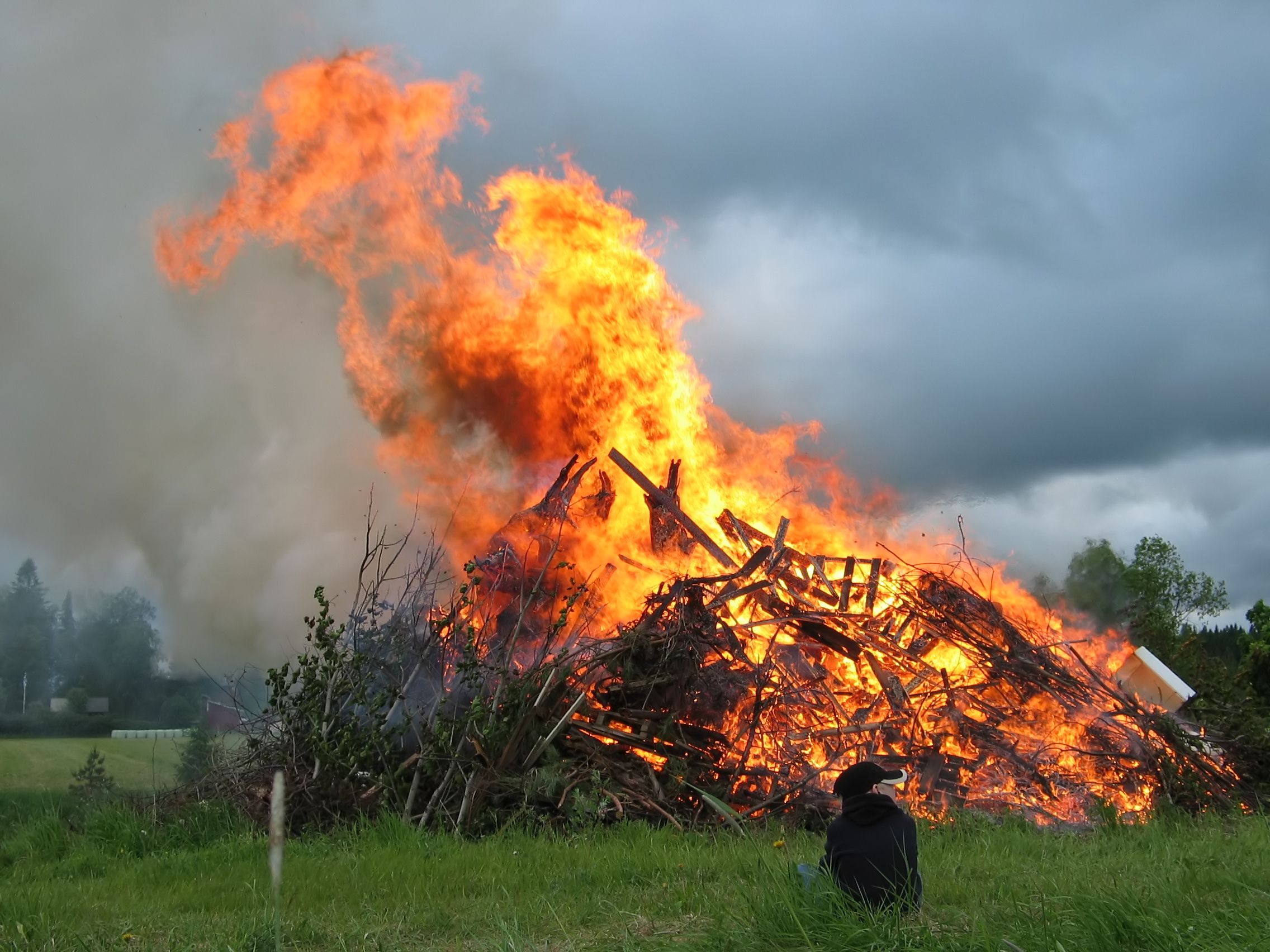
Is wood burning a physical or chemical change?
a)
Physical
b)
Chemical
6.
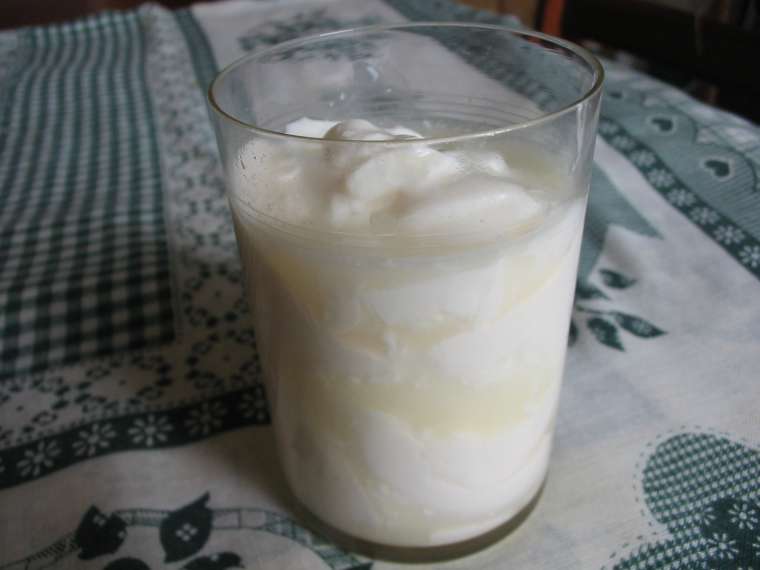
Is milk going sour a physical or chemical change?
a)
Physical
b)
Chemical
7.

Is gatorade powder dissolving in water physical or chemical change?
a)
Physical
b)
Chemical
8.

Is mold growing on cheese a physical or chemical change?
a)
Physical
b)
Chemical
9.

Is making orange juice a physical or chemical change?
a)
Physical
b)
Chemical
10.

Is sharpening a pencil a physical or chemical change?
a)
Physical
b)
Chemical
11.

Is copper tarnishing a physical or chemical change?
a)
Physical
b)
Chemical
12.

Is the formation of the grand canyon a physical or chemical change?
a)
Physical
b)
Chemical
13.
In an exothermic reaction, energy is _________.
a)
Released
b)
Absorbed
c)
Stored
d)
Doubled
14.
During Photosynthesis energy is absorbed. What kind of reaction is it?
a)
Physical
b)
Exothermic
c)
Endothermic
d)
Photothermic
15.
The Law of Conservation of Mass tells us matter can't ______________.
a)
change color
b)
change state of matter
c)
be created or destroyed
d)
change temperature
16.
Which of the following IS a clue that a chemical change has occurred?
a)
State of matter change
b)
Size Change
c)
Change in temperature
d)
Shape change
17.
Which of the following is a chemical property of water?
a)
Reacts with pure Sodium
b)
Boils at 100 degrees Celsius
c)
Dissolves Sugar
d)
Has a density of 1 g/mL
18.
Jack has a rock. The rock has a mass of 14g and a volume of 2cm3. What is the density of the rock?
a)
7 mL
b)
7 g/cm3
c)
28 g/cm3
d)
1/7 g/cm3
19.
Which units of measurement are used for volume?
a)
grams
b)
centimeters
c)
grams/milliliter
d)
milliliter
20.
Which lab tool might you use to measure the volume of a liquid?
a)
electric scale
b)
bunsen burner
c)
test tube
d)
graduated cylinder
21.

What is the volume of Object X?
a)
10.0 cm3
b)
15.0 cm3
c)
20.0 cm3
d)
25.0 cm3
22.

I have two objects with the same volume but different masses. Which object will be more dense?
a)
The object with less weight.
b)
The object with more weight.
c)
The object with more mass.
d)
The object with less mass.
23.
What is the formula for density?
a)
density = mass x volume
b)
density = mass / volume
c)
density = mass + volume
d)
density = mass - volume
24.
The tool used to measure the mass of a substance or object is a ______________.
a)
balance
b)
graduated cylinder
c)
ruler
d)
thermometer
25.
Frank has a paper clip. It has a mass of 9g and a volume of 3cm3. What is its density?
a)
3 g/cm3
b)
1/3 g/cm3
c)
27 g/cm3
d)
39 g/cm3
26.
Calculate the number of gold atoms in a 4 mole sample of gold.
a)
2.41x1024
b)
3.01x10²³
c)
4.82x1024
d)
6.02x10²³
27.
What is the molar mass of calcium hydroxide, Ca(OH)2?
a)
74.1 g/mole
b)
57.1 g/mole
c)
58.1 g/mole
d)
none of the above
28.
Calculate the mass of iron in a sample of iron ore containing 2.61x10²³ iron atoms.
a)
0.433g
b)
24.2g
c)
44g
d)
6.02g
29.
Calculate the number of moles of chlorine atoms in 55g of copper chloride.
a)
0.409 moles
b)
0.818 moles
c)
1.550 moles
d)
2.201 moles
30.
What is 50 C in Kelvin?
a)
223
b)
323
c)
100
d)
50
31.
What will happen to the volume of a gas under constant temperature if the pressure increases?
a)
Increase
b)
Decrease
c)
Nothing
d)
Explosion!
32.
If you increase the pressure of a constant volume of gas, what will happen to the temperature?
a)
Increase
b)
Decrease
c)
Stay the same
d)
It will Blow Up
33.
How do you convert Celsius to Kelvin?
a)
Add 273
b)
Subtract 273
c)
You can't convert those
d)
They are the same thing
34.
What about gasses can be measured?
a)
Pressure and Volume
b)
Temperature, Volume, and Pressure
c)
Volume and Temperature
d)
Pressure, Temperature, Volume, and Moles
35.
Which is a quality that only gasses display
a)
Spread out to fill all available space
b)
Take the shape of their container
c)
Can't be compressed
d)
All of these
36.
How are pressure and volume related?
a)
Directly
b)
Indirectly
c)
They aren't related
37.
What law combines all 3 factors (pressure, temperature, and volume)
a)
Combined Gas Law
b)
Charle's Law
c)
Boyle's Law
d)
Avagadros Ideal Gas Law
38.

Describe the substance between letters A and B.
a)
Solid
b)
Liquid
c)
Melting
d)
Evaporating
39.

Describe the substance between letters D and E.
a)
Gas
b)
Liquid
c)
Melting
d)
Evaporating
40.
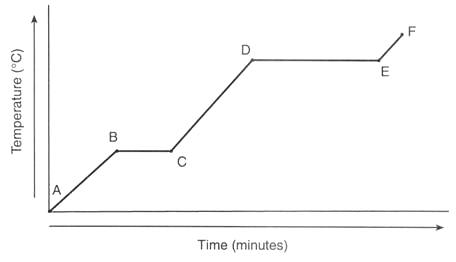
Between which points is the temperature of the substance remaining constant?
a)
A-B only.
b)
A-B, C-D, E-F
c)
B-C only.
d)
B-C, D-E
41.
Which of these conditions is always true for an exothermic process?
a)
They leave the surroundings feeling cold
b)
They release energy into the surroundings.
c)
They absorb energy from the surroundings
d)
The reactants gain energy as they form the products
42.

What is true regarding CO2 for temperatures above 31 °C?
a)
It can never be liquified.
b)
It decomposes.
c)
It has a high pressure.
d)
It is a plasma.
43.
At 10 atm, dry ice is heated from -100 °C to 30 °C. What changes occur?
a)
freezing, then condensation
b)
melting only
c)
sublimation only
d)
melting, then boiling
44.
What is the normal melting point of CO2?
a)
-78.5 °C
b)
-56.7 °C
c)
31 °C
d)
It doesn't have a normal melting point.
45.

What state of matter is X?
a)
solid
b)
liquid
c)
gas
d)
supercritical fluid
46.
For the formula:
Q= m c ∆T
The units for specific heat are:
Q= m c ∆T
The units for specific heat are:
a)
g /J C
b)
°C/g J
c)
kJ/g
d)
J/g°C
47.

What would be the effect on the particles if more heat is supplied to the system?
a)
They would slow down
b)
They would stop moving
c)
They would speed up
d)
There would be no effect
48.
If two objects have different temperatures, heat will flow from the warmer object to the cooler one UNTIL ____________
a)
one reaches a temperature of zero
b)
they both have an equal temperature
c)
one runs out of energy
49.
The total energy of all the particles in a substance is called:
a)
temperature
b)
thermal energy
c)
degrees
d)
mass
50.
If the specific heat of water is 4.18 J/g∙°C, how much heat is required to increase the temperature of 1.2 kg of water from 23 °C to 39 °C? (show your work)
a)
-80,256
b)
80.256
c)
80,256
d)
-80.256
51.
A combination that can be separated by physical processes is a .....
a)
Pure Substance
b)
Glucose
c)
Element
d)
Mixture
52.
A mixture that is NOT evenly distributed is called ....
a)
Compounded
b)
Homogenous
c)
Heterogenous
d)
Salty
53.
If you change a substance into a new substance...
a)
Partial Change
b)
Physical Change
c)
Chemical Change
d)
Freezing
54.

This picture represents:
a)
Element
b)
Compound
c)
Mixture of Elements
d)
Mixture of Compounds
55.
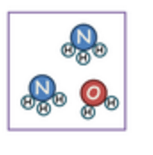
This picture represents:
a)
Element
b)
Compound
c)
Mixture of Elements
d)
Mixture of Compounds
56.
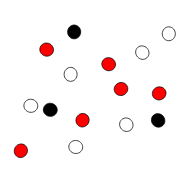
This picture represents:
a)
Element
b)
Compound
c)
Mixture of Elements
d)
Mixture of Compounds
57.
All matter is made up of .....
a)
Compounds
b)
Atoms
c)
Molecules
d)
Sunshine
58.
How many liters would you need to make a 1 M solution if you have 6 mol of Sodium Hydroxide?
a)
2
b)
3
c)
4
d)
6
59.
How many moles of NaCl are present in a solution with a molarity of 8.59 M and a volume of 125 mL?
a)
1074 mol
b)
0.069 mol
c)
1.07 mol
d)
62.7 mol
60.
Describe a solute.
a)
part of solution present in largest amount
b)
gets dissolved
c)
water
d)
surrounds and breaks apart
61.

How does a solution become supersaturated?
a)
dissolve lots of solute in it.
b)
dissolve a little solute in it.
c)
dissolve more solute than you should be able to.
d)
dissolve a super amount of solvent in it.
62.
Solution where more solute can still be dissolved at the given temperature.
a)
Saturated
b)
Unsaturated
c)
Supersaturated
d)
Homogeneous solution
63.

Which solute is the most soluble at 10 ⁰C?
a)
KI
b)
KClO3
c)
NH4Cl
d)
NH3
64.

Which solute is the least soluble at 90 ⁰C?
a)
SO2
b)
KClO3
c)
KI
d)
HCl
65.
Graph that shows the amount of solute that can be dissolved in 100 g of water at a certain temperature.
a)
Solubility curve
b)
Saturation curve
c)
Concentration curve
d)
Molarity curve
100 %

