
 Worksheets
Biology Review
Total questions: 94
Worksheet time: 3hrs 59mins
Name
Class
Date
1.
In what organelle is the genetic material found inside?
a)
Endoplasmic Reticulum
b)
Golgi Complex
c)
Nucleolus
d)
Nucleus
2.
What organelle is called the "powerhouse" of a cell?
a)
Endoplasmic Reticulum
b)
Nucleus
c)
Mitochondria
d)
Nucleolus
3.

Using this image, what organelle is C?
a)
Cell Wall
b)
Mitochondria
c)
Large Cell Vacuole
d)
Chloroplast
4.
What is the function of the vacuole?
a)
Sac that stores water, nutrients, and waste products
b)
Sac filled with digestive chemicals
c)
Jelly-like substance within the plasma membrane
d)
stack of membranes that packages chemicals
5.
What is the function of nucleus?
a)
Structure that organizes motion of chromosomes.
b)
Structure that contains DNA and directs the cell
c)
Membrane that surrounds and protects the cell
d)
Stack of membranes that packages chemicals
6.
Where does photosynthesis occur?
a)
mitochondria
b)
stomata
c)
xylem
d)
chloroplast
7.

I make proteins for the cell. What am I?
a)
ribosome
b)
mitochondria
c)
chloroplast
d)
lysosome
8.
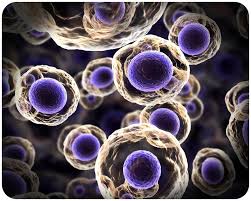
The two kinds of cells are Prokaryotes and Eukaryotes. How are they different?
a)
Prokaryotes have a nucleus.
b)
Eukaryotes have a nucleus.
c)
Prokaryotes are plant cells.
d)
There is no difference.
9.

What cell part is NOT found in all cells?
a)
Cell Wall
b)
Cell Membrane
c)
Cytoplasm
d)
Genetic Material
10.
Main producer of ATP in all eukaryotes
a)
chloroplast
b)
mitochondria
c)
lysosome
d)
smooth er
11.

What does this organism use for movement?
a)
Pseudopod
b)
Cilia
c)
Flagella
d)
legs
12.

What does this organism use for movement?
a)
Pseudopod
b)
Cilia
c)
Flagella
d)
legs
13.

Which phase of the cell cycle is depicted in this image?
a)
Cytokinesis
b)
Interphase
c)
Anaphase
d)
Metaphase
14.
which of the following does not occur by mitosis?
a)
growth
b)
production of gametes
c)
repair
d)
development in the embryo
15.
The cell membrane pinches in, dividing the cytoplasm into 2 cells
a)
Metaphase
b)
Anaphase
c)
Telephase
d)
Cytokinesis
16.

Which best describes the process shown?
a)
mutation in which the DNA content of the gene is ltered
b)
segregation of sister chromatids
c)
condensation and segregation of the alleles
d)
crossing-over which alleles are exchanged
17.
Which of the following best describes meiosis?
a)
It is carried out in all tissues theat require cell replacement
b)
It occurs only in cells in the reproductive structures of an organism
c)
It happens in all of the tissues except the brain and spinal cord
d)
It is the first stage of mitosis
18.

Which is the correct order?
a)
C,D, B, A, F, E
b)
D,A,F,C,E,B
c)
B,E,C,F,A,D
d)
C,B,D,A E,F
19.
A male shark has 40 chromosomes in each of its sex cells. How many would be present in its body cells?
a)
20
b)
40
c)
80
d)
160
20.
A guinea pig cell has 64 chromosomes. After mitosis, each daughter contains ___ chromosomes.
a)
128
b)
64
c)
32
d)
16
21.
Why is meiosis important for sexual reproduction?
a)
It allows the zygote formed from fertilization to have triple the chromosome number of the organism.
b)
It allows gametes to have twice the original number of chromosomes of the organism.
c)
It allows gametes to have half the original number of chromosomes of the organism.
d)
It allows the zygote formed from fertilization to have half the original number of chromosomes of the organism.
22.
How many daughter cells are produced in mitosis?
a)
4 new cells
b)
2 new cells
c)
One new cell
d)
none of these
23.
Why do cells undergo meiosis?
a)
to help repair the cell
b)
to produce sex cells: egg and sperm
c)
to help the cell grow
d)
none of these
24.
How many daughter cells are produced in meiosis?
a)
4 daughter cells
b)
none of these
c)
3 daughter cells
d)
2 daughter cells
25.
Is the final result of meiosis haploid of diploid?
a)
diploid
b)
haploid
26.
The body cells of a horse contain 64 chromosomes. How many chromosomes would be present in cells produced through meiosis?
a)
64 chromosomes
b)
32 chromosomes
c)
63 chromosomes
d)
128 chromosomes
27.
A female sex cell is called...
a)
Sperm
b)
Egg
28.
A male sex cell is called...
a)
Egg
b)
Sperm
29.

How many chromosomes do humans have?
a)
46
b)
21
c)
10
30.

Fruit fly body cells have 8 chromosomes. After mitosis, you would expect a resulting fruit fly daughter cell to have -
a)
16 chromosomes.
b)
46 chromosomes.
c)
8 chromosomes.
d)
4 chromosomes.
31.
Which two processes are involved in protein synthesis?
a)
Replication and Transcription
b)
Replication and Translation
c)
Transcription and Translation
32.
Within the cell, where does translation occur?
a)
Nucleus
b)
Cytoplasm
c)
Ribosome
33.
Within the eukaryotic cell, where does transcription occur?
a)
Nucleus
b)
Cytoplasm
c)
Ribosome
34.
Which of the following bases is found only in RNA?
a)
Adenine
b)
Guanine
c)
Thymine
d)
Uracil
35.
Transcribe the following sequence of DNA into RNA:
AAG CTT TGC
AAG CTT TGC
a)
TTC GAA ACG
b)
UUC GAA ACG
c)
TTC GUU UCG
d)
UUC GUU UCG
36.
What is the monomer of DNA and RNA?
a)
amino acids
b)
nucleotides
c)
fatty acids
d)
monosaccharide
37.
Which of the following would be a DNA nucleotide?
a)
phosphate, deoxyribose, uracil
b)
phosphate, deoxyribose, thymine
c)
phosphate, ribose, uracil
d)
phosphate, ribose, thymine
38.
What would be the complementary DNA strand for the following nucleotide sequence?
TCG ATA CGA
TCG ATA CGA
a)
AGC ATA GCT
b)
AGC TAT GCT
c)
AGC UAU GCU
d)
UGC TUT GCT
39.
Which nucleotide is complementary to adenine?
a)
adenine
b)
thymine
c)
cytosine
d)
guanine
40.
Which correctly outlined the central dogma
a)
DNA --> mRNA --> rRNA
b)
DNA --> tRNA --> protein
c)
DNA --> mRNA --> protein
d)
DNA --> amino acid --> protein
41.
What will be the resulting mRNA from this DNA sequence:
GAT-TAC-AGA-TTA-CAT?
GAT-TAC-AGA-TTA-CAT?
a)
CTA-ATG-TCT-AAT-GTA
b)
GAU-UAG-UGA-UUA-GUT
c)
CUA-AUG-UCU-AAU-GUA
d)
CAT-ACA-TAC-ATA-TAG
42.
DNA has a ______ strand; RNA has a ______ strand.
a)
double/double
b)
double/triple
c)
double/single
d)
single/single
43.
What enzyme initiates DNA replication?
a)
DNA polymerase
b)
tRNA
c)
RNA polymerase
d)
mRNA
44.

Nucleotides are made up of a sugar, phosphate, and..?
a)
nitrogenous base
b)
nucleic acid
c)
cholesterol
d)
fatty acid
45.
What is the transcribed mRNA strand for CATTAA
a)
GUAAUU
b)
GTAATT
c)
AUGGUU
d)
CATTAA
46.
A monomer of DNA is called a(n)
a)
Monosaccharide
b)
Amino Acid
c)
Triglyceride
d)
Nucleotide
47.
A five-carbon sugar found in DNA.
a)
ribose
b)
guanine
c)
deoxyribose
d)
helicase
48.
DNA polymerase is a(n)
a)
lipid
b)
enzyme
c)
sugar
d)
starch
49.
What mutation has occurred here?
T-G-A-C-C-A
T-G-A-G-C-A
T-G-A-C-C-A
T-G-A-G-C-A
a)
Substitution
b)
Deletion
c)
Insertion
d)
Frameshift
50.
DNA molecule segment is : TTACGCAAG
The mutated DNA segment is TTCGCAAG. This is an example of ___ mutation.
The mutated DNA segment is TTCGCAAG. This is an example of ___ mutation.
a)
Substitution
b)
Deletion
c)
Insertion
d)
Inversion
51.
What are the building blocks of proteins called?
a)
DNA
b)
RNA
c)
Ribosomes
d)
Amino Acids
52.
What causes mutations?
a)
Mistakes in replication or environmental influences
b)
The amino acids
c)
Passed down by genetics
d)
It's how your born
53.
Osmosis is the movement of _____ across a membrane.
a)
food
b)
energy
c)
oxygen
d)
water
54.
Which is true about active transport?
a)
It requires energy
b)
it does not require energy
c)
It moves substances down the concentration gradient
d)
it moves material from high to low concentration
55.

The picture below is an example of (movement of perfume) _________________.
a)
osmosis
b)
isotonic
c)
diffusion
d)
active transport
56.
A membrane that allows some molecules to pass but not others.
a)
Tonicity
b)
Osmosis
c)
Selectively permeable
d)
Impermeable
57.
Which biomolecule helps form muscles?
a)
Nucleic Acid
b)
Carbohydrate
c)
Protein
d)
Lipids
58.
Which biomolecule is responsible for insulation and energy storage?
a)
Protein
b)
Nucleic Acid
c)
Lipid
d)
Carbohydrate
59.
Which biomolecule has sugars and starches?
a)
Lipids
b)
Proteins
c)
Carbohydrates
d)
Nucleic Acid
60.
Which biomolecule contain your genetics?
a)
Carbohydrate
b)
Lipid
c)
Nucleic Acid
d)
Protein
61.
Which biomolecule is your main source of energy?
a)
Nucleic Acid
b)
Protein
c)
Lipid
d)
Carbohydrate
62.
Fats and oils are composed of what two groups of molecules?
a)
glucose and fructose
b)
starch and sugar
c)
water and cellulose
d)
fatty acids and glycerol
63.
The monomer of a nucleic acid is
a)
Monosaccharide
b)
Amino Acid
c)
Nucleotide
d)
Triglyceride (3 Fatty Acids and 1 Glycerol)
64.
The monomer of a protein is
a)
Monosaccharide
b)
Amino Acid
c)
Nucleotide
d)
Triglyceride (3 Fatty Acids and 1 Glycerol)
65.
Which biomolecule is also known as enzymes?
a)
Carbohydrate
b)
Lipid
c)
Nucleic Acid
d)
Protein
66.

What is the following molecule?
a)
DNA
b)
RNA
c)
Testosterone
d)
Estrogen
67.
What is the functions of lipids?
a)
Quick source of energy
b)
Builds muscles, skin, enzymes
c)
Stores genetic information
d)
Stores energy, insulation, protection
68.
Unlike mitosis, meiosis in male mammals results in the formation of
a)
one haploid gamete
b)
three diploid gametes
c)
four diploid gametes
d)
four haploid gametes
69.
Why do we need meiosis?
a)
To double the number of chromosomes going into sex cells
b)
To halve the number of chromosomes going into sex cells
c)
To triple the number of chromosomes going into sex cells
d)
To not change the number of chromosomes going into sex cells
70.
products of meiosis are genetically
a)
different
b)
identical
71.
If the Diploid number of Carrots is 18, the haploid number is
a)
18
b)
9
c)
27
d)
36
72.
Human eggs and sperm are _____, and each has ____ chromosomes.
a)
diploid, 23
b)
diploid, 46
c)
haploid, 23
d)
haploid, 46
73.
Crossing over helps promote
a)
male genotype
b)
genetic variation
c)
DNA replication
d)
mitosis
74.
The cells produced via meiosis are called:
a)
sex cells (gametes)
b)
somatic cells
c)
body cells
d)
skin cells
75.
What sex chromosomes would a male have?
a)
XX
b)
XY
c)
YY
d)
Trisomy Y
76.
Crossing-over occurs during which stage of meiosis?
a)
prophase II
b)
prophase I
c)
anaphase II
d)
telophase II
77.

This type of cell is found in males and is responsible for reproduction.
a)
sperm cell
b)
egg cell
c)
muscle cell
d)
nerve cell
78.
G = green, g = yellow
The genotype for a yellow plant is...
The genotype for a yellow plant is...
a)
GG
b)
Gg
c)
gg
d)
all of the choices result in yellow
79.
T = tall an t = short
TT and Tt would result in the following phenotype
TT and Tt would result in the following phenotype
a)
short
b)
tall
c)
both tall and short
d)
neither tall or short
80.

T - tall and t = short
In the punnett square below, what belongs in the missing square
In the punnett square below, what belongs in the missing square
a)
tt
b)
Tt
c)
Bb
d)
TT
81.
What is the purpose of an enzyme?
a)
give permission for the reaction
b)
raise activation energy
c)
speed up reactions
d)
control how many reactions occur
82.
Enzymes are capable of increasing the rate of a chemical reaction within a living cell. Enzymes accomplish this through which of the following means?
a)
reducing the number of products
b)
reducing the activation energy
c)
increasing the temperature of the cell
d)
increasing the concentration of reactants
83.

What is structure A?
a)
Substrate
b)
Active site
c)
Enzyme
d)
Products
84.

What is structure E, F, G?
a)
Substrate
b)
Active site
c)
Enzyme
d)
Products
85.
What is a substance called if it speeds up a chemical reaction?
a)
reusable
b)
catalyst
c)
specific
d)
fragile
86.
What 3 letters do enzymes typically end in?
a)
-ose
b)
-ase
c)
-ese
d)
-tic
87.
The "lock and key hypothesis" attempts to explain the mechanism of?
a)
Vacuole formation
b)
Pinocytosis
c)
Sharing of electrons
d)
Enzyme specificity
88.
Which type of cell has no nucleus?
a)
Eukaryote
b)
Prokaryote
c)
Animal
d)
Plant
89.
What does a flagellum do?
a)
It helps the cell move.
b)
It helps the cell make protein.
c)
It stores water and energy for the cell to use later.
d)
I don't know, but it looks cool.
90.
Prokaryotic does not have…….
a)
membrane bound organelles
b)
cell membrane
c)
DNA or RNA
d)
life
91.
The ___________ is the basic unit of life
a)
organ
b)
cell
c)
atom
d)
tissue
92.
Organs and tissues that perform the same function is called _____________?
a)
cells
b)
tissues
c)
organ system
d)
organs
93.
What is the correct order of organization
a)
tissues-cells-organs-organ systems-organism
b)
cell-tissue-organs-organ systems-organism
c)
organism-cells-tissues-organ systems-organism
d)
tissues-cells-organs-organ sytems-organism
94.
Uses ATP (energy)
a)
Passive Transport
b)
Active Transport
100 %

