wayground logo

Free Printable Worksheets

Font size

S
M
L
XL
Worksheets

Honors Biology Midterm S1 Review

Total questions: 90

Worksheet time: 3hrs 46mins

Name
Class
Date
1.

What is the independent variable?

a)

The variable that is not changed

b)

The variable that is being observed

c)

The variable that you purposely manipulate

d)

The variable that responds to the change

2.

This statement would be which part of the scientific method: "There is so much snow outside!"

a)

Inference

b)

Question

c)

Observation

d)

Hypothesis

3.

Quantitative or Qualitative? Number of eggs in a carton.

a)

Quantitative

b)

Qualitative

4.

Quantitative or Qualitative? Smoothness of the eggs in a carton.

a)

Quantitative

b)

Qualitative

5.

Quantitative or Qualitative? Color of your pool water.

a)

Quantitative

b)

Qualitative

6.

Quantitative or Qualitative? pH levels of your pool water.

a)

Quantitative

b)

Qualitative

7.
An experiment is performed on plants to see how different liquids affect plant growth. Each plant in the experiment is given a different liquid; water, apple juice, or milk. Each plant has the same amount of soil, sunlight, and listens to the same music. In this investigation, the independent variable is ...
a)
The type of plant
b)
The amount of sunlight
c)
The type of music
d)
The type of liquid
8.
An experiment is performed on plants to see how different liquids affect plant growth. Each plant in the experiment is given a different liquid; water, apple juice, or milk. Each plant has the same amount of soil, sunlight, and listens to the same music. In this investigation, what is the dependent variable?
a)
Type of plant
b)
Water, apple juice, milk
c)
Plant growth
d)
Color of the plant's leaves
9.
What is the most basic unit of life?
a)
cell
b)
tissue
c)
organ
d)
organ system
10.
An organism made of one cell is called
a)
unicellular
b)
multicellular
11.
It is hot outside. You start sweating. In this case, the hot weather is the...
a)
stimulus
b)
response
c)
cause and effect
d)
responder
12.

The combination of chemical reactions through

which an organism builds up or breaks down

materials as it carries out its life processes is called ...

a)

absorption

b)

metabolism

c)

digestion

d)

consumption

13.

Maintaining a stable internal

environment is called

a)

homeostasis

b)

equilibrium

c)

balance

d)

evenness

14.

Green plants produce their own food through the process of photosynthesis. Which characteristic of life does this represent?

a)

All living things use energy

b)

All living things contain cells

c)

All living things maintain homeostasis

d)

All living things grow

15.

A baby song bird hatches from its egg with both parent songbirds watching. Which characteristic of life does this represent?

a)

All living things reproduce

b)

All living things maintain homeostasis

c)

All living things use energy

d)

All living things grow

16.

A camel has eyelashes that work to keep the dust and sand out of its eyes. Which characteristic of life does this represent?

a)

All living things adapt to their environment

b)

All living things grow

c)

All living things have cells

d)

All living things use energy

17.
When a baby kitten becomes an adult cat, this is an example of...
a)
energy metabolism
b)
growth and development
c)
response to stimuli
d)
having cells
18.

Which biome is located in the eastern third of the US, most of Europe, and Japan?

a)

tundra

b)

taiga

c)

grassland

d)

temperate deciduous forest

19.

Which biome lacks trees due to its high winds, low amount of precipitation, and permanently frozen subsoil?

a)

tundra

b)

taiga

c)

grassland

d)

desert

20.

Which biome is home to large, grazing herbivores and ground-nesting birds?

a)

Tundra

b)

Taiga

c)

Grassland

d)

Desert

21.
The biome pictured is
a)
tropical rain forest
b)
temperate deciduous forest
c)
temperate rain forest
d)
tropical seasonal forest
22.
The closer a biome is to the equator, the more we would expect it to be
a)
warmer & wetter
b)
warmer & drier
c)
cooler & wetter
d)
cooler & drier
23.

An example of a biotic factor would be

a)

soil type

b)

producers or consumers

c)

average rainfall

d)

climate

24.

What are the two most significant factors that influence life in a biome?

a)

Average temp and precipitation

b)

Soil type and climate

c)

Plants and animals

25.

Which biome has the lowest net primary productivity?

a)

Deserts

b)

Forests

c)

Grasslands

26.

This biome has the highest net primary productivity

a)

Deciduous forests

b)

Temperate forest

c)

Rainforest

27.
Energy increases as you move up the food pyramid (from bottom to top).
a)
True 
b)
False
28.
Consumer that eats plants
a)
heterotroph
b)
herbivore
c)
producer
d)
community
29.
Which of these is an example of an autotroph?
a)
Sunflower
b)
Krill
c)
Leopard
d)
Hummingbird
30.
What percentage of energy is passed on to each tropic level?
a)
10%
b)
50%
c)
90%
d)
100%
31.
In a food web, arrows point at:
a)
who gets energy.
b)
who gets eaten.
32.
Bacteria, fungi, and earthworms are examples of: 
a)
scavengers
b)
predators
c)
prey
d)
decomposers
33.
Which organism recieves the least amount of energy from the producer?
a)
Owl
b)
Grasshopper
c)
Lilypad
d)
Mouse
34.
An environmental change that removed which of these organisms from the ecosystem would cause the most instability in the ecosystem?
a)
Auklets
b)
Foxes
c)
Salmon
d)
Zooplankton
35.
The diagram below is an example of _______________
a)
Food Web
b)
Food Chain
c)
Food Pyramid
d)
Food Buffet
36.

All food webs and food chains begin with _________________.

a)

primary consumer

b)

producers

c)

secondary consumers

d)

tertiary consumers

37.
How many carnivores are shown in this food web?
a)
6
b)
4
c)
5
d)
3
38.

If there are 100 Kcal of energy available in the producers, how much energy would be available in the primary consumers?

a)

10 Kcal

b)

1 Kcal

c)

100 Kcal

d)

1000 Kcal

39.

Which organism do the owl and the weasel compete for in the food web?

a)

Hawk

b)

Spider

c)

Grasshopper

d)

Shrew

40.
Cattle egrets forage (feed) in fields among cattle. The egret gets easy access to flying insects stirred up by the cattle, and the cattle don't care if they are there or not.
a)
mutualism
b)
commensalism
c)
competition
d)
parasitism
41.
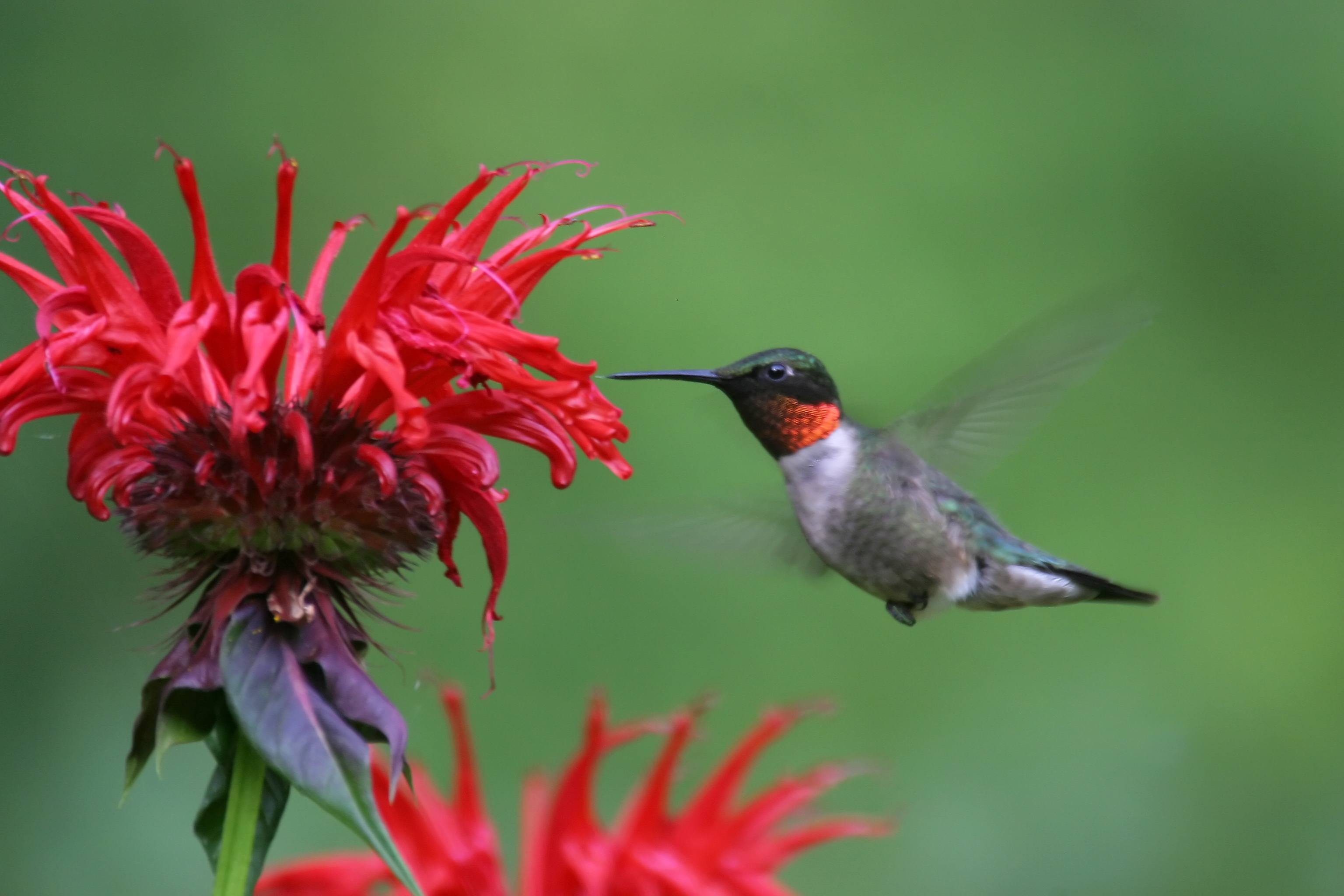
What type of symbiosis?  Hummingbirds feed on nectar from flowers.  The flowers are pollinated by hummingbirds as they move from flower to flower.
a)
commensalism
b)
mutualism
c)
parasitism
d)
predation
42.
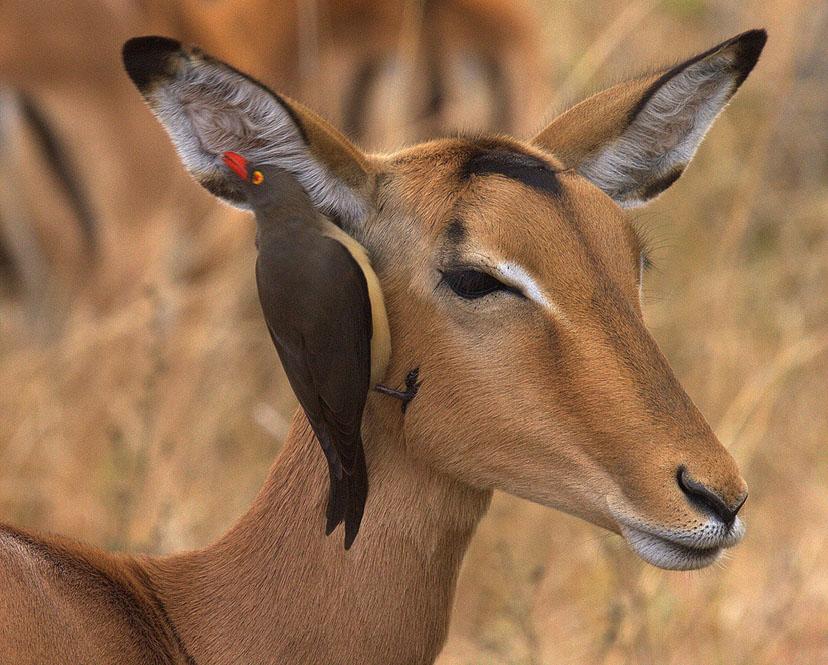
Red-billed oxpeckers are birds that often feed on parasites that infest impala.  This is an example of _______.
a)
commensalism
b)
mutualism
c)
neutralism
d)
competition
43.

Aphids are tiny insects that live on and eat the leaves of plants, removing vital nutrients from the plants.

a)

Predation

b)

Parasitism

c)

Commensalism

d)

Mutualism

44.
Which symbols best describe mutualism?
a)
+,+
b)
+,-
c)
+,0
d)
-,0
45.
Barnacles create home sites by attaching themselves to whales. This relationship neither harms nor benefits the whales. 
a)
parasitism
b)
commensalism
c)
mutualism
46.

The maximum size of a population that the environment can carry.

a)

Population

b)

Carrying Capacity

c)

Limiting Factors

47.

In which cell organelle does photosynthesis occur?

a)
mitochondria
b)
stomata
c)
xylem
d)
chloroplast
48.

Which of the following would NOT cause a change in the rate of photosynthesis

a)

lack of oxygen

b)

lack of carbon dioxide

c)

lack of water

d)

lack of light

49.
Why is photosynthesis important?
a)
creates oxygen for animals to breath
b)
creates energy for heterotrophs to use
c)
creates food for plants to use
d)
all of these are correct
50.
Oxygen is...
a)
needed for photosynthesis to occur
b)
a product of cellular respiration
c)
a product of photosynthesis
d)
deadly to humans
51.
2 energy rich molecules created by Light Dependent Reactions of Photosynthesis are:
a)
ATP and ADP
b)
ATP and NADPH
c)
ADP and FADH
d)
ADP and NADP
52.
The splitting of the glucose molecule is called?
a)
synthesis
b)
denaturalization
c)
glycolysis
d)
dissolving
53.

What's the chemical formula for glucose?

a)

6C6H12O6

b)

C12H6O12

c)

C6H12O6

d)

CHO

54.
What is the correct equation for cellular respiration?
a)
6O2 + C6H12O6 -> 6CO2 + 6H2O + Energy
b)
6O2 + C6H12O6 + Energy -> 6CO2 + 6H2O
c)
6CO2 + 6H2O -> 6O2 + C6H12O6 + Energy
d)
6CO2 + 6H2O + Energy -> 6O2 + C6H12O6
55.

Which of the following is a reactant of cellular respiration?

a)

Glucose

b)

Carbon Dioxide

c)

Water

d)

ATP

56.

Which of the following is a product of cellular respiration?

a)

Glucose

b)

Carbon Dioxide

c)

Oxygen

d)

Nitrogen

57.

Which of the following is not needed to start the light reaction

a)

H2O

b)

ADP + P

c)

CO2

58.

What is the waste-product of light-dependent reaction?

a)

oxygen

b)

water

c)

carbon dioxide

59.
What provides the energy for the Calvin cycle?
a)
ATP
b)
ADP
c)
NADP
d)
NADPH2
60.
Most plants appear green because chlorophyll
a)
absorbs green light.
b)
absorbs violet light.
c)
reflects green light.
d)
does not absorb violet light.
61.

In green plants, the primary function of the Calvin cycle is to

a)

Use ATP to release carbon

b)

Split water to release oxygen.

c)

Construct sugar from carbon dioxide.

d)

Use NADPH to release carbon

62.
The two main stages of photosynthesis are the
a)
light reactions and respiration
b)
dark reactions and the Calvin cycle 
c)
light reactions and the Calvin cycle
d)
dark reactions and fermentation
63.

which type of human cell would you expect to find a higher number of mitochondria? (hint: think about what the mitochondria does)

a)

muscle cells

b)

hair cells

c)

skin cells

d)

red blood cells

64.

all of the following generate 2 ATP except

a)

glycolysis

b)

Krebs cycle

c)

electron transport chain

d)

fermentation

65.

What are the three stages of cellular respiration?

a)

1- glycolysis

2- cellular respiration

3- fermentation

b)

1- glycolysis

2- krebs cycle

3- electron transport chain

c)

1- krebs cycle

2 - calvin cycle

3- electron transport chain

d)

1- electron transport chain

2- krebs cycle

3- glycolysis

66.

Where does glycolysis take place?

a)

in the mitochondria

b)

in the cell membrane

c)

in the cytoplasm/

cytosol

d)

in the endoplasmic reticulum

67.
What does it mean for something to be anaerobic?
a)
It requires CO2
b)
It does not require CO2
c)
It requires oxygen
d)
It does not require oxygen
68.

Which of the below is a consequence of lactic acid production?

a)

Increased flexibility of muscles

b)

Increased strength

c)

Increased muscular pain & fatigue

69.

Which type of water property explains water's ability to stick to other material.

a)

Cohesion

b)

Surface tension

c)

Adhesion

d)

High specific heat

70.

A material is hydrophobic, that means it...

a)

Doesn't mix with water or dissolve in water easily

b)

Mixes with water or dissolves in water easily

71.

Water is...

a)

Polar

b)

Nonpolar

72.
Which of the following properties of water enables molecules to cling together as they move from the roots to the leaves of plants?
a)
Water expands as it freezes.
b)
Water is an excellent solvent.
c)
Water exhibits cohesive behavior.
d)
Water moderates temperature.
73.
Some insects can stand on the surface of calm water. Their feet push the surface of the water down slightly, but they do not break the surface. Why?
a)
The insects are light enough so they do not break the hydrogen bonds holding the water molecules together
b)
The insects actually use their wings to hover slightly above the water’s surface and they only skim it with their feet.
c)
The insect’s feet are non-polar, so they are repelled by the polar water molecules and are pushed away from the water’s surface.
d)
The insects are small enough to see the individual water molecules, so they are able to step carefully from one molecule to the next
74.
What is a solute?
a)
The substance that does the dissolving in a solution.
b)
The substance that is dissolved into the solution.
c)
The mixing of different substances.
d)
The process in which neutral molecules lose or gain electrons
75.
What is a solvent?
a)
The substance that does the dissolving in a solution.
b)
The substance that is being dissolved in a solution.
c)
The mixing of different substances.
d)
The process in which neutral molecules lose or gain electrons
76.

Fish breathe oxygen, which is dissolved in water. Is the oxygen the fish breathe considered to be the solute or solvent?

a)

Solute

b)

Solvent

77.
a)

solute

b)

solvent

78.
Something is ___________ ____________
when some molecules can cross the membrane while others cannot. 
a)

Semi Permeable 

b)
Totally Transparent
c)
Liquid Licorice 
d)
Heavily Patrolled 
79.
Hydrophobic region of the cell membrane?
a)
E
b)
B
c)
C
d)
80.
What type of transport is this?
a)
facilitated diffusion
b)
active transport
c)
diffusion
d)
osmosis
81.
In which direction will these molecules diffuse?
a)
from right to left
b)
from left to right
c)
they will not move at all
d)
they will move in both directions equally
82.
Which part of this phospholipid is hydrophobic?
a)
fatty lipid tails
b)
head
c)
all of it is hydrophobic
d)
none of it is hydrophobic
83.
A person should never drink salty water because their cells would
a)
shrink
b)
expand
84.
Passive transport requires no
a)
concentration gradients
b)
osmosis
c)
motion
d)
energy
85.

All of the following are examples of passive transport except....

a)

osmosis

b)

diffusion

c)

facilitated diffusion

d)

endocytosis

86.

A type of active transport when a cell takes in large amounts of solids

a)

pinocytosis

b)

exocytosis

c)

phagocytosis

d)

osmosis

87.

The egg lost mass in the corn syrup. This means that corn syrup is a ____________ solution

a)

Hypertonic

b)

Hypotonic

c)

Isotonic

d)

Osmotonic

88.

The egg would gain mass if placed in a ____________ solution

a)

Hypertonic

b)

Hypotonic

c)

Isotonic

d)

Osmotonic

89.

What was the independent variable in the egg lab?

a)

The type of liquid used each day

b)

The mass of the egg

c)

The amount of liquid in the cup

d)

The cup we were using

90.

Which type of transport was demonstrated throughout the egg lab?

a)

Passive Transport

b)

Active Transport