
 Worksheets
IBDP Biology: Topic 2 - Molecular Biology - Review Game
Total questions: 93
Worksheet time: 1hrs 8mins
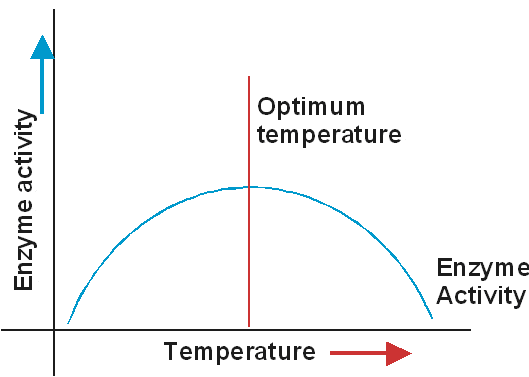
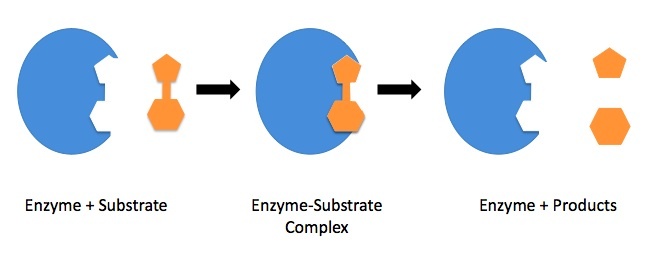
In order to increase the rate of reaction using an enzyme a scientist could.... (Choose all that apply)
Increase the amount of substrate
Decrease the temperature
Increase the temperartue
Introduce a competitive inhibitor
Enzymes are known as which macromolecule
Amino Acid
Protein
Carbohydrate
DNA
The type of reaction that occurs when a molecule is broken down by an enzyme.
Denatured
Catabolic reaction
Anabolic Reaction
Decomposition
The special bond links amino acids together
Glycosidic bond
Activation energy
Peptide bond
Active site
The amino acids that our bodies can manufacture or modify
essential amino acid
non-essential amino acid
coenzyme
protein
These reactions occur when smaller molecules are bound together to create larger ones
activation energy
peptide bond
anabolic reaction
catabolic reaction
Amino acids that must come from food as our bodies cannot make them
Non-essential amino acids
Essential amino acids
Enzymes
Peptide bonds
Many amino acids joined together
monopeptide
dipeptide
polypeptide
polysaccharide
Is the sum of all your body’s catabolic and anabolic reactions
anabolic reaction
catabolic reaction
metabolism
activation energy
The alteration of the active site allowing the enzyme and it’s substrate to fit together better
denature
induced fit
activation energy
peptide bond
The building blocks of proteins
enzymes
coenzymes
amino acids
polypeptides

Which describes the functions of proteins in living things?
structural, transport, signaling, catalysts, etc.
stores and transmits genetic information
stores energy and makes up cell membranes
quick energy and forming cell structure

Proteins are composed of (Choose all that apply)
carbon
hydrogen
nitrogen
phosphorus

Proteins are polymers of __________.
amino acids
fatty acids
carboxylic acids
nucleic acids

All proteins
have a unique structure that determines their unique function.
are exactly the same in function but different in structure.
are exactly the same in structure but different in function.
are enzymes.

The order of amino acids determines the ______ and ultimately the function of a protein.
shape
color
flavor
texture

Enzymes are ________ that act as ________.
proteins, catalysts
amino acids, proteins
proteins, amino acids
catalysts, carbohydrates

What is the function of enzymes in living things?
increase the rate of chemical reactions
form the basis of the plasma membrane
main energy molecule for a cell
insulation and protection
How does an enzyme influence a biological reaction?
It increases the energy difference between reactants and products.
It decreases the activation energy necessary to begin the chemical reaction.
It increases the kinetic energy of reactants, thereby increasing their tendency to collide.
It decreases the kinetic energy of reactants, enabling them to move through a chemical change.
Protein is found in the following food:
Meat, poultry, and fish
Pasta
Leafy Greens
Any of the above
which are proteins?
antibodies
collagen
hair
muscles
all options

Which colored box highlights the amino group?
Darker Blue (left)
Turquoise (top)
Orange (right)
Red (bottom)
Purple (middle)

Which colored box is different for every amino acid?
Darker Blue (left)
Turquoise (top)
Orange (right)
Red (bottom)
Purple (middle)

Which colored box is the reason this is an organic molecule?
Darker Blue (left)
Turquoise (top)
Orange (right)
Red (bottom)
Violet (middle)

Which colored box highlights the carboxyl?
Darker Blue (left)
Turquoise (top)
Orange (right)
Red (bottom)
Purple (middle)
Two amino acids will bond together as the result of _______.
Dehydration synthesis
Hydrolysis
pHolysis
Rehydration synthesis
In total, there are ____ building blocks of proteins.
20
thousands
millions
4
8
A protein goes through ____ stages of folding before it is finished.
4
2
3
5
20
If a protein is "denatured", what does that mean?
The protein has broken down
The protein has been created
The protein has folded
The protein has been domesticated
Which group is NOT attached to the alpha carbon atom in an amino acid?
Carboxyl group
Amine group
R-group
Phosphate group
What changes to the protein structure due to the effect of pH and temperature?
Denaturation
Hydration
Condensation
All of the above
What determines the three-dimensional shape of proteins?
The sequence of amino acids and the precise position of each amino acid within a structure
The type of bonds between amino acids
The number of amino acids
The type of R-group
What stabilizes alpha helices and beta-pleated sheets in the secondary structure of proteins?
Ionic bonds
Hydrogen bonds
Disulfide covalent bonds
Hydrophobic interactions
What is an example of a conjugated protein?
Insulin
Collagen
Haemoglobin
All of the above
What technology has allowed imaging of single-protein molecules and their interactions with other molecules?
Cryogenic electron microscopy
Atomic force microscopy
Scanning tunneling microscopy
X-ray crystallography
What type of amino acids helps integral proteins to embed in membranes?
Polar
Non-polar
Essential
Non-essential
What is an example of a non-conjugated protein?
Haemoglobin
Insulin
Both A and B
None of the above
Which of the following amino acids is involved in the formation of disulfide bonds?
Cysteine
Glycine
Alanine
Both B and C
What is the role of R-groups in polypeptides?
They determine the properties of assembled polypeptides
They form the backbone of the polypeptide chain
They aid in the process of transcription
None of the above
In a water-soluble protein, where would you expect to find the hydrophobic amino acids?
On the surface of the protein
In the core of the protein
Evenly distributed throughout the protein
Not present in the protein
The α-helix and β-sheet are examples of which level of protein structure?
Primary
Secondary
Tertiary
Quaternary
What does denaturation do to a protein? (Choose all that apply)
Changes the primary structure
Changes the secondary and tertiary structure
Changes the quaternary structure
All of the above
What is the effect of polar amino acids on the tertiary structure of proteins?
They cause the protein to fold into a helix
They cause the protein to form a β-sheet
They can form hydrogen bonds that contribute to protein folding
None of the above
What is the main characteristic of a fibrous protein? (All that apply)
It is composed of multiple polypeptide chains
It has a long, narrow shape
It has a spherical shape
None of the above
What makes an amino acid hydrophilic?
A nonpolar R-group
A polar or charged R-group
A neutral R-group
None of the above
What type of reaction is used to breakdown a polypeptide (protein) into amino acids?
(a)
Which element is found in all polypeptides but is not found in carbohydrates?
C
O
H
N
Where do hydrogen bonds form in a protein's secondary structure?
between NH2 and COOH groups of adjacent amino acids
between R groups of different amino acids
between NH2 and COOH groups of non-adjacent amino acids
between S (sulphur) atoms of different amino acids
What is true of all proteins that have a quaternary structure?
they consist of four polypeptides
they can attach to and release oxygen
they consist of more than one polypeptide
they contain iron
What is mainly responsible for determining a protein's tertiary structure?
hydrogen bonds between NH2 and COOH groups of adjacent amino acids
interactions between the R groups of different amino acids
hydrogen bonds between NH2 and COOH groups of non-adjacent amino acids
peptide bonds
An amino acid has the formula:
NH2C(CH3)HCOOH
What R group does it have?
H
C2H3
CH3
C2H4
A polymer of alpha-D-glucose found in plants has mostly 1,4 linkages and some 1,6 linkages. Which molecule fits this description?
glycogen
cellulose
amylose
amylopectin

What type of molecule is shown in this diagram?
trans saturated fatty acid
cis unsaturated fatty acid
cis saturated fatty acid
trans unsaturated fatty acid
Glucose is absorbed through protein channels in the plasma membrane of epithelium cells in the small intestine. Which characteristics of glucose prevent its diffusion through the phospholipid bilayer?
it is non-polar and therefore hydrophobic
its hydrogen bonds link with amino acids in the protein channel
it is polar and therefore hydrophilic
its covalent bonds interact with the phospholipids

What characteristic shows that this steroid molecule is a lipid?
it is made of carbon rings
it has a very low proportion of oxygen to carbon
it contains OH groups as do fatty acids
it is made only of nitrogen, oxygen, and hydrogen

The diagram shows the structure of palmitic acid. What type of fatty acid is palmitic acid?
it is monosaturated
it is polyunsaturated
it is saturated
it is a trans-fatty acid
What is a role of cholesterol in animal cells?
it increases body fat
it controls membrane fluidity
it lines the inner wall of capillaries
it is a constituent of bile
Which molecule diagram corresponds to the name?


Which molecule is a sugar?


What molecule is a polysaccharide?
glucagon
glycose
glycerol
glycogen
Which substance is used for structure in plants?
amylopectin
cellulose
collagen
starch
In which compounds would a double bond link carbon to oxygen (C=O)?
I. amino acid
II. fatty acid
III. glycerol
I and II only
II and III only
I and III only
I, II, and III
That is the maximum number of fatty acids that can be condensed with glycerol?
one
two
three
four

Which described these molecules correctly?
I: ribose II: amino acid
I: glucose II: amino acid
I: ribose II: fatty acid
I: glucose II: fatty acid
Which of the following molecules is ribose?


If a cells Ψp = 3 bars and its Ψs = -4.5 bars, what is the resulting Ψ ?
-7.5
7.5
-1.5
1.5
A cell with a water potential of -1.5 bars is placed in a beaker of sugar water with Ψs = -4.0 bars. In which direction will the net flow of water be?
Out of the cell
Into the cell
Both into and out of the cell
Neither into nor out of the cell
A cell with a water potential of -1.5 bars is placed in a beaker of sugar water with Ψs = 1.5 bars. In which direction will the net flow of water be?
Into the cell
Out of the cell
No net flow of water
NaCl dissociates into 2 particles in water: Na+ and Cl-. If a solution in an open beaker contained 0.1M NaCl at 20 ° C, what is the Ψ of the solution, and in which direction would the net flow of water be?
-3.3 bars, net flow out of the root (into the solution)
3.3 bars, net flow into the root
-4.87 bars, net flow out of the root (into the solution)
4.87 bars, net flow into the root
A plant cell with a Ψs of -7.5 bars keeps a constant volume when immersed in an open-beaker solution that has a Ψs of -4 bars. What is the cells Ψp ?
-4
-7.5
-3.5
3.5
What is the Ψs of a 1.0M sugar solution at 22 ° C under standard atmospheric conditions?
-24.5 bars
24.5 bars
-2.45
2.45
Diffusion is the movement of molecules from an area of _____ concentration to an ______ concentration
High, low
Low, high
Low, low
High, high
What property of water accounts for its usefulness as a coolant in sweat?
A. High specific heat capacity
B. High latent heat of vaporization
C. High boiling point
D. High melting point
What is the term for the attraction of water molecules to other water molecules?
A. Surface tension
B. Capillary action
C. Cohesion
D. Adhesion
Which property of water accounts for its moderating effects on the Earth’s atmosphere?
A. Cohesive
B. Thermal
C. Transparency
D. Adhesive
Which properties explain the ability of water to dissolve solutes?
I. Polarity of Water Molecules
II. High Specific Heat Capacity of Water
III. Hydrogen Bonding
A. II and II only
B. I and III only
C. II and III only
D. I, II, and III
Water shows strong cohesive properties. Which of the following can occur because of the cohesive properties of water?
A. Water can be pulled up a plant through the xylem.
B. Enzymes can react with their substrates in cells.
C. Sweating cools the body on a hot day
D. Salt can dissolve in sea water
What property makes water an important coolant in the natural world?
A. It is cohesive
B. It requires much energy to evaporate
C. It has a lower temperature than blood
D. It has a low specific heat
What property of water makes it a good evaporative coolant?
A. High latent heat of evaporation
B. Relatively low boiling point
C. Volatility
D. Transparency
Between which atoms do hydrogen bonds form in water?
A. Oxygen and hydrogen atoms in the same water molecule
B. Oxygen and hydrogen atoms in different water molecules
C. Hydrogen atoms in the same water molecule
D. Oxygen atoms of different water molecules

