
 Worksheets
Cell Cycle and DNA
Total questions: 91
Worksheet time: 2hrs 3mins


Uncontrolled cell division which usually leads to tumors and disease is called:
Metaphase
Cytokinesis
Cancer
Diabetes
Which type of cell divides most frequently?
Liver cell
Skin cell
Blood cell
Nerve cell
Which of these cells never divides?
Skin cell
Liver cell
Nerve cell
Blood cell
Select all stages of interphase?
G1
S
G2
Mitosis
In which stage of the cell cycle does nuclear splitting take place?
G2
S
Mitosis
Cytokinesis
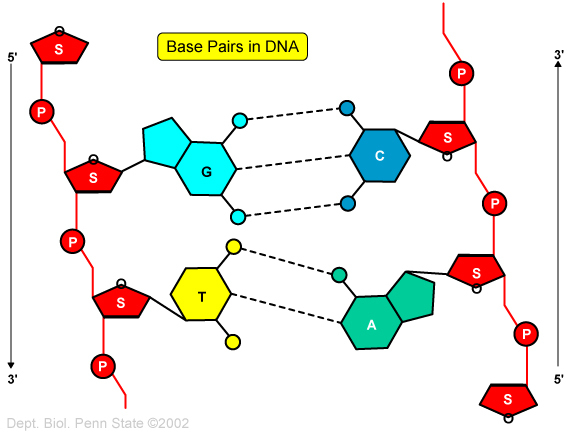
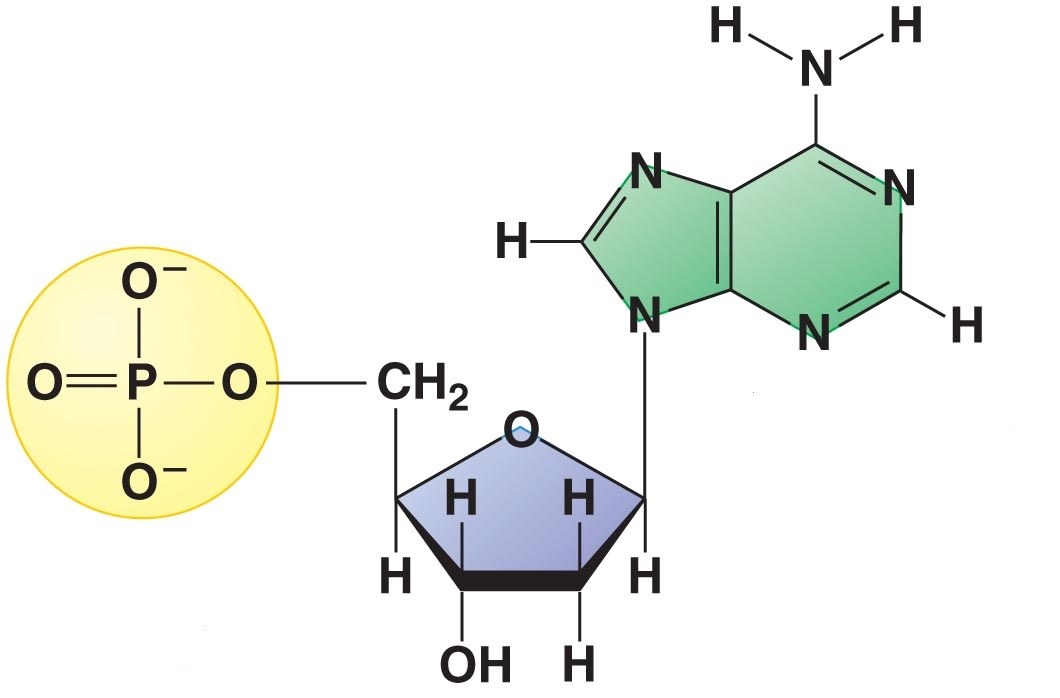
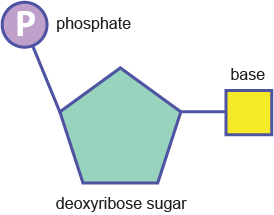
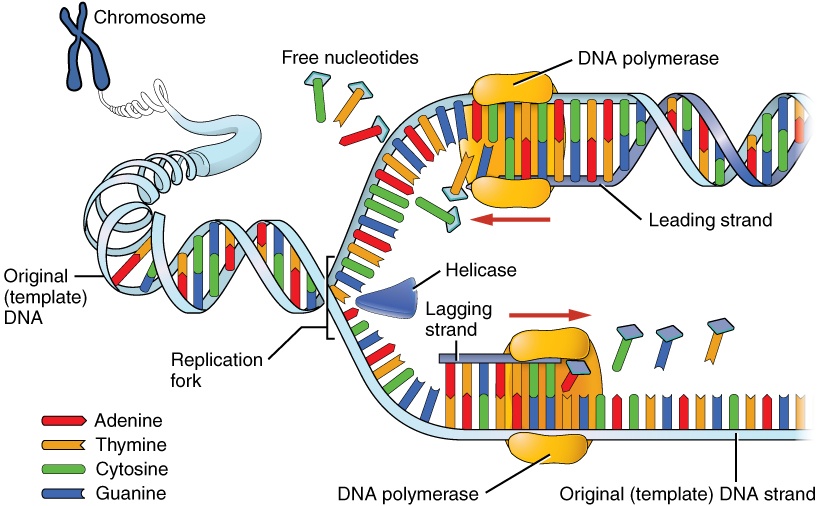
5'-ATGCCAT-3'

DNA is an acronym for _____
Diphosphorus Nucleic Acid
Ribose Nucleic Acid
Deoxyribonucleic Acid
Deoxyribonucleic Acetate

Primary functions of DNA are (mark all that apply)
Transmit information on heredity from one generation to the next
Control cellular respiration
Regulate homeostasis
Provide a blueprint for making proteins

a ______ codes for a particular trait. It is a distinct sequence of DNA forming part of a chromosome
Gene
Chromosome
Pedigree
Protein
Which enzyme is responsible for adding bases?
Topoisomerase
DNA Polymerase
Ligase
Primase
Why is it crucial that living things are able to replicate their DNA?
Each new cell must have an exact copy of DNA
Less copies of DNA are needed when a new cell is created
A cell needs multiple copies of DNA
Only muscle cells need DNA


An organism's reproductive cells, or sex cells, are called _____.
bacteria
prokaryotes
gametes
pathogens

A _________ is DNA tightly coiled around proteins.
gene
chromosome
trait
mutation
The 2 exact copies of DNA in a chromosome are called ________.
chromatids
genes
mutations
pathogens

The two sister chromatids are attached to each other at a point called the __________ of a chromosome.
zygote
autosome
gene
centromere
How many chromosomes does a human body cell have, total?
48
46
23
47
Body cells are also called _________ cells.
normal
prokaryotic
pathogens
somatic
A _______ is an egg that has been fertilized by a sperm cell.
gene
chromosome
zygote
embryo
What is the name given to all the genetic information that an organism possesses?
Genome
Book of Information
Genus
Geneticology

This image has is a cluster of skin cells from the same organism. What can you say about the genetic information of these cells?
They have the same genetic information.
They have completely different genetic information.
None of the above.

The order of the bases in DNA determines the outcome of a particular gene.
True
False
An abnormal mass/group of cancer cells is called a
tumor
cyst
lesion
polyp

A mutation is defined as:
A change in the cell's structure
Anything that changes in an embryo
Any change in the physical features of a human
A change in the DNA sequence
A mutation can occur if a base pair is ____________, deleted, or substituted for another.
modified
added
transferred
A mutation in which only one nucleotide is altered is called a:
Frameshift Mutation
Deletion Mutation
Point Mutation
Insertion Mutation
ATTTGAGCC- Original
ATTGAGCC - Mutated
The example above is an example of a
Insertion
Point mutation
Deletion
Substitution
Mutations are random.
True
False
Mutations are SOMETIMES helpful to the organism.
true
false
True or false, mutations create genetic diversity?
True
False
In order for offspring to get a genetic mutation, the mutation must occur in what type of cell?
Cells with no nucleus.
Any body cell after birth.
Cells with no cell wall or cell membrane.
Cells like eggs or sperm cells that are undergoing reproduction.
Normal cells stop dividing when they come into contact with other cells (known as contact inhibition). What types of cells do not follow this rule?
Skin cells
Egg cells
Cancer cells
Nerve cells
As a cell grows, what increases at a faster rate?
Surface area
Volume
As cells become larger, the ratio of surface area to volume
increases
decreases
Why are cells so small?
They have a high surface area to volume ratio when they are small
They are more efficient at transporting materials
When cells are too large, the DNA becomes overloaded
All of these are true
Why do the cells of multicellular organism divide?
To repair damaged tissue
To replace dead cells
For growth of the organism
All of these are true
Why do unicellular organisms divide?
For asexual reproduction
To repair damaged tissue
To replace dead cells
For growth of the organism
Who discovered the "base pairing rule"?
Watson
Crick
Chargaff
Franklin
Who won the Nobel Prize for the structure of DNA?
Franklin
Watson and Crick
Chargaff
Avery
Who took a picture of DNA using X-rays which led to the discovery of the structure of DNA?
Watson and Crick
Franklin
Chargaff
Avery
When DNA is replicated, what is the result?
Semi conservative replication
2 molecules of DNA that are identical
2 molecules of DNA that each contain one old and one newly synthesized strand.
All of these are true

