
 Worksheets
Midterm Review
Total questions: 154
Worksheet time: 2hrs 5mins
Name
Class
Date
1.
Which statement is true?
a)
Children were not allowed to work in the mines during the Industrial Revolution
b)
Work conditions were closely regulated
c)
There were no labor laws that prevented children from working
d)
Children were allowed to work but they were treated fairly.
2.
What were living conditions in the city like during the Industrial Revolution?
a)
Very extravagant
b)
Strict housing regulations
c)
Spacious and luxurious
d)
Crowded and unsanitary
3.
Mass production led to:
a)
Products being more superior in quality
b)
goods became less expensive
c)
laborers received higher wages
d)
industries moved to rural areas
4.
Before the Industrial Revolution all products were created by
a)
Factories
b)
Hand
c)
Slaves
d)
Royalty
5.
How did the Industrial Revolution affect the cities?
a)
Made the crime rate decrease
b)
Led to an increase in farm workers
c)
Make the cities cleaner and safer
d)
Led to an increase in population in the cities
6.
This machine allowed factories to be built anywhere, powered by coal.
a)
flying shuttle
b)
steam engine
c)
spinning jenny
d)
cotton gin
7.
Which of the following was NOT associated with early factory working conditions?
a)
Safe working conditions
b)
Low wages
c)
Dangerous working conditions
d)
Pollution
8.
Why did people move to the cities during the Industrial revolution?
a)
Jobs in factories
b)
Jobs on the farm
c)
Family
d)
Friends
9.
Which is NOT a reason the Industrial Revolution began in Great Britain
a)
Harbors/Rivers
b)
Coal/Iron
c)
Assembly Line
d)
Stable Government
10.
What is the movement from rural to urban areas called?
a)
Moving
b)
colonization
c)
inflation
d)
urbanization
11.
What is a characteristic of mass production?
a)
Division of Labor
b)
Handmade goods
c)
Individualized parts
d)
Urbanization
12.
Which of the following is not an accurate description to working conditions during the Industrial Revolution?
a)
Workers often worked 12 or more hours a day
b)
Workers were given multiple breaks
c)
Children as young as ten often worked infactories
d)
Workers received low wages
13.
Which of the following is not an accurate description of the changes in cities?
a)
They became overcrowded
b)
Disease spread rapidly due to unsanitary conditions
c)
Housing, education, and police were lacking
d)
Modern sewage systems allowed for waster to be transported outside the cities
14.
Why is competition good for business?
a)
It gives consumers choices
b)
Leads to improvements with products
c)
Helps regulate pricing
d)
All of the above
15.
A ___________________ is when one company has complete control of the industry and can charge any price that they want for their goods.
a)
Labor Unions
b)
Reformers
c)
Urbanization
d)
Monopoly
16.
Which is NOT a result of the enclosure act?
a)
Smaller farmers lost their land and ability to use the common land
b)
Large Landowners and wealthy benefited the most
c)
Larger farms were able to produce more food for the growing population
d)
Smaller farmers expanded and were able to produce more food
17.
What is the open field system?
a)
land was open for anyone to use who wanted to farm
b)
large land owners were only able to farm
c)
the land was privately owned
d)
farming was done in cities
18.
What was one cause of the population spike during the Industrial Revolution?
a)
The baby boom.
b)
The agricultural revolution
c)
The rise of textile factories
d)
New theories about childbirth
19.
What was NOT a direct effect of the steam engine?
a)
People could travel farther than ever before.
b)
Factories didn't need to be built directly next to rivers.
c)
People became focused on using cleaner energy.
d)
The demand for coal increased.
20.
As a result of the Industrial Revolution, where did more people work?
a)
On farms
b)
On airplanes
c)
In factories
d)
In cubicles
21.
Where did people live as a result of urban migration?
a)
farms
b)
suburbs
c)
cities
d)
colonies
22.
Which social class grew the most as a result of the Industrial Revolution?
a)
Nobility
b)
Upper class
c)
Middle class
d)
Lower class
23.
Which economic system, in which private individuals own and profit from business, was at the core of the Industrial Revolution?
a)
Socialism
b)
Mercantilism
c)
Labor union
d)
Capitalism
24.
As the population grew, that meant more ___________ for factories and industries.
a)
Workers
b)
Cloth
c)
Unions
d)
Reform
25.
Which of the following was a negative result of the Industrial Revolution?
a)
The birth of the middle class
b)
The development of new consumer goods
c)
The use of child labor
d)
The development of the transcontinental railroad
26.
In which country did the Industrial Revolution begin?
a)
The United States
b)
England
c)
France
d)
Germany
27.
What had to occur before the Industrial Revolution could take place?
a)
The Economic Revolution
b)
The Glorious Revolution
c)
The Agricultural Revolution
d)
The French Revolution
28.
What impact did the Agricultural Revolution have on the population of England?
a)
The population increased a little.
b)
The population declined steeply.
c)
The population increased dramatically.
d)
The population stayed the same.
29.
Which 2 natural resources were the backbone of the Industrial Revolution?
a)
wood and peat
b)
oil and natural gas
c)
coal and iron
d)
cotton and tobacco
30.
Which innovation allowed factories to be built anywhere?
a)
flying shuttle
b)
spinning jenny
c)
cotton gin
d)
steam engine
31.
What is the movement of people from rural to urban areas called?
a)
ruralization
b)
colonization
c)
inflation
d)
urbanization
32.
Who designed the first efficient steam engine?
a)
James Hargreaves
b)
John Kay
c)
Richard Arkwright
d)
James Watt
33.
What product was first made using machines in factories?
a)
Steel
b)
textiles
c)
locomotives
d)
flying shuttles
34.
A place where people and machines join together to mass produce goods.
a)
Cartel
b)
Corporation
c)
Factory
d)
Urbanization
35.
Mass production led to:
a)
Products being more superior in quality
b)
goods became less expensive
c)
laborers received higher wages
d)
industries moved to rural areas
36.
The Industrial Revolution happening during the _____ and the ____.
a)
1700s, 1800s
b)
1800s, 1900s
c)
1900s, 2000s
d)
1500s, 1600s
37.
This machine separated the seed from cotton fibers.
a)
Spinning Mule
b)
Spinning Jenny
c)
Steam Engine
d)
Cotton Gin
38.
How did the Industrial Revolution affect the cities?
a)
Made the crime rate decrease
b)
Led to an increase in farm workers
c)
Make the cities cleaner and safer
d)
Led to an increase in population in the cities
39.

Who invented the cotton gin?
a)
Eli Whitney
b)
Jim Morse
c)
James Watt
d)
the guy that delivers your pizza
40.
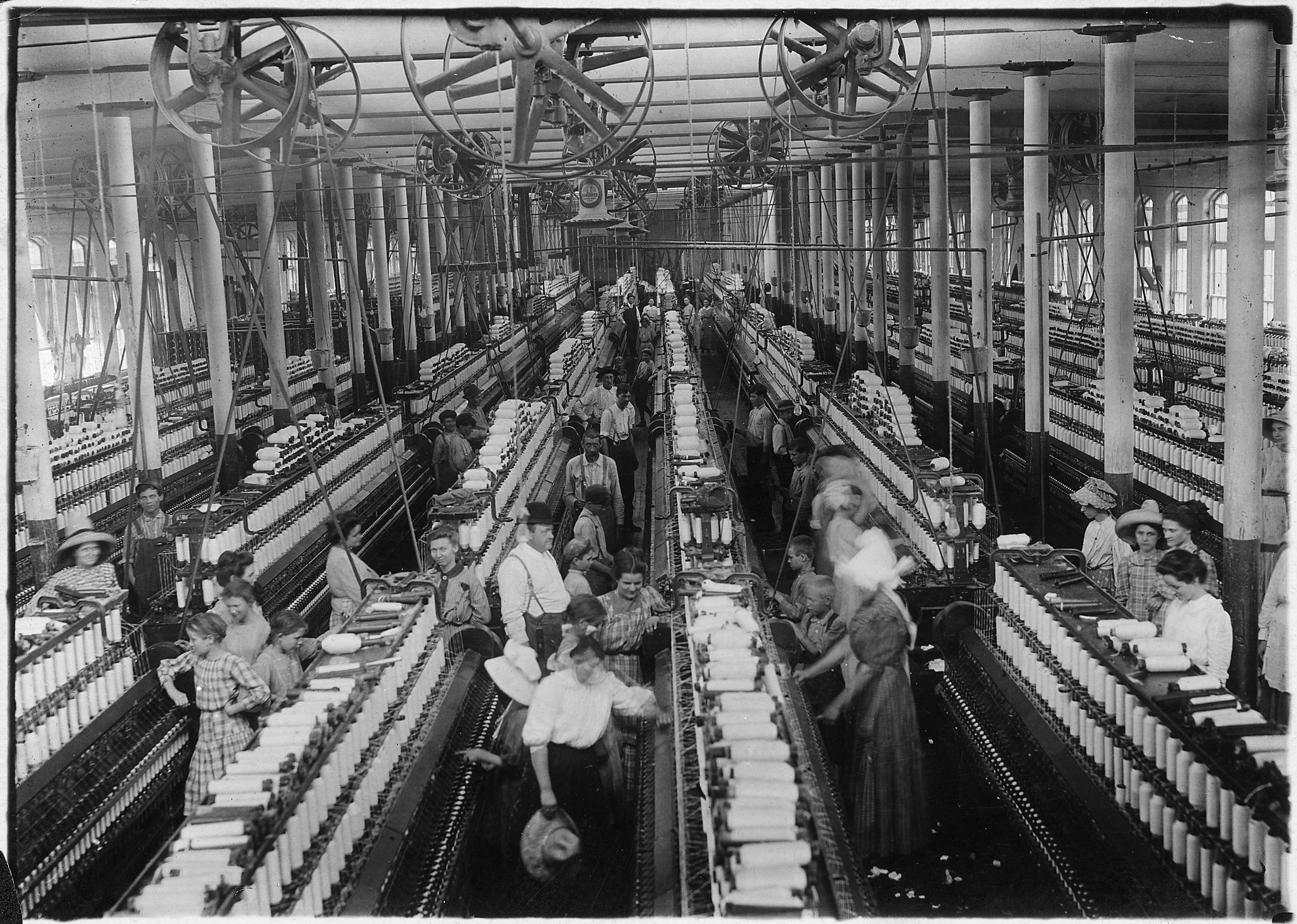
Where were most factories built before the steam engine was invented?
a)
in the mountains
b)
in the desert
c)
along rivers
d)
anywhere
41.
What kept soil healthier and produced healthier food?
a)
Miracle Grow
b)
Enclosure Movement
c)
Job rotation
d)
Crop rotation
42.
What is the fencing in of lands called?
a)
Enclosure Movement
b)
Stock Breeding
c)
Fencing
d)
Blockade
43.
The fundamental change in the economy was from agriculture and trade to ________________________.
a)
One based on the importance of schools
b)
One based on the evaluation of factory workers
c)
One based on the production of manufactured goods
d)
One based on the availability of farmers
44.
James Hargreaves invented the
a)
spinning jenny
b)
the water frame
c)
the steamboat
d)
the factory
45.
Richard Arkwright invented
a)
the water frame and factory system
b)
the steam engine
c)
the steam boat
d)
the spinning jenny
46.
______________get to make the economic decisions under capitalism.
a)
Individuals
b)
Government
c)
Literally no one
d)
The President
47.
Which is NOT a characteristic of Capitalism?
a)
Market Economy
b)
Supply and Demand
c)
Freedom of Competition
d)
Classless Society
48.
Laissez-faire means...
a)
Hats off
b)
Hands around
c)
Hands off
d)
Hands on
49.
The government or groups of workers might control these resources but the profits are divided among the people.
a)
Capitalism
b)
Communism
c)
Socialism
d)
Mixed Economy
50.
In a socialist economy, the wealth is distributed evenly among citizens.
a)
True
b)
False
51.
In a socialist country, citizens pay LESS in taxes than those who live in a capitalist country.
a)
True
b)
False
52.
This person wrote "The Wealth of Nations" and believed the government should have a limited role in business.
a)
John Locke
b)
Adam Smith
c)
Charles Fourier
d)
Karl Marx
53.
This economic system aims to make the best products for the lowest amount of money, which often times leads to bad treatment of workers.
a)
Socialism
b)
Communism
c)
Mixed Market Economy
d)
Capitalism
54.
What was a long term result of the Industrial Revolution?
a)
A cleaner natural environment
b)
Animal Preservation
c)
Worker Unions and Labor Laws
d)
A second Neolithic Revolution
55.

This economic system is based on competition, profits, and self-interest.
a)
Socialism
b)
Communism
c)
Capitalism
56.
In a "pure" communist society, who are the wealthiest and most powerful people?
a)
Intellectuals
b)
Business leaders
c)
Military leaders
d)
No One--every member of society is supposed to be equal
57.
In a Communist country, workers have no ________ to work harder.
a)
Time
b)
Help
c)
Ability
d)
Incentive
58.
How does socialism differ from capitalism?
a)
In socialism, the goverment controls the means of production; whereas, capitalism focuses on the private owner.
b)
In socialism, the goverment provides subsidies for small buisnesses; whereas, capitalism only depends on the corporations to spark the economy.
c)
In socialism, the goverment does not provide any form on humanitarian aid; whereas, capitalism funds small buisness with tax relief.
d)
In socialism, the government controls what the consumer can purchase; whereas, capitalism controls what the business can market.
59.
The founder of communism
a)
Adam Smith
b)
John Locke
c)
Karl Marx
d)
Rousseau
60.
What does communism believe in?
a)
Economic system with individuals having private ownership of money/production.
b)
Maintaining total control over society.
c)
Economic equality through elimination of private property.
d)
A government of the people, by the people, for the people.
61.
Karl Marx's ideas inspired
a)
free market economies
b)
democracies
c)
technological innovation
d)
dictatorships
62.
The United States practices
a)
pure capitalism
b)
pure socialism
c)
pure communism
d)
mixed market
63.
According to the law of supply and demand, how does the scarcity of product that is in high demand affect prices?
a)
Scarcity of a high demand product stablizes the market value of the product.
b)
Scarcity of a high demand product increases the market value of the product.
c)
Scarcity of a high demand product neutralizes the market value of the product.
d)
Scarcity of a high demand product decreases the market value of the product.
64.
According to the law of supply and demand, how does over-manufacturing of a product affect the price?
a)
Over-manufacturing reduces the price of a product.
b)
Over-manufacturing creates jobs to improve the economy.
c)
Over-manufacturing raises prices to offset production costs.
d)
Over-manufacturing leads to peaks in the business cycle.
65.
The sudden overthrow of a government by a usually small group of persons
a)
sans-culottes
b)
coup d'etat
c)
coup deville
d)
emigres
66.

How did Napoleon gain enough support to crown himself emperor of France?
a)
he reinstated the three estates
b)
he reversed the gains of the revolution
c)
he instituted the Reign of Terror
d)
he restored stability and military victory to France
67.
Where was Napoleon exiled for the first time?
a)
Elba
b)
St. Helena
c)
St. Versailles
d)
St. Etna
68.
Where was Napoleon exiled for the last time?
a)
St. Joan
b)
St. Madrid
c)
St. Helena
d)
St. Elba
69.
The act of destroying (burning) any resources so an enemy can't use them is known as...
a)
Scorched Earth
b)
Continental system
c)
Barricade
d)
Reign of terror
70.
The great French empire that Napoleon created eventually fell after the unsuccessful invasion of Russia. Why was the invasion considered a great disaster for Napoleon?
a)
There was a massive air attack by the Russians that wiped out most of Napoleons army
b)
Russia's scorched-earth policy and cold winter wiped out most of Napoleons army
c)
The Battle of the Bulge wiped out most of Napoleons army
d)
The newly formed United States allied with Russia to wipe out most of Napoleons army
71.
Napoleon completely ignored women's rights
a)
True
b)
False
72.
What was a factor that led to Napoleon wanting to sell Louisiana to the U.S
a)
He need money for an upcoming war
b)
He never wanted to visit Louisiana
c)
He wanted to be done with the colonist
d)
He never wanted to sale Louisiana
73.

Napoleon's Code of Laws he instituted to consolidate power throughout Continental Europe
a)
Shariah Law
b)
English Common Law
c)
Napoleonic Code
d)
Code of Hammurabi
74.

Naval battle. Napoleon's failed invasion of Great Britain
a)
Battle of Toulon
b)
Battle of Austerlitz
c)
Battle of Waterloo
d)
Battle of Trafalgar
75.
What was Napoleon's "continental system"?
a)
Ban on all European trade with Great Britain
b)
Napoleon's Code of Laws
c)
Napoleon's battle strategy to conquer Europe
d)
None of these
76.
Why did Napoleon invade Russia in 1812?
a)
They violated the Continental system by trading with Great Britain
b)
They violated the Napoleonic Code
c)
Napoleon needed a place to go skiing
d)
Napoleon wanted to conquer Asia
77.

Who was put in power after Napoleon's first exile?
a)
Coach Graves
b)
Louis XVIII
c)
Alexander I
d)
Queen Latifah
78.

When Napoleon escaped exile and returned to France, Great Britain and Prussia invaded. Which Battle in Belgium did they meet Napoleon?
a)
Toulon
b)
Austerlitz
c)
Waterloo
d)
Trafalgar
79.

What was the result of the Battle of Waterloo?
a)
French defeated. Napoleon was exiled to St Helena
b)
French defeated. Napoleon as exiled to Elba
c)
French defeated. Napoleon was killed in Battle
d)
French victorious
80.
Which country hosted the Congress of Vienna?
a)
Great Britain
b)
Prussia
c)
Austria
d)
France
81.

What was the purpose of the Congress of Vienna?
a)
Redraw country borders to pre Napoleon lines
b)
Created the Confederation of German States
c)
Establish European colonial claims in Africa and Asia
d)
All of these
82.
Which of the following is an example of Napoleon's achievements in education?
a)
The Napoleonic Code
b)
Computer Side Chats
c)
The creation of more private schools
d)
Greater public education (lycees)
83.

How did the Congress of Vienna inspire nationalist movements across Europe in the revolutions of 1830 and 1848?
a)
They imposed British rule on Europe
b)
They put absolute monarchs back in power
c)
They established the nations of Germany and Italy
d)
They established democratic governments across Europe
84.
What is Nationalism?
a)
A sense of unity based upon shared characteristics: language, culture, religion, and geography
b)
Advocates legitimate, tradition government in order to preserve the status quo
c)
Advocates limited government in order to protect individual liberties
85.
Headed by a monarch as the only source of power controlling all functions of the state. Power is inherited.
a)
Dictatorship
b)
Parliamentary Democracy
c)
Constitutional Monarchy
d)
Absolute Monarchy
86.

Which term best defines the concept that the sun is the center of the universe
a)
heliocentric
b)
geocentric
c)
Ethnocentric
d)
Eurocentric
87.
A belief or theory that opinions and actions should be based on reason and knowledge rather than on religious belief or emotional response. This new way of thinking challenged religious dogma
a)
empiricism
b)
rationalism
c)
reactionism
d)
inductive reasoning
88.
A 6-step procedure based on observation and experimentation.
a)
Planetary Model
b)
Philosophical Method
c)
Pavlov's Hierarchy of Needs
d)
Scientific Method
89.

A polish mathematician and astronomer who formulated the sun was the center of the solar system.
a)
Galilieo
b)
Humes
c)
Copernicus
d)
Descartes
90.

An Italian physicist and astronomer who proved that the fall speed of a heavy object is not proportional to the weight. He is also responsible for introducing the telescope.
a)
Galileo
b)
Vesalius
c)
Hooke
d)
Boyle
91.

An English scientist that discovered the laws of motion
a)
Galileo
b)
Newton
c)
Kepler
d)
Copernicus
92.

Dedicated himself to restructuring traditional learning, he proposed a new system, creator of modern scientific method.
a)
Newton
b)
Bacon
c)
Descartes
d)
Frisius
93.

He sought to uncover to meaning of the natural world with a rational approach through science and mathematics.
a)
William Harvey
b)
Robert Boyle
c)
Rene Descartes
d)
Gottfried Leibniz
94.

According to John Locke, why are governments created?
a)
God gives monarchs a divine right to rule over their people
b)
People are naturally selfish and need a strong ruler to create order
c)
People set up governments to protect their lives and property
d)
Civil government must be established to offset the power of the church
95.

The Enlightenment thinkers basically believed that people
a)
had the power to reason
b)
needed to be controlled for their own safety
c)
had no rights
d)
should be happy under an absolute monarchy
96.

Montesquieu believed that the best form of government would have
a)
Direct democracy in which every man voted directly
b)
A intelligent monarchy
c)
Three branches that would check and balance each other
d)
No influence on the economy
97.

According to Locke, all humans share a set of __________.
a)
internal organs
b)
natural rights
c)
hopes and dreams
d)
traits and motivations
98.

Rousseau, Montesquieu, and Locke would all support:
a)
A dictatorship
b)
A democracy
c)
An absolute monarchy
d)
All of these
99.
Which of the following would NOT be an Enlightenment ideal?
a)
one ruler should make laws
b)
the government should represent the people
c)
the government should be limited
d)
citizens should have their natural rights
100.
Why might absolute monarchs not like the ideas of the Enlightenment?
a)
They were afraid the ideas would not spread easily.
b)
They think the ideas gave government too much power.
c)
They were afraid the ideas would spread and challenge the power they had.
d)
They thought the ideas would harm their own people.
101.

Famous economist, defender of free-markets, author of The Wealth of Nations. His writings are considered a foundation for the economic system of capitalism.
a)
Adam Smith
b)
Karl Marx
c)
Friedrich Engels
d)
Weyland Yutani
102.
What type of economic system called for businesses to operate with little or no government regulation?
a)
Socialism
b)
Communism
c)
Laissez-Faire
d)
Command Economy
103.
Was the father of criminal justice and thought a person should be innocent until proven guilty.
a)
Beccaria
b)
Rousseau
c)
Locke
d)
Hobbes
104.
Where did absolute monarchs claim to get their power from?
a)
The people
b)
By the democratic process
c)
By divine right
d)
By winning wars
105.
How did the Scientific Revolution lead to the Enlightenment?
a)
Enlightenment thinkers used new inventions to come up with government ideas.
b)
The Enlightenment was a result of monarchs changing due to discoveries in science.
c)
Philosophers thought, like science, life could be explained by applying reason.
d)
Philosophy was discovered during the scientific revolution.
106.
All are a theme of the Enlightenment except:
a)
Reason
b)
Absolutism
c)
Natural Law
d)
Skepticism and observation
107.
One cause of the French Revolution was the emergence of a new middle class of merchants and professionals called the
a)
bourgeoisie
b)
aristocracy
c)
sans culottes
d)
denoument
108.
France was deep in debt because
a)
money spent on the American Revolution
b)
Marie Antoinette's lavish spending
c)
the 1st and 2nd estates did not pay taxes
d)
all of the above
109.
The idea that reason should guide society rather than tradition helped cause the revolution and came from
a)
the Declaration of Independence
b)
the Scientific Revolution
c)
the Enlightenment
d)
all of the above
110.
The Second Estate was composed of
a)
Church leaders
b)
Nobility
c)
Peasants
d)
none of the above
111.
Most of the people of France belonged to the
a)
1st
Estate
Estate
b)
2nd Estate
c)
3rd Estate
d)
4th Estate
112.
Why was voting in the Estates General unfair
a)
votes were not secret
b)
each estate voted by how many members there were
c)
each estate got the same number of votes
d)
the King got two votes
113.
When the other estates refused to change voting rules the 3rd Estate
a)
met separately
b)
declared themselves the new government
c)
Created the National Assembly
d)
all of the above
114.
When the people of Paris heard that the military was going to stop the revolution their response was to
a)
leave the city
b)
storm the Bastille
c)
force the King to come to Paris
d)
none of the above
115.
In 1789, the hungry women of Paris marched to Versailles and
a)
forced the King to return to Paris
b)
demanded that the King abdicate
c)
demanded that the King leave France
d)
all of the above
116.
The National Assembly set down the ideas of the Revolution in
a)
the Declaration of Independence
b)
the Declaration of the Rights of Man
c)
the US Constitution
d)
The Edict of Nantes
117.
The radicals who took over the revolution were led by
a)
Louis XVI
b)
Robespierre
c)
Rousseau
d)
Marquis de Lafayette
118.
Robespierre was sent to the guillotine because
a)
he was accused of a crime he did not committ
b)
other radicals thought he might execute them next
c)
the King's supporters captured him
d)
none of the above
119.
The First Estate was made up of this group.
a)
clergy
b)
common people
c)
nobles
d)
kings and queens
120.
Only this group paid taxes in pre-revolutionary France.
a)
1st Estate
b)
2nd Estate
c)
3rd Estate
d)
1st and 3rd Estates
121.
What was the Divine Right of Kings?
a)
right to not pay taxes
b)
God given right to rule
c)
predetermined rise to power
d)
enlightenment of kings
122.
Which foreign country invaded France during their revolution and why?
a)
England; because they split with the Catholic Church
b)
Spain; because they saw an opportunity to expand their empire
c)
Prussia and Austria; to prevent revolutionary ideas against a monarchy from spreading throughout Europe
d)
Italy; because France opposed the Fascist Party
123.
Period of Maximillien Robespierre's rule where up to 40,000 people were executed in France
a)
The Great Fear
b)
The Red Scare
c)
Reign of Terror
d)
Coup d'etat
124.
Member of the Jacobins that came to power in France in 1793?
a)
Maximillien Robespierre
b)
Napoleon Bonaparte
c)
Jacques Pierre
d)
Voltaire
125.
Which was NOT a cause of the French Revolution?
a)
Government Debt.
b)
Equal Tax Burden
c)
Financial Crisis.
d)
Unfair social divisions.
126.
What is a guillotine?
a)
The document used to write the French constitution.
b)
Execution machine used during the French Revolution.
c)
A type of french bread.
d)
A French peasant.
127.
What event caused the Great Fear?
a)
The fall of the Bastille
b)
the execution of Louis XVI
c)
The Tennis Court Oath
d)
The assassination of Robspierre
128.
The edict of war on France by Austria and Prussia was known as
a)
The Declaration of Pilnitz
b)
The Declaration of Rights of Man
c)
The Constitution of 1791
d)
the sans-culottes
129.
Group set up by Robespierre to ensure the revolution would not be stopped
a)
Third Estate
b)
National Assembly
c)
Legislative Assembly
d)
Committee of Public Safety
130.
Lavish palace of King Louis XVI and Marie Antoinette
a)
Versailles
b)
The Eiffel Tower
c)
The Champs-Elysees
d)
The Estates General
131.

What was the main factor in determining a person's social status in Spain's colonies in Latin America?
a)
race
b)
wealth
c)
politics
d)
religion
132.

What is the name for the wealthy, Spanish born citizens?
a)
Creoles
b)
Mestizos
c)
Peninsulares
d)
Mulattos
133.

People who are mixed with European and Native descent
a)
Penisulares
b)
Creoles
c)
Mestizos
d)
Mulattos
134.
Which group dominated Latin American social and political life in the early 1800s?
a)
creoles
b)
peninuslares
c)
mestizos
d)
7th Grade History Students
135.
What was Simon Bolivar's dream?
a)
To have a free independent Bolivia
b)
to unite South America into one nation named GranColombia
c)
to give Mexico its independence
d)
to unite Latin America into one nation named Grand South America
136.

What job did Miguel Hidalgo have in Mexico?
a)
priest
b)
soldier
c)
general
d)
He was a student of the great Mr. Harnish
137.

The first strong leader of the slave revolt was?
a)
Toussaint Louverture
b)
Maximilian Robespierre
c)
Henry VIII
d)
Simon Bolivar
138.
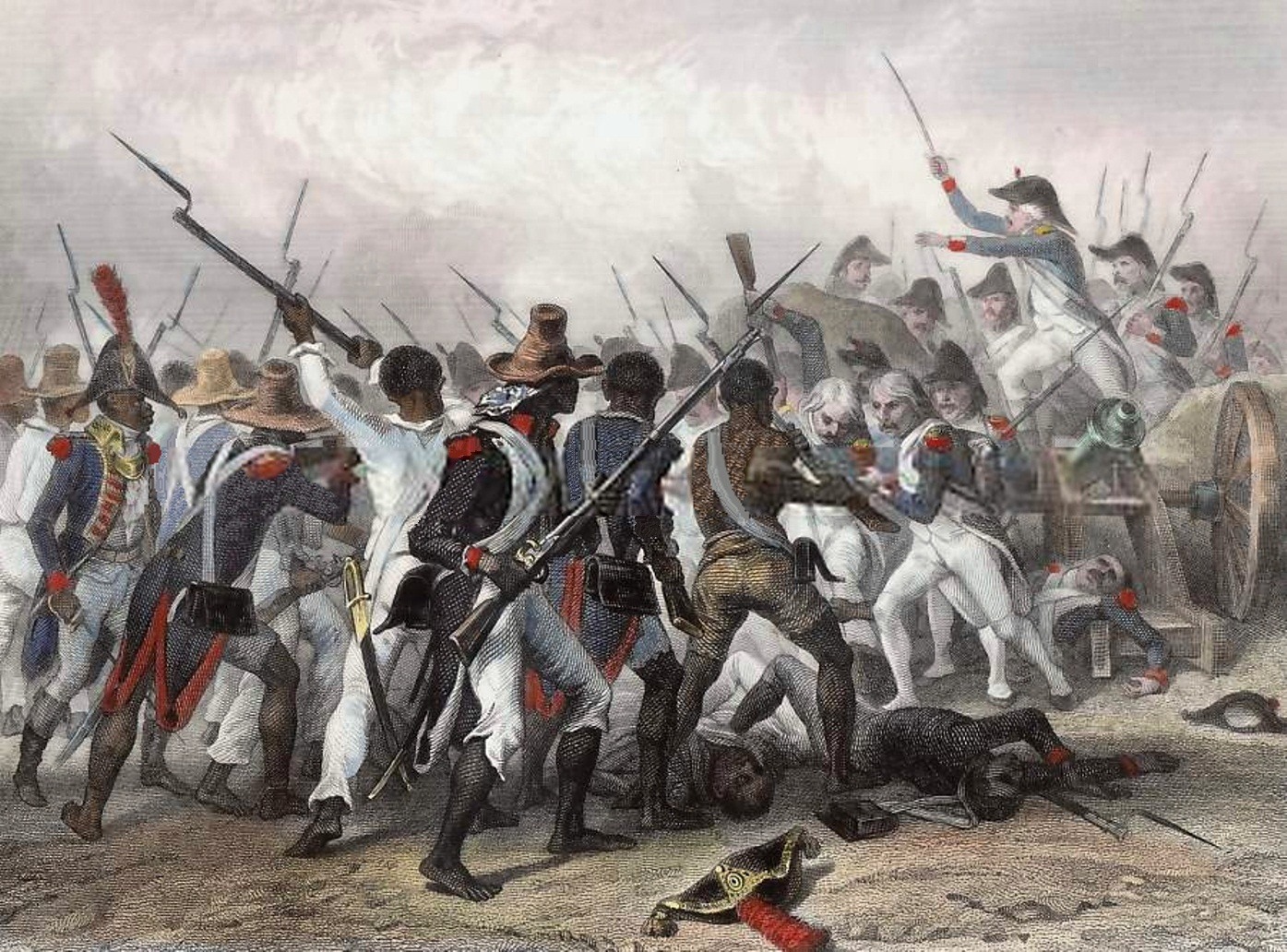
The Haitian Revolution was the first completely successful _____ revolt in world history.
a)
Male
b)
Rich landowner
c)
Slave
d)
Nationalistic
139.
Brazil gained independence from Portugal without a fight.
a)
true
b)
false
140.

Which title best completes this graphic organizer?
a)
Results of Nationalism in Europe
b)
Causes of the Industrial Revolution
c)
Impact of the Scientific Revolution
d)
Reasons for Latin American Independence Movements
141.
How did the French Revolution affect the Latin American independence movements?
a)
It was a model for peaceful solutions to political conflicts.
b)
It provided ideas for making political changes.
c)
It promoted regional cooperation to solve economic problems.
d)
It encouraged the British to meet the demands of the people.
142.
Nationalist who led his "Red Shirts" to unify Italy.
a)
Giuseppe Garibaldi
b)
Benito Mussolini
c)
Napoleon Bonaparte
d)
Simon Bolivar
143.
The first Kaiser of a unified Germany
a)
Victor Emanuel
b)
WIlhelm I
c)
Nicholas I
d)
Charles I
144.
The Iron Chancellor: Unites Germany: Realpolitick
a)
Cavour
b)
Wilhelm I
c)
Bismarck
d)
Garibaldi
145.
War with this country gave Prussia and Austria Schleswig and Holstein
a)
France
b)
Denmark
c)
Russia
d)
Poland
146.
This nation controlled Lombardy and Venetia before Italian Unification
a)
Spain
b)
France
c)
Austria
d)
Greece
147.
Otto Von Bismark practiced this type of "politics of reality"
a)
Realpolitik
b)
conservatism
c)
nationalism
d)
Guerilla Warfare
148.
Bismark explained that his decisions would not be made by speeches, but rather by:
a)
blood and iron
b)
water and ice
c)
blood and sweat
d)
wool and steel
149.
What was the largest and strongest German state in the 1800s; led German unification?
a)
Hamburg
b)
Berlin
c)
Prussia
d)
Vienna
150.
After the reign of Napoleon, what took root in Europe?
a)
Nationalism
b)
Defeat
c)
Desperation
d)
Liberal Ideologies
151.
Who unified much of Southern Italy with only a volunteer army in 1860?
a)
Giuseppe Mazzini
b)
Giuseppe Garibaldi
c)
Cavour
d)
Emmanuel II
152.
War with this country completed unification and gave Germany the Alsace-Lorraine.
a)
France
b)
Denmark
c)
Russia
d)
Poland
153.
First King of Italy
a)
Wilhelm I
b)
Victor Emanuel II
c)
Cavour
d)
Manzzini
154.

Why did the Congress of Vienna return absolute monarchs to power in Europe after the Napoleonic Wars?
a)
to restore order and the balance of power
b)
to encourage the spread of nationalism
c)
to promote the spread of Enlightenment ideas
d)
to protect the power of the Catholic Church
100 %

