
 Worksheets
IPC Chemistry Test 1
Total questions: 85
Worksheet time: 1hrs 7mins
Name
Class
Date
1.
What is Chemistry?
a)
The study of matter, its properties, how and why substances combine or separate to form other substances.
b)
The study of chemistry.
c)
Don't choose this one... GO CHECK YOUR NOTEBOOK!!
2.
Anything that takes up space and has mass.
a)
volume
b)
matter
c)
mass
d)
density
3.
What is matter made up of?
a)
Atoms
b)
Fish
c)
Facts and figures
d)
Water and air
4.

The yellow columns in this table represent ....
a)
Metals
b)
Non-metals
c)
Transition metals
d)
Metalloids
5.
The purple sections in this table represent ....
a)
Metals
b)
Non-metals
c)
Transition metals
d)
Metalloids
6.
The pink sections in this table represent ....
a)
Metals
b)
Non-metals
c)
Transition metals
d)
Metalloids
7.
The white columns in this table represent ....
a)
Metals
b)
Non-metals
c)
Noble gases
d)
Metalloids
8.
What is the only atom in group 1 that is not a metal?
a)
Lithium
b)
Hydrogen
c)
Calcium
d)
Francium
9.
Where can you easily find information about atoms?
a)
Periodic table
b)
Multiplication table
10.
What does the atomic number tell you about an atom?
a)
How many protons an atom has
b)
The mass of an atom
c)
The atoms phone number
11.

What is the atomic number of this nucleus?
a)
1
b)
3
c)
4
d)
7
12.

What is the mass number of this nucleus?
a)
1
b)
3
c)
4
d)
7
13.
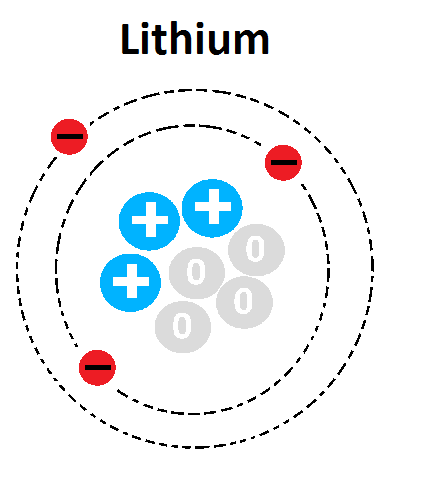
What is the atomic number of this atom?
a)
1
b)
3
c)
4
d)
7
14.
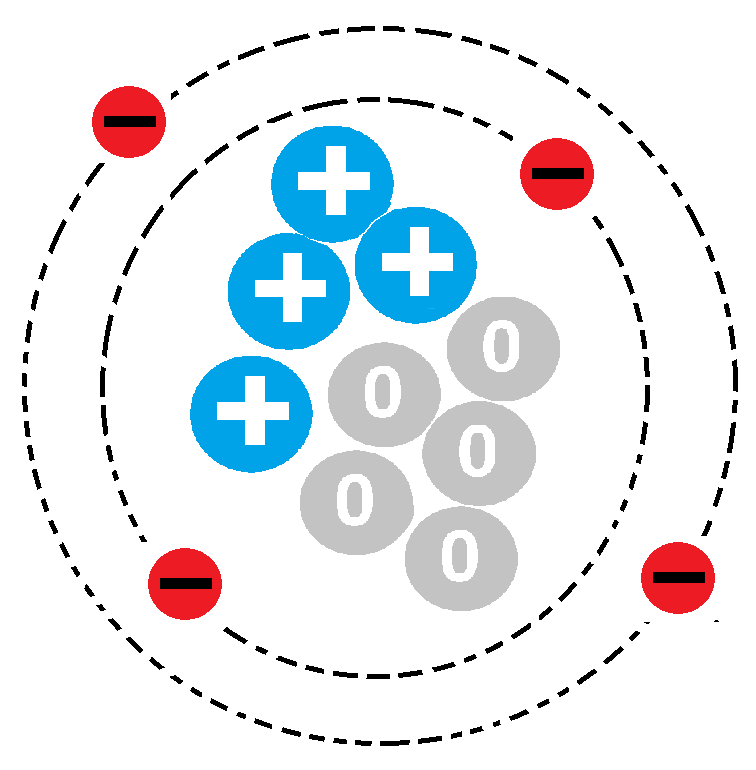
What is the atomic number of this atom?
a)
4
b)
5
c)
9
d)
none of the above
15.

What is the mass number of this atom?
a)
4
b)
5
c)
9
d)
none of the above
16.

What is the atomic number of this atom?
a)
9
b)
10
c)
19
d)
27
17.

What is the mass number of this atom?
a)
9
b)
10
c)
19
d)
27
18.
What is the mass number?
a)
the number of protons
b)
the number of protons and neutrons
c)
the number of neutrons
d)
the number of protons and electrons
19.
He
a)
Helium
b)
Hydrogen
c)
Hyrdonium
d)
Halogen
20.
B
a)
Brick
b)
Boron
c)
Beryllium
d)
Bromine
21.
O
a)
Oxygen
b)
Osmium
c)
Ozark
d)
Ooze
22.
boron =
a)
4
b)
5
c)
6
d)
7
23.
nitrogen =
a)
5
b)
6
c)
7
d)
8
24.
Xenon
a)
Xe
b)
Ce
c)
Se
d)
Re
25.
Cesium
a)
Cs
b)
Ce
c)
Cr
d)
Cl
26.
Te
a)
Tellurium
b)
Thallium
c)
Titanium
d)
Tungsten
27.
Barium
a)
B
b)
Ba
c)
Be
d)
Bi
28.
The subatomic particle with a neutral charge is:
a)
protons
b)
electrons
c)
neutrons
d)
cloud
29.
Which two subatomic particles are found in the NUCLEUS of at atom?
a)
protons & nuetrons
b)
protons & electrons
c)
neutrons & electrons
d)
electrons & protons
30.
Positive charges are ...
a)
electrons
b)
protons
c)
neutrons
d)
neutral
31.
Opposite charges ...
a)
attract each other
b)
repel each other
c)
stabilize each other
d)
are not attracted or repelled
32.
Like charges ...
a)
attract each other
b)
repel each other
c)
stabilize each other
d)
are not attracted or repelled
33.
When objects have equal numbers of positive and negative charges, they are
a)
positively charged
b)
negatively charged
c)
electrically neutral
d)
unbalanced
34.

The charge of an electron is:
a)
Positive.
b)
Negative.
c)
Electrons have no charge
35.

Which of these is the electron?
a)
A
b)
B
c)
C
36.
If a substance has a higher number of electrons than protons on its surface, what type of charge does it have?
a)
A positive charge.
b)
A negative charge.
c)
A neutral charge
d)
No charge at all
37.
The subatomic particle with a neutral charge is:
a)
protons
b)
electrons
c)
neutrons
d)
cloud
38.
When objects have equal numbers of positive and negative charges, they are
a)
positively charged
b)
negatively charged
c)
electrically neutral
d)
unbalanced
39.
Having equal amounts of positive charge and negative charge
a)
electric discharge
b)
electrically neutral
c)
electric conductor
d)
electrically charged
40.
What is the mass number?
a)
the number of protons
b)
the number of protons and neutrons
c)
the number of neutrons
d)
the number of protons and electrons
41.

What is the mass number of this atom?
a)
7
b)
14
c)
21
d)
none of the above
42.

How many neutrons in chlorine?
a)
17
b)
18
c)
20
d)
19
43.

How many protons in Chlorine?
a)
17
b)
35.5
c)
36
d)
355
44.

How many protons in Phosphorus?
a)
15
b)
31
c)
30.974
d)
P
45.

How many protons in Palladium?
a)
46
b)
106
c)
64
d)
601
46.
How many neutrons in Phosphorus?
a)
15
b)
31
c)
30.974
d)
16
47.

How many Neutrons in Silicon?
a)
14
b)
28
c)
68
d)
82
48.

How many neutrons in Iron?
a)
26
b)
56
c)
30
d)
-55
49.
Which subatomic particle has almost no mass?
a)
proton
b)
neutron
c)
electron
50.
The mass of a neutron is about the same as the mass of a(n)
a)
atom
b)
proton
c)
electron
d)
nucleus
51.
Which subatomic particle(s) is/are located in the nucleus?
a)
protons only
b)
electrons only
c)
protons and neutrons
d)
protons and electrons
52.
What is the mass of a proton?
a)
1+
b)
1 amu
c)
0
d)
0.0005 amu
53.
Each column in the periodic table is called a
a)
period
b)
group
c)
cluster
d)
unit
54.
Protons determine an element's __________.
a)
Reactivity
b)
Nucleus
c)
Identity
d)
Color
55.
Most of an atom's mass is found in the
a)
electrons.
b)
nucleus.
56.
Atomic mass - Atomic Number =
a)
protons
b)
neutrons
c)
electrons
d)
Average Mass
57.
An element is defined by its number of
a)
protons
b)
electrons
c)
neutrons
d)
protons + electrons
58.
If an element has 6 protons, 7 neutrons, and 6 electrons, what type of charge does the element have?
a)
positive
b)
negative
c)
neutral
d)
imaginary
59.
To change a solid to a liquid, what do you add?
a)
heat
b)
water
c)
cold
d)
mass
60.
To change a liquid to a solid, what do you add?
a)
heat
b)
gas
c)
air
d)
cold
61.
Which state of matter has a definite shape?
a)
solid
b)
liquid
c)
gas
d)
plasma
62.
Which state of matter take up ALL the space inside a container?
a)
solid
b)
liquid
c)
gas
d)
all of the above
63.
What is happening in the statement below?
The ice cube melted.
The ice cube melted.
a)
Matter is changing from a liquid to a solid.
b)
Matter is changing from a liquid to a gas.
c)
Matter is changing from a solid to a liquid.
d)
Matter is changing from a gas to a liquid.
64.

This picture is an example of a ____________.
a)
solid
b)
liquid
c)
gas
d)
plasma
65.

This is an example of a _________.
a)
solid
b)
liquid
c)
gas
d)
plasma
66.
When heat is added to a liquid, it ______________.
a)
freezes
b)
evaporates
c)
melts
d)
condenses
67.
When heat is added to a solid, it ______________.
a)
freezes
b)
evaporates
c)
melts
d)
condenses
68.

The drops of water that appear on the outside of a glass of cold juice on a warm day are an example of?
a)
Sublimation: A solid turning into a gas.
b)
Condensation: A gas changing to a liquid.
c)
Evaporation: A liquid changing to a gas.
d)
Deposition: A gas changing to a solid.
69.

Which item is not made of matter?
a)
air
b)
water
c)
a pencil
d)
a shadow
70.

The picture shows examples of:
a)
solids
b)
gases
c)
liquids
d)
plasmas
71.

Are humans made of matter?
a)
yes
b)
no
c)
I don't understand the question.
d)
maybe
72.

A substance that has a definite shape and volume.
a)
evaporation
b)
gas
c)
liquid
d)
solid
73.

What phase change can happen if enough heat energy is added to a solid?
a)
it melts
b)
it freezes
c)
it condenses
d)
particles slow down
74.

What phase of matter is shown in the diagram?
a)
solid
b)
liquid
c)
gas
d)
physical changes
75.

What phase of matter is shown in the diagram?
a)
solid
b)
liquid
c)
gas
d)
phase change
76.

What phase of matter is shown in the diagram?
a)
solid
b)
liquid
c)
gas
d)
physical change
77.

In which segment is the kinetic energy remaining constant?
a)
A-B
b)
B-C
c)
C-D
d)
E-F
78.

What line segment represents only the solid state?
a)
A-B
b)
B-C
c)
C-D
d)
D-E
79.

What state(s) of matter are present at D-E?
a)
Solid-liquid
b)
Liquid
c)
Liquid-gas
d)
Gas-Solid
80.

Between which points is the temperature of the substance increasing?
a)
A-B only.
b)
A-B, C-D, E-F
c)
B-C only.
d)
B-C, D-E
81.

This type of graph is called a:
a)
Phase diagram
b)
Heating curve
c)
State of matter
d)
Temperature chart
82.

What state of matter is segment 5?
a)
Solid
b)
Liquid
c)
Gas
d)
Plasma
83.
True or false: melting and freezing occur at the same temperature.
a)
True
b)
False
84.
C =
a)
4
b)
5
c)
6
d)
7
85.
F =
a)
9
b)
10
c)
7
d)
8
100 %

