wayground logo

Free Printable Worksheets

Font size

S
M
L
XL
Worksheets

Energy Test Review 2025-2026

Total questions: 85

Worksheet time: 5hrs 32mins

Name
Class
Date
1.
Mechanical energy is the sum of an object's _____ energy and _____ energy.
a)
thermal, chemical
b)
potential, chemical
c)
kinetic, chemical
d)
potential, kinetic
2.
The unit for energy is the
a)
Newton
b)
Joule
c)
Kilogram
d)
Watt
3.
The bonds between molecules store ________ energy.
a)
Mechanical
b)
Chemical
c)
Electrical
d)
Potential
4.
All food is an example of _______ energy.
a)
Chemical
b)
Nuclear
c)
Electrical
d)
Mechanical
5.
Fossil fuels like gasoline or coal are examples of _________ energy.
a)
chemical
b)
nuclear
c)
thermal
d)
mechanical
6.
This is the energy that best describes a moving object. 
a)
sound
b)
thermal
c)
chemical 
d)
mechanical 
7.
The energy from the random movement/vibrations of particles is _______ energy.
a)
chemical 
b)
mechanical
c)
thermal 
d)
radiant
8.
If both of these balls are traveling down a bowling lane at the SAME speed, which one would would have more kinetic energy?  
Ball A = 500kg     B = 100kg
a)
A
b)
B
c)
A and B have the same energy
d)
A and B do not have any energy
9.
What factors affect kinetic energy?
a)
Time and Mass
b)
Velocity and Time
c)
Mass and Velocity
d)
Position and Velocity
10.
The law of conservation of energy states:
Energy cannot be created or destroyed, it can only change transform from one kind of energy to another.
a)
True
b)
False
11.
At which two points on the pendulum, is the pendulum experiencing the greatest potential energy?
a)
A and B
b)
B and C
c)
C and D
d)
A and D
12.
The skater has the greatest __________________ energy at the top of the ramp.
a)
Gravitational Potential
b)
Elastic Potential 
c)
Kinetic
d)
Chemical
13.
At what position does the cyclist have the least gravitational potential energy?
a)
A
b)
B
c)
C
d)
D
14.
In an energy transformation, some energy ALWAYS turns into...
a)
Thermal Energy
b)
Nuclear Energy
c)
Mechanical Energy
d)
Radiant Energy
15.
A crate with mass of 15.3 kg is pulled 9.2 m up in order to place it on top of a shelf. Calculate the GPE of the crate.
a)
140.76 J
b)
1.66 J
c)
1,379.4 J
d)
5.89 J
16.
What is the KE of a football which has a mass of 0.8 kg and is kicked at a velocity of 10m/s.
a)
80 J
b)
3.2 J
c)
160 J
d)
40 J
17.

The diagram below shows a hot air balloon rising. Propane gas tanks are seen at the bottom of the balloon. What energy transformations occur when propane gas is burned to lift the balloon?

a)

Mechanical to light to chemical

b)

Chemical to mechanical to thermal

c)

Thermal to chemical to light

d)

Chemical to thermal to mechanical

18.
Which answer would best fit this energy transformation: 
chemical energy -> mechanical energy
a)
person running
b)
candle burning
c)
windmill turning
d)
playing a violin
19.
A hairdryer converts -- 
a)
electrical energy into chemical
b)
electrical energy into thermal
c)
chemical energy into mechanical
d)
thermal energy into mechanical
20.
Which transformation describes the process of photosynthesis?
a)
radiant -> thermal
b)
radiant -> chemical
c)
thermal -> chemical
d)
thermal -> chemical
21.
When a hand-held fan (operated by batteries) is turned on, the blades spin. Which shows the energy conversion required to make the fan work?
a)
Electrical -> Chemical -> Radiant
b)
Electrical -> Chemical -> Mechanical
c)
Chemical -> Electrical -> Light
d)
Chemical -> Electrical -> Mechanical
22.
Gordon throws a baseball into the air. It rises, stops when it reaches its greatest height, and then falls back to the ground. At what point does kinetic energy convert to potential energy?
a)
when the baseball is rising
b)
when the baseball is falling
c)
just after the baseball hits the ground
d)
while the baseball is stopped in the air
23.
Which object best fits this energy transformation:
Electrical -> Mechanical -> Sound 
a)
A triple beam balance measuring an object’s mass
b)
A pencil sharpener plugged into a wall outlet
c)
A projector displaying a diagram on the screen
d)
A working flashlight used to light up a dark corner
24.
How does heat flow?
a)
Always from cold to warm
b)
Always from warm to cold
c)
Both warm to cold & cold to warm
d)
It depends on the temperature
25.

At which point on the roller coaster does the car have the most kinetic energy? (6.8A)

a)

W

b)

X

c)

Y

d)

Z

26.

The distance from the wave crest or trough to the equilibrium  Level

a)

Wave

b)

Amplitude

c)

Wave Crest

d)

Wave Trough

e)

Wave Height

27.

The lowest part of a wave.

a)

Wave

b)

Amplitude

c)

Wave Crest

d)

Wave Trough

e)

Wave Height

28.

distance between two consecutive wave crests or between two consecutive wave troughs.

a)

Wave

b)

Amplitude

c)

Wave Length

d)

Wave Trough

e)

Wave Height

29.

The number of waves passing a fixed point in a specified period of time

a)

Wave Height

b)

Wave Length

c)

Wave Frequency

d)

Wave Trough

30.

The part of a wave that the particles are more pushed together.

a)

Compression

b)

Rarefaction

c)

Particles

d)

Wave

31.

The part of a wave that the particles are pulled apart

a)

Compression

b)

Rarefaction

c)

Particles

d)

Wave

32.
Which answer best explains what causes a wave?
a)
Shaking
b)
Potential energy
c)
Light
d)
Vibrations
33.
What kind of wave is pictured?
a)
Transverse
b)
Longitudinal
c)
surface
d)
none of the above
34.

What does a wave carry from place to place?

a)

energy

b)

matter

c)

people

35.

A wave that can travel through matter and empty space is a:

a)

electromagnetic wave

b)

longitudinal wavy

c)

transverse wave

36.

Which are properties of a mechanical wave?

a)

can be longitudinal or transverse

b)

can move through space

c)

must have matter to move

d)

carries energy

37.

What wave has particles that move perpendicularly to the direction of the wave?

a)

Transverse waves

b)

Longitudinal waves

c)

Sound waves

d)

Light waves

38.

Which image shows transmission?

a)

A

b)

B

c)

C

d)

D

39.

Which of these waves would be the dimmest?

a)

Wave 1

b)

Wave 2

c)

Wave 3

d)

Wave 4

40.

Which wave has the most energy?

a)

Wave 1

b)

Wave 2

c)

Wave 3

d)

Wave 4

41.

Which of the following waves has the highest frequency?

a)

Radio Waves

b)

Red Light Waves

c)

Blue Light Waves

d)

Infrared Light Wave

42.

A wave is traveling in one medium. Then it begins traveling through another medium and changes direction. What happened?

a)

The wave was absorbed

b)

The wave was transmitted

c)

The wave was refracted

d)

The wave was reflected

43.

Isaac Newton found that sunlight is a mix of different wavelengths Which evidence supports this?

a)

light is white.

b)

light is found all over the universe

c)

light separates into colors in a prism

d)

light can travel very rapidly through space

44.

What determines what color of light your eyes perceive?

a)

The frequency of the wave

b)

The amplitude of the wave

c)

The intensity of the wave

d)

The type of wave it is

45.
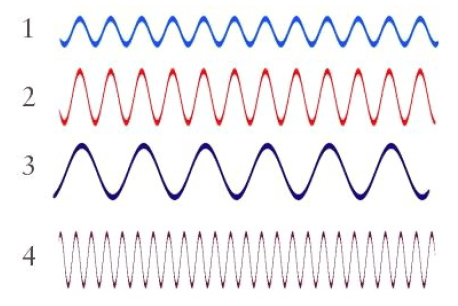
Which wave in the diagram has the greatest frequency?
a)
1
b)
2
c)
3
d)
4
46.
Which of the following is NOT a mechanical wave?
a)
sound
b)
light
c)
ocean
d)
seismic
47.
What kind of heat transfer happens when the sun is heating your body?
a)
Conduction
b)
Radiation
c)
Convection
d)
Density
48.
What heat transfer happens when you burn your hand by touching a fire?
a)
Radiation
b)
Conduction
c)
Convection
d)
I don't know!!!!!!!!!!!
49.
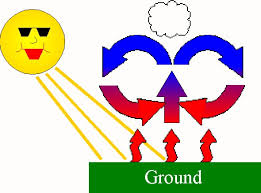
Warm air rises and the cool air sinks demonstrates this type of heat transfer. 
a)
conduction
b)
convection
c)
radiation
d)
Insolation 
50.
Ironing a shirt is an example of...
a)
condensation
b)
conduction
c)
convection
d)
radiation
51.
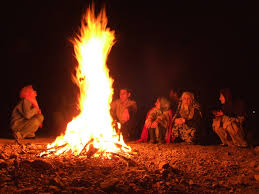
A group of friends gather around a fire to stay warm.
a)
conduction
b)
convection
c)
radiation
52.
Transfer of thermal energy through "space"
a)
conduction
b)
convection
c)
radiation
53.
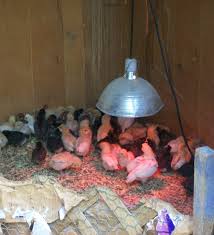
The baby chickens are kept warm from the heat lamps demonstrates this type of heat transfer. 
a)
conduction
b)
convection
c)
radiation
54.
Near the ceiling of a room the air is warmer; the warm air rises because of
a)
conduction
b)
convection
c)
radiation
55.
Long sound waves are...
a)
high pitched
b)
low pitched
c)
medium pitched
56.
Short sound waves are...
a)
high pitched
b)
low pitched
c)
medium pitched
57.
When the car moves AWAY from you, its horn seems...
a)
Low pitched
b)
High pitched
c)
Normal
58.
When an ambulance move TOWARD you it sounds ________ pitched. 
a)
high
b)
low
c)
medium
59.
What can you tell about this object's motion?
a)
Moving to the North (up).
b)
Moving to the South (down). 
c)
Moving to the West (left). 
d)
Moving to the East (right). 
60.
What can you tell about the motion of this object?
a)
Moving left.
b)
Moving right quickly.
c)
Standing still. 
d)
Moving up slowly. 
61.

What is the Doppler effect?

a)

The observed change in frequency of sound or light because of the relative motion of a wave source and the observer.

b)

The observed change in amplitude of sound or light because of the relative motion of a wave source and the observer.

c)

The observed change in wave speed of sound or light because of the relative motion of a wave source and the observer.

d)

The observed change in equilibrium position of sound or light because of the relative motion of a wave source and the observer.
62.

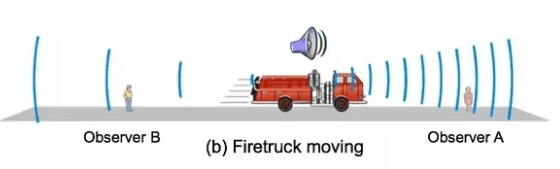
Look at the picture. Who is experiencing a higher pitched sound?

a)

Observer A

b)

Observer B

c)

There's no difference

63.

A lamp that plugs into a wall socket draws energy, which flows through a thin wire in the bulb, causing it to heat up until it glows. What energy transformations are taking place?

a)

Chemical → light → electrical

b)

Mechanical → sound → light

c)

Thermal → solar → electrical

d)

Electrical → thermal → light

64.

In which of the following scenarios would this energy transformation be observed?

chemical → light → heat

a)

Plucking a guitar string

b)

Lighting a match

c)

Turning on a fan

d)

Starting a car

65.

Which of the following is a form of potential energy?

a)

sound energy

b)

chemical energy

c)

mechanical energy

d)

thermal (heat) energy

66.

The law of conservation of energy states ___.

a)

electrical energy can be transformed into other forms

b)

energy can be created and destroyed

c)

energy is never created nor destroyed

d)

what goes up must come down

67.

During energy transformations, energy is never ___.

a)

released as heat

b)

used to increase an object's potential energy

c)

created or destroyed

d)

completely transformed

68.

A baseball is hit into the air with a bat. When does baseball have the greatest gravitational potential energy?

a)

when it hits the ground

b)

when it reaches its highest point

c)

when it leaves the bat

d)

when the mechanical and kinetic energies of the baseball are equal

69.

Calculate the gravitational potential energy of the object.

GPE = mgh

mass: 50

gravity: 10

height: 6

a)

5320J

b)

300J

c)

66J

d)

3000J

70.

Calculate the kinetic energy.

KE=12mv2KE=\frac{1}{2}mv^2  

mass: 200

velocity: 5

a)

2,500J

b)

250J

c)

500,000J

d)

none of the above

71.

What type of energy is stored in a battery?

a)

electrical

b)

thermal

c)

radiant

d)

chemical

72.

Which energy transformation occurs in a toaster?

a)

electrical → thermal

b)

chemical → thermal

c)

nuclear → electrical

d)

thermal → electrical

73.

A battery converts what type of energy to another?

a)

electrical → thermal

b)

chemical → electrical

c)

kinetic → nuclear

d)

light → heat

74.

Energy transformations occur when ___.

a)

a chemical reaction takes place

b)

energy changes from one form to another

c)

energy is created through conduction

d)

two forces slide together that are touching

75.

As a candle burns, the chemical energy stored in the wax is transformed into

a)

heat and light

b)

heat and magnetism

c)

electricity and light

d)

electricity and magnetism

76.

The blades of a wind turbine are at rest until the movement of air causes the blades to spin. Which energy transformation happens when the blades are spinning as shown?

a)

Electrical to mechanical

b)

Chemical to electrical

c)

Mechanical to electrical

d)

Chemical to mechanical

77.

Which of the following would be an example of the following energy transformation:

Electrical -> Mechanical -> Sound

a)

A triple beam balance measuring an object’s mass

b)

A pencil sharpener plugged into a wall outlet

c)

A projector displaying a diagram on the screen

d)

A working flashlight used to light up a dark corner

78.
People get energy from the food that they eat and transform that energy as they move. Which energy transformations occur as a student rapidly rubs the palms of his hands together?
a)
mechanical to thermal to electrical
b)
chemical to mechanical to thermal
c)
mechanical to chemical to sound
d)
chemical to sound to electrical
79.

When a hair dryer is being used, one of the energy transformations that takes place is ____.

a)

chemical to electrical

b)

electrical to chemical

c)

electrical to mechanical

d)

mechanical to electrical

80.

Energy appears in many forms. What form of energy is lightning?

a)

sound energy

b)

mechanical energy

c)

magnetic energy

d)

electrical energy

81.

All of the following are forms of energy EXCEPT:

a)

friction

b)

heat

c)

light

d)

electrical

82.

Light is an example of which type of energy?

a)

nuclear

b)

chemical

c)

electromagnetic

d)

gravitational

83.
Explain what happens to the potential energy of a rock as it falls off the side of a cliff.
a)
The kinetic energy decreases as the potential energy increases.
b)
The kinetic energy decreases as the potential energy decreases.
c)
The potential energy decreases as the kinetic energy increases.
d)
The potential energy decreases as the kinetic energy decreases. 
84.
As a pendulum swings from its highest to lowest position, what happens to its kinetic and potential energy? 
a)
The PE and KE increase and decrease together
b)
The PE decreases while the KE increases 
c)
Impossible to know without knowing the mass  
85.
The diagram shows a complete circuit with a battery and a buzzer making noise. This circuit works by transforming -
a)
chemical energy to electrical to sound.
b)
electrical energy to thermal to light.
c)
sound energy to electrical to chemical.
d)
mechanical energy to electrical to sound.